DESCRIPTION: This is a fun agility, balance and coordination activity that teaches body position"Power Position", on ice stability and heads up "head on swivel" scanning.
KEY EXECUTION POINTS: Players place their stick on the butt end. Holding stick out away from the body at arms length. Release the stick and spin 180 degrees and attempt to catch the stick without it falling. Players not successful kneel in this elimination game to allow successful players to continue until the last player remains. The last player standing wins. Vary directions.
KEY TEACHING POINTS: * Low body position. * Quick pivot/spin stay low * Upper body leads lower body . * See the stick target to catch.
Corner Connect Reset is a constrained, game-based environment designed to highlight how players recognise support, manage spacing, and transition between roles under pressure.
One offensive support player is placed in the corner hit zone. Teams may only use this support player while attacking in the active zone, and the support player must touch the puck before any shot attempt. This immediately shifts player attention away from individual action and toward connection, timing, and shared problem solving.
After a goal is scored, the scoring team must reset behind their own net before re-attacking. This rule disrupts momentum, forces reorganisation, and creates repeated offence–defence transitions.
For goalies, movement is constrained to shuffle movements only, shaping how they manage angles, depth, and body positioning while tracking developing threats rather than reacting to isolated shots.
Game Design Intent
This task is not designed to produce a specific offensive pattern. It is designed to expose how players perceive support, pressure, and opportunity when time and space are limited.
Requiring the corner support player to touch the puck before a shot attempt introduces a recurring problem, how to progress toward the net without rushing play or collapsing spacing. Players must recognise when the support option is viable, how to create it, and how to stay connected once the puck moves away from the middle.
The reset behind the net after scoring removes emotional carryover from success. Players are required to reorganise, defend, and then re-enter the attack, mirroring the volatility of real game transitions where structure is often lost.
Together, these constraints create an environment where role clarity must emerge through interaction, not instruction.
4 Role Ecology in Action
Offence With the Puck
Players in possession are encouraged to attack the middle when space allows, not to force plays, but to draw defenders and reveal passing options. Deception, puck protection, and scanning before receiving become functional behaviours, as decisions must be made under time pressure and with awareness of the support constraint.
The puck carrier is not solving the problem alone. Their actions shape the possibilities available to teammates.
Offence Supporting
The corner support player becomes a critical reference point rather than a stationary option. Their effectiveness depends on timing, availability, and the ability to move the puck quickly back into the play.
Off-puck teammates must adjust spacing to remain connected for second touches, rebounds, and quick strikes. Support is no longer passive, it is dynamic and responsive to how the play unfolds.
Defence On the Puck
Defenders are rewarded for applying immediate pressure while maintaining control. Angling attackers toward the boards, disrupting passing lanes to the corner, and managing stick position become more valuable than chasing.
Because shots cannot occur without a support touch, defenders learn to recognise moments to pressure the puck and moments to deny connection.
Defence Away From the Puck
Off-puck defenders are constantly scanning. Their role is to protect the middle, read passing lanes, and anticipate transitions once possession changes.
Denying easy return passes from the corner support requires communication and shared understanding, reinforcing the importance of defending space rather than reacting late to the puck.
Roles are not assigned or rotated by the coach. They emerge as players interact with the constraints.
Goalie Ecology
Goalies are active participants in this environment. Limiting movement to shuffle-only mechanics places emphasis on angle control, depth management, patience, and body positioning.
Because shots are delayed until the support player is involved, goalies are required to track developing threats rather than respond to immediate releases. The reset rule after goals also introduces rapid emotional shifts, moving from save mode to communication and organisational leadership.
Goalies learn to manage space, read cues, and stabilise the environment during moments of transition, reinforcing that goaltending is about understanding the game, not just stopping pucks.
Why This Task Works
Corner Connect Reset creates a game that thinks back. The environment rewards connection over speed, awareness over effort, and organisation over chaos.
Players are not told where to stand or what decision to make. Instead, they learn through repeated interaction with realistic problems that demand scanning, timing, and adaptability.
The task supports transferable learning because the behaviours it reveals are shaped by the game itself. This makes it a powerful tool for developing hockey sense, role understanding, and decision-making that holds up under real competitive conditions.
Author Bio: Barry Jones is an IIHF Level 3 High Performance Coach and USA Hockey Level 3 Performance Coach. His work blends ecological dynamics, nonlinear design, and athlete-centred leadership to build adaptive teams that thrive in uncertainty.
In episode 326 of the Glass and Out Podcast we sit down with the President, General Manager, and Head Coach of the WHL's Penticton Vees, Fred Harbinson.
Now in his 19th year with the team, Harbinson has the Vees on track for a historic season as the Western Hockey League's newest franchise in its first season after departing the BCHL. In late January of 2026, Penticton sat 2nd in the Western Conference, were riding an 11 game win streak, and recently cracked the CHL’s top 10 ranking, landing at number 9. With 26 games left to play in the regular season, the Vees are only 10 wins away from breaking the win record for an expansion team, set by the Everett Silvertips in 2014.
With Penticton, Harbinson built one of the most storied franchises at the Jr A level in Canada, leading the Vees to multiple championships, including six Fred Page Cup titles, a Western Canada Cup, a Doyle Cup, and an RBC Cup National Championship. He has recorded over 700 career wins in the BCHL and has been honored multiple times with the Joe Tennant Memorial Trophy as BCHL Coach of the Year. He also holds the distinction of the most playoff series victories in league history.
Listen as he shares the championship mentality that has resulted in expansion success, putting an emphasis on the defensive side of the game, and why selling development is about providing your players with a layer of tools.
Coaches: stop overloading your players with 90-min video breakdowns. Players learn by doing, not watching. Short, focused clips work. Most video sessions? They’re for you, not them.
Royal Road Goalie Game is a single-net, end-zone game designed to expose how players manage possession, timing, and lateral connection under immediate pressure.
One net is set with a goalie. One skater is positioned in each circle inside the end zone. Play begins with the coach spotting the puck into either circle. Both players compete to win possession, creating an immediate battle for control and space.
The puck winner becomes Offence With the Puck and must protect the puck, scan the environment, and move the puck across the zone to the opposite circle before a shot can be taken. The receiving player becomes Offence Supporting, timing their movement, presenting a passing option, and preparing to attack the net.
If possession changes, the new attacker must move the puck across the Royal Road before shooting. On rebounds, the environment expands into a live 2v2, with both original players joining the play. The task quickly shifts from isolated interaction to collective problem solving.
Game Design Intent
This task is designed to shift attention away from straight-line shooting and toward lateral awareness, connection, and role switching.
By requiring the puck to cross the zone before a shot, the environment creates a recurring problem, how to attack a net when immediate shooting is removed as the primary option. Players must recognise pressure, manage deception, and connect with a teammate before offence can emerge.
The rebound-triggered transition to 2v2 increases complexity without stopping play. Players must adapt to a sudden change in numbers, space, and responsibility, mirroring real game moments where structure breaks and reforms quickly.
The Royal Road constraint is not teaching a tactic. It is shaping perception, forcing players to see and use space that often goes unnoticed under time pressure.
4 Role Ecology in Action
Offence With the Puck
The puck carrier is challenged to protect possession while scanning for lateral options. With shooting delayed, deception, body positioning, and patience become functional behaviours rather than coached instructions.
The attacker learns that moving defenders is often more valuable than beating them directly.
Offence Supporting
The player in the opposite circle is not a static receiver. Their effectiveness depends on timing, availability, and readiness to attack once the puck arrives.
As play becomes live 2v2, supporting players must immediately adjust spacing to stay connected for second touches, rebounds, or quick strikes, reinforcing that support is an ongoing process rather than a fixed position.
Defence On the Puck
Defenders apply immediate pressure to contest possession and disrupt the lateral pass. Stick positioning, body alignment, and pressure timing become critical as defenders attempt to influence puck movement without overcommitting.
Because shots are delayed, defenders learn to manage space and patience rather than chase immediate outcomes.
Defence Away From the Puck
Off-puck defenders read passing lanes, protect the middle, and anticipate transitions once possession changes. The Royal Road constraint heightens the importance of scanning and communication, as denying east–west movement often matters more than attacking the puck.
Roles are not assigned by the coach. They emerge as players interact with the changing demands of the environment.
Goalie Ecology
Goalies experience a high-information environment shaped by traffic, lateral movement, and delayed shooting.
The Royal Road constraint increases east–west puck movement, requiring goalies to stay square through passes, adjust depth on lateral plays, and manage sightlines through bodies. Rebound situations rapidly change the context, demanding quick recovery, emotional regulation, and repositioning.
Goalies are challenged to manage S.A.D, spacing, angle, and depth, while communicating through developing chaos. The task reinforces that goaltending is a perceptual and decision-making skill, not just a technical one.
Why This Task Works
Royal Road Exchange creates an environment that thinks back. Players are not rewarded for speed alone, but for awareness, timing, and connection.
By shaping how and when shots can occur, the task encourages players to recognise pressure, exploit space, and transition seamlessly between roles. The behaviours that emerge are not rehearsed solutions, but adaptive responses shaped by the game itself.
This makes the task highly transferable. The habits developed hold up under real game conditions, where lateral awareness, role clarity, and rapid transitions often determine success.
Author Bio: Barry Jones is an IIHF Level 3 High Performance Coach and USA Hockey Level 3 Performance Coach. His work blends ecological dynamics, nonlinear design, and athlete-centred leadership to build adaptive teams that thrive in uncertainty.
Cross-Ice Outlet Exchange is a split end-zone, cross-ice game designed to expose how players manage pressure, outlet decisions, and rapid role transitions in tight space.
One end zone is divided into two attacking zones, each with its own net and goalie. An east–west line is placed just above the circles, creating a high soft-ice zone between the two attacking areas. Play begins with the coach spotting the puck into either zone.
In each attacking zone, two attackers and one defender battle net-front, while a second defender is positioned high between the circles. The net-front defender’s primary challenge is to win possession under pressure and connect the puck to the high defender. From there, the high defender must scan and move the puck east–west across the middle line to activate the attackers in the opposite zone.
If possession changes in either zone, responsibility immediately shifts. The new defender must locate the high outlet to continue the transition sequence, creating constant movement between roles without stopping play.
Game Design Intent
This task is designed to connect net-front battles with decision-making in soft ice.
By separating pressure zones from the outlet zone, the environment creates a recurring problem, how to exit pressure without forcing play or losing structure. Players are challenged to recognise when possession is secure, where support exists, and how quickly the environment changes once the puck moves east–west.
The requirement to transition through the high defender prevents isolated battles from becoming dead ends. Instead, every possession carries the potential to flip the problem to the opposite side, reinforcing that offence and defence are linked through connection, not effort alone.
The result is an environment that rewards scanning, patience, and awareness while maintaining game-speed chaos.
4 Role Ecology in Action
Offence With the Puck
Attackers receiving the puck off the cross-ice pass are immediately placed in an attacking role with advantage. Shot selection, deception, and puck protection emerge naturally as players adapt to lateral feeds and moving defenders.
Because offence is activated through connection rather than recovery, attackers learn to recognise when to attack space versus when to stabilise possession.
Offence Supporting
Supporting attackers in the opposite zone must manage timing and spacing before the puck arrives. Their role is shaped by anticipation rather than reaction, staying available for lateral feeds, rebounds, or quick secondary actions once the puck crosses the middle.
Support becomes a function of reading the outlet, not following the puck.
Defence On the Puck
Net-front defenders operate under constant pressure. Winning possession requires body positioning, stick detail, and balance rather than chasing outcomes.
Once possession is gained, defenders must immediately shift perception from battle to connection, recognising the high outlet as a continuation of defence rather than a separate task.
Defence Away From the Puck
The high defender occupies a critical ecological role. They must read pressure, scan both attacking zones, and manage passing lanes while staying available as an outlet.
Away-from-the-puck defence becomes about information gathering and anticipation, not static positioning. As possession changes, roles reverse quickly, reinforcing adaptability.
Roles are not assigned by instruction. They emerge as players interact with pressure, space, and time.
Goalie Ecology
Goalies experience a demanding lateral environment shaped by traffic, cross-ice passes, and rapid puck movement.
Tracking through bodies, staying square on east–west feeds, adjusting depth, and managing lateral pushes are constant demands. Because shots often arrive following puck movement rather than recovery, goalies must read developing threats and stabilise rebounds to prevent secondary chances.
The pace of transitions requires quick recovery and emotional regulation, reinforcing that goaltending is about managing sequences, not isolated saves.
Why This Task Works
Cross-Ice Outlet Exchange creates a game that thinks back. Players are rewarded for recognising connection, managing pressure, and transitioning between roles without losing awareness.
The constraints ensure that learning is shaped by the environment rather than instruction. Net-front battles, high outlets, and cross-ice activation combine to create a task where hockey sense emerges through interaction.
The behaviours developed in this environment transfer directly to the full game, where pressure, soft ice, and rapid role switching define success.
Author Bio: Barry Jones is an IIHF Level 3 High Performance Coach and USA Hockey Level 3 Performance Coach. His work blends ecological dynamics, nonlinear design, and athlete-centred leadership to build adaptive teams that thrive in uncertainty.
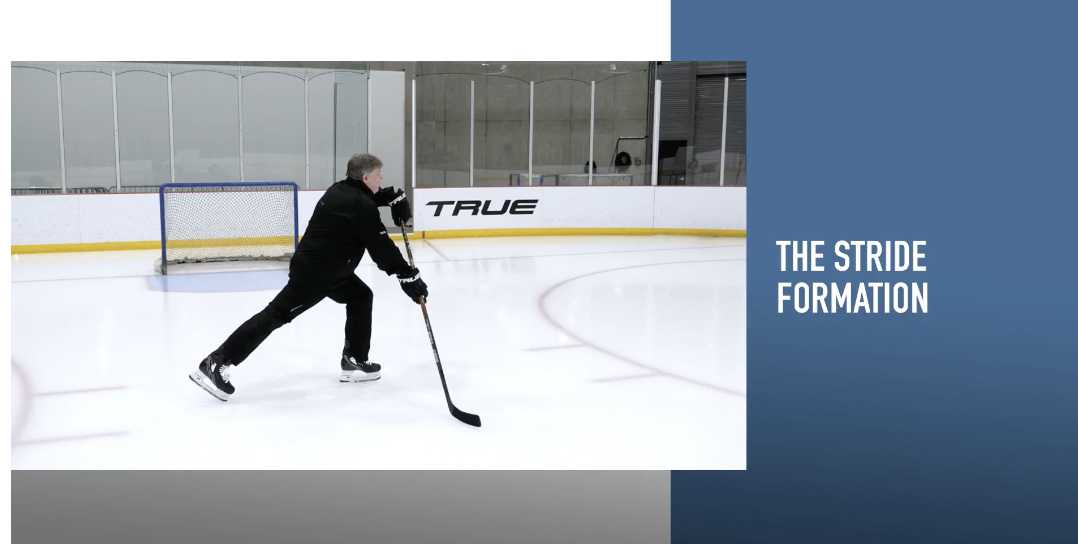
Tim Turk's tactics show up in the NHL more often than you'd think when you know what to look for. TCS collaborated with Tim on a course last summer, Mastering the Fundamentals of Shooting, and one of the key lessons focuses on stride formation.
Stride formation is the classic hockey wrist shot - weight on the front foot, under the top hand, back foot back and pushing power into the shot. Even though it's a classic, a lot of players have neglected to practice it as they get older because it's easier to lean on their fancy hockey sticks to whip and torque. That's fine, but they're missing out on an important piece of the shooting arsenal. Watch the clips above with this image in mind!
In any discussion on in game over-coaching two key topics take center stage:
Joystick Coaching
Constant Correction
Hot Take: Neither one works.
Joystick coaching...we have all seen it and at times may have all tried it. The art of standing on the bench, yelling instructions to your players on what to do and when to do it. "Pass the puck", "Get it deep", "Skate", "Shoot it". Do we really need to tell hockey players to pass the puck? Skate? Shoot? Do they not know this already?
When you stand on the bench directing players in their actions you are sending a loud message to players. I do not trust you to think for yourself. To solve your own problems, to be creative. You are not willing to let them make mistakes and learn from those mistakes.
It also sends another message...practice may not be developing players effectively. If you have to stand on the bench and direct players in what to do and when, then perhaps you have failed them in practice.
There is so much benefit to putting trust in your players. Allowing them to play the game with freedom, knowing it will be OK to make some mistakes. It generates creativity and skillfulness while also increasing their enjoyment of playing the game.
Lets get down off the bench and put away the game controllers. Trust them, trust the work you have done in practice and let them play. You will be rewarded and so they will they.
Constant Correction...every time players come off the ice you take out the iPad, or the whiteboard, or you have something to say to one or more players. And often, its all over the map. One shift its about poor puck protection and some turnover. Next shift its about their compete. Then their defensive zone coverage is not good. How do you expect players to digest all that information and place any value on it? Its simply to much. This over coaching is creating information overload and as a result none of it sticks.
You can counter this over coaching with some simple approaches:
Let them play. Be patient and willing to allow some mistakes. Taker notes on the mistakes you are seeing to address in practice. Highlight a recurring mistake and focus only on that one...but not constantly.
Set a learning focus prior to the game. "Today's game we are going to play with puck confidence and make good pass decisions". The players now have a focus, and you have something to base any periodic corrections and feedback on. No more overload.
Provide simple reminders to players on the bench during the play. As the game is being played you can provide simple reminders rather than waiting for mistakes to occur. Its not directed at any player or group of players. You are just sharing a simple reminder.
Focus on positive reinforcement of the good things they are doing rather then always raising the mistakes.
However, there is another consideration here. Does in game correction even work or can it work? We must understand learning and the role of correction and feedback to answer this. If corrective feedback is to have an impact, it must be (1) immediate and (2) the player must be able to use that feedback immediately to make the correction. Both are out of our control during games, therefore the value of corrective feedback is greatly diminished.
Example - Tommy goes on the ice for his shift. 15 seconds in he takes a shot and misses the net. He stays on for 40 more seconds and then comes off the ice. You meet him with "Tommy you have to start hitting the net. Your eyes are down all the time. You must get your eyes up when shooting".
Is this correction immediate? No, its almost 1 minute after the fact. Can Tommy take that feedback and go back on the ice right away and take a shot on net, trying to raise his eyes? No. He has to sit and wait for his next shift (maybe 2 minutes) and there is no guarantee he will even get a shot on net again. This fact about role of feedback now riases questions on the effectiveness of in game correction.
Coaches want to coach and help their players. That's what we do. But the next time you are on the bench think about over coaching. Are you creating information overload? Is your feedback all over the map? Are players able to effectively use your feedback? You may realize that in this case less may be better.
In episode 327 of the Glass and Out Podcast we welcome back Head Coach of the Wheeling Nailers, Ryan Papaioannou.
With The Coaches Site and Glass and Out, one of the cool aspects is we get to touch base with coaches during the various chapters of their journey as they climb their way up the coaching ladder.
We first connected with Papaioannou during his time with the AJHL's Brooks Bandits. Under his leadership the Bandits captured seven AJHL Championships, one BCHL Championship (the Bandits joined the BCHL in advance of last season), and four National Championships at the Jr A level in Canada.
At the beginning of this season Papaioannou was hired by the Pittsburgh Penguins organization to coach their ECHL affiliate in Wheeling. Currently, the Nailers are tied for 5th overall in the ECHL standings.
More than anything, Ryan’s successful transition from tier 2 hockey to the professional ranks is a signal that leadership and the ability to develop a winning culture matters more than what level you’ve coached at.
Listen as he shares why being adaptable is crucial in the ECHL, the importance of deception in elite players, and why winning breeds development.
Is hockey sense something that players are born with or can it be developed? Thinking the game is a skill that can be developed like skating, passing and shooting.