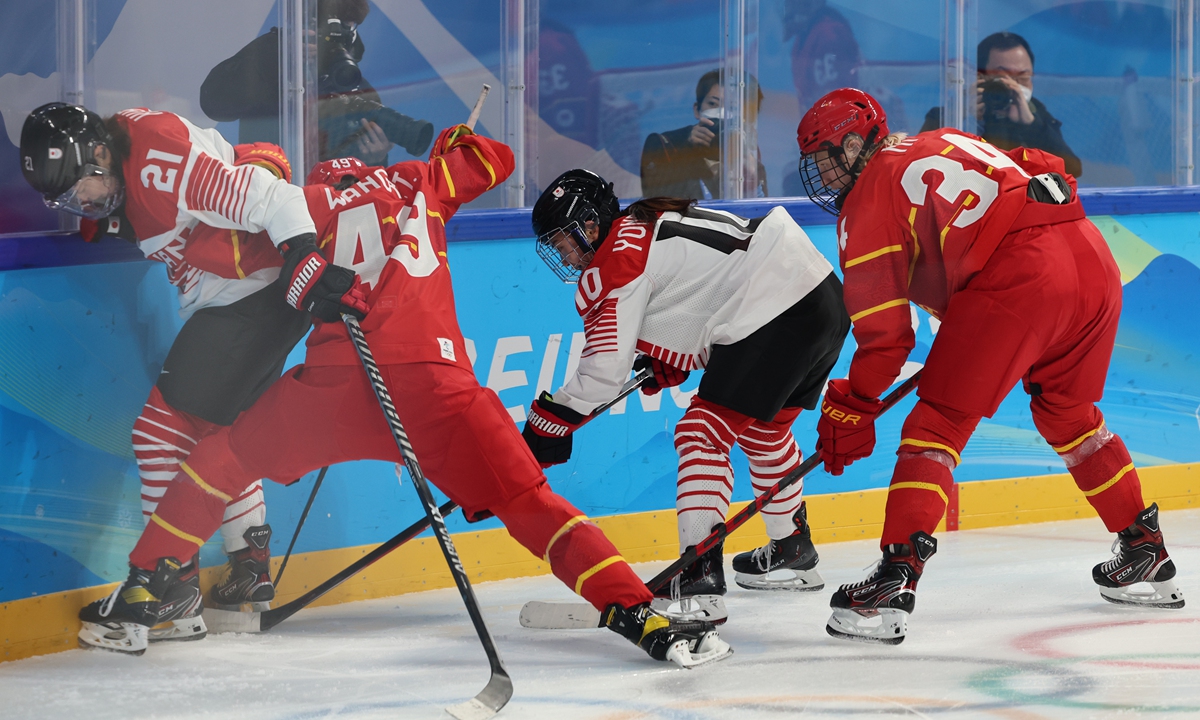
Set up a cross-ice game with two nets and a center line dividing the surface into two scoring zones.
Hit Zone Assist Game
Using Offensive Support and Constraint to Shape Role Clarity, Transitions, and Goalie Control
By Coach Barry Jones | IIHF Level 3 High Performance | USA Hockey Level 3 Performance
- Designing Small Area Games Series: Above The Net - Solving F3 Support and develops habits
- Designing Small Area Games Series: 3 Player Outlet Game - Solving Breakout Support and develops puck movement habits
- Designing Small Area Games Series: Endzone Outlet Regroup Game - Solving Breakout Support and Regroup Habits habits
- Designing Small Area Games Series: Circle Net Face off Game - Solving Front of Net Behaviours
- Designing Small Area Games Series: Corner Battle Screen Game - Solving Board Battles and Net Front Screen
- Designing Small Area Games Series: Neutral Zone Circle Game - Solving D-to-D Connection and Cross Ice Activation
- Designing Small Area Games Series: Boards to one timer - Solving Board Clearances to outlets
- Designing Small Area Games Series: Asteroids Battle Game - Solving front of the net Clearances to outlets
- Designing Small Area Games Series: Royal Road Goalie Game - Solving S.A.D for Goalies in the Royal Road
- Designing Small Area Games Series: HIT Zone Assist Game - Solving the support problem
Game Overview
Corner Connect Reset is a constrained, game-based environment designed to highlight how players recognise support, manage spacing, and transition between roles under pressure.
One offensive support player is placed in the corner hit zone. Teams may only use this support player while attacking in the active zone, and the support player must touch the puck before any shot attempt. This immediately shifts player attention away from individual action and toward connection, timing, and shared problem solving.
After a goal is scored, the scoring team must reset behind their own net before re-attacking. This rule disrupts momentum, forces reorganisation, and creates repeated offence–defence transitions.
For goalies, movement is constrained to shuffle movements only, shaping how they manage angles, depth, and body positioning while tracking developing threats rather than reacting to isolated shots.
Game Design Intent
This task is not designed to produce a specific offensive pattern. It is designed to expose how players perceive support, pressure, and opportunity when time and space are limited.
Requiring the corner support player to touch the puck before a shot attempt introduces a recurring problem, how to progress toward the net without rushing play or collapsing spacing. Players must recognise when the support option is viable, how to create it, and how to stay connected once the puck moves away from the middle.
The reset behind the net after scoring removes emotional carryover from success. Players are required to reorganise, defend, and then re-enter the attack, mirroring the volatility of real game transitions where structure is often lost.
Together, these constraints create an environment where role clarity must emerge through interaction, not instruction.
4 Role Ecology in Action
Offence With the Puck
Players in possession are encouraged to attack the middle when space allows, not to force plays, but to draw defenders and reveal passing options. Deception, puck protection, and scanning before receiving become functional behaviours, as decisions must be made under time pressure and with awareness of the support constraint.
The puck carrier is not solving the problem alone. Their actions shape the possibilities available to teammates.
Offence Supporting
The corner support player becomes a critical reference point rather than a stationary option. Their effectiveness depends on timing, availability, and the ability to move the puck quickly back into the play.
Off-puck teammates must adjust spacing to remain connected for second touches, rebounds, and quick strikes. Support is no longer passive, it is dynamic and responsive to how the play unfolds.
Defence On the Puck
Defenders are rewarded for applying immediate pressure while maintaining control. Angling attackers toward the boards, disrupting passing lanes to the corner, and managing stick position become more valuable than chasing.
Because shots cannot occur without a support touch, defenders learn to recognise moments to pressure the puck and moments to deny connection.
Defence Away From the Puck
Off-puck defenders are constantly scanning. Their role is to protect the middle, read passing lanes, and anticipate transitions once possession changes.
Denying easy return passes from the corner support requires communication and shared understanding, reinforcing the importance of defending space rather than reacting late to the puck.
Roles are not assigned or rotated by the coach. They emerge as players interact with the constraints.
Goalie Ecology
Goalies are active participants in this environment. Limiting movement to shuffle-only mechanics places emphasis on angle control, depth management, patience, and body positioning.
Because shots are delayed until the support player is involved, goalies are required to track developing threats rather than respond to immediate releases. The reset rule after goals also introduces rapid emotional shifts, moving from save mode to communication and organisational leadership.
Goalies learn to manage space, read cues, and stabilise the environment during moments of transition, reinforcing that goaltending is about understanding the game, not just stopping pucks.
Why This Task Works
Corner Connect Reset creates a game that thinks back. The environment rewards connection over speed, awareness over effort, and organisation over chaos.
Players are not told where to stand or what decision to make. Instead, they learn through repeated interaction with realistic problems that demand scanning, timing, and adaptability.
The task supports transferable learning because the behaviours it reveals are shaped by the game itself. This makes it a powerful tool for developing hockey sense, role understanding, and decision-making that holds up under real competitive conditions.
Author Bio:
Barry Jones is an IIHF Level 3 High Performance Coach and USA Hockey Level 3 Performance Coach. His work blends ecological dynamics, nonlinear design, and athlete-centred leadership to build adaptive teams that thrive in uncertainty.