Corner Battle Screen Game | Recovery, Net Front Presence, and Hidden Release
Designing visual disruption to reveal how recovery, screening, and scoring opportunity emerge through interaction
By Coach Barry Jones | IIHF Level 3 High Performance | USA Hockey Level 3 Performance
- Designing Small Area Games Series: Above The Net - Solving F3 Support and develops habits
- Designing Small Area Games Series: 3 Player Outlet Game - Solving Breakout Support and develops puck movement habits
- Designing Small Area Games Series: Endzone Outlet Regroup Game - Solving Breakout Support and Regroup Habits habits
- Designing Small Area Games Series: Circle Net Face off Game - Solving Front of Net Behaviours
- Designing Small Area Games Series: Corner Battle Screen Game - Solving Board Battles and Net Front Screen
- Designing Small Area Games Series: Neutral Zone Circle Game - Solving D-to-D Connection and Cross Ice Activation
- Designing Small Area Games Series: Boards to one timer - Solving Board Clearances to outlets
- Designing Small Area Games Series: Asteroids Battle Game - Solving front of the net Clearances to outlets
- Designing Small Area Games Series: Royal Road Goalie Game - Solving S.A.D for Goalies in the Royal Road
- Designing Small Area Games Series: HIT Zone Assist Game - Solving the support problem
Game Overview
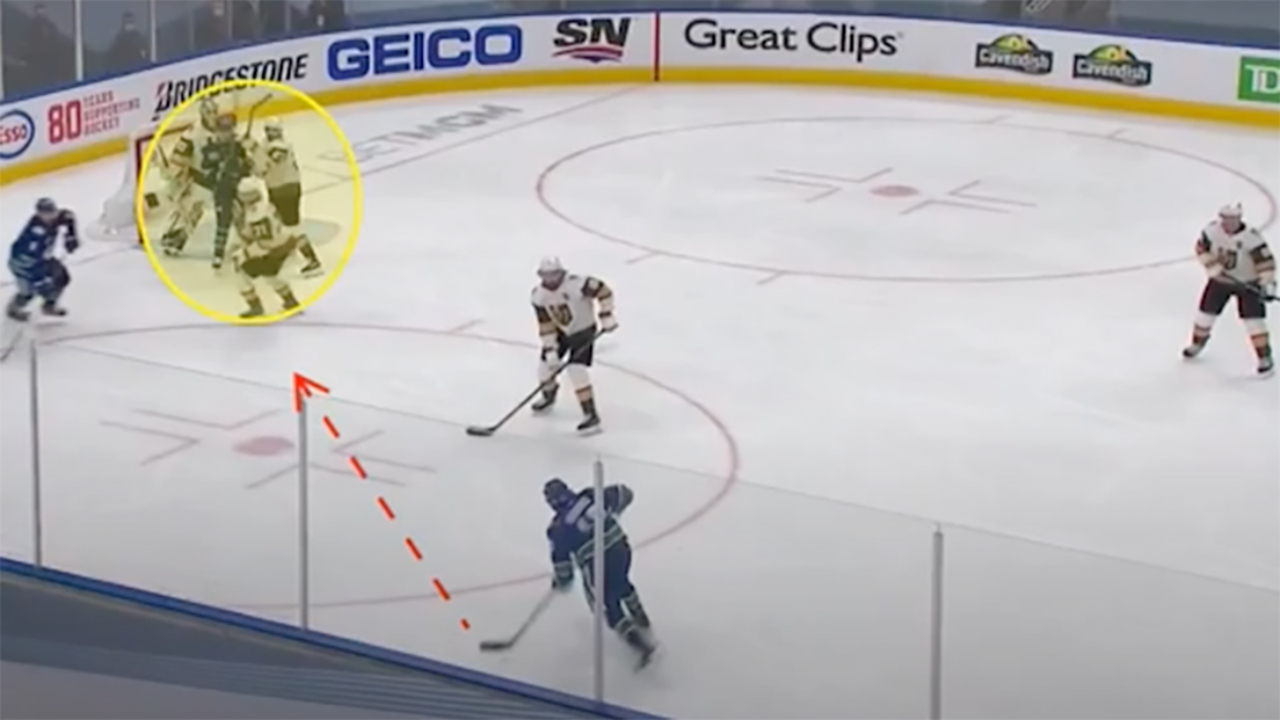
The Corner Battle Screen Game takes place in the end zone using one corner as the starting point for puck recovery. The net is positioned approximately 8 metres away from the corner, with a goalie in position and a marked crease area. One player stands at the top of the crease, creating a constant net front presence.
Play begins when the coach spots a puck into the corner. One player from each team enters to compete in a 1v1 battle for possession. The player who gains control of the puck immediately transitions from recovery to attack, using the net front player as a screen while attempting to score.
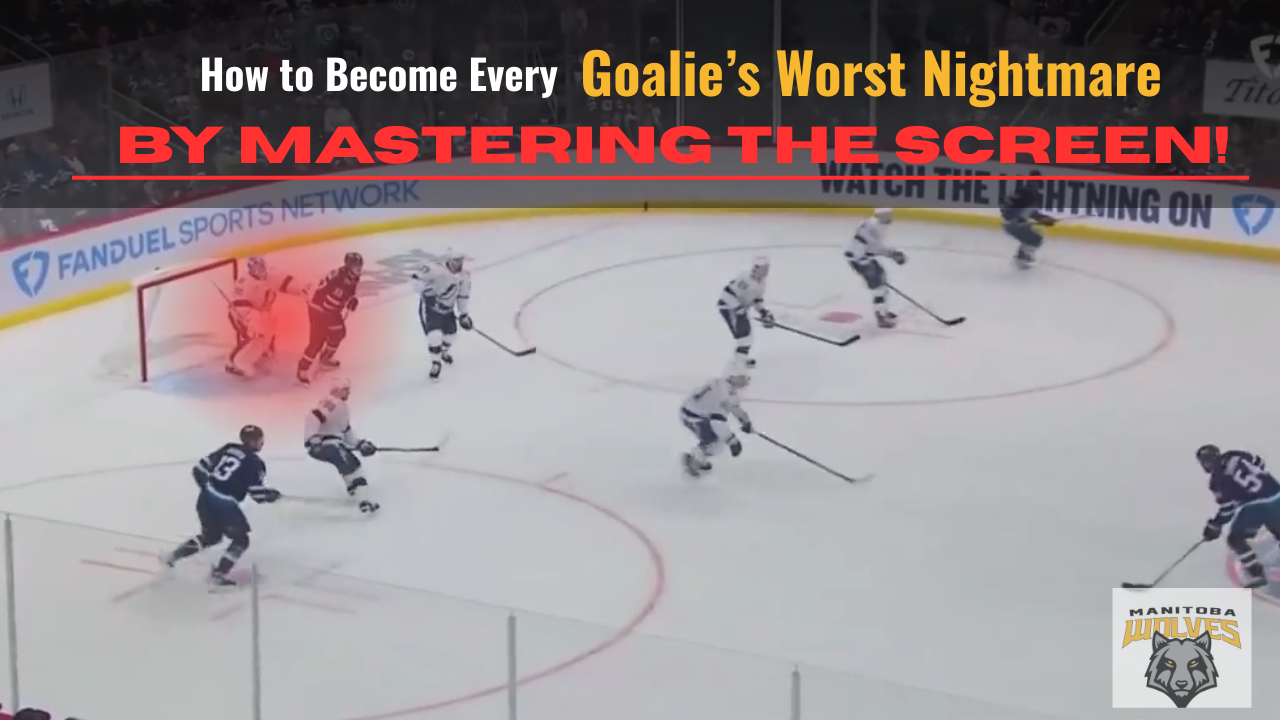
The screen player does not control the puck but shapes the scoring environment. Their presence alters the goalie’s visual field and changes the conditions under which the shooter operates.
This creates a layered interaction where recovery, screening, and scoring exist as connected events rather than isolated actions.
Game Design Intent
This task is designed to expose the moment where defensive recovery becomes offensive opportunity. The transition is immediate. There is no separation between the two phases.
The net front screen introduces visual uncertainty. The goalie cannot rely on uninterrupted puck tracking. The shooter cannot rely on clear shooting lanes. Both players must interpret and respond to disruption.
The proximity of the corner to the net compresses time and space. Players must act within constraint. This reveals how perception and action are shaped when opportunity exists briefly and under pressure.
The screen player becomes a living constraint. Their presence continuously reshapes what is visible, available, and possible.
The environment does not guarantee scoring opportunity. It reveals how players create it.
4 Role Ecology in Action
Offence With the Puck
The puck carrier emerges from recovery directly into offensive possibility. Their ability to perceive the screen, interpret goalie positioning, and release the puck is shaped by interaction with both players.
The shooter does not operate in isolation. Their opportunity emerges through the presence of the screen.
Scoring becomes a relational event.
Offence Supporting
The screen player exists without the puck but plays a central role in shaping offensive opportunity. Their positioning influences the goalie’s perception and the shooter’s available options.
Their role emerges through spatial awareness, timing, and presence.
They do not create offense directly. They shape the conditions under which offense becomes possible.
Defence On the Puck
The defender in the corner shapes the entire sequence. Their pressure influences whether recovery occurs cleanly, under stress, or not at all.
Their presence alters timing, positioning, and the quality of offensive opportunity.
Defence becomes the force that shapes offensive perception.
Defence Away From the Puck
The goalie exists as the final defensive presence but also as an active participant in the interaction. Their positioning, tracking, and emotional regulation influence how the shooter perceives opportunity.
The goalie is not simply reacting. They are continuously interpreting the evolving environment.
Their role emerges through perception of disruption.
Goalie Ecology
The goalie must track the puck from the corner while managing the presence of a screen. Visual information becomes incomplete. The goalie must interpret movement, anticipate release timing, and regulate emotional response under uncertainty.
This task shapes patience and perception. The goalie learns to exist within visual disruption rather than relying on uninterrupted tracking.
The goalie’s behaviour becomes anticipatory, shaped by environmental cues rather than isolated events.
They learn to perceive threat before the shot occurs.
Why This Task Works
This task connects recovery, screening, and scoring into a single ecological event. It removes artificial separation between phases of play and replaces it with continuity.
The environment thinks back. It challenges players to perceive opportunity as something that emerges through interaction.
Players learn that scoring is not simply about shooting. It is about timing, positioning, and relationship to others.
The screen reshapes perception. The recovery reshapes timing. The goalie reshapes opportunity.
This learning transfers because the task reflects the true nature of scoring in hockey. Opportunity exists briefly, often under pressure, and often through visual disruption.
Players do not learn a technique. They learn how to perceive opportunity within uncertainty.
This is where adaptable scorers and adaptable goalies are formed.
Author Bio:
Barry Jones is an IIHF Level 3 High Performance Coach and USA Hockey Level 3 Performance Coach. His work blends ecological dynamics, nonlinear design, and athlete-centred leadership to build adaptive teams that thrive in uncertainty.