End Zone Outlet Regroup Game | Recovery, Breakout, and Activation
Constraining activation to reveal how breakout connection shapes offensive opportunity
By Coach Barry Jones | IIHF Level 3 High Performance | USA Hockey Level 3 Performance
- Designing Small Area Games Series: Above The Net - Solving F3 Support and develops habits
- Designing Small Area Games Series: 3 Player Outlet Game - Solving Breakout Support and develops puck movement habits
- Designing Small Area Games Series: Endzone Outlet Regroup Game - Solving Breakout Support and Regroup Habits habits
- Designing Small Area Games Series: Circle Net Face off Game - Solving Front of Net Behaviours
- Designing Small Area Games Series: Corner Battle Screen Game - Solving Board Battles and Net Front Screen
- Designing Small Area Games Series: Neutral Zone Circle Game - Solving D-to-D Connection and Cross Ice Activation
- Designing Small Area Games Series: Boards to one timer - Solving Board Clearances to outlets
- Designing Small Area Games Series: Asteroids Battle Game - Solving front of the net Clearances to outlets
- Designing Small Area Games Series: Royal Road Goalie Game - Solving S.A.D for Goalies in the Royal Road
- Designing Small Area Games Series: HIT Zone Assist Game - Solving the support problem
Game Overview
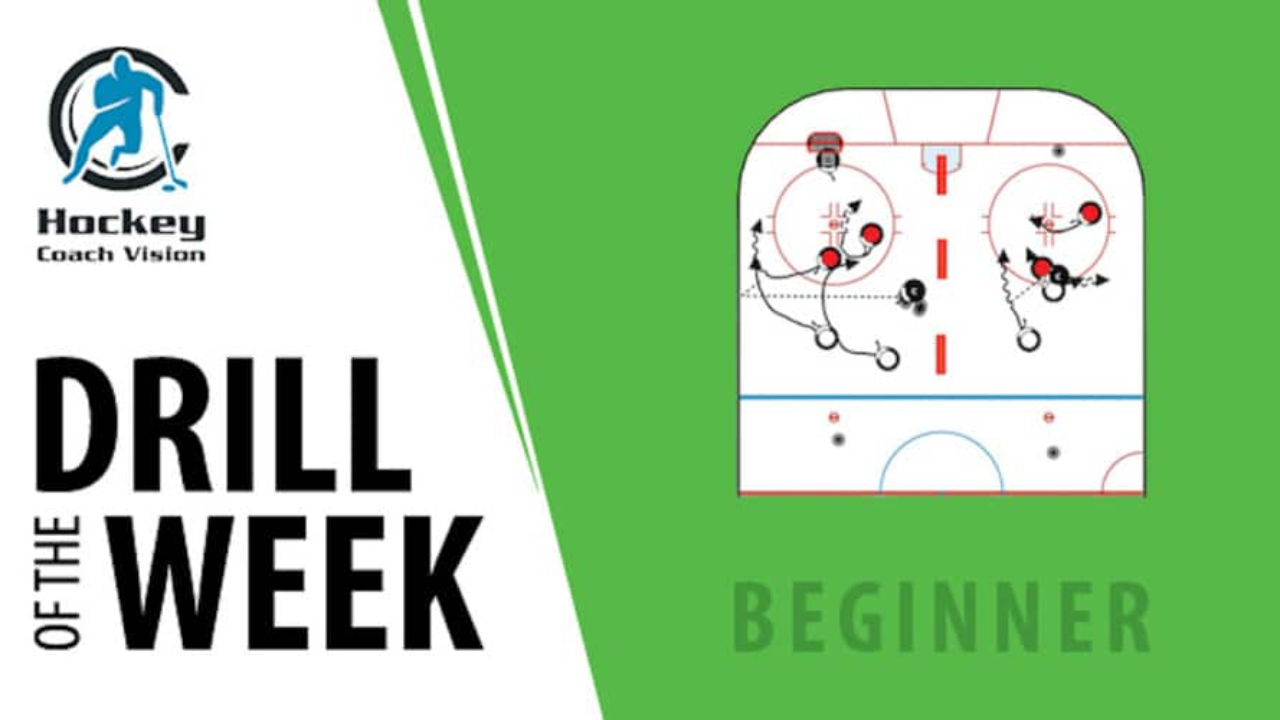
The End Zone Outlet Regroup Game takes place in one end zone with a single net and goalie. Each team begins with two players inside the zone and one outlet positioned on the outside dot on their side. The coach spots a puck into the corner, triggering a race for recovery between opposing players.
The player who recovers the puck cannot use the outlet immediately. Both inside players must first connect through puck movement before the outlet becomes available. This creates a moment where possession exists without full offensive potential.
Once the outlet receives the puck, they leave the zone and regroup before re-entering to attack the net as a connected three player unit. The defending team remains inside the zone and must recover possession and activate their own outlet to transition.
The environment constantly shifts between incomplete and complete offensive states, shaping how players interpret recovery, support, and opportunity.
Game Design Intent
This task challenges the assumption that puck recovery automatically creates offense. Instead, offensive opportunity must be built through connection and timing.
The requirement that both players touch the puck before activating the outlet creates a relational dependency. Recovery alone is not enough. Players must recognize support, reconnect play, and construct offensive potential together.
The outlet positioned outside the zone creates spatial separation. This separation forces players to perceive when connection exists and when it does not. The environment reveals how players behave when support is temporarily unavailable.
The regroup phase introduces transition instability. Players move between defensive recovery and offensive construction in real time. This exposes how perception, timing, and awareness shape behaviour during moments of change.
Offense is not given. It emerges through interaction.
4 Role Ecology in Action
Offence With the Puck
The puck carrier exists within constraint. They cannot activate the outlet independently. Their decisions are shaped by the presence, absence, and movement of support.
Possession becomes less about control and more about connection. The puck carrier must perceive relationships before opportunity emerges.
The environment encourages patience, scanning, and timing.
Offence Supporting
Supporting players influence whether offense becomes possible. Their movement, availability, and positioning shape the activation moment.
Support is not static. It evolves as players interpret recovery, pressure, and space.
Offensive structure becomes something players build together through shared awareness.
Defence On the Puck
The defender directly influences the speed and clarity of breakout connection. Their pressure shapes perception, forcing the puck carrier to interpret support under constraint.
Defensive presence introduces uncertainty. This uncertainty reshapes offensive behaviour.
Defence becomes the condition that shapes offensive learning.
Defence Away From the Puck
Players away from the puck exist in a state of anticipation. They must interpret cues, recognize activation timing, and prepare to influence the next phase of play.
Their role emerges through perception, not assignment.
They learn to exist within instability.
Goalie Ecology
The goalie operates within a fluid offensive environment. Offensive threats do not appear immediately. They develop through breakout connection and regroup activation.
This shapes how the goalie manages readiness, depth, and attention. The goalie must track recovery, interpret breakout cues, and recognize when offensive potential becomes fully activated.
The goalie learns to perceive the environment as it evolves, not simply react to the shot.
Their behaviour becomes anticipatory, not reactive.
Why This Task Works
This task reshapes how players understand offense. It removes the illusion that possession alone creates opportunity and replaces it with the reality that opportunity must be built.
The environment thinks back. It rewards players who recognize relationships and exposes players who act in isolation.
Players experience how recovery, support, and timing work together to create offense.
This learning transfers because the task reflects the true nature of hockey. Offensive advantage is constructed through connection, not control.
Players do not learn a pattern. They learn how to perceive.
This is where adaptability lives.
Author Bio:
Barry Jones is an IIHF Level 3 High Performance Coach and USA Hockey Level 3 Performance Coach. His work blends ecological dynamics, nonlinear design, and athlete-centred leadership to build adaptive teams that thrive in uncertainty.