
 00:00:00
20 Tips for Minor Hockey Coaches to Create Player Engagement
Getting Immediate Attention
- Consistent Alerts - Use the same sharp 2-blast whistle or call-out to indicate “stop and listen.” Use phrases like, "Freeze" or "Hold" to lock players for ideal teachable moments.
- Establish a Command Phrase - Say something unique like “Eyes on me!”, “Eyes and ears!”, "Focus"— and ask and expect players to respond immediately.
- Change Your Voice - Shift tone, volume, or pace. A sudden whisper can grab more attention than yelling.
- Use Physical Proximity - Walk toward the most distracted area or player—your presence alone often settles them down.
- Name Drop Positively - Call out: “Love the focus, Carter!”—This praises one and cues others to follow suit.
Designing Practice with Engagement in Mind
- Keep Lines Short and Players Moving -Long lines = boredom = distractions = disruption = active disengagement/ rebellion. Create stations or split into small groups.
- Use Timed Drills or Designed and Themed Challenges -Add urgency: “You have 20 seconds—let’s go!” keeps focus and intensity high.
- Gamify Drills - Turn routine drills into mini-competitions (e.g., “pass relay” keeping tallied successful passes vs attempts or “beat the blue, red, green line” or "defenceman vs. forwards").
- Create Roles or Missions -“You’re the puck retriever,” “You’re the traffic cop” or better yet add descriptive cues and terms, "You're the anchor", "You're the bumper"- kids love unique identity and responsibility. It makes them feel vital and that they belong.
- Break Drills into Shifts -2-3 short reps with a reset keep kids attentive vs. dragging out one long sequence. Flow drills may be good to warm up and get "touches" but they can also reinforce many bad habits like long shifts, floating and a disconnected mindset.
Building Buy-In and Mindset
- Set Clear Expectations From the Start - Quickly state today’s objectives and behavioural expectations at the beginning of each session.
- Create Team-Wide Cues - Use call-and-response: Coach says “Ready?” the team replies “Let’s go!” or "Break!" as they break the coach scrum, the team responds "Hustle!" -These affirmations are habit builders and create team cohesion and camaraderie.
- Explain the “Why” Behind Drills - A 10-second explanation like “This helps your shot get off faster in games” adds purpose.
- Let Players Demonstrate or Teach - Rotate who introduces or demonstrates a drill—players engage more when they’re in front of their peers. Peer coaching and leadership development are vital. Use triads and pairs to see results jump off the chart.
- Use Names Often - Kids tune in when they hear their name: “Liam, we need your focus here.” Consider the use of (respectful) nicknames to energize players.
Managing Disruptive Behaviour Tactfully
- Redirect, but Don’t Shame or Scold - “Come help me with this cone” works better than “Stop messing around!”
- Use Silent Signals - A hand up, finger to lips, or eye contact and silence can speak louder than words.
- Pause Practice Momentarily - Stop, reset calmly: “We’re better than this. Let’s refocus and raise our level.”
- Praise Publicly, Correct Privately - Highlight positive examples in front of others, catch them doing it right...and reward this, but also pull players aside quietly for constructive redirects.
- End on a Positive Challenge - Wrap up drills and sequences on a positive outcome. Then end practice with a fun game, relay, or challenge to leave them excited and eager for the next training session.
Most importantly, as a coach, bring your best to practice. Bring energy, enthusiasm and excitement. Practices are when we as coaches perform, teach and lead. Your excitement and energy, like a virus, will spread throughout the team.
Most importantly, as a coach, bring your best to practice. Bring energy, enthusiasm and excitement. Practices are when we as coaches perform, teach and lead. Your excitement and energy, like a virus, will spread throughout the team.
 00:00:00
Beating the Forecheck: Details of an Effective Breakout
Derek Laxdal has coached from Major Junior to the National Hockey League, which has contributed to each team's success on and off the ice. As the current head coach of the Coachella Valley Firebirds, his focus on breakouts has improved both the individual player and team success. His presentation on Day 1 at TCS Live 2025 on breakout versus aggressive forechecks explained the details, energy, structure, and physicality needed to maintain possession. He described how when you play fast and break out fast, you are hard to play against as you wear the other team down.
The ultimate goal of his strategy was to either maintain or gain an advantage. Laxdal focused on effective puck retrievals using techniques like skate screens to create space and disrupt the forecheck. His defensemen are taught three points of deception: head fakes, stick positioning, and toe cap movements. When breaking out, teams have three primary options: weakside, strongside, or through the middle, with the key being to have numbers around the puck and communicate effectively. The most important aspect of mastering and perfecting this skill is practice. Laxdal gave examples of touch, half ice breakouts, and play on the move drills to strengthen team breakouts. Laxdal emphasized that the breakout begins with the ability to execute quick, connected passes that allow the team to transition from the defensive zone to the offensive zone with speed and minimal pressure.
Laxdal's breakout strategy was proven in his time with the Oshawa Generals while working with Calum Ritchie. While preparing him for his NHL debut in Colorado, Laxdal focused on the importance of support, structure, and routes during breakouts. They trained Calum in layers, focusing on the defensive zone, neutral zone, and offensive zone, all while encouraging him to attack the blue line with speed. Laxdal drew on clips of Nathan McKinnon to illustrate effective routes and tendencies, which are crucial aspects for junior players to adopt for success at the next level.
Advice for coaches: Be true to yourself and stay authentic in your coaching approach. Building strong relationships with your players and giving them respect and understanding will gain trust and confidence in the room. Laxdal says, “If guys can have a foundation, they will get out of the zone 9 times out of 10.” Practice makes perfect, so consistently working on tactics helps educate your team. Finally, his most important aspect: balance your coaching passion with personal life. Don’t take the game home, and always make time for family.
Story written by TCS Live intern Carly Ryder.
 00:00:00
The Last Hunt!
Having landed back on Canadian soil on Sunday, returning from an unforgettable experience at my first TCS Live conference- left me feeling inspired to contribute something to this amazing community. First time poster, longtime reader, I think that is how the saying goes. Here goes nothing....
TCS Live was so awesome, to be in the same building with 400+ coaches who are all trying to get better at their craft of serving the game & its participants was an unbelievable vibe! It inspired me & also caused me to reflect on why, as coaches, sometimes we are secretive and protective of what we do with our teams and staffs. Ego plays a part & I have no problem admitting that, but I have learned so much from other coaches that I have played for & coached with! I love the line that the best coaches are the best thieves, it's 100 percent the truth.
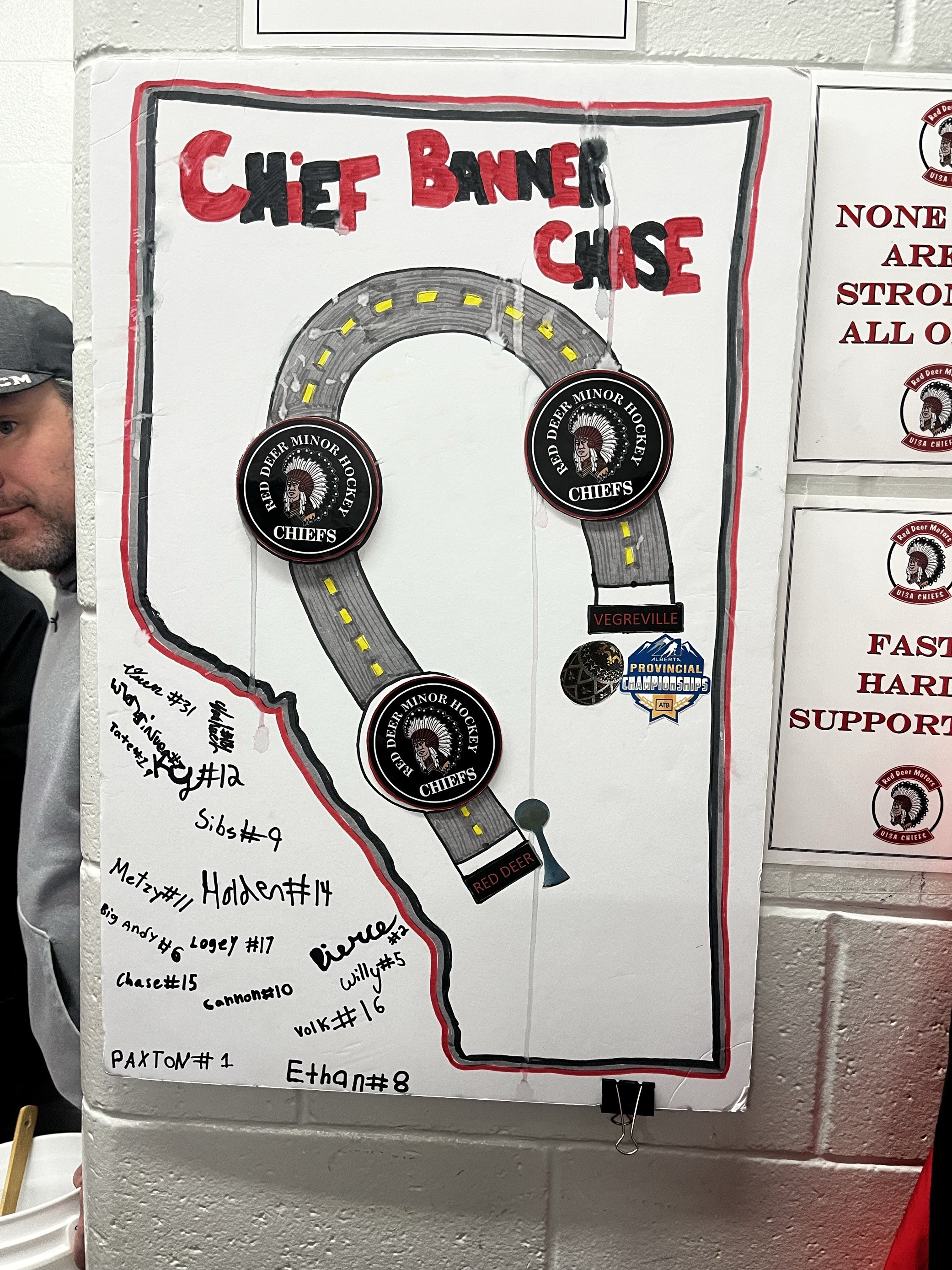
With all this in mind, I wanted my first post to be about some visual aids that I used this past season with the U13A squad that I was fortunate enough to lead in Red Deer. We had a great season, won our division, won our league & then came a goal short in a provincial semi-final. I am a big believer that as a coach & leader it's our job to motivate & inspire those that we lead. In the playoffs, when things always tighten up & the margins squeeze, any little bit of extra juice or motivation can make the difference. One way our staff leaned into this inspirational leaderhsip was through our "Chief Banner Chase" & our "Last Hunt" boards. Every bullseye marked a signifcant playoff accomplishment for us. In the playoffs it was with each series win, we used landmarks familiar to Red Deer & Vegreville- where the provincial tournament was held. The room was absolutely electric when we achieved these accomplishments as a group & we were able to put a logo on the board over a bullseye! I truly think this brought our team together & reinforced our shared goal. At the provincial tournament we had a similar board, with 3 bullseye's. After we clinched a semi-final berth we asked our 2 stick boys that had been assigned to help us out, to have the honors of putting a logo on the board- it was an unforgettable moment for our group. In the end we fell a goal short & 2 logo's never made the board- that is sports- but it's truly amazing how little visuals like this can take on a life of their own & how much juice and energy they can provide over a long & tough playoff run!
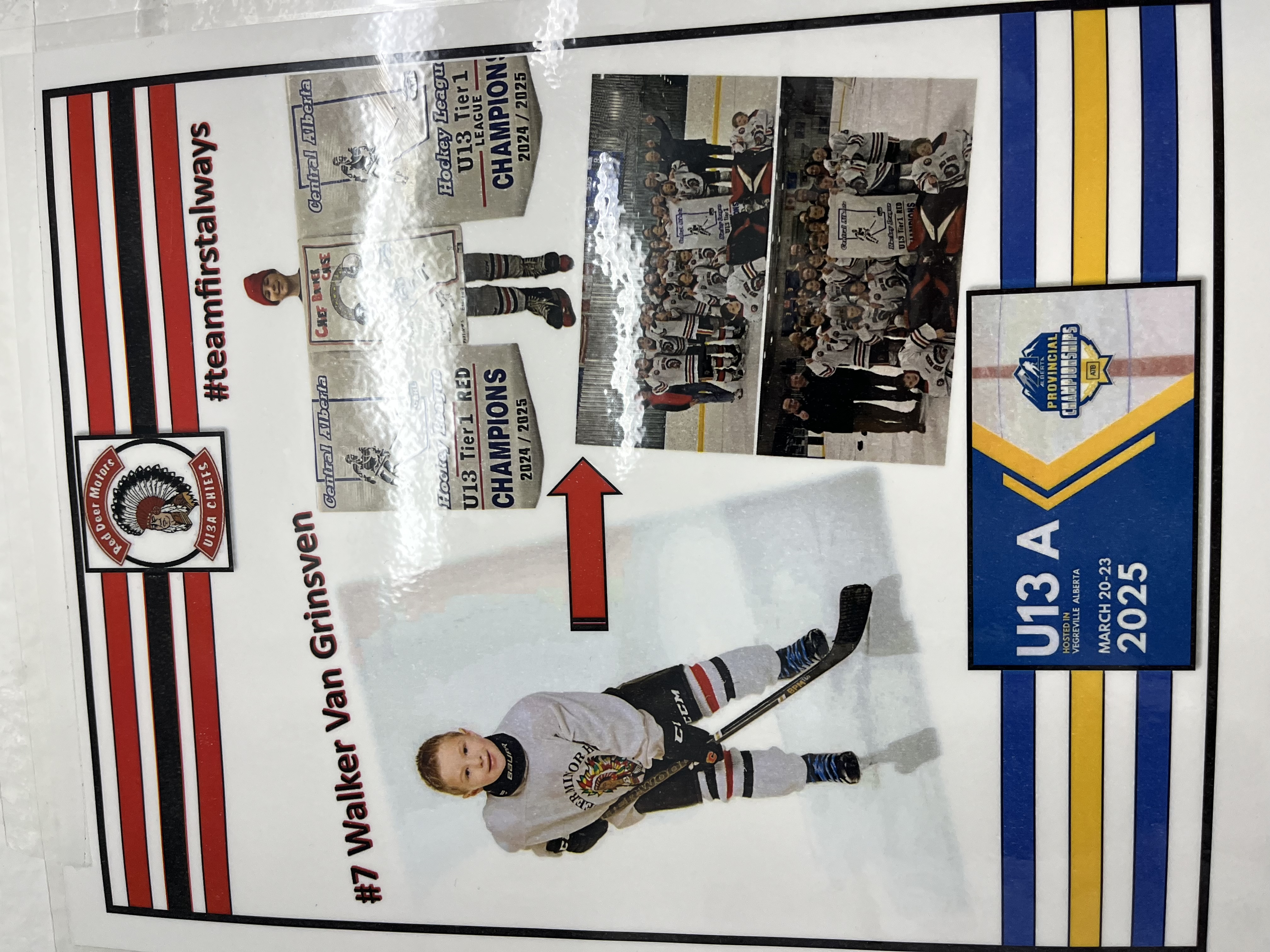
As we headed into the provincial tournament, after winning the league championship the coaching staff talked about re-focusing the group & how we could provide a little bit of extra motivation to hopefully get us over the top, while also highlighting how amazing it is to compete for a provincial championship. We landed on creating a custom designed print for every player that would hang above their stall in Vegreville to highlight how far each player has come. We asked the parent group to provide theirt favorite picture of their player when they first started out. At our meeting before the provincial torunament we talked about how pumped their 5 & 6 year old self would be if they knew that in 5 or 6 years time all their hard work & effort had resulted in them being called league champions & then getting a chance to represent their hometown at a provincial championship! We then handed out the custom prints & you could feel the pride and self satifsfaction in the room. Seeing these hanging above their stall before our first Provincial Tournament game was pretty amazing & hopefully a great keepsake for them to remember the experience!
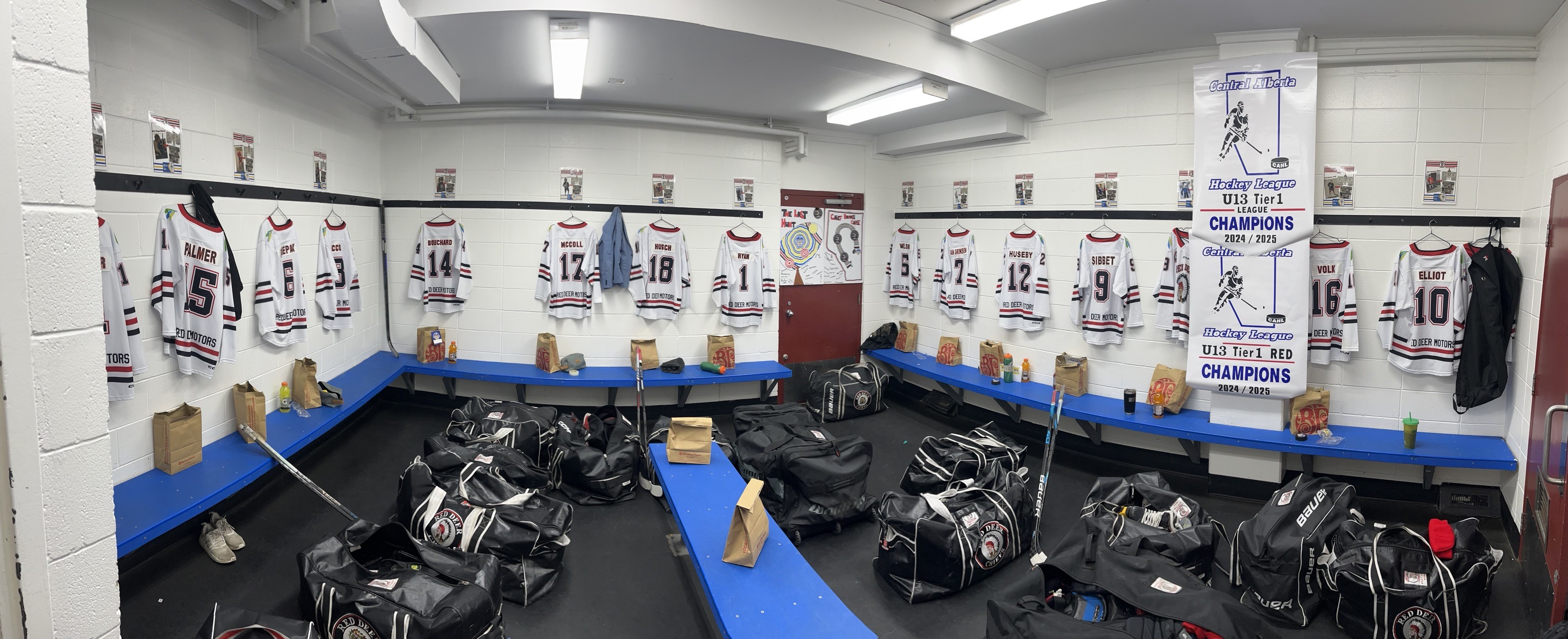
Hopefully this post inspires some other coaches! It is by no means groundbreaking stuff, but it was something that was custom to our group & I think it captured the spirit and attention the 11 & 12 year old players that we were trusted to lead! It resulted in some unforgettable moments & quite honestly it made the victories togethers that much sweeter & also the season ending defeat that much tougher- but at the end of the day, that is what makes sports & hockey so unbelievable! If you made it this far, thanks for reading!
 00:00:00
Why Chaos Creates Smarter Athletes
Part 1: Why Chaos Creates Smarter Athletes
Part 1 of 5 in the “Teaching Through Chaos” Series
By Coach Barry Jones. IIHF Level 3. USA Hockey Level 3.
If it looks messy… You might be doing it right.
Picture this:
Pucks flying. Players bumping. Decisions are being made faster than you can say “wheel it.”
No cones.
No lines.
No perfectly executed reps.
Just organised chaos.
And that’s where the magic happens.
Because in sport, real sport, chaos isn’t the enemy. It’s the environment. And it’s time we stopped trying to coach it out of our sessions.
The Game Isn’t Clean. So, Why Are Our Practices?
For decades, we’ve coached like the game is something we can segment, isolate, and teach piece by piece.
Skating drills. Passing drills. Shooting drills.
Then a scrimmage at the end. Like glue to hold it all together.
But here’s the problem.
The game doesn’t work that way.
It’s dynamic. Messy. Unscripted.
And if you’re only training players in isolation, you’re teaching them for a version of the game that doesn’t exist.
Enter Ecological Dynamics, coaching for the Real World.
Ecological dynamics isn’t a buzzword. It’s a lens.
It combines motor learning, psychology, and systems science to help us understand one simple truth:
Athletes don’t just learn skills. They learn in environments.
Rather than teaching movement patterns, we create environments where skills emerge through interaction. We shape the learning space, not just the drill.
This isn’t soft science. It’s how top coaches develop adaptable athletes, from grassroots to high performance. And it’s the approach I bring into every rink session, whether I’m running early morning skill work at NRG or helping a state team prepare for nationals.
The Role Shift – From Drill Sergeant to Designer
The coach of the past controlled everything.
• Start on this whistle
• Move to that cone
• Execute this technique
The coach of the future?
They design environments that invite the athlete to problem-solve.
In an ecological approach, the coach becomes less of a director and more of a designer. Less about prescribing, more about provoking.
Instead of saying “do it like this,” we ask, “Can you find a better way?”
Instead of chasing perfect reps, we chase better decisions.
Why Chaos Works
Here’s the irony.
When you stop trying to control the chaos, athletes get more intelligent.
• They read plays faster
• They adapt to pressure
• They learn to make decisions, not just movements
And they do it through the mess. Not by avoiding it.
This kind of learning is what I call sticky. It sticks because it’s earned through trial, error, and adjustment. Through failing forward. Through live reps inside a designed game environment.
What’s Coming Next in the Series
This is just the start.
In the next four blogs, we’ll dig deeper into:
• How perception–action coupling shapes skill
• Why sticky learning beats short-term memory
• How to design small area games for decision-making
• Real coaching stories from para, neurodiverse, and women’s athletes
• And how to create inclusive, athlete-centred chaos that builds smarter players across all levels
Final Thought
If your session looks perfect from the outside…
If every rep is clean…
If no one is struggling…
Ask yourself:
Are they learning the game? Or just learning the drill?
Let’s stop polishing practices.
Let’s start teaching through chaos.
 00:00:00
Part 1: The Periodisation Paradox - Why Planning Still Matters in a Nonlinear World - “Planning the Unplannable” Series: Coaching Women’s High-Performance Hockey Through the Chaos
Part 1: The Periodisation Paradox - Why Planning Still Matters in a Nonlinear World
By Coach Barry Jones | IIHF Level 3 | USA Hockey Level 3
Part 1 of 5 - From the “Planning the Unplannable” Series: Coaching Women’s High-Performance Hockey Through the Chaos
What’s the Periodisation Paradox?
You need to plan a season… for a game that refuses to follow a script.
In a high-performance sport like women’s ice hockey, everything screams structure:
- Calendars
- Game plans
- Development blocks
- Performance benchmarks
But learning? Learning doesn’t care about your schedule.
Players don’t grow in straight lines.
They loop, regress, adapt, leap forward, stall out… and then surprise you.
And this is where coaches hit the wall:
We’re told to plan everything, but also to coach non-linearly, letting athletes solve problems, and to respect individual timelines.
So how do we do both?
Linear vs Nonlinear: What’s the Difference?
Traditional (linear) periodisation works like this:
- Week 1: Skating technique
- Week 2: Passing
- Week 3: Breakouts
- Week 4: Forechecking
One skill, one week. Tidy. Predictable.
But this model assumes all athletes:
- Learn at the same rate
- Need the same thing at the same time
- Perform best when drilled in isolation
That’s not how the game works, and not how players learn in context.
What Nonlinear Coaching Means
Nonlinear coaching (especially in an ecological framework) recognises:
- Learning is messy, emergent, and self-organised
- Players develop through problem-solving, not repetition
- The environment shapes skills, tactics, and habits
So instead of teaching the movement, you shape the challenge.
So, What’s the Answer to the Paradox?
We stop planning skills. We start planning problems.
This is what I call Thematic Periodisation:
- You still structure your season.
- But instead of “passing week” or “D-zone week” ...
- You build 2–3 week problem blocks (e.g., “Escape Pressure,” “Stretch the Ice,” “Protect the Middle”)
Each theme:
- Embeds multiple principles of play
- Creates affordance-rich environments
- Let’s athletes discover the right solutions, at their own pace
Why This Matters in Women’s High-Performance Hockey
In my experience coaching women’s state and national-level athletes, structure is important, but not at the expense of autonomy or connection.
Female athletes thrive when:
- The “why” behind the work is clear
- Emotional safety allows for failure and exploration
- Learning environments invite, not prescribe, decisions
The Periodisation Paradox isn’t just a coaching strategy; it’s a leadership one.
It honours the athlete as a learner, not a product.
Coach’s Corner: The Plan That Doesn’t Break
In my first three-week block with a women's team, I won't script drills.
I'll script problems to solve.
Theme: Breaking Pressure
Embedded Principles: Support the puck, Delay under pressure
Design: 2v2 corner escape games with variable resets
Cue: “Scan early. Escape late. Trust your support.”
What happened?
Different players found different solutions.
And by week three, without a single line drill, our breakout speed improved, and our decision-making doubled.
That’s the paradox in action. It works if you let it.
Language That Sticks
- “We plan the problem, not the pattern.”
- “This isn’t a drill, it’s a decision.”
- “Chaos is the classroom. Culture is the glue.”
Reflective Questions for Coaches
1. Where in your season do you plan outcomes rather than opportunities?
2. Are your athletes solving problems or performing for you?
3. Can your plan flex without falling apart?
Next in the Series
➡️ Part 2: Principles Over Plays, Building a Game Model Around What Transfers
“Planning the Unplannable” Series: Coaching Women’s High-Performance Hockey Through the Chaos
Part 1: The Periodisation Paradox - Why Planning Still Matters in a Nonlinear World
Part 2: Principles Over Plays - Building a Game Model Around What Transfers
Part 3: Reps That Stick - Habit Building Through Ecological Design
Part 4: Culture is the Constraint - Coaching the Human Before the Skill
Part 5: Designing the Season - Themes, Adjustments, and the Coaching Compass
 00:00:00
Hockey Factories: HC Slovan
Connections happen everywhere in hockey.
It’s a global game, but one of the smallest of small worlds when you start playing your own version of Six Degrees of Kevin Bacon.
A changeover in ownership at HC Slovan Bratislava has brought in new minds, fresh faces and, like all shifts, a new philosophy.
Not easy to do with a club that has a history dating back to the early 1920s and especially with a club that won the Slovak Extraliga Championship as recently as 2022.
“HC Slovan has such a long history, there have been so many famous players that have come through,” explains Michael Harsanyi, Slovan’s U12 Head Coach and U14 Assistant Coach. “Our club just passed its 100th anniversary, so it has a ton of tradition. I feel like the players have some of the best conditions in Slovakia to get better as a player and as a person. This is it.”
Harsanyi would know, he played at HC Slovan from age 7 until he was 20-years-old.
His entire childhood career was with the club and now he’s behind the bench instead of sitting on it, helping develop the next era of players.
“When I started in the club, there were a lot of kids because it’s the biggest club in Bratislava, but I think there wasn’t so much focus on the younger kids,” Harsanyi admits. “The focus was at U16 and U18 and higher but now it’s getting better and better that way.”
Part of the emphasis the new ownership group has brought in centres around the core of what Hockey Factories is all about – development.
And not just on the ice.
“We’ve started to set up that vision for the club and we try to get all the coaches to have that same vision,” Harsanyi details. “We said we want to focus on a holistic approach with younger players – we don’t look at them as hockey players, we look at them as kids.”
Peter Kudelka (below) was called upon to be the CEO of the club in 2024, under the new regime. He played for HC Slovan and coached with the Slovakian women’s national teams.
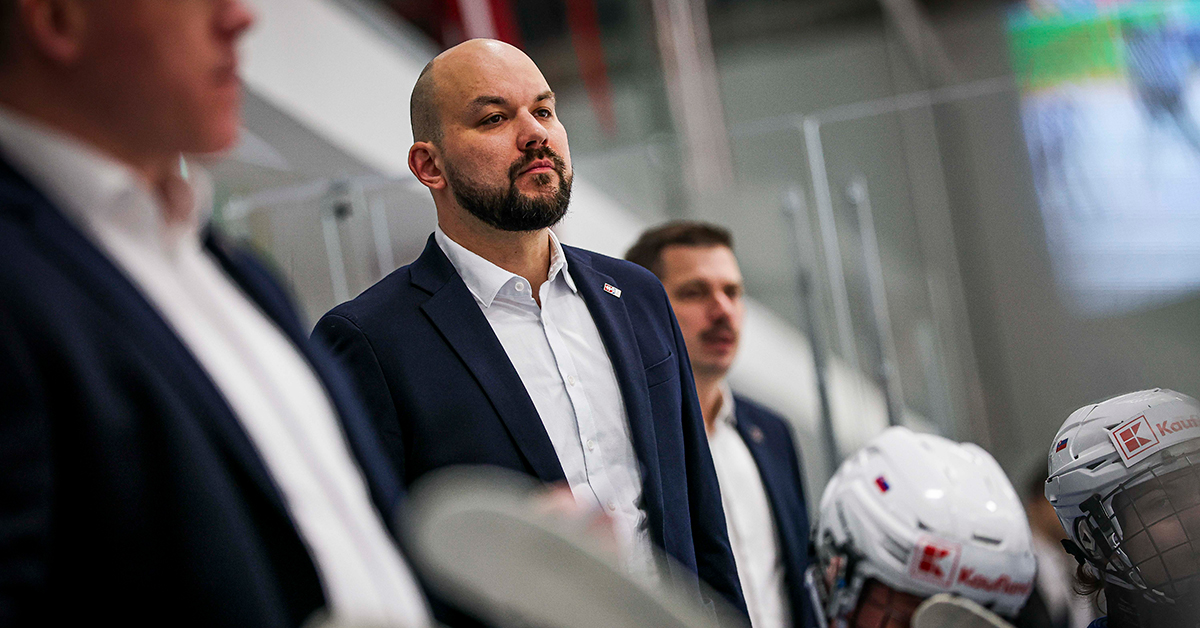
As Kudelka was looking to fill out his staff, he went through his rolodex and by connecting his past with his future, found the two other sides of his square of leadership to bring the club to new heights.
================================
Kudelka first connected with Lukas Havlicek when they were 14-years-old at a regional camp in Slovakia.
They had played for different teams and were rivals on the ice, Kudelka says, but had a great relationship.
Further down their paths, Havlicek was organizing tournaments for youth teams and Kudelka brought him on as a coach for the club he managed.
That’s where they got on the same page of how to develop young people.
When the opportunity came for Kudelka to step into his current role with Slovan Bratislava and hire a manager, Havlicek was at the top of his list.
“Our first meeting was more of Lukas not believing it was real, but the second meeting we met with the board, and it was a reality and one that we are very excited he wanted to take on,” Kudelka shares. “After two short meetings he accepted my offer and here we are.”
“With Peter and I knowing each other for more than 20 years we actually developed into similar people professionally,” Havlicek says. “We want to produce a high quality, professional club with honesty and responsibility and we want to do things 100%. We took things from our other experiences and the people we’ve met and want to put that into our club.”
Havlicek has a storied past in the game as well.
After wrapping up his playing career, he was organizing youth tournaments and got into the agency world, scouting for HC Ocelair Trinec before moving on to the NHL to be part of the Pittsburgh Penguins for two seasons.
“As a player, I always thought too much and sometimes that was a bad idea,” Havlicek (below) jokes. “I was doing some coaching when I finished playing, but I always saw myself managing people and being part of the decision-making process. I was working with a tournament company scouting, arranging schedules and flights and naturally that went to my next step of representing these players. With the Penguins, I thought I could show that I was able to identify good players at young ages and so combining all those things together, what else could you do but be a GM?”
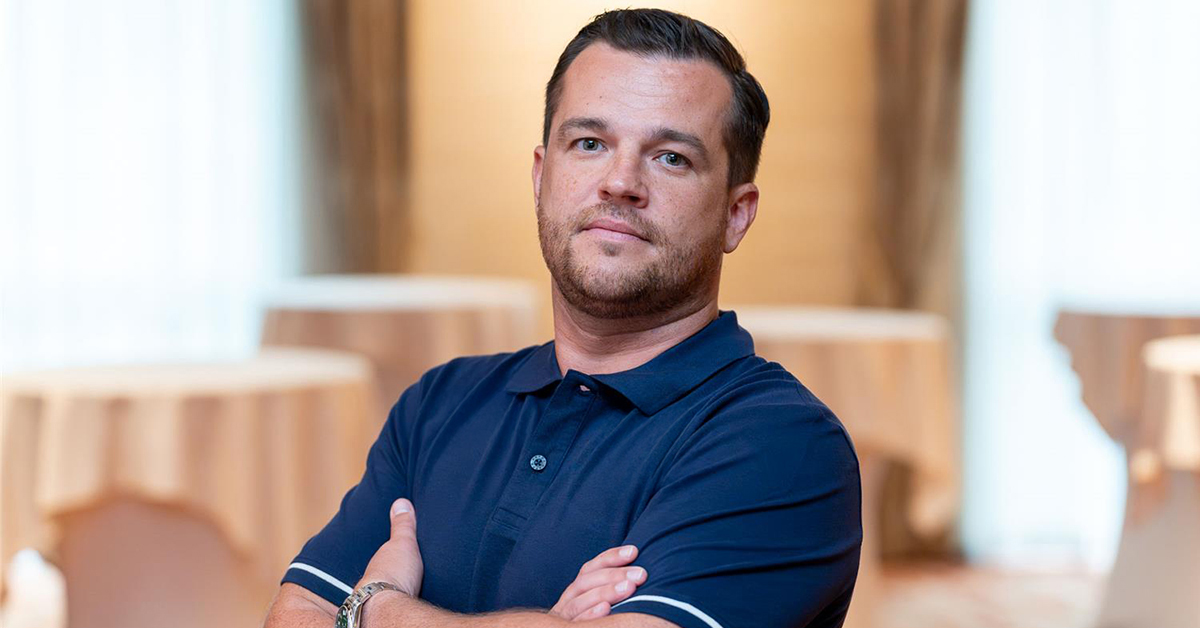
The two got to work.
“As with every job you have expectations and then you learn from actually doing it,” Havlicek outlines. “I was hoping we would find the club in a different shape, as a whole, but we had more work than we thought. The process started from there.”
One of Havlicek’s principal skills is communication. He talked glowingly about some of the opportunities he’s had to meet people, pick their brains and share and support each other.
It’s not the classic Slovakian way, he says.
The other principal Kudelka and Havlicek share is holistic development.
“I realized long term athlete development through a holistic approach was the best way,” Kudelka states. “We know that we are not just developing a player, we are developing a human being. We know 95% of the players in our program will never play professional hockey, but we know we can develop wonderful people for our community in Slovakia.”
Kudelka admits it’s not just about practice, practice, practice. His new philosophy has always been to develop leadership and life skills beyond hockey.
“When they come through our program, we hope to get them tools so they can be successful in business, studies and family life and they will be the best people in our society.”
There may be no one more connected to those impressionable years than Harsanyi.
“At this age group, we focus on the social side and the mental side,” he adds. “Hockey, obviously, is a big part of it, but now it’s just as important to work with the kids on them as people off the ice. We want to teach them a balanced system – offense and defence – so they can all work together and show them that hockey is a team sport so everyone has a role to play.”
There is a school grade system that is used in Slovakia – the U12s and U14s are explained more as Grade 6 and Grade 8s, comparable by their age.
Seeing a mix of those two age groups, Harsanyi has to take different approaches with each and manage that within the coaches throughout the club.
“With the younger kids we want to make sure they feel like we are one of them, not like I’m the coach and you are the player,” Harsanyi includes. “We want them to be honest with us and have fun with us and then the older kids we do talk more in depth with them about school and life and anything they have going on outside of hockey.”
His mission is for his players to get to U18 and U20 and be successful, but admits at his level they are looking for good habits and execution.
“We want our players to want to win and be competitive, but in the younger groups it’s nowhere near the most important thing.”
During that handoff, players will fall under the leadership of Michal Macho, HC Slovan’s U20 coach and previously Slovakia’s U16 national team head coach.
His main role, as he says, involves the preparation of and development of young players.
“My task is to guide the training process that makes the transition to pro hockey as smooth and successful as possible,” Macho continues. “We are the last age group that is transferring players to the men’s leagues, so we have a great responsibility to have them ready for that moment.”
Macho’s hockey career got cut short with a knee injury, so he joined a friend who was coaching Grade 6 at the time and has been coaching ever since.
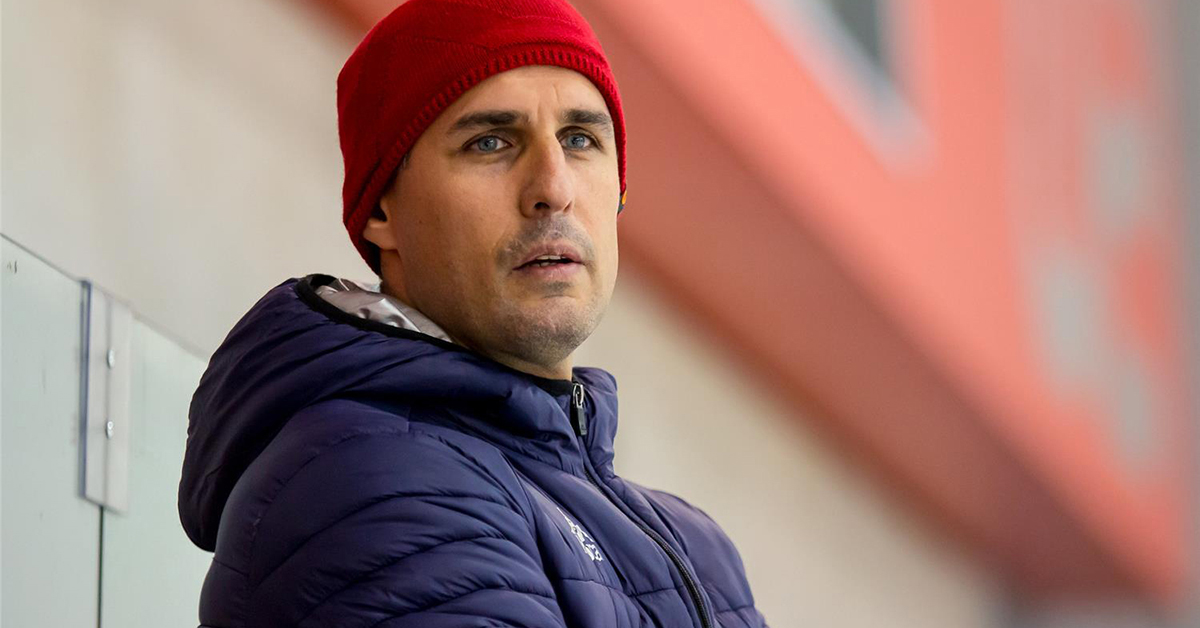
“It’s been more than 10 years now and in my coaching career, I’ve got through almost all levels,” Macho (above) says. “Every two years it seems I’ve been moving up and now I’m coaching U20. Every age group will give you something to learn as a coach about the game and the players in that time of their lives. I’d love to try to coach a men’s team one year but right now, I’m thrilled where I am.”
Because of his age group and connection with the men’s team, Macho is regularly sharing information with those coaches, which has made it easy for the club and the coaches to align.
To make the holistic development work within the club, as Havlicek explains, it’s not just about player development, the coaches have to develop and communicate as one.
“Our coach evaluation is about learning from mistakes, what was the reaction at certain times and what could we do better,” Havlicek states. “We sit and talk as a group every week about our process and our communication and if we figure that we’ve made changes, we have done the best we can do, then we’ve done a good job.”
“Now that it’s happening, it’s been great to see our coaches get connected,” Harsanyi echoes. “It’s so important for all our coaches to go the same way so we can teach the same principles because that will only help the players as they go from category to category. When the coaches get new players next season, it makes it easier for them too to have the same principles from the year before.”
That communication is not just within the club’s coaches but also with their skills staff, including Peter Bohunicky, a former presenter at The Coaches Site Live.
After Havlicek was brought in, he called upon Bohunicky to help with the player development side of the club.
It was an easy yes.
“The vision is exactly the same, Lukas wants to develop and build something,” Bohunicky explains. “He has great experience from high level hockey, and this is what I’ve done for 20 years, I love to develop players. That’s why I said yes right away. I know Lukas, I know he’s a professional and the vision of his development. We are trying to build something.”
Bohunicky (below) sees his role to make the players better, to accomplish their dreams and to get them to the next level.
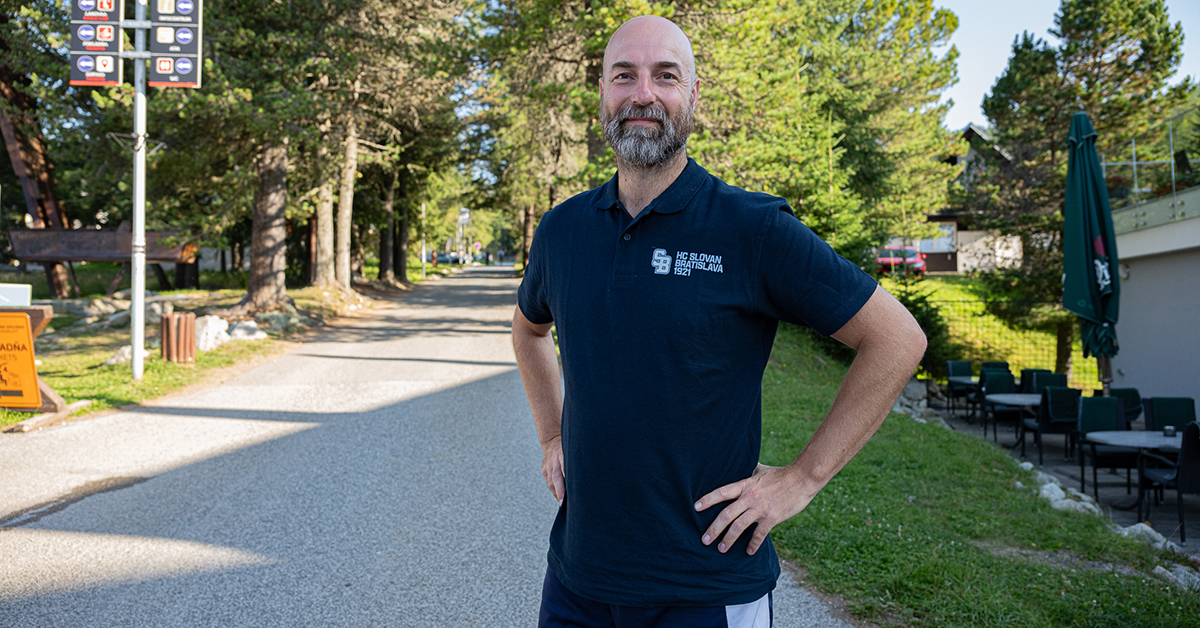
To grow them from one role to a better role, he says.
“My hands are free, Lukas knows me and trusts in me and what I do,” Bohunicky includes. “I always say the NHL is the best league in the world and it is my dream to get the players there. If something less is going to happen, that’s still great. I don’t have low dreams, I have the highest dreams possible for my players.”
Having experience working with players from all levels, including members of the Florida Panthers and Anaheim Ducks, Bohunicky sees a comparison of HC Slovan to organizations at the NHL level.
“Everything is so professional. It seems like every person is there for the right reasons and doing the right thing within the club. I have no problem saying this is the top-class club in Europe, for sure.”
“It’s important for me that I have people around me that believe in the process of developing all the players in our club,” Kudelka wraps up. “One of the biggest parts of my vision when I started with Slovan is around educating the coaches. I know that people who have experience, who have learned from others, who carry evidence-based knowledge are the types of coaches that have the best success.”
It wasn’t always that way for Kudelka.
In fact, it was the complete opposite.
He found his way at a sports school in Finland, one of the most prestigious in the world.
While he was there, he also found someone who would be at the forefront of his vision of coach education.
================================
On their website, The Finnish Sports Institute explains they offer vocational training and liberal education in the field of sports in Vierumaki.
They offer degrees in things like physical education, sports facilities and specific courses for coaching.
One hour outside of Helsinki, Vierumaki is the home of holistic development.
It’s where Kudelka attended his studies and got his greatest wakeup call.
“It’s funny, before 2020 I was a different coach,” he admits. “I was yelling, I was being dominant, I was trying to act like a dictator. After that, I met a former Jokerit coach and he was my mentor. He showed me a different approach to being a coach. I can say I learned the majority of this kind of athlete-centered coaching in Finland.”
This athlete centred coaching is now the North Star of HC Slovan, but at the time, Kudelka had a lot of learning to do.
“It was brutal,” he comments. “I traveled to Finland with high self confidence and I thought I knew everything and was going to get a little bit of information from a different country. After two months, I realized I knew nothing. So, I started reading a lot, talking with my teachers and more experienced coaches and I changed. In the end, it helped me to be successful in the high performance environment in Slovakia and the youth national level as well.”
One of his classmates, Ruben Rampazzo (below), had a fairly similar experience.
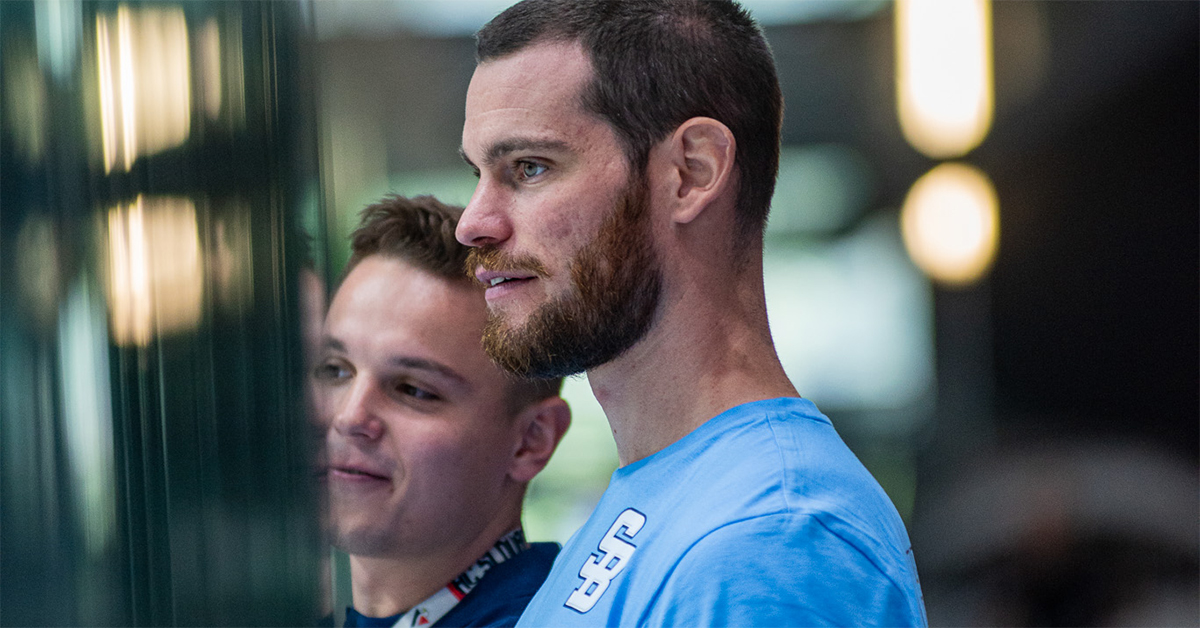
“Vierumaki had a big impact on me,” he admits. “It was a small life crisis to realize everything you’ve experienced is not really valid in this new role in sport, which has been frustrating, but the coaches and teachers give you confidence and content that helps reshape your philosophy for the better.”
“The first year especially, you are flushed with information until October and November until you finally realize ‘ok, I don’t know anything’.”
Rampazzo’s thesis, which he was kind enough to share with me, entitled “Culture & Coaching” focuses on how Swedish coaches coaching in Switzerland navigate the cultural landscape.
It is a fascinating read.
The idea of it started with his own upbringing.
He was born in the bilingual area of Balzano, Italy, his mother is from Switzerland, she spoke Swiss/German to him, and his father is Italian and he spoke Italian to him. His friends, as well, spoke German dialect so he was surrounded by different cultures, ideals and norms from Day 1.
As preparations for this coming year started, Kudelka knew to properly educate his coaches, he had to bring Rampazzo on board.
“He is a very important person for me and what he’s doing for coaches is amazing,” Kudelka compliments Rampazzo regularly during our call. “We are educating our coaches as much as we can. Every two weeks we have sessions that are mandatory for our coaches. We are pushing our coaches to be better. We can help create great human beings and then in the end we are able to prepare them to play at an elite level.”
Rampazzo says he jumped at the opportunity to join a club like HC Slovan with such a rich history, but also the chance to come in with a bit of a blank page.
“My goal is to refine the coaching process,” he claims. “So, how our coaches are working with players from 12-years-old and up, what are they doing with them and how we will target player development. We will do some theories with the coaches, some articles and then I’ll be present at practices, and they will have assignments after the presentations, it’s a short study program for the coaches.”
Having walked through the door in May knowing only Kudelka, Rampazzo expects to start very general, but once he has a better understanding of what coach needs what, he will get into more specific and individual work in year two.
“My personal goal is to increase the professional competence of the coaches and give them a taste that they feel like they know how to develop themselves,” Rampazzo sets out. “Being able to identify their strengths and weaknesses and obstacles they face to help them make their next step. When they have that, I know they will work very hard to find the truth with evidence-based thinking about the game, about nutrition, anything, finding out what is true.”
This year, Rampazzo clarifies, it will be to optimize the way coaches talk to their players, the words they use and how to bring their vision alive.
“If there’s the same use of language but also what we do, how we train, similar session structure, similar game play – all of that helps the player but it also helps the coach evaluate and adapt,” he continues. “Our coaches will need to experiment, educate themselves, reflect and then we will all get better.”
Through now 14 Hockey Factories articles, I’m not sure I’ve come across a club with the dedication in coach education like HC Slovan.
Rampazzo also speaks about being in Finland and hearing the same conversation with coaches that they want their players to compete more, but his mission is to include the coaches in finding out how they want to get there.
“What I see with coaches that didn’t get to go through a study program is they do things because that’s how things have always been done or how they feel most comfortable, but I think the reflection part with themselves has become more important,” Rampazzo explains.
“It’s not just about the tactics and technique anymore. You have to be able to connect with people, how you know yourself, how you get your message through and how you think about what you’re doing.”
================================
It's one thing being hired as a manager for an NHL team, where you have to concern yourself with one group, whereas as a manager of a club like Slovan, you have to reach every corner, from the introduction of the game to the first team.
Kudelka and Havlicek had the vision and had brought in some pieces around it; it was now about bringing it to life.
“When we first came in, we looked at the club and players and you are somewhat handcuffed because of contracts and money,” Havlicek explains. “But then you can look at the staff itself, find the people you believe in, bring in people you think will take you to the next level and we found unique people who fulfilled our philosophy.”
There were some changes made with the youth coaches right away. There was some hesitation with the pro team, but then a decision was made to move on from their head coach at the time.
To fill that role, they went looking for someone who had the same passion, same vision and the communication skills to make it all happen.
They found that in Brad Tapper. (below)
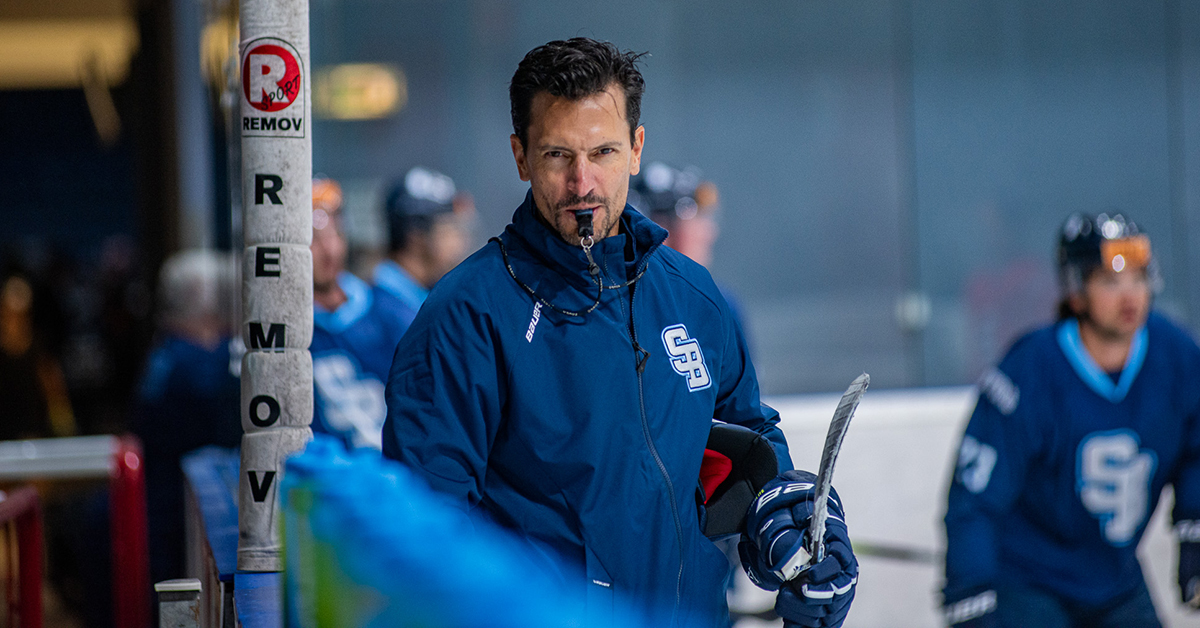
“When I started talking to Brad and his thinking of finding ways to be better every day, that was the start,” Havlicek recalls. “The passion and communication he has, I think, will bring him great success here.”
Kudelka, in no surprise, was in lockstep with Havlicek’s thinking.
“I had a video call with Brad during the international break in February and I was very impressed,” he remembers. “At the end of the call, I told him if I wasn’t the CEO, I’d want to be his assistant coach because we shared 95% of the same beliefs. It was crucial for me to find the right guy, who understands he is a piece of the whole organization.”
Tapper had been released from ERC Ingolstadt in Germany where he had coached for three years working with Mark French, who is someone he took a lot from.
He got his start coaching in the Ontario Junior Hockey League with the North York Rangers in 2009 before moving to posts with the Florida Everblades, Orlando Solar Bears and Adirondack Thunder in the ECHL, Chicago Wolves, Rochester Americans and Grand Rapids Griffins in the AHL and Okanagan Hockey Academy in Ontario before going to Germany to coach Iserlohn.
“From Day 1, Lukas has been amazing to work with,” Tapper boasts. “I’m a big people person and I love talking to people. The lure for me is that everyone has been amazing to work with. I don’t know how to say much in Slovakian, but people are willing to change their language for me, it’s been awesome.”
Tapper presents himself as a player’s coach with the incredible line of wanting to “make people go from a ‘B’ to an ‘A’. He fits the mould perfectly.
“I think players coming in will hear the passion in my voice,” Tapper hopes, which is evident. “I’m very sincere about this job and very sincere about this club. This club has a very strong connection with the community. Everyone is going to be valued in every role.”
He’s a player’s coach for certain, with expectations that are non-negotiable.
“I’m not big on trying to get players to compete. At this level, that’s their job, that’s how they put food on the table. They should be ready to go,” he demands. “I should not have to put the carrot in front of the player’s nose. It should be in front of them already. The players should understand that work ethic is non-negotiable for me. Every rep is important.”
Tapper is at the top of a very high coaching totem pole within HC Slovan and coaches like Macho are leaning on him already.
“My first meeting with Brad was great. He’s a great person who loves to teach and give information that he has,” Macho declares. “He fits the philosophy of HC Slovan when it comes to developing the players, but at the same time developing the coaches too. It’s a great place for developing both.”
Bohunicky is no different.
“When Brad came, which is unbelievable, all the mentalities and goals and philosophies were made for each other. It’s amazing how all the pieces of the puzzle work together,” he details excitedly. “When I talk to Brad about hockey and development and what we like in players and what we want for them to be successful, we match all the time. That’s why I’m even more pumped up to be part of the organization.”
Talking about the relationship between Tapper, Havlicek and himself, Kudelka does not mince words, explaining how crucial it is for the success of the entire club.
“Brad called it vertical integration. We talked about how even though he’s with the first team, he cares about all the kids in the entire club,” Kudelka shares. “He knows it’s his job to know about all the important players in our organization. We talk about the same vision, the same language and we talk about how important that is all the way through the club.”
Tapper laughs when I ask how he approaches his new role at the highest level’
“I’ve heard the word pressure so many times. I don’t feel it, I’m not going to feel it,” he states. “I have a sports mentor who helps me in the way of talking and going through things. You look like Brooks Koepka and he’s on the 18th green trying to win a Major and he has it in his mind that it’s a practice round. That’s where I want to be.”
================================
In anything, having the vision is one thing and putting it into action is another.
With Kudelka, Havlicek, Tapper and Rampazzo, integrating the coaches into their own development, along with the players, is the beginning and end.
“What I want from coaches is for everything to move forward,” Havlicek says. “If the coach is the one who leaves the locker room first, there’s something wrong. We want them to be spending time with video, or YouTube or The Coaches Site or get new points of view to get new ideas in their head.”
Kudelka agrees.
“My expectation of our coaches is that they want to be better, day-by-day and session-by-session,” he repeats. “I want them to be motivated to be better as coaches and as human beings. It takes time, of course, but I believe if we surround ourselves with those people, we can be one of the best programs in Europe.”
Macho has seen the work of the executives firsthand and describes his experience so far like working with family.
“I think that the best part of being with HC Slovan is the sharing and caring for each other, it’s like putting everything we have into developing players,” he points out. “The management provides excellent conditions to all of us. They give us what we need to put our philosophy into practice and it’s our job to do everything we can for our players, everyone who walks in the door, with the goal to develop the person and the player.”
Because after all, it’s always about the players.
As Havlicek mentions a couple times in our conversation, there are more important things than systems and where the right winger will end up, saying the reason why he enjoys the World Juniors so much is because it features young players playing with creativity and doing it at full speed, more organically, like youth hockey.
“Combining that pro team with the youth players was important to us, having our pro players go to different age groups and interact with the kids,” Havlicek enlightens. “In certain groups, where you’re having fun and building your love of sports, you get to meet your hero and it’s a dream come true. With the older guys, you want to be as fast as them, stronger than them and the junior kids, it’s being specific about ‘how can I be better?’ to get to see those players up close and know that’s what it takes to be a pro.”
He calls it a slow introduction into the elite world with the hopes that a kid that plays there until they are 12 comes back and ends up a 10-year season ticket holder because they loved their time with the club.
As importantly, Havlicek talks about wanting those same people to have a great job because they were taught how to be on time, how to work with a group, how to support each other and be polite and responsible.
On the ice, Tapper sees the connection between how a player plays, where they play and how you communicate with them as a reflection of the person they are off the ice.
“Role clarity is important. The Slovan Way is a way of life,” he comments. “We are going to teach these guys to do what’s right all the time, it can be taught. Little things like holding the door for an older person or a younger person will help us with the behaviours on the ice as well. There are no shortcuts, there are no cutting corners, we do everything the right way.”
The mission of the new ownership and management at HC Slovan, a club with nine Slovak championships, one Czechoslovak championship and one IIHF Continental Cup, making it one of the most successful hockey clubs in Slovakia is to get away from the idea of ‘we need to win’.
“I want to change the mentality that it is more than winning and we have a tremendous responsibility to pass that into our community,” Havlicek says. “We will be proudly working towards it every day, getting better as a group.”
Alignment is something that has been a common theme in the Hockey Factories series, it’s how the coaches can get the most out of the players.
It’s done through connection, much like the foundation of the new wave at HC Slovan.
Havlicek suggests his relationships have been built on communication and, as a coach, being able to describe what you want, put the players in the role and talk to them, know them and see how you can develop them.
That connection only gets stronger when development of both players and coaches is at the forefront.
“After 4-years-old, kids spend more time at school or in athletics than they do at home,” Havlicek reminds us. “We have a tremendous responsibility to teach them the right things and to teach that, you have to live that yourself.”

 00:00:00
Finding the Balance Between Physicality and Discipline with Alan Letang
Subscribe: Apple Podcasts | Spotify | Linktree
In episode 308 of the Glass and Out Podcast we welcome Alan Letang, Head Coach of the OHL's Sarnia Sting.
Letang is still in the front 9 of his coaching career. When he decided that coaching was his chosen career post retirement, he immersed himself in all facets of the job.
And it’s paid off. After 2.5 seasons as an Assistant Coach in Owen Sound, he was promoted to the role of Head Coach. This would eventually lead him home to Sarnia, where he is getting set to lead the Sting for a 5th season, and one in which the expectations are high.
Internationally, he has represented Canada multiple times, beginning as an Assistant Coach at the 2020 and 2023 World Junior Championships, as the Head Coach of Canada’s entry at the Hlinka Gretzky Cup, and finally as the Head Coach of Team Canada at the 2024 World Junior Championships.
Listen as he shares his philosophy on setting players up for success after a mistake, finding the fine line between physicality and discipline, and how he's approaching the changing landscape of junior hockey.
Video Timestamps:
- 0:00 Focus areas in training camp
- 3:20 Growing from mistakes
- 6:20 Getting a staff on the same page
- 11:50 The fine line of physicality
- 15:45 Layers added throughout a season
- 19:30 Getting drafted by Montreal
- 21:20 How his playing style set him up for coaching
- 25:30 Lessons from being fired
- 27:35 Making players feel safe
- 31:00 COVID season in Owen Sound
- 34:50 Importance of a support system
- 37:45 Playing career in Croatia
- 42:00 Transition from player to coach
- 46:00 Coaching influences
- 51:55 WJ experience with Team Canada
- 56:00 Rebounding from tough loss
- 58:40 Gold medal game
- 1:02:00 Reflecting on handling pressure
- 1:04:15 Getting the Head Coach role
- 1:07:45 Trusting your gut
- 1:11:00 His next evolution in Sarnia
- 1:13:50 Experience at TCS Live 2025
 00:00:00
U13 Practice Plan - First Practice of the Season
Here is the practice plan for the Vancouver Angels U13 A1 team's first practice of the season. As it is the first practice with our team selected, we are working on quick pace using flow drills and small area games/battles, break out basics and D-Zone coverage and practicing our pre-game on ice warm up.
Not all of the descriptions have been updated, so I will drop some info for some of the drills below:
- Here is a great video of the Stick Tag - Warm up - this is a great warm up drill to get the kids moving, working on their edges in a fun environment. Highly recommend this drill!
- Next, we have 3 Greyhound varitations. Players line up on a 4 corners of the blueline and perform different skating and passing patterns. I hope the drill PDF explains those routes appropriately.
- The Slingshot is a great drill to work on quick passing and breakout habits in a small area. One player lines up at the bottom of the circle, another player at the top of the circle. A third player leaves from the blueline, passes to the downlow player, opens up for the pass along the boards before receiving the puck back. The player in motion then makes a quick pass to the player at the top of the circle, who quickly sends it back to the bottom circle player. The player in motion gains speed at the top of the zone before rotating into the slot for a final pass from the down low player.
- Breakout to 3 v 2 sees the players perform 3 breakouts, each time the group breaks out of the zone, they pass the puck back to the coach at center ice, who dumps the puck back in. After the 3rd breakout, the players pass to coach once more, before regrouping in the NZ, receiving the puck back from coach and attacking the 2 D for a 3 vs 3 rush.