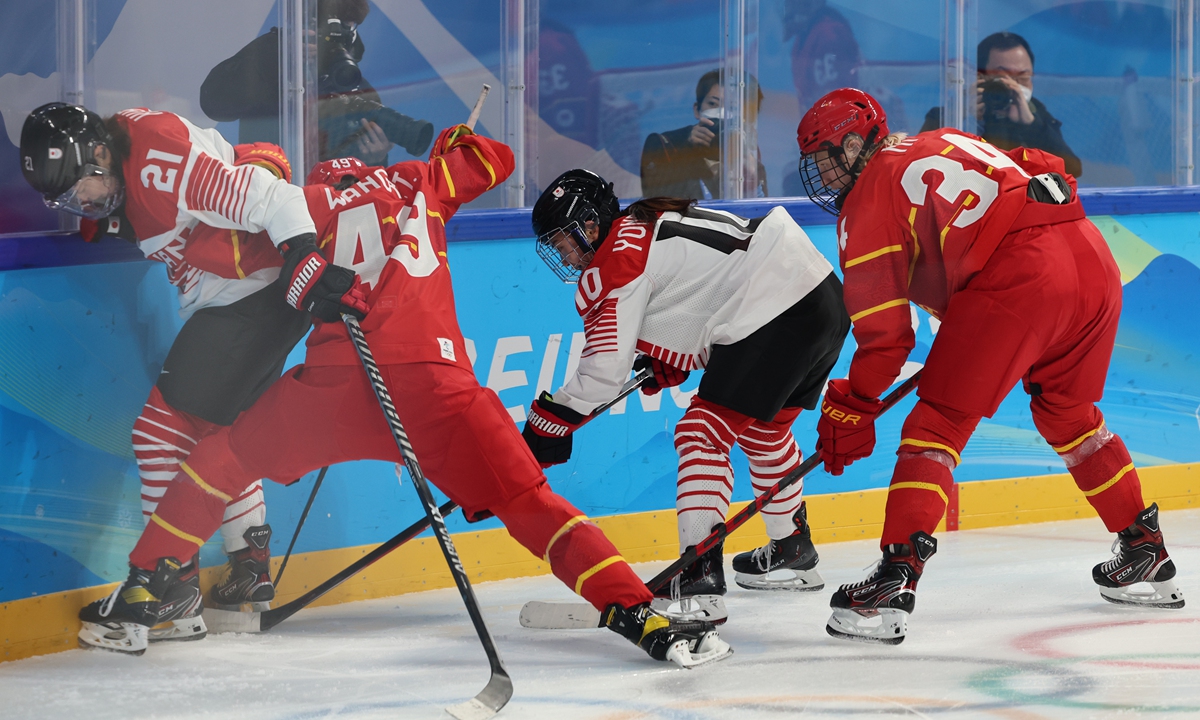
Above the Net
Designing Role Clarity, Transition Habits, and Goalie Awareness Through Constraint
By Coach Barry Jones | IIHF Level 3 High Performance | USA Hockey Level 3 Performance
- Designing Small Area Games Series: Above The Net - Solving F3 Support and develops habits
- Designing Small Area Games Series: 3 Player Outlet Game - Solving Breakout Support and develops puck movement habits
- Designing Small Area Games Series: Endzone Outlet Regroup Game - Solving Breakout Support and Regroup Habits habits
- Designing Small Area Games Series: Circle Net Face off Game - Solving Front of Net Behaviours
- Designing Small Area Games Series: Corner Battle Screen Game - Solving Board Battles and Net Front Screen
- Designing Small Area Games Series: Neutral Zone Circle Game - Solving D-to-D Connection and Cross Ice Activation
- Designing Small Area Games Series: Boards to one timer - Solving Board Clearances to outlets
- Designing Small Area Games Series: Asteroids Battle Game - Solving front of the net Clearances to outlets
- Designing Small Area Games Series: Royal Road Goalie Game - Solving S.A.D for Goalies in the Royal Road
- Designing Small Area Games Series: HIT Zone Assist Game - Solving the support problem
Game Overview
Above the Net is a cross-ice, single-zone game designed to expose how players manage space, responsibility, and transition around the net. Two east–west nets with goalies immediately shift perception away from straight-line offence and toward lateral scanning, timing, and role discipline.
Each side plays with three skaters. At any moment, only two players are allowed to forecheck or attack the net. The third player must remain above the net on their half of the zone, functioning as either a defensive safety or an F3 support option. This constraint introduces a recurring problem, how to apply pressure offensively while maintaining structure above the puck.
After a goal is scored, the scoring team must exit the zone and defend their own net before re-entering to attack. This removes goal chasing and creates immediate offence–defence role switching.
Game Design Intent
This task is not about set plays or systems. It is about role clarity under time pressure.
By limiting how many players can attack, the environment naturally teaches when to commit versus when to stay connected. Spacing above the net becomes functional, not instructed, as players experience how it protects against counter-attacks and supports reloads. Early support emerges as more effective than late effort.
The exit-and-defend rule after scoring adds emotional and perceptual stress. Players must reset, reorganise, and defend before attacking again, mirroring real game transitions where structure often breaks down.
4 Role Ecology in Action
Offence With the Puck
Players attacking the net must solve scoring problems with limited numbers. Deception, puck protection, and purposeful movement emerge naturally as players adapt to pressure rather than relying on volume shooting.
Offence Supporting (F3)
The player above the net learns to read timing rather than hold position. Staying available without collapsing, managing reloads, and linking attack to defence become functional behaviours shaped by the environment.
Defence On the Puck
Defenders are rewarded for patience and body positioning. With limited attackers, stick detail and angling matter more than chasing outcomes or overcommitting.
Defence Away From the Puck
The above-the-net constraint creates constant scanning and communication demands. Defenders learn that protecting space and passing lanes is often more impactful than directly engaging the puck.
Roles are not assigned by the coach. They emerge through interaction with the task.
Goalie Ecology
Goalies are active participants in this environment. East–west nets increase lateral tracking demands and create changing shooting angles from below and across the net. Frequent reset moments after goals require goalies to manage emotional shifts as well as positional ones.
Because teams must exit and defend after scoring, goalies move rapidly between save mode and communication mode. This promotes active puck and player tracking, early net awareness, and verbal leadership during transitions.
Goalies are learning the game, not just stopping pucks.
Why This Task Works
Above the Net creates a game that thinks back. Players are not told where to stand or what decision to make. Instead, the environment rewards awareness over speed, timing over effort, and structure over chaos.
The behaviours that emerge are shaped by interaction with pressure, space, and time, making them robust and transferable. This makes the task a powerful tool for developing hockey sense, role understanding, and repeatable habits that carry into the full game.
Author Bio:
Barry Jones is an IIHF Level 3 High Performance Coach and USA Hockey Level 3 Performance Coach. His work blends ecological dynamics, nonlinear design, and athlete-centred leadership to build adaptive teams that thrive in uncertainty.