At the start of the season, I tell my players (ages 15-17) to “fire their parents as their hockey agents.”
Why? Because young athletes must take ownership of their journey. This is about more than just hockey—it’s about learning to advocate for themselves, build confidence, and develop real-life skills that will serve them far beyond the rink. And most importantly, when they take control, they have more fun playing and develop a deeper love for the game.
Taking Ownership: The First Step to Growth
Too often, young athletes rely on parents to handle tough conversations with coaches, teammates, and even themselves. By removing that safety net, players learn to think critically about their development and take responsibility for their progress. They stop playing for their parents' approval and start playing for their own passion and goals—which makes the game more enjoyable.
One of my players always had her mom ask me about ice time. One day, I told her, “If you want more minutes, come talk to me yourself.” At first, she was nervous. But when she finally sat down and asked me what she needed to work on, we had a great conversation. She realized it wasn’t about favoritism or politics—it was about specific things she could control. A few weeks later, after putting in extra work in practice, she earned a bigger role. That moment changed her confidence—not just in hockey, but in life.
Confidence Comes from Personal Accountability
When players manage their own hockey experience, they:
Initiate conversations with coaches about their role on the team.
Manage their own schedule.
Handle their own gear, game preparation and nutrition.
Learn to embrace feedback directly, rather than filtering it through parents.
Confidence isn’t just about skill—it’s about knowing you are in control of your journey. And when players feel more confident, they play with more freedom and have more fun on the ice.
I had a defenseman who always hesitated on the ice—afraid to make mistakes. One day, I told her, “Stop looking at your dad after every shift. Play the game for yourself.” The next game, she didn’t glance at the stands once. She started jumping into rushes, taking risks, and actually enjoying herself. Afterward, she told me, “That was the most fun I’ve had playing hockey in years.”
Learning to Communicate Like an Adult
Hockey is full of important interpersonal dynamics:
Talking to a coach about ice time.
Handling conflicts with teammates maturely.
Asking for feedback constructively.
If parents always step in, players never develop these critical life skills. By taking ownership, they practice professionalism at a young age—something that will help them in school, jobs, and life.
I had a player, whose dad would constantly email me about power play time. One day, I asked her, “Do you actually want to be on the power play, or is this your dad’s dream?” She hesitated, then admitted, “Honestly, I love the penalty kill way more.” Once her dad backed off, she fully embraced her role, became an elite penalty killer, and—most importantly—had more fun.
Parents Should Be Supporters, Not Managers
Parents naturally want to help, but over-involvement can be counterproductive. Many players resent hockey because they feel it’s controlled by their parents, rather than something they truly own. When players “fire” their parents as agents, parents transition into a healthier role:
Encouraging without interfering.
Being a support system, not a spokesperson.
Celebrating their child’s independence.
Often parents want to get involved in their child’s recruitment to university or college teams. But when you talk with these coaches, the message is clear: If you want to play at the next level, you have to show you can advocate for yourself.
Coaches and scouts want to deal with mature, confident players—not parents.
Players develop a stronger emotional connection to the game when they feel like it’s theirs, not something their parents are managing for them.
Long-Term Benefits: Hockey as a Training Ground for Life
A player who learns to speak up for themselves in hockey will be more comfortable doing so:
In college (negotiating with professors, handling team responsibilities).
In the workplace (advocating for promotions, handling conflict professionally).
In life in general (making confident decisions, setting personal goals).
Hockey isn’t just about the sport—it’s a microcosm of real-world challenges. And when players feel in control of their own experience, they enjoy it more, stay in the game longer, and develop a lifelong love for hockey.
A former player of mine once told me, “The first time I had to ask a professor for an extension in college, I wasn’t scared at all—because I’d already learned how to have tough conversations in hockey.”The confidence she built in the rink stayed with her for life.
Players who take ownership don’t just become better athletes—they have more fun, stay in the sport longer, and enjoy hockey in a deeper, more meaningful way.
The Players Who Have the Most Fun Stay in the Game Longer
The biggest reason players quit hockey? It stops being fun.
The best way to keep hockey fun? Let players take control of their own experience.
Players who love the game work harder, improve faster, and enjoy every moment more.
The rink becomes a place of excitement, not stress. Players don’t just stay in the game—they thrive in it.
Ownership Makes Hockey More Fun
By telling my players to “fire their parents as their hockey agents,” I’m not just teaching them independence — I’m helping them take full ownership of their journey. They feel less pressure, gain confidence and develop a lifelong love of the game.
They don’t just become better hockey players—they have more fun playing than they ever thought possible.
'5 on a Dime' in Hockey: Advantages and Disadvantages
The '5 on a Dime' strategy in hockey involves all five skaters collapsing tightly around the puck in the defensive zone, mimicking a five dice piece, creating a compact formation to protect the net and block shooting lanes. This approach aims to suffocate the opposing offense by limiting space and opportunities. This set up has many strengths and weaknesses.
Advantage:
Taking up passing lanes, every player is 2-5 feet from eachother creating a strong support system.
Disadvantage:
If one player is out of position then the entire system falls apart (especially if there is no communication)
The Pitfalls of Puck Watching
In this clip you will see players even at high levels puck watching, there are major consequences to this.
Consequences:
Defenders may lose track of opposing players, leading to unmarked attackers in prime scoring areas.
Opponents can exploit the inattentiveness by positioning themselves for high-quality shots. As shown by the Jets in this clip.
How to Prevent this:
Players should regularly scan the ice to monitor both the puck and opposing players.
Teammates must communicate to ensure coverage assignments are clear and adjustments are made as needed.
The Impact of Poor Communication on Ice
Effective communication is vital in hockey, facilitating coordination and strategic execution. A lack of communication can lead to confusion, missed assignments, and defensive lapses.
Negative Outcomes:
Without clear communication, players may overlap responsibilities or leave opponents unmarked. Instead of players fillinf lanes, there becomes holes in the sctucture.
Miscommunication can result in turnovers and missed opportunities to advance the puck.
Enhancement Techniques:
Teams should develop verbal and non-verbal cues to convey strategies and adjustments during play.
Building strong relationships among players can improve on-ice communication and trust.
In summary, while strategies like '5 on a Dime' can offer defensive benefits, they must be executed with vigilance to avoid common pitfalls such as puck watching and poor communication. Emphasizing player awareness and teamwork is essential for maintaining a robust defensive posture. You can have the perfect system but without the perfect communiction and awareness any system will fall apart.
Stick play and angling are always a topic of discussion in the coaching world. Coaches post all the time about the importance of both. Attached is a practice plan I used with my team this year to work on both stick play and angling.
Nash possession- With a 4v3 advantage to one team the outnumbered players need to focus on having sticks in the lanes and on the ice.
McGill Angle- This drill is used as a Goalie warm-up as well as a drill for players to work on staying on the opponents hip with stick on puck.
Moosehead stick lift- This drill we’re focusing on stick play and cutting through the hands while taking a good angle to the puck carrier.
2v2 NZ Angle- Working on getting into good ice and angling the opponent to the outside ice.
3v3 Forward all the time- THE BEST ANGLING DRILL HANDS DOWN- I haven’t found a better drill to work on angling. You can run this drill for 10-12 minutes and film it and I bet you will find 5-8 great teaching clips to show your team. It also is a great drill to get the tempo up.
3v3 touch gloves- after going full ice we’ll now shrink the zone and work on stick and angling in the D-zone looking to defend putting everything together from the drills above.
We run this practice for 50 minutes and have plenty of time to get everything in. Pucks don’t move far and can be placed in the appropriate spots quickly. We use film to break down our practice for teaching. So unless there’s a massive issue we usually don’t stop. Not everyone has this luxury so if you’re going to teach on ice you might need to cut down on some of the timing. Age is Varsity High School.
Rick Tocchet, the Head Coach of the Vancouver Canucks, has a clear message for his players: they must earn their ice time (playing time.) This philosophy is the cornerstone of success in the NHL and at every level of hockey. If a team wants to compete for a Stanley Cup, or a championship at their respective level, players must understand that they will not receive things such as ice time just by showing up— they must work for everything.
In youth hockey, the approach is different. While all players deserve opportunities to develop, coaches should still strive to provide equal skill growth and game experience opportunities. However, that does not mean ice time is purely automatic. Coaches can still reward effort, discipline, and commitment by offering roles in special team assignments, late-game situations, and key moments where extra ice time is up for grabs.
So, how can young hockey players earn their ice time? Here are eight ideas for coaches and players:
Work Hard in Practice Consistently put in the effort and push yourself to improve. Coaches notice players who give their all every day.
Be a Relentless Competitor During Games Play with urgency at all times, as if every shift is your last. Battle for loose pucks, make plays, and be a 200-foot player. Compete on defense just as hard as when your team is on offense. In simple words, play with 2nd and 3rd effort consistently. Relentless effort sets you apart and earns respect from coaches and teammates alike.
Pay Attention to All the Small Details of the Game Coaches value players who focus on the details that make a difference. For example, shoulder check and scan the ice (or "take pictures") to stay aware of your surroundings. Use deception in your game to outwit opponents and apply proper passing and receiving techniques to ensure precision. Mastering these small aspects elevates your overall play.
Keep a Positive Growth Mindset Focus on making a difference with the ice time you get, rather than dwelling on the minutes you do not get. A notable example is Akil Thomas during the 2020 World Junior Championships. Despite limited ice time and few shifts in the third period, Akil stayed ready and focused. In a heated tie game for a gold medal game between Russia and Canada, with less than five minutes left in regulation time, the coach called him for a shift—and he scored the game-winning goal! His mindset was simple: “What can I do to help the team with the playing time I get?” Stay prepared and seize your opportunities.
Execute Fundamental Skills and the Team System Show that you understand and can apply the necessary tactics to help the team succeed. Being dependable on the ice is crucial.
Be Coachable Listen to your coaches, take feedback positively, and adjust your game accordingly. A willingness to learn goes a long way.
Be a Good Teammate Support and encourage those around you, contributing to a strong and unified team culture.
Encourage Your Linemates Hockey is a team game, and positive reinforcement leads to better chemistry and improved performance on the ice
Be a Leader Lead by example with a great attitude, discipline, and respect for the game. Leadership is not just about wearing a letter on your jersey—it is about how you conduct yourself every day.
At the minor hockey level, development is the priority, but effort and attitude still matter. Players who embrace this mindset will not only earn their ice time but also set themselves up for long-term success in the game.
The lesson from Tocchet applies to all levels of hockey: if you want more opportunities, put in the work, and show a willingness to learn. Coaches and teammates will recognize your commitment, and as a result, you will inspire those around you to elevate their performance. This dedication enhances your skills while creating a positive environment that fosters growth, camaraderie, and a shared drive for success.
Enio Sacilotto is President of International Hockey Camps and runs the Mental Edge High-Performance Training. Enio has 43 years of coaching experience (professional hockey in Europe and the Victoria Royals (WHL)). Currently, he coaches at the Burnaby Winter Club Hockey Academy, is the Croatian National Men’s hockey team coach and is the Head Coach with the Grandview Steelers. If you have questions or are interested in his services, contact Enio at enio@coachenio.com or call 604 255 4747. Website: www.coachenio.com.
Most of us fill March Madness brackets every year fixating on what little school in the United States that is ranked in double digits in their section will run the table and upset the giants.
We all love the dark horse, the underdog, the ones that don’t appear to belong but, hey, you never know, it only has to happen once.
The Cinderella syndrome that some teams fall into is the one that they are just excited to be invited to the dance, even if that means they don’t actually make it to the floor.
You can only imagine that was the case at the Canadian Tire Centre in Ottawa, Ontario on Friday, December 27th, 2024.
The World Junior Hockey Championships had started the day before, and host Canada had posted a comfortable 4-0 win against the eventual silver medalist team from Finland.
Their next game was one most Canadians assume is just going through the motions, with eyes on the New Year's Eve matchup with the United States coming up.
Their opponent was Latvia.
A while ago, it’s possible the Latvian players were walking into this game with the same thought process.
Until a former NHL head coach stepped into the country, Latvian hockey was “happy to be there”.
To him, that wasn’t good enough.
To a country, that became the standard.
================================
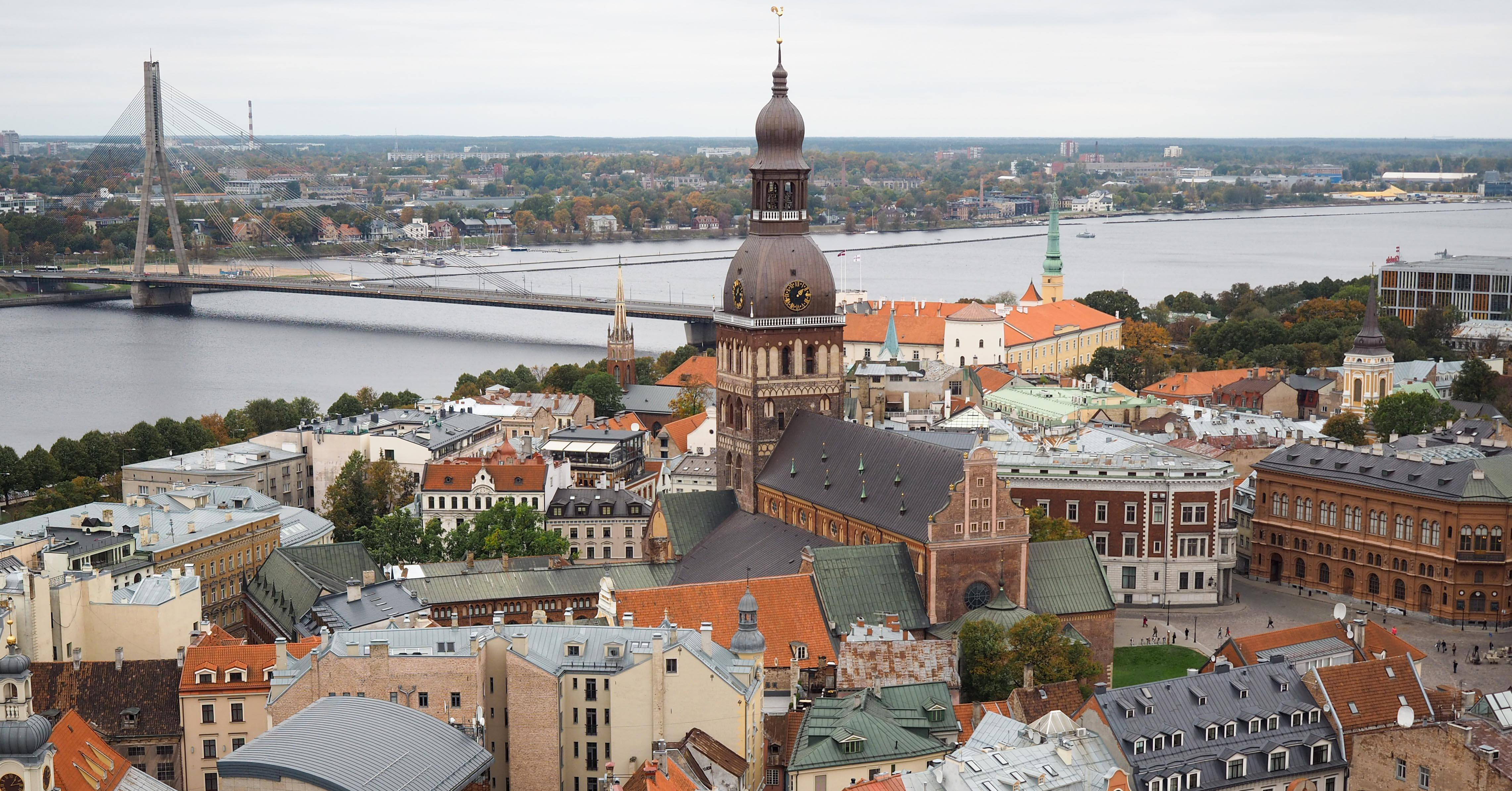
Riga, Latvia is as picturesque a European city as you will find.
Founded in 1201, the city hosts 1.9 million foreign visitors every year, but has a population of 621,000 residents.
The capital city of Latvia represents one third of the population of the country, which boasts 1.8 million citizens according to a 2023 census.
To put that in perspective, the country of Latvia would be the third largest city in Canada and the fifth biggest city in the United States.
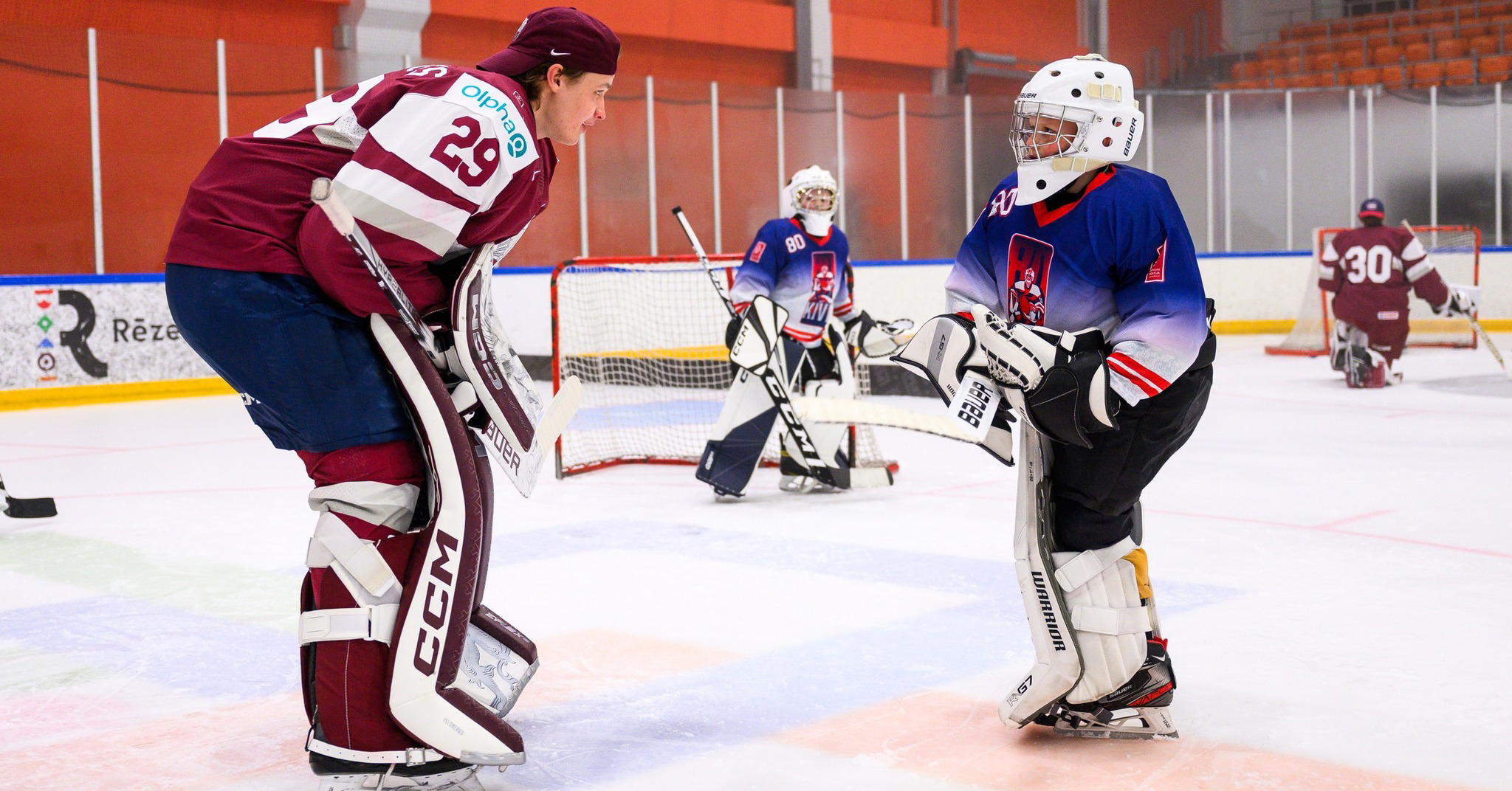
HS Riga (aka Hockey School Riga) was founded in 1999 and is overseen by the Riga City Council.
It was created as an opportunity for local players to mix school and hockey, instead of them feeling like they had to leave their home and country to find the competition and development they needed to make a career out of the game.
With the support of the city, it also makes it a more affordable option for families looking for private hockey education.
They carry teams in the Junior Development Hockey League and the Optibet Hockey League, along with the Latvian Hockey Higher League, which is the top league in the country.
The schedule is similar to what you see with most academies these days.
“I’m normally at school by 8 am until 2:30 pm and then I’ll go to training," current HS Riga U15 player, Alberta Purins explains. "We normally have three hours in between so we’ll go home, eat, maybe get a nap and then by 7:00 pm we are training and on the ice. Then go home and do it again. It’s a great way to get both worlds together, but not all at once.”
I asked him how he likes that kind of schedule, thinking it would be a lot for anyone that age.
His answer is probably pretty familiar.
“I really like it,” Purins admits. “School not as much, but hockey every day? Absolutely!”
The school mandate plays a role in developing players well before they can actually attend, with skating schools and then do a school-like system with Grade 1, 2, 3 until they get to U15 where there’s more of a special class and there are tryouts and the work starts to prepare players for their hockey lives.
For a country as small as Latvia, they need all the skaters they can find.
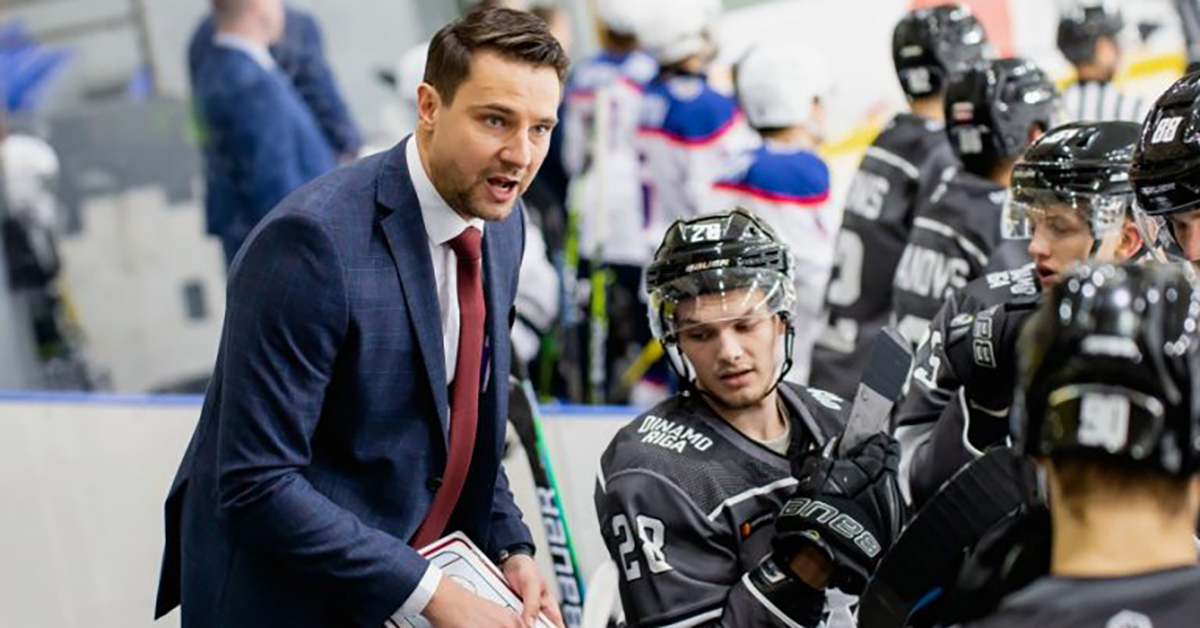
“We want to give everyone a chance. Every kid has to play. Everyone is into it,” explains Raimonds Vilkoits, HS Riga’s U17 Head Coach and Team Latvia Assistant Coach. “Our philosophy is that everyone needs to play, everyone has to touch the puck. It’s a similar to the standard European model.”
Purins was signed up at Riga when he was around 3-years-old.
Kristers Obuks, who plays at HS Riga’s U17 team came to HS Riga when he was around 7-years-old after playing at another club.
“We have a lot of great coaches for each year I’ve been there,” Obuks claims. “As we were getting older, the coaches were slow with teaching the game, they were finding ways to make it interesting and focus on just enjoying the game at the start.”
It’s also a challenge for the program to find competition, so the U15s play in the U17 championships and then the Finnish championships and the U18s play in the top Men’s league in the country.
But getting to play older age groups early on is something Oleg Sorokins, U18 Head Coach, believes is an advantage down the road for their players.
“You have to be ready to play for older groups and it also depends on how good the older group is,” Sorokins says. “The higher level is also a great evaluator. You get a chance to see skill level and physical level what kids are able to play with older players and which ones are not ready yet.”
Vilkoits agrees.
“We challenge the players to be their best at every game. In our hockey school, there is no game you can just show up and see what happens,” he declares. “The players will grow into it strength and conditioning-wise as they play older players, but the idea is to be challenged all the time and be prepared all the time as much as we can.”
“We are small, that’s the thing,” Riga coach Juris Ozols admits. “We can compete with the tactics with Canada, but we can't compete with the skill level because of the volume. Not everyone is drawn to hockey in Latvia and even if they are, he may be picking a different sport because hockey is expensive. It's not that easy.”
HS Riga was looking for an advantage.
Latvia, as a whole, needed someone to show them the way.
================================
On May 3rd, 2016, the Calgary Flames made a coaching change.
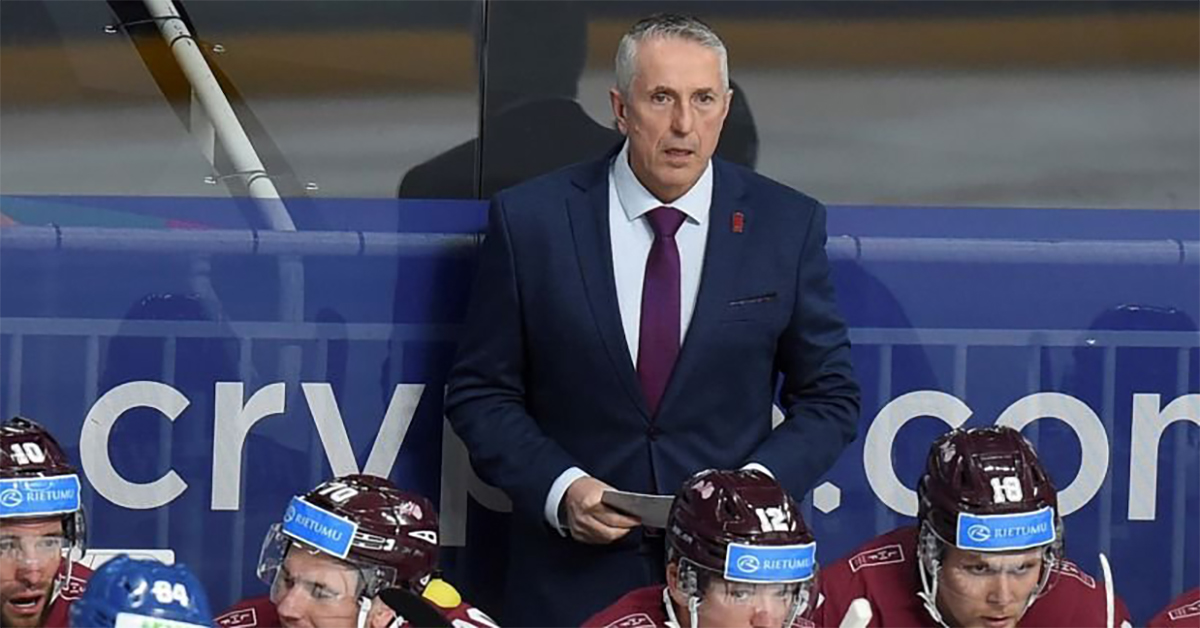
One season after winning the Jack Adams Trophy for the NHL’s best coach, the team decided to move on from Bob Hartley, after a 134–135–25 record and one playoff appearance over his four seasons in Calgary.
That winter Hartley got a phone call from the general manager of the Latvia National Team, who said he were interested in meeting him.
The World Juniors were being held in Toronto that year, so Hartley travelled from his Florida home to meet with the staff, exchange ideas and get to know each other.
That meeting very well could have changed the course of Latvian hockey forever.
Hartleywas offered the job as Head Coach and got to Latvia a few months before the World Championships for training camp and to also travel around the country promoting hockey, talking about the relationship between parents, kids and coaches and to help make sure everyone was blended together.
Development has always been at his core.
The Bob Hartley High Intensity Hockey Camp still runs in York, Pennsylvania – a camp he has run for the last 28 years, with its next sessions coming up in July.
But this was a new chapter for Hartley, who had coached Junior A, major junior, AHL, NHL and now had a chance to represent a country in the World Championships – something he admitted he didn’t pay much attention to before.
The response from his promotional tour, he says, was tremendous.
“Lots of times it’s not about country, it’s about culture,” Hartley shares. “Life is about culture, business is about culture. I got there and I was amazed by the quality of the human beings – players, staff and fans – and the passion they have for the game of hockey in unbelievable.”
Another thing stood out to him, even going back to the first meeting he had with the club at the World Juniors.
“Right away, I sensed they felt they were already down two goals before the puck even dropped,” Hartley acknowledges. “Playing against Canada, the USA, Russia, Sweden, they felt like they had no chance. It was like they were just happy to participate. Of course, they were happy to represent their country, but the belief of competing wasn’t there.”
Not only did Hartley realize he had to instill a new structure and detail and concept with how his team played, he had to work on their mindsets first.
“They were proud, they wanted to do well, but the belief was iffy,” Hartley remembers. “When I got to the big team and was talking to the coaches around me, it was ‘yeah, we are lucky to be in those tournaments’ and I was very much of the mindset of ‘never mind being lucky, let’s play these guys’.”
One of his stops was at HS Riga.
“There is such a passion for teaching there, I’d go out on the ice with the coaches and kids and it was always impressive how professional and organized they were,” Hartley states. “We know hockey is expensive and academies can be too, so if you are going to invest your family’s money, HS Riga has a commitment and tradition of excellence. They want to do it the right way.”
The time Hartley spent at Riga was impactful from the coaches perspective as well, with Vilkoits going as far as saying it completely changed him.
“I was a young coach at the time so there was so much to take in,” Vilkoits recalls. “Everything from stick details to the culture of playing. I was working with the U20 National Team so the things I learned in that seminar I got to use right away. I kind of knew the positions, but what Bob did was teach us the ‘why’.”
Vilkoits uses sentences like ‘we looked at hockey differently’ and ‘it was one of the big turning points for us’ when he references his time seeing Hartley in action.
It also went a long was for the younger players to see the older players go toe-to-toe with the ‘big boys’ of hockey.
“It’s easy to say we don’t have a Connor McDavid or a Nathan McKinnon or a Johnny Gaudreau,” Hartley would preach. “When I got there I would say to our players ‘once we get on the ice and in the faceoff circle, they have the same number of players on the bench and the same amount of guys on the ice, so make sure you don’t get outworked by the one beside you. If you’re the left winger, look at the right winger and say to yourself ‘there’s no way this guy is going to outwork me’.”
The shift began to happen.
They just missed the quarterfinals at the 2017 World Championships, losing out to Germany in a shootout for the spot.
The mental side played a huge part in not just their game preparation, but also their strategy.
Hartley explains how the team used to line five guys on the blueline and play a very passive game with the thinking that losing 6-0 is better than getting beat 11-5 because you were more aggressive.
“You can have the best details, the best systems, all of that – but if you don’t believe or play in awe of your opponent, you don’t stand a chance,” Hartley preached. “You can’t start the game and mentally already be down, it doesn’t work. The belief is to get in those battles and those games and appreciate the moment. I would tell our guys ‘don’t watch them, compete against them’.”
It took some time but when it clicked and the National Team started to buy-in, there were no longer ‘big boys,’ in fact, they wanted to play those teams, looking forward to lining up against McDavid, Draisaitl and company.
“We got rid of the moral victory. It was win or lose. We were not just sitting back and trying to defend. I spent lots of time changing that DNA,” Hartley says. “Latvians are very competitive, it was inside of them. We just had to find a way to get it out.”
Hartley used that advice in the future as well with the Head Coach of the Swiss team in the 2018 World Juniors.
Remember Christian Wohlwend?
Before the game, when asked what kind of game he was expecting he said, ‘A Canada team who dominates us again. They’re faster, they’re bigger, they’re stronger, they can shoot better, they can pass better, they can do everything better.’
Wohlwend was with Hartley in Zurich in 2011 as a young coach for about a month following him and in the playoffs he was hired by Hartley to pre-scout other teams.
Hartley didn’t take to that comment lightly.
“He’s a pitbull and when he said that, the next day I called him and said ‘Don’t do this. You probably said the truth but your players are listening to you. Don’t make them feel like they don’t stand a chance.’ It reminded me of my start in Latvia where you want to turn those games into an opportunity for greatness.”
The trickle-down hit home for HS Riga’s Oleg Sorokins – a former Olympian in his own right.
“Not everybody is going to be a star. Even in the NHL, not everyone is going to be a star,” Sorokins tells. “They are looking for 3rd and 4th line players that make a difference so having some of those skills can even help you go all the way. You will always need players that work their asses off and I think that was one of the mindsets that Bob brought in.”
Hartley stayed four more years (one lost to the COVID-19 pandemic) before scheduling conflicts with his head coaching position at Omsk Avangard (KHL) became too much.
No doubt his influence was a major contributor to the 2023 World Championship bronze medal won by the country in 2023 – it’s first medal at the tournament – when they beat the United States in overtime.
“Our bronze medal was huge,” Vilkoits smiles as he reminisces. “You wouldn’t believe the welcome we got when our team got home, maybe 50,000 people near the Monument of Freedom. It just shows if everyone works together, something big can happen and it makes you believe in miracles.”
================================
After a scoreless 1st period, Canada scored three minutes into the 2nd, putting them up 1-0 against Latvia at the 2025 World Junior Championships.
It stayed that way until there were seven minutes left in the game.
Latvia scored.
Shock covered the crowd and the players on the Canada bench.
It was a game.
For all of 64 seconds the game was tied until Canada notched another marker, moving them 5 minutes and 38 seconds away from a victory that now seemed more like an exhale.
With 2 minutes and 29 seconds left, their breath stopped.
Latvia had scored again.
The game was going to overtime.
The extra frame solved nothing, so the game went to a shootout.
Incredibly, Canada and Latvia went into the 8th round of shooting, when Eriks Mateiko went blocker side and silenced the Canadian crowd.
Latvia had come back twice in the game and pulled off a win for the ages.
Mateiko had spent two seasons at HS Riga before going to the QMJL, Linards Feldsbergs, who made 55 saves in the game, had been at Riga as well.
The reactions back home were amazing.
“It was really great, all of Latvia was probably screaming in their home,” Purins remembers. “It had been a really long time since Latvia got a medal at the World Juniors, it was crazy. It was a hard working team and a real inspiration.”
“They did great work in not letting Canada play,” Ozols details. “On the surface it’s a win in the round robin but there were four 2008 guys and it's more crazy when the guys are 3 years younger than the Canada team, it means something.”
Sorokins was watching maybe more intently than others, he had some players on his U18 team in that game.
“It was very joyful for me, It was a lot of fun to see how they’ve developed even in the one or two years since they had been here,” he boasts. “We had some guys playing for the U20s that still hadn’t played at the U18 level so it was good for us to see how they can work in a different role. As an example, there were some players who would be on the power play or top line at the U18 level but in U20 they had to play more of a defensive role.”
Sorokins concludes.
“We were very proud of our players in that tournament, especially the win against Canada.”
================================
For the growth of hockey to happen in any country, big or small, it can’t just be one program.
Vilkoits is quick to admit a lot of other hockey schools are doing a good job but compliments his club for having all the opportunities and technologies to develop players.
“There’s a lot of love here, within HS Riga,” Vilkoits says proudly. “It was enthusiasm and love that brought this place to being one of the biggest in Latvia. There are a lot of people here that do a lot for our players behind the scenes. Our management team and the people working take great care of this place. Our video room, our stick handling zone, stretching room, workout rooms – they may not be the best in the world, but we do have that and that sets us apart. The infrastructure is an important factor in this.”
Professionalism is something both Obuks and Purins say is one of their biggest takeaways from their time with the club so far.
“The hard work we are learning there it’s so important,” Purins accounts. “My coach says without hard work, there is no win. So, we get pushed to work hard in all areas – for games, for training, for practice. It’s a big focus.”
“We have a lot of opportunities like playing in Finland, we have a lot of great coaches that are also National team coaches, so we get to learn from some great people,” Purins doubles. “It’s a really professional club, if you are comparing to other clubs in Latvia, I think we are the most professional.”
Coaches, like anywhere, are the lifeblood of an organization or program. Coaches here work on a rotation, starting at U15 and working upwards to U18 and then starting at U15 again.
Some years the Head Coach will also switch to being an Assistant Coach and back again.
It gives them a fresh perspective on players, allows them to learn new tactics and bring their skill sets at different parts of the player’s career.
“Every coach has their own skill set and gets to add their own thing, so it’s great for the guys and girls because you’re not doing the same thing all the time,” Vilkoits (above) explains. “Every coach here has played hockey and has their own way of teaching, which makes it interesting year over year.”
In fact, at HS Riga and Latvia as a whole, it’s not as easy as just plucking a parent from the crowd to help out.
“The biggest difference between Latvia and other countries in Europe is that we have coaches from the very beginning. You must have a coach’s license, and those are not easy to get,” Sorokins goes on. “You don’t get a coach’s license by being on the ice for 50 or 100 hours. You have to study. I studied for four years in university for this role. I don’t know if that’s good or bad but it’s not that easy to just become a coach.”
The coaches will meet at various times throughout the year, teaching different systems but tactically adding things to help the players as they get older, hoping players were see and think the game differently.
“In Latvia, I think we are all different. We don’t have a particular style and I think that has been successful for us,” Sorokins points out. “I don’t think it would benefit us to all be under one system because we have a lot of players that bring a lot of different skills and we can’t be like a Sweden or Canada that is picky about the players they have.”
To Sorokins’ point, Latvia may have 200 kids in one age group in the entire country and at some point they have to make a National team out of that group.
That is where, at the beginning and all the way through their time at HS Riga, no one is brushed aside.
“The Federation understands development, they are doing a fantastic job,” Hartley compliments. “The pool of players in Latvia is far from Canada or the US so you can’t miss anyone. The big kid at 10 years old that’s a little clumsy on skates, with good coaching, good work outs and good practice can really surprise you at 16 years old.”
There are strength and conditioning coaches for all age groups at HS Riga, starting at even 9-years-old.
Vilkoits is one of them, that’s what he went to school for.
“Everyone here does such a great job. The younger team coaches have the job of making the kids fall in love with hockey and learn to skate and then we go from there,” he explains. “There are a lot of emotions, our best fans are our parents in the early years and then we move into a more pro style, where we teach them more systems, have more demands, stuff like that.”
================================
As I’m sure anyone reading this as seen, European hockey games just hit different.
Take it from a man who has won a Stanley Cup, won an AHL Championship and a QMJHL championship.
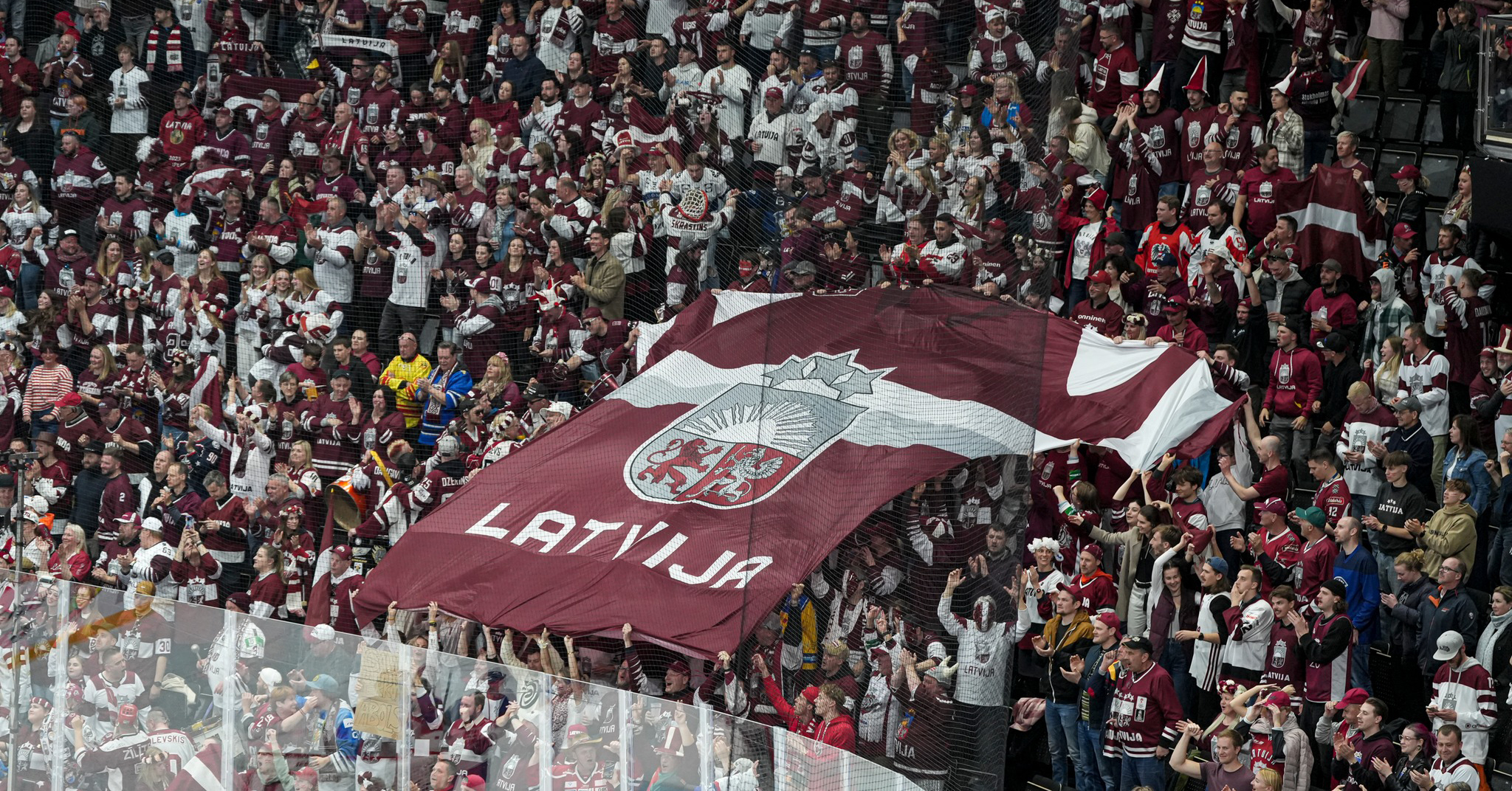
“It’s constant chanting and constant singing,” Hartley describes a Latvian home game “I remember we played a game against a Russian team my second year and the rink was packed. Russia had a powerhouse and we had many kids because it was early in training camp. I was with Jacques Cloutier and I remember the start of the 3rd period we were down 6-1 and it sounded like we were up 6-1 in the arena.”
Even when the world wasn’t allowed inside hockey arenas, they just waited beyond the doors.
“During COVID, my last World Championships, we beat Canada in the first game 2-0 and there were no fans in the arena but when we left the rink it was almost like a parade,” Hartley laughs. “They had drums and flags and it was wild. In an NHL rink, the fans are great and there’s a great atmosphere but over there they’ve got instruments and flags waving – there is always one guy with a massive flag who you think will have sore arms for a month after the game but he keeps waving and it’s just great.”
HS Riga is covered in posters and logos all over the school.
It’s a very patriotic place to be.
For most players growing up in Latvia, the NHL is always in their vision but the National Team is a very big deal.
When I asked Kristers Obuks what his goals were in hockey, he was quick to rhyme them off.
“I’m looking to get my education and, of course, I’m hoping to play hockey at the highest level, in the NHL, like every hockey player., but a real goal of mine would be to play for the Latvian National Team.”
Purins was no different.
“My dream is to be in the NHL and lift the Stanley Cup. It would be amazing,” he dreams. “I want to live my life as a professional hockey player and more than anything I want to represent my country.”
================================
Latvia continued to make an incredible run at the 2025 World Juniors, beating Germany 4-3 in overtime in their next game before falling 3-0 to Finland and 3-2 to Sweden – another two powerhouses of the tournament – in the quarterfinals.
It was the best result the country had seen at the World Juniors ever, but make note, the four best results ever at the World Juniors for the country have come in the last four years.
A far cry from the 2017 result that got them relegated from the tournament.
A total of 15 players from the team had gone through HS Riga at some point in their playing careers, including both goaltenders, six defensemen and seven forwards.
Many are spread across the globe now, playing in the USHL, CHL and different countries across Europe.
That’s what Sorokins gets his players ready for.
“At our age group, it’s not just fun hockey any more. These are players trying to make the jump,” Soroks outlines. “Up until this age, it was always preparing to take the next step as a junior player but they have to understand the next level after this is professional hockey. At that level you have to earn your position on the ice and you have to earn your contract and that is tough for some of them.”
Over the success of HS Riga and its ties to the National Team and the World Junior team, Vilkoits says it has been pretty amazing to see it all come together.
“Players here have now seen you can go through HS Riga and move on to the next level, whether that is junior hockey or pro hockey or in North America or in Latvia or other countries around the world. Our hockey traditions have been going on for a while now, the game brings out such awesome emotions you just want to watch it and support our native guys.”
It motivates the players, and also the coaches.
“My demands are the same for myself as they are for my team,” Vilkoits concludes. “I have to be prepared, I have to be ready to answer the bell and be ready to make decisions. I love that feeling. In that process, you get some wins, you get some losses but you can always learn from them.”
The development is what energizes Sorokins at the crucial age group he represents.
“My favourite part of coaching is when you’re trying to teach a different skill or tactic and you see it in a game. You see the players get it and you made a difference in something. If something works, that’s the best feeling for a coach. My win would be development. When I see that kind of development, I’m pretty happy – of course, as fast as possible.”
And for Bob Hartley, a Hawkesbury, Ontario native, Latvia will also hold a special place in his heart.
“For me, it was magical because I had a great experience and met some unbelievable people and unbelievable coaches, it was great.”
HS Riga was at the centre of one of the great Cinderella stories of the last decade.
This group finally understands, they belong on that stage with everyone else.
In the fast-paced world of hockey, the ability to outwit opposing goalies can often be the difference between scoring a goal and missing an opportunity. Corey Perry of the Edmonton Oilers exemplifies the art of deception in shooting, highlighting a masterful blend of patience, awareness, and skill. Here is a breakdown of techniques that can elevate your game and help you emulate Perry's brilliance on the ice.
Head Up and Scanning the Ice
The foundation of effective deception starts with keeping mindful awareness of your surroundings. Keeping your head up allows you to scan the ice, find gaps in the defense, and analyze the goalie’s positioning in the net. By taking mental snapshots of the situation, you can anticipate opportunities rather than rush into action. Perry demonstrates this skill by analyzing the defensive structure before making his move, ensuring his shots are calculated and strategic.
Patience: Catch and Release
Two common mistakes players make are:
Excessive stickhandling before shooting.
Catching and releasing the puck too quickly.
There is a time to "catch and release," and there is a time to be patient—receiving the puck, stabilizing yourself, and then deciding on the best moment to strike. Perry’s ability to delay his shot just enough to freeze defenders or lure the goalie into a vulnerable position highlights the value of timing.
Using Fake Shot Moves
Deception thrives on misleading your opponent. Incorporating fake shot movements can disrupt the defence and force them to over-commit. Perry excels at feigning a shot, creating just enough hesitation to exploit openings.
Manipulating the Shooting Angle
Changing the puck’s position to alter the shooting angle is a highly effective technique. Perry often pushes the puck in front of his body, forcing the goalie to adjust and creating new scoring possibilities. This move heightens unpredictability, and manipulating angles can open shooting lanes that seemed blocked just seconds earlier.
Quick Release
Once you have set up the perfect shot, execution is key. A quick release ensures that the goalie has minimal time to react, turning deception into a tangible advantage. Perry’s ability to combine a shift in angle with an instantaneous shot often leads to goals.
Conclusion
Corey Perry's approach to shooting is a masterclass in deception and precision. By keeping your head up, scanning the ice, using fake shot moves, manipulating the shooting angle, and employing a quick release, you can dramatically improve your ability to score goals.
These techniques require practice and patience but can transform your game, allowing you to capitalize on opportunities. For further insights into shooting fundamentals, click here for an excellent article.
Whether you are a budding hockey player or a seasoned veteran, incorporating these strategies can elevate your scoring ability and bring a touch of Corey Perry’s ingenuity to your game.
Enio Sacilotto is President of International Hockey Camps and runs the Mental Edge High-Performance Training. Enio has 43 years of coaching experience (professional hockey in Europe and the Victoria Royals (WHL)). Currently, he coaches at the Burnaby Winter Club Hockey Academy, is the Croatian National Men’s hockey team coach and is the Head Coach with the Grandview Steelers. If you have questions or are interested in his services, contact Enio at enio@coachenio.com or call 604 255 4747. Website: www.coachenio.com.
Let me warn you, it's likely the kid you won't suspect: the player that shows up early and stays late... the "coachable" player that does everything you ask and more... the player that stands out in skill, leadership, and/or team morale.
That's why it's so easy to miss.
My coaches did... so did my son's.
Many kids are great at compartmentalizing. And, it's no secret that, for many youth and teen athletes, sports are their safe space- their escape from everyday realities.
Maybe you have an idea, maybe you've heard rumors, or maybe this is just a reminder that you'll never know- but you can be prepared.
To my elite gymnastics coaches when I was 13, I probably looked ambitious: showing up to additional, optional practices after the required twenty hours of scheduled practices. Training through stress-fractures and cracked vertebrae. They didn't know my father's death left my mom and I homeless for 9 months (maybe a little longer, maybe a little shorter, I've blocked out most of that time) and I'd rather be anywhere than sleeping on my neighbor's couch.
It didn't dawn on my son's high school coaches that their AAA hockey 2nd leading points scorer AND All-Conference center fielder/leading base stealer was navigating his parents' divorce...
nor did my son's college coach suspect that while scoring six goals during "freshman" year at Nationals his mom was recovering from breast cancer & a double mastectomy.
Moral of the story? Even with youth & teen athletes often spending more time with coaches than at home, we rarely truly know what's happening in their lives.
And yet, we do know that whatever they're navigating, they're working with an unequipped brain to fully process or rationally reason the spectrum of emotions (those pathways are still connecting until they're about 25).
Fortunately, youth and teen coaches- especially 12u-16u coaches- have an incredible opportunity to strengthen those neurological pathways, provide an even greater safe space, and support their foundation pillars.
Certainly, providing all youth and teen athletes with the tools to build a solid foundation to navigate hormonal changes and mindset for performance, recovery, and growth is essential... but that's kind of my job!
What can coaches do that doesn't take away from coaching time?
Notice Behavior Patterns: is an athlete newly staying later? arriving earlier? exhibiting aggressive/emotional behaviors (including frequent retaliation penalities).
Recognize Changes in Energy: uncharacteristic fatigue? energy drinks?
Listen for Excuses: forgot fueling snacks again, didn't have time to eat, drive-thru was closed
Sure, these could absolutely be kids without the right tools and knowledge to fuel their foundation.
But, they could also be an opportunity to keep a few extra granola bars or snacks on hand... or expand emotional vocabulary (many 15 year olds are confused by "be aggressive" and then consequences for penalties)... or question low energy (why aren't they sleeping/fueling well?).
Of course, some young athletes will continue to compartmentalize and may never share their realities with us. That's ok. Simply creating a safe space for them to ask for a snack, realize that compassion is also productive, or simply understand that there's an entire team of support available enhances player development beyond the drills.
Even youth and teen athletes without traumatic events are displaying high injury-risk behaviors (energy drinks, vaping, poor fueling, poor sleep) and disordered eating habits (male and female athletes) in record numbers.
Our young athletes have high aspirations. To reach their goals- in sports & life- they need the right tools to thrive through puberty and developemental years. We can prepare them.
Net Automatic is a tactical strategy in hockey that focuses on creating scoring opportunities from behind the opponent's net. By positioning players around key areas, such as the face-off dots and the high slot, teams can generate unexpected passing and shooting angles. This approach disrupts traditional defensive setups and requires coordination among players. The tactic is adaptable, making it effective in both even-strength and power-play situations, ultimately enhancing a team's offensive capabilities.
The Offensive Zone Setup
Players must position themselves around the face-off dots and the high slot to create optimal passing lanes. This formation enables quick puck movement, making it difficult for the opposing team to defend. The player behind the net acts as a central playmaker, and with the help of his support players' positioning and coordination, this setup allows for dynamic offensive plays that maximize scoring opportunities.
Challenges for Goalies
Shots and passes originating from behind the net are the most difficult to track for goalies. They need quick reflexes and impeccable positioning to adjust. The unpredictability of passes from this area can force goalies to shift focus rapidly, impacting their ability to make crucial saves.
Defensive Zone Confusion
Defending against Net Automatic can be highly confusing for defenders. Anticipating plays when the puck is behind the net requires a high level of awareness and communication. Defenders must constantly adjust their positions to block passing lanes and prevent scoring opportunities. Strategies to counter this tactic include maintaining tight coverage around the net and ensuring that no offensive player is left uncovered. The unpredictability of Net Automatic can create moments of confusion, leading to breakdowns in defensive coverage.
Applications in Game Situations
Net Automatic can be utilized effectively during various game scenarios. In standard 5-on-5 play, it introduces an element of unpredictability that challenges the defense. During power plays, the tactic becomes even more advantageous due to the extra space, allowing for a more dynamic execution. This approach creates high-quality scoring chances, enhancing the overall offensive strategy.
Gretzky 3v2 Behind The Net Drill;
This small area game is played from the top of the circles and below. The coach has the pucks in the middle of the ice and the players are split into two teams and lines up at the top of the circles to define the boudary.
The coach will dump a puck in and designate one team to have 3 players join the game while the other team will have two. The team that has three players must always have one player below the goal line. They can rotate players behind the net but they must always have 1 behind the net.
Each rep is performed with 3 pucks. First 2 pucks (Gretzky) has to play the puck from behind the goal line with a 2v2 in front of the net. With the 3rd puck it's a full 3v2.
Coaching Points;
defensive players need to communicate
defensive players need to be aware of the switches
forwards should create swtiches and rotate from behind the net to create confusion for defense
fowards need to "find the passing lane" to the player behind the net
Create and find open ice to get open and to get shots through
F1 passes up to the D inside the blue line. F2 follows the circle and crashes the net looking for a rebound from the D man shooting. After that quick shot/rebound, F2 curls down low towards F1 and the 2 F’s criss cross with F1 leaving a puck for F2. The 2 F’s then drive up the ice. At the same time, D is gapping up and playing the 2v1 down the ice.
we run this both ends at same time
working on passing low to high, driving to the net for rebounds. And then jumping into a 2v1 rush down the ice, D working on gap control
There are two concepts in total football that apply to hockey and they should be part of your team's identity. The two concepts both require players to work as a unit collectively with the flexibility to interchange positions in space to:
Contract the ice surface to make the area being defended smaller.
Expland the ice surface to create space to attack inside when in possession of the puck at the right opportunity.
In the video clip below the Flordia Panther's tilt the ice on the Edmonton Oilers for 56 seconds, an entire shift, by expanding the ice surface in the offensive zone relocating the puck strong side to weak side throughout the shift and working the puck N-S, E-W in zone outside the dots as a unit to create space looking for an opportunity to attack inside the dots (middle ice). Edmonton does a good job of defending middle ice in the clip but a poor job of contracting the ice in zone to create a smaller area to defend as a unit. Loose pucks are a Pressure Trigger for both teams and only one team (Florida) was winning the races to the loose pucks and pressuring up as a unit to exit the space on the puck recovery. Florida outworked Edmonton in the video which should not happen, in any zone of the ice surface, especially, the defensive zone.
Hockey is a game of battles to win the Possession Game (PG). You win the PG you generally win the hockey game. A loose puck is a Pressure Trigger which both teams should immediately recognize as an opportunity to win a puck. In the video clip there were 10 loose puck opportunities to regain puck possession. Florida won the races to all 10 loose pucks and relocated the pucks to avoid a puck battle and to create space to maintain possession.
At the end of the 56 seconds in the OZ Florida Forwards were tired and started to come off the ice which allowed Edmonton to pressure up on a puck strong side with numbers to create the smaller space to defend and to win the puck and exit the zone. The Edmonton DMAN got body and stick position on the defender and moved the puck into middle ice support to exit the zone. The contraction of the ice by the OILERS was done at the end of the shift when there were many opportunities to regain puck possession to exit the zone.
Defensive Zone Play Analysis
The OILERS were too slow in their defensive zone and should have been reading and reacting better to the loose pucks as a unit, not individually.
The OILERS failed to get body position and stick position on pucks to regain puck possession.
The OILERS failed to contract the ice as a unit to create puck battle (contested puck) situations.
The OILERS were too passive and not aggressive enough or competitive enough on loose pucks.
The OILERS aren't the only team that struggled with the heavy forecheck pressure applied by the FLORIDA PANTHERS. To beat heavy forecheck pressure you must beat the opponent at their own game. Faster to loose pucks (win races), get body and stick position on pucks, pressure up as a unit to contain the puck battle with numbers and exit tight space with numbers.
You must match the physicality of your opponent.
Conclusion
The Florida Panthers are back to back Stanley Cup Champions for a reason. It is obvious that the strategy and tactical play of the STC's is based on the concept of Total Football. Every NHL team should be replicating the identity of the STC's because it's the best way to play. Defence wins Championships. Winning the PG by defending up ice with a heavy forecheck in the OZ and NZ makes perfect sense. Defending your end of the rink with a heavy puck pressure game as a unit winning pucks and taking away ice to make the area to defend smaller makes perfect sense. Hockey sense makes sense, it's a simple game but hard to play.