Culture is a word that is overused, yet underdeveloped. Learn from the master.
Culture is a word that is overused, yet underdeveloped. As leaders we understand that culture is vitally important to maximize the performance of the team.
In this post we are going from the micro culture on the player level to macro culture on the team level.
1. Understanding the micro-culture
In order to fully understand the macro level culture we need to start at the micro level with the individual players that make up the team. Without the micro, there is no macro.
Let’s start by understanding the four stages of a lifelong hockey player’s career.
First stage: Playing for your parents
This is when players are first picking up the game. Their parents usually give them a push to try out the sport. Parents have bought the equipment and take them to the rink.
Second stage: Playing for your coach
At this stage players recognize their coaches know more than their parents. Players are trying to do what the coach is trying to teach them.
Third stage: Playing for yourself
At this stage the player gets pretty good and starts playing for themselves. They feel the empowerment of being talented at something.
Fourth stage: Playing for your teammates
This is when players realize there is more than just playing for themselves and their personal achievement. Their maturity level is increasing and they are able to see how their actions affect others.
2. Building the macro-culture
Zooming out to a macro level, our goal is to create a critical mass of players at stage 4. Once a team has a critical mass of players at stage 4 they will naturally convert other players from stage 3 to stage 4.
A team’s culture is like an organism. It’s dynamic, fluid, and ever-changing. Therefore a leader must always be on top of culture development. One leader who is always on top of his team’s culture is Bill Belichick of the New England Patriots.
As head coach, Belichick understands his job is to be the person who installs, cultivates, and maintains the culture. He painfully learned this understanding from his stint as the head coach with the Cleveland Browns from 1991 to 1995 when off the field events bled onto the field and affected team performance.
Background history lesson: Belichick was the coach when owner Art Modell announced mid-season he was moving the team from Cleveland to Baltimore. The season prior, Cleveland had won a playoff game (still their last playoff win) and were predicted by many to reach their first-ever Super Bowl. They started the season 4-1 and ended up the season as 5-11. Nick Saban was Belichick’s defensive coordinator.
From that failure, Belichick emerged as a leader who purposefully talked about cultural aspects daily. His team meetings directly cover items that affect team culture. Whether that be if they celebrate a teammate’s great play or what is and isn’t acceptable behaviour.
Talk is cheap and actions speak louder than words. Once we talk about it, we must walk it.
If you follow American football you’ll understand Belichick doesn’t just talk the talk, but also walks the walk. He holds his players accountable to the team’s culture. If a player falls outside of the team’s culture, they face consequences. For players, that often means being cut from the team and losing out on millions of dollars in pay.
When asked about the most important player on the early Super Bowl winning teams, Belichick mentions only one key player, Willie McGinest. This was due to Willie’s contribution in the locker room and team facilities. Willie’s stall was the closest to the door in and out of the locker room. With his strategic location and presence, he would hold players accountable to the culture Belichick was building in New England.
When building a great culture leaders need help. In this pursuit a coach must understand who their most important player is ASAP. The most important player is the one who is able and willing to hold other players accountable, like McGinist. With Willie on board, the critical mass forms and continues to convert teammates into cultural disciples. They truly shape the others around them and reinforce the team’s culture.
Coaching hack: When you are done speaking and leave the room, stand outside the door and listen for who speaks first and commands the room. Those are the players who are the most important for team culture and need extra attention in leadership development.
3. Challenging ourselves as leaders
In order to start the process of culture building, I challenge myself and and our staff to start by defining the culture so we can talk about it purposefully and often.
At the Patriots’ practice facility their five elements are posted immediately inside of the player’s entrance. They are:
Do your job
Work hard
Be attentive
Put the team first
Ignore the noise
My five personal culture elements:
Communication
Commitment to team
Assertiveness
Dependability
Persistence
Now think: What are you elements? Can your players articulate them when asked? Who is the person who speaks first when you leave the room? Is that person reinforcing what you are wanting?
What kid didn’t play cops and robbers when they were young?
You and your band of thieves stole any number of items: money, diamonds, or perhaps even something more sacred, another kid’s toy.
The other group upheld the law, bringing the crooks down in a good old fashioned footrace, tag them and right to jail they went.
We played that until the streetlights came on. Hours on end.
Students at the Jokerit skating school are playing the same game today, just on ice.
“The best way to teach skating was trying to keep it as playful and enjoyable as possible,” says Tuomas Taskinen, Jokerit U13 head coach. “When you’re teaching a skill at the very basic level it’s not good to have a competition. You need to have basic knowledge and skills so you are able to compete, but quite often it gets competitive because of the kids that are involved and it fires them up.”
The Jokerit skating school starts with boys as young at four-years-old and entertains them with games like “Who’s Afraid of the Ice Man” or their own version of Red Bull Crushed Ice courses with fire hoses, small boards and other obstacles in their way.
Taskinen has taken on the U13 coaching role after going through the ranks with each age group, starting with U7, when the Jokerit program first begins.
“When we start at the beginning of the season, if we have 50 kids, maybe a third of them are ok with skating,” explains Mikko Nurminen, Jokerit Director of Youth Coaching. “Then there’s a middle group who can move, and you can start doing things with them. Then there’s the group who can’t skate at all.
“We try to get the last group moving so they can participate and once we do that, we start doing fun games like tag or cops and robbers. We try to be very supportive and make it fun, so they want to keep going.”
For some, their experience with Jokerit may end at skating school as they choose to try other sports. For others, they will spend the next decade of their lives growing through Finland’s most prestigious hockey development program.
The Joke of the Jokers began in 1967.
Junior hockey has always been an important part of the Jokers for the last 50 years, when the program captured its first Finnish Junior Championship in 1973.
Finland, a hockey crazy country to say the least, couldn’t get enough.
The junior leagues started to fill up and ultimately the idea of a skating school became reality in November of 1994. Since then, thousands of players over 30 years have fallen in love with the game through the supportive approach of the Jokerit coaches and instructors.
Players who graduate from the skating school could make their move into the U7 program and onwards, with the Jokerit juniors rounding out at U20.
As the Director of Youth Coaching, Nurminen is their first point of contact.
“It’s one of the best things in my job, Saturday morning skating school,” Nurminen says. “Most of the time they are really happy, but they are also really honest, so it’s a positive challenge to make them feel comfortable.”
“One of the big things that I like with Jokerit is that the hockey directors want to underline the values of the club and that goes not only with the coaches and players, but also with parents,” Taskinen adds. “We talk to them about how they should support their kids. It’s ok if in U7 there’s a Saturday morning where the kid is tired and he’s not willing to come to practice. It’s ok, we don’t push it too hard, we’ll try next week.”
From then on, it’s constant development.
“I think we have tried to help the kids go as far as possible,” Nurminen states. “At the beginning it should be really fun and still make you better every day, so we try to introduce new things and bring that in as we challenge ourselves to do things a bit earlier or what is the right order.
“The first games we have are in U7, but it’s half ice until U10,” Taskinen explains. “If you look at the big picture, the period they are in that range there are three main goals: they have good skills in skating and stickhandling, so they can carry the puck and lift their head and see where they are going, and that their attitude towards the game is positive.”
That is done methodically, they are not throwing information at kids from all directions and are not necessarily trying to develop the best 10-year-olds in the country.
Their development process is deliberate, it’s functional and it’s direct.
Any feedback given to the players in that age group at that time is specifically focused on the type of area they are trying to improve with that practice or drill.
“Once the boys go to full ice, we approach teaching hockey in four ways from a game point of view,” Taskinen shares. “Offence with the puck, offence without the puck, defending the puck carrier, and defending the player who doesn’t have the puck.”
“I think it’s helped that we only focus on the goals and feedback from that particular area,” he continues. “If we are trying to improve their game as a puck carrier and we give them feedback on their defending, it mixes up everything.”
Their timelines at first could catch a North American-ized parent off guard. Taskinen would go on to explain they don’t start teaching how to defend the player without the puck until U12.
In some circles around North America, there are teams watching kids that age in some form of recruiting. When I asked Taskinen which of the four parts of the game was the easiest to grasp, his answer was no surprise.
“The kids want to have the puck,” he said. “The second easiest is how they are defending against the guy who has the puck, because they want to get the puck. When we go to full ice, we talk about how you should move on the ice when you are playing forward, how you can help the player who has the puck with your movement. The hardest is getting them the idea that it’s really hard to defend if you’re looking at the puck because usually the puck carrier is not the most dangerous person in our zone.”
That message is consistent throughout their growth for players within the Jokerit club because, for the post part, from U7 to U12 they have the same coach.
Nurminen runs the hockey schools and skating schools and will be the U7 head coach until January or February of that season. It’s then handed off to a parent coach or someone who may stay with that group over the next few years.
It creates a line of communication and level of comfort between the coaches, players and parents that is at the heart of Jokerit’s success.
“What we have tried to tell them, from the very beginning, is we have praised effort,” Taskinen says. “If nobody makes a mistake in a hockey game, that would be a very dull game. What I would like to see when they are on the ice is they show effort, which creates competitiveness, and it gives them tools to face adversity because there will be that in many aspects of their life.”
“The other thing we have underlined many times is don’t be afraid of mistakes,” he continues. “If you make a mistake, don’t worry about that, I’ve done that a thousand times, so has Michael Jordan. But the idea is when we make a mistake, we try not to worry about it, but we talk afterwards about what we can do differently, but what is done is done, the past is what it is, and we try to control the things that are controllable.”
***
Skill development takes the lead at every age level you examine with Jokerit, but you see it start to take off around the U13 level.
Back in 2013, the Finland Ice Hockey Federation launched a skills coach project.
It was a three year investment leading up to the World Championship to try to start improving junior hockey across the country.
Essentially, the Federation paid 50% of the full-time skills coach’s salary, while the club paid the rest.
The program has been extremely successful, now entering its ninth season.
“It has helped a lot because we’ve been able to hire someone for that role and the fact that we have more people who are full-time is a big thing for us,” says Olli-Pekka Yrjanheikki, Jokerit’s Director of Coaching. “The more important thing is how it brings our cooperative clubs closer to Jokerit. We have great relationships with our cooperative clubs and Jokerit is aiming to have the best players from those clubs when they are U15 and U16.”
Each program who takes advantage of the project is required to have a cooperative club network; Jokerit has nine clubs and over 3,000 players within their system.
Their slogan: “Developing together the quality and image of local hockey.”
Teemu Poussa is the man who has benefitted as skills coach for Jokerit.
He spends a large portion of his time working with the three cooperative clubs in his region and with the U12s, and onward with the parent club.
“We are trying to coach those players in game situations and go more in depth,” Poussa says. “We have some goals in every role that we are trying to progress year after year. Our big goal when they move from my phase to U16 is that they have certain skills in every role.”
When Poussa starts working with the players is when they are hoping to grasp all four concepts of the game and be able to play that way all over the ice.
“We are trying to concentrate on one skill or one role in a practice, so then we have a certain skill or thing that we want to see from that practice,” Poussa explains. “We will create competition in practices, we will score points or do bets for their age group and post winners on Instagram and it really helps. We plan our practices in a good way to include the things we want to see from those roles.”
“Sometimes we think too much about the games; my opinion is the practice matters,” Poussa continues. “We are normally playing once a week in my age group and my U15 program practices four times a week, so that’s why it matters what we are doing in practice and how can we develop those skills. We create different environments – sometimes you have one minute left and you’re one goal behind, so my vision is practicing those situations, so they are ready when they do play games for those scenarios.”
“Winning should matter in the practices,” Poussa delivers. “As an example, 2v2 is the best game, in my opinion. You can’t hide there. If you want to score you have to help and if you need to defend you have to know how to defend both guys. So, then we look at how we help the puck carrier, how we create 2 on 1 situations in every area of the game, how are we scanning the ice and understanding the game; does the puck carrier need help in the attacking zone?”
Poussa sees his role as coaching the coaches. A theme that is echoed throughout everyone in Jokerit’s front office.
“Working with both our big club and the cooperative clubs it’s important we have a goal in mind,” Poussa points out. “We have the cooperative clubs, and we have coach education with all of those coaches too, to help them learn and grow. I would say the biggest thing is that I see these coaches and teams weekly, so we see how they have done, how the players are developing.”
Overseeing a large group of players, coaches and teams means communication has to be at the forefront.
That’s where Poussa and Nurminen collaborate.
“Mikko and I write the weekly message for the coaches,” Poussa explains. “It has our schedule, will talk about the last week and there’s also coaching notes that could be a video or an article. I think that’s been a really good part and it’s been a great way to bring some research and opinions to everyone.”
“It’s communication from us to the teams, but it’s also to the parents, and from the teams back to us,” Nurminen includes. “The best teams and coaching groups we have work with communication. We have about 500 players in Jokerit if you count the hockey school, so there are a lot of different opinions. We have to communicate really well.”
***
Jokerit also has a secret weapon in its back pocket.
A man who created a career for himself on the ice, but in a different sport.
For many Canadians, Victor Kraatz is a legend.
The 10-time World Champion figure skater captured hearts across the country, with partner Shae-Lynn Bourne, from 1992-2003, just missing the podium at two Olympic Winter Games.
After his skating career concluded, Kraatz put that part of his life behind him. But he always came back to the ice.
“I went back to school and was studying marketing,” Kraatz explains. “When I stopped competing as an athlete, I sort of said ‘that’s it’ and walked away. I did that partially because I needed to find out who I was.”
“I was working for the Vancouver Whitecaps and at the time they had a coach who was giving our organization a pep talk and I’m sitting there thinking ‘what am I doing?’ I went home and there were all these ideas in my head. So, in 2010 I did some Olympic coverage for CTV and was watching the hockey games and I was just trying to think of how to get started.”
Chance meetings seemed to have followed Kraatz since then.
While working at the North Shore Winter Club in North Vancouver, Kraatz was approached with the suggestion of working with a young player, who he didn’t know at the time. They set up a meeting and a relationship was born.
“The kid showed up and it was Mathew Barzal,” Kraatz tells. “At the time he was playing for Seattle and so I said ‘let’s work on stuff and you tell me if you want to do this or focus on something else and let’s see if this is a good match or if you are way beyond my skills and then we just walk away.’”
“We always kept the door open that if either of us feel like we are out of each other’s leagues we just walk away, but it never happened,” Kraatz remembers. “Right away, I was thrown into this opportunity because he’s so intense and hard working. That’s how my name was thrown out there and word got around. It was his first year with the New York Islanders and he won NHL Rookie of the Year and we had a few more sessions after that. I still text him to see how he’s doing, and it’s become a really special relationship.”
In another occurrence, Kraatz was invited to put on a clinic in Helsinki and afterwards was asked if he would be interested in doing some work for a team. The two parties exchanged information and a few months later, they reconnected, and he was offered an opportunity to join the club.
That meeting happened to be with Kim Borgstrom, Jokerit junior club President.
“When I met him and learned why he was moving to Finland, I told the board that we have to keep him,” says Borgstrom. “Victor has brought a lot of knowledge to the club, it’s interesting to see how he was doing things in North America. He was one of the best skaters in the world. All the players I know that have worked with Victor, love him.”
“The one thing that Jokerit always pride themselves in is being a fast team,” Kraatz details. “Carrying the puck as fast as they can to get into the O-Zone, so that is always in the back of my mind. The danger of that is when you have kids spinning their feet, they are very agile, but they are not able to cover the ice. The balancing act is you need kids who are agile and moving their feet, but they still need to be able to cover the ice.”
“Balance is key in a lot of ways. I don’t want to be the same as a coach, I want to learn new skills and you do that by watching other people or listening to other people,” Kraatz says. “I don’t want athletes to think ‘I know skating is important, but what does that mean if I can’t handle the puck.’”
“You can run a fitness class and do drills down the ice until you’re blue in the face but how does that translate to a game like scenario. It’s always with the intent of being game relatable. I see too often where coaches will do some crazy stuff and think ‘wow that’s fantastic but is it going to hold up in a game.’”
This is Kraatz’s third season with the club. It’s a completely different dynamic of players and styles from Finland to North America, and Kraatz credits the people within Jokerit for making this such a smooth transition.
“The coaches are always open to suggestions or questions that I have, and I would say ‘this is what we would do in Canada’ and he would come back with ‘yeah, that wouldn’t work here,’” Kraatz shares. “So, you learn their coaching philosophy and we’ll tweak it and that gives me a great opportunity to learn about their hockey culture and it’s a great overlap of me learning a lot from them and hopefully vice versa.”
“I’m here for a very precise mandate – keep the kids fast, keep them agile, teach them the technique, draw from past experiences and whatnot,” Kraatz explains. “With the younger kids you simplify it. Generating power, changing directions, quick steps but always with the puck. With the older guys, there are two kinds – the player who has been a professional for a long time and there we try to make them as good as they can be at that stage, and then the younger guys who are still learning multiple different ways to do things at a high speed. It’s more detail oriented, but I leave their certain style and my task is to find the way to make them the best they can be.”
It speaks to Kraatz’s coaching style, knowledge and skill to not only have success in his previous career, but to translate that into hockey.
But that doesn’t mean it’s been all smooth.
“I remember we did this one drill with Matt and he said to me ‘I want you to pass me the puck’ and I’m going back to him, ‘no I don’t think you want that,” Kraatz laughs. “But he comes back to me with ‘it’s actually good, I’ve got to get a shitty pass sometimes.’”
“There are plenty of skills coaches in Finland so there must be something I’m doing that makes me stand out and I’m never tired of learning for that reason,” Kraatz follows up. “With a team setting, I ask questions, I ask why and try to fill in the blanks for some of the intent because I didn’t play hockey at a high level. That has worked fantastic and the trust we have in the organization is incredible.”
***
You speak with any member of the coaching staff within Jokerit and the message is the same.
It’s remarkably impressive how from age seven to age 20, the development model stays consistent.
Consistency is key for this club, and they’ve had plenty of it – starting from the top.
President Kim Borgstrom has been with the board for 30 years, Mikko Nurminen seven years, Tuomas Taskinen around the same.
And Olli-Pekka Yrjanheikki has been a member of Jokerit for a decade.
Yrjanheikki, who thankfully did not ask me to attempt to pronounce his last name, is affectionately known as “OP.”
As the Director of Coaching, OP (top left in photo above) oversees the coaching staff under three values – cooperating, continuing development and commitment.
“Five years ago, we identified how the team would play, four years ago it was how to help individual players improve their skills and now, for the last two years, we have talked about leadership and how we communicate with players,” Yrjanheikki explains. “That wouldn’t have been possible if we didn’t have all these coaches here for so long. Coaches are one of the best assets of the club. The big thing is the board of directors have the patience to give us time to make progress in our development. For instance, Tero Määttä (U20) is in his fourth season, Niko Halttunen (U18) his fifth season and Tuomas Kalliomäki (U16) is in his 11th season with the club.
“Jokerit has had great coaches and great players throughout its history,” Yrjanheikki admits. “But every age group had been a different unit 10 years ago. Now we have a group of coaches not just for an age group. They follow our age groups. Every team knows what the players in our system are doing and what the players can do as they go through the program. The club culture has gotten stronger because of that.
“We have a community of coaches, not just a group of coaches,” Yrjanheikki continues. “We meet quite often with our coaches, and we discuss our values. All the coaches can discuss and decide what appropriate action we need to take. What does the goalie coach do to achieve those values? What does the head coach do to match those values? Then, the coaches can see their opinions are being heard.
“The brand of Jokerit is big, but we are a small club so it’s easy to affect things and change things pretty quickly. The organization is flat and agile for decision making,” Poussa celebrates. “We have really good coaches and that really motivates me. The best thing about it is this still doesn’t feel like work. The environment is what makes Jokerit so special.
“Coaching is organized so that most of the coaches in Finland and our team are father coaches until U13-14 and then there will be pro coaches,” Taskinen includes. “There are several workshops for the coaches every year, Teemu is on the ice once a week and the idea is not so much to teach the kids, but to have a conversation with coaches and spur them on. I think for the past 10 years the club itself has organized really well and that is one of the key things that separates us from other teams.”
Yrjanheikki and Jokerit have a competence-based framework for coaches. It’s how they are evaluated and how coaches can identify where they want to improve.
It consists of self-development skills, people skills and substance skills.
“My main goal is that we have the best coaches in our different levels and that the teams know every day counts, so we see the individual player improves here,” Yrjanheikki explains. “We can monitor that improvement many other ways: by how players are improving, how our teams succeed and how many national team players we have. Those are the things that will prove if we are doing a good job or not.
“The atmosphere within the coaches is the main thing, for me,” he continues. “The fact that we have the opportunity to keep the same coaches here. I like to think talented players are willing to come to Jokerit because we are famous for the way we treat players and how we communicate. It is our job to show the players how to live the professional lifestyle. How to sleep, how to work in school, how to take care of themselves. It’s so important that they communicate with us, their teammates and coaches and that they can listen to feedback even if it’s negative. When that player looks in the mirror, he knows that he is the one person responsible for his career.”
***
Jesper Tarkiainen is one who could tell you a better story about Jokerit than I could.
He lived it – from skating school all the way to the University of Vermont, where he’s currently enrolled in his freshman year.
The format worked for him.
“It was very easy because all the friends are the same and we go from year to year with the same group and same coaches, so that makes it easier,” Tarkiainen explains. “For us, it was in U15 when two groups got together into one team and when there were actually cuts and it started getting real and competitive. Before that, we played as two groups and there’s a lot more guys in the program until that point.”
The trademarks of a Finnish hockey player are their speed and their skill, which has suited Tarkiainen throughout his development.
“We were always skilled, always staying on the puck, we never dumped the puck, and we were always taught to stay on the puck as long as you can, try to make a play instead of just giving it up,” he says. “We did a lot of skating and a lot of edge work, all the way from skating school until when I was done with the program – more skill than grind. I enjoyed playing that style, I was always a smaller guy growing up, so that was good for me.”
Tarkiainen won a national championship at the U15 level and in his second season with the U18s. Now playing for Todd Woodcroft in Vermont, he says a lot of what he was taught as a kid has translated.
“I think the biggest thing is in every practice the level you have to perform in is always high,” he states. “You always have to give your best and if you give bad passes or don’t move your feet, you hear about it. Every practice you have to be good and that’s the mindset that Jokerit taught me.”
***
Tarkiainen is a model of what Jokerit is hoping becomes the norm.
Introduce them to skating, get them playing in their younger years, progress through the system and one day, hopefully join their big club in the Kontinental Hockey League.
Jokerit is the first Finnish team to join the KHL, which they did in 2014. Of the 24 member clubs in the KHL, 19 of them are based in Russia.
Since joining the KHL, the team has qualified for the playoffs every year, but has not advanced past the 2nd round.
To do that, the hope of all involved with Jokerit is that it will be their own players that fill that roster – but there’s a tough bridge to gap.
“The negative thing is we are struggling to keep our most talented players when they are 19 or 20-years-old,” Yrjanheikki explains. “They are thinking it’s too big a step to go from U20 to KHL, so they will go to Liga teams or North America, but the dream is to bring a kid through skating school to the KHL one day.”
Club president Kim Borgstrom agrees.
“Our goal is to see Jokerit junior players take the next step to get into the KHL. You have to take a step somewhere else to get into the KHL right now, but that is one thing I’d like to see one day. The step from U20 to the KHL is huge, but on a big scale, I want to see more Jokerit players on the KHL team.”
Janne Vuorinen lives that challenge every day.
As Director of Player Personnel (essentially Assistant GM for the KHL Jokerit club), his role is to hire coaches and recruit players to the U20 and KHL club. He also oversees the junior organization and coaching managers.
“During the time Jokerit has been in the KHL, I think we’ve put even more focus on the junior system and we’ve invested more money on the coach’s side,” Vuorinen says. “It’s a little bittersweet that sometimes the benefit goes to some other team because we create good players that play for other Finnish teams, but more and more in the coming years, more Jokerit players will be coming to the KHL team.”
“As an organization we would be very proud if some of our players were in our skating schools and went all the way up to our U20 program,” Vuorinen continues. “I think that’s a big accomplishment for our system and all of our coaches who have helped that player along the way. If they do leave, we try to stay in contact with them and keep those relationships with the players so if they develop for the KHL level, then we can bring them back and they can still be proud of the Jokerit program and their journey with our junior teams.”
Vuorinen sees coaching stability and development as keys to getting those players there.
“The team first mentality comes right away, we tell them in U7 we have to do this together and that doesn’t matter if it’s between the coaches in U7 or the KHL team, they need to work together,” Vuorinen assures. “They really understand the Jokerit logo is the main thing. We believe if we work together, it’s much easier for each individual to improve and move on with their careers. The main thing is we want to have a good character team and a good team chemistry. We don’t want to hire good players if they are bad people.”
***
Vuorinen’s boss is one of the most well-known people in the country. His name also carries a lot of weight in Canada, especially in Edmonton, Alberta.
Jari Kurri played in Edmonton for 10 seasons, helping the Oilers win five Stanley Cups in that time, amassing 1,043 points along the way.
After his Hall of Fame playing career, Kurri returned home and worked as a General Manager with the Finnish National team.
In 2013, he came back to his roots, joining Jokerit as their GM and President of the men’s team.
“It’s a great story for myself when I started as a nine-year-old joining Jokerit,” Kurri remembers. “When this opportunity came, I thought ‘wow, this is perfect for me’. Also, joining the KHL team and having to learn how to play in that league, it was a challenge that I really enjoyed. To come to Jokerit in this role, it’s great. I enjoy every day.”
While Kurri’s job is to build up the KHL team, he sees the work being done at the junior level and looks forward to seeing the fruits of those labours as the players start stepping into their professional careers.
“I think it’s great we have coaches that stay with the kids for three or four years, they then know the players and they have an open mind,” Kurri believes. “All the coaches are together, on the ice or in the office, so we learn from each other.”
“It’s good for us that our coaches discuss with the junior coaches and try to bring what the game is about at this level and figuring out what direction the game is going and what type of players you need,” Kurri agrees. “I think in the last few years our program has gotten really good in the juniors. They are putting a lot of effort into improving the junior program and hiring good coaches and I think it’s going in the right direction.”
“We have gotten respect in the league that Jokerit is a good hockey club and tough to play against. It’s good for us that we are building a reputation like that.”
Kurri has his own goals for the KHL club, ones that any GM would look for.
“We have had good success in the regular season, but we need to get that next step in the playoffs,” Kurri states. “It’s not easy because if we go past the 1st round, we are going to face the top team in the league, so it’s not easy to get past there, but that’s our goal now.”
***
You cannot develop players, under the same model, with similar skill sets from age six to age 19 without the three C’s that Yrjanheikki had described earlier: cooperating, continuing development and commitment.
“That’s the fuel for me. To see how the guys develop and now as they grow from boys to young men, to have those connections are so important,” Taskinen recalls. “I remember when I was their age the mentality was the coach was a big authority and that you never started a conversation with a coach. So to create an atmosphere of trust and mutual respect is great; I’m more than pleased when some of the guys start joking with me – not at me – but with me and I think that shows there is a trust and that is really important.”
“The big thing for us is we want to emphasize our coaches,” Vuorinen explains. “OP, Teemu and Mikko are doing a great job with that. We see what kind of hockey is happening at the best level and we try to develop players to be ready for that, and same with our coaches.”
“I take a lot of pride that the coaches and employees really like the organization and want to stay with us. If they can get a better spot for their career we are happy for them, but we are very proud when they want to stay with Jokerit.”
“For me, it’s in my heart,” Borgstrom shares. “It’s like a family. Both of my older brothers played for Jokerit. My son’s NHL agent played with my brother. It’s great to see old guys come back. It’s a big family. It’s my lifestyle.”
The fire that coaches are trying to develop in their players is obvious within them, as well.
“I’m competitive in a way,” Nurminen admits. “If I feel there is someone at another club doing something great, I challenge myself to become better. I want to be the best at what I do. I take pride in our program and what we do here. I want this to be the greatest hockey program, doing what we do. That gets me going.”
“OP knows a lot about the game, he studies all the time,” Poussa points out right away when asked who he’s learned from along the way. “He has to be one of the best in Finland, from the junior side. From Mikko, I’ve learned how to communicate with the parents and other people in the organization. I want to see Jokerit be the best player developer in the next three years. I don’t have huge aspirations, but I want to be the best skills coach for these age groups.”
And with NHL Hall of Famers, lifetime coaches and a country filled with alumni, the man who oversees this historic junior program can’t help but go back to the beginning himself.
“Hockey is a way of life for me. I just love hockey, it’s not a place of work for me. I get inspired when I think I have helped a player or a coach somehow or someway,” Yrjanheikki says with a smile. “Whenever I have a feeling that I have helped a player or coach, that brings me joy and that’s why I’m here.”
"Not every kid can be a pro hockey player, but the focus is on the person themselves. If they are willing to work, we are able to do something with them.”
Due to the COVID-19 pandemic, the 2019-2020 NHL regular season was stopped on March 12th, 2020.
The playoffs were different, with a 24 team format where you had to go through a qualifying round, just to get into the playoff picture.
The NHL Draft lottery was different too.
The lottery that year featured 15 teams – seven who didn’t make the playoffs and the eight who lost in the qualifying rounds of this new look second season.
Despite having a 2.5% chance of selecting first overall, the New York Rangers slid in to grab coveted Alexis Lafreniere. The Los Angeles Kings jumped up to second, the Ottawa Senators held serve at third.
The draft went as many predicted, Lafreniere first, Quinton Byfield second.
The Senators then took center stage and pulled right at the heartstrings.
Former Jeopardy host, and proud Canadian, Alex Trebek appeared on the screen to announce the 3rd pick of the 2020 NHL Draft.
It would be one of the last public appearances for Trebek before he passed away from pancreatic cancer at the age of 80.
It was just the start for Adler Mannheim’s Tim Stutzle.
Because of the pandemic, there was no march to the podium, no shaking hands with your new coach, general manager or the draft wizards that had selected you.
Instead, Stutzle was surrounded by family and friends in a ballroom in Germany as he pulled the Senators new look jersey over his head.
Stutzle was a Senator, and German hockey was back in the spotlight.
***
You have to go back to 1981 to find a German hockey player selected in the NHL draft, who spent any time playing in the league itself.
Defenseman Ulrich Hiemer (below) was selected by the Colorado Rockies 48th overall in ’81, and played 143 games in the National Hockey League.
After that, it was Uwe Krupp in 1983, a 214th overall pick who made someone look like a genius after he logged 729 games.
Goaltender Olaf Kolzig was the first German to go in the 1st round, being taken by Washington 19th overall in 1989.
Jochen Hecht played 833 games as a second rounder for St. Louis in 1995 and Marco Sturm went to San Jose with the 21st overall pick in the 1996 NHL draft.
Going 20th overall in 2001 was Marcel Goc.
***
Goc knows a few things about what it takes to get to the NHL.
The Calw, Germany, native suited up for 636 NHL games with San Jose, Nashville, Florida, Pittsburgh and St. Louis.
The best success of his career came in the later stages, when he won a silver medal with Germany during their Cinderella run at the 2018 Winter Olympics, beating Canada in the semi-finals before losing to Russia in the Gold Medal game.
He followed that up with his first DEL championship in 2019 with Adler Mannheim.
“I came back and wanted to win a Cup in the DEL, my brothers had already won a Cup, so I couldn’t finish my career without one of those,” Goc jokes.
After hanging up the skates, Goc has since transitioned into a new role with Adler Mannheim.
He is a newly hired development coach, a job he is still getting used to.
“My job now is trying to take care of our under 23 players,” Goc explains. “I try to work with them in separate ice times or after team skates and we try to fill those spots with guys from our U20 team. I’m in touch with the coaches in the program and who is coming through the ranks.”
“I don’t have a team, but I spend quite a bit of time at the rink. My part is still developing, a development coach is not common in Germany.”
Goc wasn’t very familiar with what a development coach’s role even was, until a former teammate became his.
“I got introduced to the idea when I was in San Jose with Mike Ricci,” Goc shares. “Ricci retired and all of a sudden he was a development coach. But it was good for me. Sometimes he was on the ice and sometimes he wasn’t, but I could always ask him what he thought of my game, what I could do better and on the ice we would always work on certain stuff – net front, faceoffs, stuff along the boards.”
“I wanted to be with every age group because I really had no idea what our kids looked like compared to other teams – what are they missing, how you coach them, how to talk to them and try to get the same message across, but you’ve got to approach the players different.”
***
The Club
Adler Mannheim is the New York Yankees of the Deutsche Eishockey Liga.
Since the league began in 1994, Mannheim has eight DEL championships, winning four in five years between 1997 and 2001.
Backed by the Hopp family (Dietmar Hopp, the billionaire software engineer) and the Hopp Foundation, the program leads the way in recruiting players throughout Germany, an investment Marcus Kuhl says is the main reason for their success.
“It is because of the Hopp Foundation that we have the money and possibility to do all these things,” Kuhl, the assistant general manager for Adler Mannheim’s feeder program, believes. “We can hire good coaches, go to the schools and bring these kids on the ice and help them out in every situation of their life. To do that you need money and we are very lucky to have the Hopp family.”
The team plays in the state of the art SAP Arena in Mannheim, which along with hockey is the host to handball and hundreds of other conferences and events. It’s also welcomed Tina Turner, Depeche Mode, Madonna and Justin Timberlake since it opened in 2005.
But there is that another branch to Adler Mannheim that is the backbone of where the program’s success has come.
That’s the Youth Eagles.
Jungadler Mannheim.
A feeder program right to Adler, the DEL and, more recently and frequently, the NHL.
With famous graduates like Leon Draisaitl (3rd overall pick to Edmonton in 2014), Moritz Seider (6th overall to Detroit in 2019) and Stutzle, this is where the best young German players strive to go.
“Mannheim was the first one.” Jungadler’s U20 head coach, Sven Valenti details. “When the program started 20 years ago, it just kept growing. The players at this level kept developing and a few made it to the NHL, people start finding out more and more that we have a good program.”
One of the most valuable development tools Jungadler Mannheim has at their disposable is perhaps the most crucial for any hockey player at any age.
“When I grew up, I had practice twice a week and then I played games on the weekend. Now our U20 team is on the ice six times a week,” Goc states. “They have athletic training before or after practice, so it became a lot more professional and organized and from the very beginning of our program, U11 and U13, it’s streamlined, so the next coach is not always starting from scratch.”
“They have daily off-ice work – weight practice together – and that’s different than other club,” Valenti agrees. “Not many junior clubs in Germany have that type of people and professionals we have that are able to work with those players, which has become more important.”
It’s hard to believe ice is difficult to come by, that coming from a spoiled Canadian.
We have rinks everywhere. Sure, the ice time may not be great for the beer leaguers, but it’s available.
There are approximately 38 million people who call Canada home, along with that a recent study found there are over 2,800 indoor ice rinks in the country.
Germany is more than twice the size, with a population estimated at over 83 million.
As for ice rinks, they come in at a grand total of 218.
It’s hard to get ice in Germany.
“I think there are more hockey rinks in Toronto than all of Germany,” Kuhl estimates. “This is a problem for the future because the hockey rinks in Germany are getting older and the towns don’t have the money to build them up. So that means that Jungadler and Adler, we have to work even harder to make not just more players, but good players.”
***
Kuhl is a legend in German hockey.
He played 18 years in Germany’s top league starting in 1977 and has amassed over 1,000 points.
He’s also one of the founding fathers of the Jungadler program.
Now, it’s up to him and general manager Claudio Preto to find the best players in Germany, as early as they can, and get them into the Mannheim program. Ideally growing them through the ranks in Jungadler, playing for the Adler Mannheim program and then moving on to pro hockey in the DEL, the national team or even the NHL.
“When we are looking for players, we are really looking for coordination, skating, big players, fast players and we try to make their skill side better with different coaches every day,” Kuhl says. “We have off ice programs that are really looking for athletics, skill and coordination. It’s especially important on the big ice over here that you are a good skater, with good skills and a good feel for the game.”
While they are in the Jungadler Mannheim program, they will attend school, live in dormitory style residences, and get on the ice.
“Our program is focused on school and hockey. Our philosophy is 51% school, 49% hockey,” Jungadler GM, Claudio Preto includes. “If they can do both, it’s fine. If not, they will not make it in our program. Not everyone can make money playing pro hockey, so it is very important they do well in school too.”
“We work with the schools so they are always getting free time when they need it. They have teachers there that work privately with them if they need to catch up on work because of hockey.”
“We try to make a good human being,” Kuhl adds. “We try to help them on the ice and off the ice to make them a better person and a better player. We have very close contact with the school to help and inform the players and parents along the way. That’s the only way this will work.”
Playing Up
The Jungadler Mannheim program is the pipeline – and there may not be a more proficient one in the country.
Players are getting into the Jungadler program as early as 11. From there, it’s all about development, and one of the greatest benefits those in the Mannheim program have found for young players, is playing with and against the group above them.
“It helps them think the game right and get away from bad habits,” Goc thinks. “Sometimes it’s a good reality check of where they are. They might play with the U20s where the things they do don’t work and all of a sudden there’s an odd man rush and a goal against. It’s a learning experience.”
“For others, there’s a big difference in how their body is developed, so it might be a smaller kid who does really well in juniors and when you put him against the pros it’s almost dangerous because they can’t protect themselves,” Goc continues. “But then you see, he might be ready next year, so you think of using him in a practice next time.”
“That helps a lot when a 16-year-old is playing with 18-year-olds, even if it’s just in practice,” Kuhl agrees. “They go further in their development and their thinking and feeling for the game. I think that is a big thing when you have younger players playing with older players because you’ll see them get used to the speed, thinking the game faster and the earlier we can do that the better.”
“If the competition is not as good, there is a chance for the players to develop bad habits,” Valenti points out right away. “It’s important that we make sure they don’t feel comfortable when they score three goals, but their backchecking or their stick work wasn’t good. We have to take care of that.”
“When they come in, they have to learn how to do their stuff, but in a system,” Valenti goes on. “A lot of times it’s new positioning and a new approach which takes some time for them to adjust to it but, most of the time they get it because they are smart players.”
Battle For Your Spot
Because of the limitations of finding players in Germany, for many coming into the program it is the first time they are playing with others of their skill level.
“I think in Canada there are more referees than we have players,” Preto jokes.
For some, they rise to the challenge, for others, they fall.
That’s all part of the process for Mannheim, to find those who succeed and continue to challenge them.
“When you have players coming from smaller teams, they have a lot of ice time with those teams and are used to doing things themselves because they are pretty much always the best player there,” Valenti notes. “Now they must battle for their spot on the ice, which they never had to before. Now you’re going to be with 18 other good players and you have to earn your spot or your ice time will reduce somehow.”
This is how German hockey players get their exposure. They are always playing for their spot, and in most cases, their next spot.
A U15 player could very well practice with the U20 team if they are short on bodies. They likely won’t break that line-up, but it sets them up for future success.
Those players get the early looks, they get the chance to see what it will take to get to the next level – and so do the coaches.
“You have to fight for your ice time, you have to show the coaches I’m better than this guy and I can do more and I think that helps those guys too,” Valenti comments. “The chance to play in groups that are older than you is so important, see how they develop and grow that accountability.”
There is also a benefit to those who aren’t ready to make that jump.
“This year we had three guys go up to the pro team and play there, which means the young guys have to step up and take more responsibility,” Valenti reminds us. “That is their chance to learn quicker and faster when they get pushed into that.”
Jungadler Mannheim is always looking for their next challenge and because of the aforementioned skill level in Germany, that is normally found outside their borders.
“The league in Germany is not that good, like in Canada, where they have to fight every weekend to win tournaments because it’s all on the same level,” Kuhl compares. “That’s why we have to send our teams to Sweden and Switzerland to play higher levels and better teams in other places.”
And with that comes another big adjustment most players in Germany would not have the chance to experience.
“Each country is different,” Preto details. “If we go to Switzerland it’s a fast game, a technical game. Sweden also. If we go to the Czech Republic, it’s a different style there. But what every game has is the international pride. The teams we are playing want to win for their country.”
“They will play against other European teams just to see where we are at and what other teams look like because we want to be in the mix internationally as well,” Goc mentions. “I think for some it’s very important to see where they stand. Maybe they are more puck skilled than other players and they get away with stuff now that they won’t get away with playing against pros.”
“We’ve also played schools in the USA or in Canada and it’s a great experience for the players to see all those different styles,” Preto says. “And that comes from the support of Mr. Hopp and the Hopp Foundation. It gives us a great advantage.”
“When you travel a lot because our teams played in Sweden or Finland or Canada, that’s what you see,” storied Jungadler head coach Frank Fischoeder says. “We would fly over and show our guys see how hockey is in the world and tell them ‘these guys will take their job if you don’t do it.’”
All I Do Is Win
You didn’t expect to see a DJ Khaled reference in a story about German hockey, did you?
Well, sometimes there just isn’t a better way to introduce someone.
Frank Fischoeder was a head coach within the Jungadler Mannheim program for 20 seasons. He does not know how to lose.
In fact, when behind the bench in his tenure with Mannheim, he won 17 championships.
He’s also been a U18 National Coach and most recently the head coach of the DEL’s Nurnberg Ice Tigers.
“My junior coach said, ‘a pro career will not be yours’, so I worked a few hockey schools and then worked in a few programs to bring in young kids to hockey,” Fischoeder explains. “I was very lucky to get involved with Mannheim. We have great support in the school, support in the community and, of course, the Hopp Foundation. They gave us the freedom to sign a lot of coaches, made the great facilities and have made this a pretty optimal place for hockey in Germany.”
“Frank was a great coach for me, I played when I was 15 under him and he wanted me to get better every day,” Stutzle recalls after a Senators practice. “When I had a bad game, he was really hard on me, which I really liked. In the end, he was one of the best coaches for sure and they can really thank him for their success. He always made a really good team and we had two years when we won the Cup there, he built some great teams.”
“It’s a philosophy thing. We always believed in our development,” Fischoeder says of the Mannheim program. “There is no player allowed to play with us that is not also doing something else in school, learning a job, having a business, using their head because it’s not different the way you are in your regular life and the way you are as a hockey player.”
“We started out with the same philosophy, so every organization supported by the Hopp family and their foundation works hand-in-hand with the school and mental and personal development,” Fischoeder says. “The money is not that big that when you are done hockey in Germany, you will still have to work after. So, this is not the end of their life, and that is why the school is still important for them.”
Claudio Preto and Marcus Kuhl credit Frank and others for that.
“Our coaches are looking for good attitudes, kids that are willing to work and develop,” Preto says. “Our coaches are responsible for the kids that we bring into the program. Not every kid can be a pro hockey player, but the focus is on the person themselves. If they are willing to work, we are able to do something with them.”
“It’s really hard to make sports on a high level. For us, it’s very important they finish the school with good marks, and we have a good relationship with the school, they make everything possible,” Preto continues. “If a guy does good at his studies and is a good player, we’ve done a great job. If they end up playing DEL or NHL, then that’s a big thing and we are very happy.”
At its core, Fischoeder’s coaching philosophy is not anything dramatically different than coaches you are likely around.
Maybe it’s the style of game in Germany that makes it so unique, or maybe it’s the lack of players to pick from, but Fischoeder’s toughest job is pulling the best out of his players and he does so by going right to the source.
“The ideas I’ve had, I tried to get players involved, get them into the discussion,” Fischoeder states. “I ask what kind of system they want to play, but in every system, there is a grey area. I’ve coached guys with 700 NHL games under their belt, so you can go to him and get his experience, get his feeling.”
“When you have this development, we try to build it and teach the game and give players the responsibility to work into the system. You get into an honest, open conversation with players, they want to play a certain way and you can’t have them leaving the room saying this way would be better. So, we have that conversation, we clear it out and if you make sure I like it, then I’ll say ok and we’ll do it.”
And he uses all the tools he has to get that point across.
“We show everyone on video and it’s played again and again and again and you take the grey areas away so a player cannot come back and say ‘you didn’t show us that’,” Fischoder comments. “This is something I still have problems with because I don’t want to be the coach that dictates everything, I want effort, I want work, I want discipline. I can freak out if something isn’t working but at any level there should be a certain amount of honesty.”
Fischoder uses video a lot and brings his players along, just like everything else.
“One thing we like to do is have the older guys explain the systems to the younger guys,” Fischoder divulges. “We will have team meetings where one line will have to explain one type of system on video, cut the video themselves and present it, learn to speak in front of the team. We always talk about leadership, but leading needs to be taught.”
“During the pandemic, I would put a period into the cloud and would tell them ‘in the defensive zone give me three bad to good clips and explain why,’” the veteran coach explains. “This was weekly homework, they would send their cuts back, they can draw in it, write in it and teach the game that way to see what they see. It’s always different what you see and how they feel it, so this was a good adjustment and the guys had a lot of fun with it.”
Once that is drilled in, Fischoeder and his coaching staff go to work.
“When we get on the ice, it’s principals, but not just straight rules, it’s more read and react.” he explains. “We play half ice and then with U13 we play partly on the whole ice. It makes no sense if you have one good skater, he will kill everyone. He will score five goals and everyone else will get frustrated, so if you play 4-vs-4 in a small area, the only rule is you have to skate, this is something that is hard of the classic coaching style of making systems and rules and giving that framework, but we have to get rid of that even more.”
“That style did everything for me,” Stutzle reflects. “They played me a lot, wanted me to play with the best players, gave me PP minutes, gave me confidence to play my game and that’s what really helped me. They wanted me to get better every day in practice and it was really good for me.”
Fischoeder is Sven Valenti’s predecessor.
Valenti climbed through the ranks, starting as a U13 junior coach when his son was invited to the program. He moved up to U17 and last season got his chance after Fischoeder left.
“Coaching here, our workload is high compared to other teams because we are trying to get to the international standard that we need to be able to match to the top programs in Europe,” Valenti starts. “Our teams are really active, we are practicing that a lot. We want our teams to put pressure on other teams. We don’t want our players playing like robots, we want them getting used to finding solutions in different areas and different times. We don’t want them to have Plan A, Plan B, Plan C and if those aren’t open, they don’t know what to do.”
Coming in after such a legendary coach does not go unrecognized by Valenti, who admits he’s learning every day on the job.
“it’s great to have good coaches here for feedback and what do they think of this and that,” Valenti admits. “Marcel (Goc) is such a professional and is so down to earth. He just enjoys working with the kids that are here and having fun.”
“You should never be too old to learn, there’s no reason to be arrogant and think you know everything because you can learn from a U9 or U10 coach or practice because if it’s good, why not take it.”
“I think we are more structured, and we need to be because of the big ice,” Fischoeder says. “There is so much more freedom now for players. At the beginning you had a lot of scoring young players that were supposed to block shots and play defensively and then everyone was wondering why they couldn’t score anymore, so now guys can skate around and back check like Leon (Draisaitl) in his first years – not at all.”
Coaching The Best
“It’s always fun. I don’t know if it’s like this in North America, but I’ve heard coaches that would say ‘I made this guy,’ like hell you did. We were lucky, we had this talent in our hands, we didn’t destroy it.”
Fischoeder speaks highly of his time with Leon Draisaitl.
Draisaitl, a Koln native, played 40 games with Jungadler Mannheim, scoring 57 points and adding 12 more in eight playoff games.
Kuhl agrees they didn’t do too much with Leon, other that let him go.
“Even the best players, like Draisaitl, you don’t have to show him a lot when he’s 16 because you could already see what he could do, but what he got from us was extra ice time and extra coaching to help him develop.”
“Same with Seider,” Kuhl continues. “When he was 14, he was practicing maybe twice a week, and when he came to us he was able to practice twice a day. You could see how fast he developed and even now you can see how he’s getting better every day. What he has done in the last 5 years has been unbelievable.”
“I remember when I first travelled to Canada, (Sidney) Crosby was still playing in Rimouski and there were 10,000 spectators waiting to see this guy play,” Fischoeder recalls. “Everyone knew this kid was the next Great One, but if you see these kinds of players in your organization, your job is not to destroy these guys.”
“When I see Leon, we still joke around about his backcheck, so when he was with us he knew exactly what he needed to work on,” Fischoeder continues. “It was a pretty easy job as a coach. Let them play and enjoy and pressure the other guys to support their development by working hard against them in practice.”
Players at Jungadler Mannheim also have Goc’s 600+ NHL games to reflect on, including suiting up with Crosby in Pittsburgh.
“He is a great example,” Goc states. “When he goes out on the ice to practice, I was just like ‘wow, he works in practice.’ He’s not just waiting for the coach to blow the whistle and get off the ice. He does every drill right, when he goes to the net he wants to score and that’s what he does in the game as well.”
“He puts the work in in the summertime and during the season so I tell my guys I’ve seen this guy do it,” he says. “You’re good right now but if you want to make it to the next level you have to keep doing it and don’t be satisfied with where you are right now. Somebody else is going to put in the work and they will roll past you at some point.”
The time Draisaitl or Seider or Stutzle spent there will have an impact far longer than their actual games played in the program.
“Draisaitl is pretty famous now, since he won MVP people know a lot more about him,” Valenti admits. “Of course, we have soccer is Germany that is the king of sports, but now we are seeing hockey players and basketball players playing pro in North America and it’s nice to have.”
“You get a couple guys like Seider or Stutzle who lead the way and you see a bunch of other kids that want to follow,” reflects Dave Tomlinson, a German hockey hero in his own right. “For young German players they have more players for them to look at and follow, along with doing so well at the World Juniors and the World Championships that has sparked that on.”
Tomlinson spent six seasons with the parent Adler Mannheim program, after a career in North America that included stints with the Toronto Maple Leafs, Winnipeg Jets and Florida Panthers, along with over 340 AHL/IHL games.
Tomlinson, now the colour commentator for the NHL’s newest franchise, the Seattle Kraken, will remember his time with Mannheim well.
“I loved it there. Mannheim was really well run, it was run as close as you could to an NHL or minor pro team,” Tomlinson shares. “I realized if you score early in the season, you’re a fan favourite and every top team will be after you. The Germans fans are really passionate. They love their chants and songs so they will create a song for their star players. My song was a take off of ‘Mrs. Robinson’, they would sing ‘score a goal Mr. Tomlinson’, so you’d have 11 thousand German fans singing and banging on drums so how does that not make you totally pumped?”
Fischoeder will take no credit for anyone or anything. He doesn’t even give himself many props for his 17 championships, including a story when he left the rink right after winning a championship to play soccer with his daughter.
But it’s not just the players Fischoeder points to as the rising stars in Germany.
Marcel Goc gets high praise from everyone I spoke with, a rising star in the coaching ranks in Germany, if he wants it.
“Marcel is such a good guy, such a hard working guy,” Fischoder praises. “I have not met a lot of pro players who are that focused, that professional, his preparation for practices and I tell him all the time, you don’t know what kind of power you have in German hockey, if you want to be the #1 guy you can do that in two-to-three years. You can make a big difference.”
***
The Challenge
“Our big problem in Germany is soccer,” Valenti says unequivocally. “With soccer you just need shoes and a ball, and you can play almost anywhere. In Germany, hockey is pretty expensive, and we don’t have the ice available for them.”
“We are trying to recruit more players. In the top league they have recruiting programs where at the games they give kids 7, 8, 9 years old the chance to go out on the ice and have a “day in the life” with the club,” Valenti shares. “We are in the schools, we will go into kindergarten, and we bring them on the ice, teach them how to skate.”
“The program German Federation changed for junior hockey. Even if you are in the smallest city and have an ice rink that’s just for fun or you’re in a professional league, there’s a guideline of what to do,” he continues. “We have the development program for coach’s standard is getting higher and higher and now we have more and more players coming to the NHL, so there’s a chance with social media you have a chance to see all those players and for young kids they have these heroes now helps a lot.”
Tomlinson knows how hard it is to get German players, from his time playing overseas. But from where he’s standing now, he sees the growth continuing.
“I think the new buildings have been awesome and that they are building new arenas. It seems like the top teams continue to be the top teams, but I do think Germany itself is making a good argument for being considered amongst the Finlands, Swedens and Czech Republics because they have more depth and more ability to compete with some of these bigger countries.”
For Fischoeder, it’s simple.
“We need more players. It’s too expensive here for skills coaches in kids hockey,” he admits. “You can play soccer for 60 euros a year, you get support from the German Football Association, so for us there was always this important thing of having the duel system where we are helping with the school and the hockey.”
After The Game
“If you are a national team player in Germany and you do nothing wrong, you have no injuries, everything goes perfectly and you have a great career, you maybe have your house paid for, you maybe have a million euros on your bank account, but that doesn’t mean you won’t have to work the rest of your life.”
Fischoeder, along with everyone in the Mannheim program, doesn’t waste any time to introduce the idea that not every player in the room is going to make the DEL.
“There’s not too many big hockey towns around Mannheim, so the range of area from where kids come from is fairly big,” Goc explains. “The combination of school and hockey, making sure both are good for the players is structured really well here and that’s one thing as a parent you’re looking for.”
“The main work is taking care of the person and their personality development,” Fischoeder praises. “When you work in an organization like this it’s taking care of people, hockey is important but more important is the responsibility you have that these kids feel comfortable.”
“You never know, if the hockey part is not where they end up going with their career, you don’t want to end up with nothing,” Goc confirms. “In case hockey doesn’t work the dual development making sure they are set with school and have good grades and preparing them for life, essentially, outside of hockey. How they treat hockey is how they will treat everything.”
Fischoeder has billeted several kids over his time as coach of Jungadler Mannheim. He gave the program 20 years of his life.
“I still come into the arena in Mannheim and hug everybody and feel comfortable after 20 years how much it’s meant to me,” Fischoeder says. “I built a house in Mannheim; I married my wife here and my daughter was born here, so I will always live here. I was 28 when I stepped into Mannheim, that’s a long life here and this is a big part and I love the organization and what they gave to me and the opportunity they gave me.”
“I’ve had a chance to see hockey all over the world and not a lot of people have had this chance.”
“The youth program made a huge difference for me, for sure,” Stutzle beams. “What a great coaching staff and guys like Frank, they just want to make young kids better and get them to the pro team, and that’s what they’ve been doing so far. It was some of the best years of my life being there.”
Stutzle and the rest of the players of Jungadler Mannheim have had the unique opportunity to see beyond their walls. To see hockey in Sweden, Finland, Switzerland, Russia, the USA and Canada.
Their greatest gift to us, has been bringing the spotlight back to the blossoming hockey hot bed that is Germany.
It was at a bonfire a few years ago that I came across a heated debate about one of the all-time greats.
Two friends of mine, both adamant in their stances and perhaps a little tipsy from their evening engagements, were disputing the truth to Pittsburgh Penguins star, Sidney Crosby, attending high school in Minnesota.
“Blasphemous,” said one party. “How could a Cole Harbour, NS, native and Captain Canada have attended school in the United States?”
The back and forth was solved just like any other these days.
“Google: where did Sidney Crosby go to high school?”
As the results trickled in, a map pulled up directing us to Faribault, Minnesota. To a former military school, erected in 1858. To a place that holds a Hall of Fame alumni list, that continues to add to its resume year-after-year. To Shattuck-St. Mary’s School.
The campus sits on 250 acres about an hour south of Minneapolis. The home to Centers of Excellence in engineering, bioscience, vocal performance, soccer, figure skating, golf and hockey.
In the early 1970s, the school dropped their military distinction and struggled to find a new specialty, to the point where the doors were close to being closed on the institution forever.
“The school had brought in a consultant a while afterwards,” Ben Umhoefer, director of hockey at Shattuck-St. Mary’s explains. “He suggested the one asset the school had that wasn’t being utilized was the hockey rink, and that’s where it started.”
Umhoefer was a student enrolled at the school at the time, he would graduate from Shattuck-St. Mary’s in 2005, returning in 2010 to coach five of the program’s eight teams over 10 seasons before transitioning to his current role.
At the time, Craig Norwich, a local Minnesota hockey legend who starred at the University of Wisconsin and amassed over 100 NHL games, was a coach at the school and is the one credited with the vision of getting out of the state high school league, playing more games and increasing travel.
Norwich was able to bring in JP Parise to begin the hockey movement.
Parise in turn hired Larry Hendrickson, Mike Eaves and Andy Murray to post up behind the benches and then went on a recruiting spree to get the best players from Minnesota and beyond to attend.
It started at home for Parise, bringing his young sons Zach and Jordan into the fold.
Jordan, a goaltender, played three years at the University of North Dakota, while Zach would go on to play six seasons at Shattuck-St. Mary’s, starring in 125 games and posting 340 points in his last two years, before going 17th overall to the New Jersey Devils in the 2003 NHL draft.
The school had arrived.
Since that time, Shattuck-St. Mary’s has won 27 USA Hockey National Championships, had 93 players selected in the NHL draft, seen over 750 players play D1 or D3 hockey, produced 19 Olympians with six Gold Medalists, a Hobey Baker winner, two Patty Kazmaier Awardees and over 30 current and former USA National & U18 National women’s team players.
The list keeps growing, longer and more impressive as the years go on.
Just this past year, eight Shattuck-St. Mary’s players were selected in the 2021 NHL Draft.
“That’s becoming the norm,” Umhoefer admits. “Our strengths have always been consistency, execution, doing what we say we are going to do, not over complicating, pride in the work and focusing on development.”
An Easy Decision
Some journeys to Shattuck-St. Mary’s happen in their own backyard, others happen on the other side of the world.
“After 14 years in Russia, my family and I started thinking about moving to the United States,” Artem Shlaine says. “You get a much better look from scouts, and your chances to get seen just increase.”
“My dad had sent emails around to a few American schools, but the amount for Shattuck was not affordable for my family, so we ended up in South Florida, which really helped me transition a lot.”
Shlaine, a Moscow native, moved to South Florida on his own to enroll at the South Florida Academy, headed up by former NHLers Olli Jokinen and Tomas Vokoun.
He was living in a dorm and just playing hockey. There were a number of Europeans at the school, so that helped him get settled in his new surroundings.
But Shattuck was always on his mind.
“In my second year in the US, Coach Ben (Umhoefer) saw me at a tournament and emailed my dad saying we would love to have him (at the school),” Shlaine beams. “At that point it became a reality and it was a no-brainer. I was like, ‘Dad, we’re going there’.”
You can tell the pride he has in telling that story even a few years removed from the school.
Shlaine’s father worked in the US and lived in Russia over the course of five years. His mother and brother would join him in America in his third year of high school.
Once arriving at Shattuck-St. Mary’s, Shlaine settled in nicely, despite being the only Russian on the team.
“The biggest change is that everyone who comes to Shattuck was some kind of a leader or a big guy on their former team and they teach you how to play the right way,” Shlaine explains. “It doesn’t matter if you are a goal scorer or a play maker, you’re going to play in the role you are assigned. They do such a good job of getting players to play the right way and put players in a position to succeed.”
His high school career notes 102 games and 168 points.
Before graduating to the University of Connecticut, Shlaine was drafted in the 5th round by the New Jersey Devils in the 2020 NHL Draft.
“I always thought I was a guy who can make plays and be responsible in my own zone, but I didn’t really think Shattuck would round me up so well,” Shlaine notes. “Every year you are on a team and your role changes. My first year I started on the 4th line and you make your way through and you have to prove you can play on the 4th line to get on the 3rd line and so on.”
It’s a point that is echoed by many others.
***
“It was definitely weird at first. My 8th grade year was my first year just playing girls,” explains Mackenna Webster. “It took time getting used to it and being the youngest and coming from St. Louis, the girls around you want it so bad and that’s the kind of atmosphere I’ve always wanted to be in.”
Webster arrived on the scene in 2015, joining the school’s U16 program, posting 62 points in 61 games.
“It was an easy decision,” Webster recalls. “Especially the people that went there, Brianna Decker, the Lamoureux twins and a bunch of other women who were Olympians and knowing Shattuck produced that level of talent was a big plus just going there.”
Webster’s family had received an email from women’s hockey director and head coach, Gordie Stafford and invited them to visit the school.
It immediately checked off all the boxes.
“The teachers are so accommodating, it’s the perfect place for a hockey player and really just grows you as a person and a hockey player,” Webster reflects.
“Gordie Stafford, Pete Johnson, they are obviously legends. You learn a lot about the game, you learn little skills, the mental skills, how bad we want it. Everyone there was so competitive. It’s not just the hockey, it’s the friendships and it was such a great opportunity for me.”
***
“I have four kids that all played hockey, Jackson was the lucky one who got to go to Shattuck,” Chris LaCombe admits. “I still catch heck from the others who did not get a chance to go.”
LaCombe got involved with Shattuck-St. Mary’s through a different route – the sports agency giant CAA.
He had coached youth hockey in Eden Prairie, Minnesota, and was contacted by CAA to make an introduction to the school when the agency started branching out to athletes.
LaCombe would become so involved with the agency, he would soon join legendary agent Pat Brisson at CAA, leaving his previous career behind.
Jackson LaCombe would return to Minnesota to enroll at Shattuck-St. Mary’s for the 2015-16 season.
He was small, going to the school as a defenseman where he would transition to forward, before returning to the blueline at the end of his high school career.
He also grew. A lot.
Now standing 6-foot-2, the current University of Minnesota product was a 2nd round pick of the Anaheim Ducks in 2019.
“The number one thing he got at that school was confidence,” the senior LaCombe notes. “He was the little guy all the time, fighting as hard as he could. He developed some leadership skills in his last year. Learned how to talk to adults, to give speeches. When you go on that campus, you get a great education and learn so much about yourself as a person.”
LaCombe sees it from the agency side as well.
“When you send them to Shattuck, we feel 100% comfortable when we see a kid went there,” LaCombe says about a potential client. “You can feel they are going to be a reliable player when you see that’s where they came from.”
***
You hear that from players, agents and especially parents.
“As a parent, the first thing you’re looking at is what kind of people are working there, how they can develop him as a human being and then you look at things on a hockey level.”
Evgeni Nabokov played nearly 700 NHL games. He’s the all-time leader in games, wins and minutes for the San Jose Sharks.
His son Andrei will be attending the school this year.
“Obviously I’ve been very fortunate to know a lot of people who have gone there, so I made a lot of calls and talked to people,” Nabokov explains of the process of deciding where to send Andrei for school. “To be honest with you, I was trying to find something where I’m not going to like it, but I couldn’t find anything.”
“Their reputation speaks for itself, it was comfortable, convenient. I care about good people and I want him around good people.”
Playing 14 seasons in the NHL, Nabokov can tell what’s real and what’s not. He’s trusting Shattuck-St. Mary’s to find that in his son.
“I want him to develop. I want him to play hockey and see what that is like. They are one of the closest places to pro hockey,” Nabokov states. “When you’re in the hockey environment it’s going to be interesting to see how he responds. He wants to have fun and play tons of games, win and have fun.”
The Students
So how does it happen?
How does a high school on the brink turn into the epicenter of hockey?
There are several similar themes that you continue to hear over and over: Good people. Love of the game. Playing with the best. Discipline. Team. Earning your spot.
“We place a premium on the kid’s love of hockey, are they competitive, do they work, how badly do they want to be here,” Umhoefer recites. “Most of the interaction at the start is with the parents – you want to feel good rapport when you’re talking to them. You want your messaging to be well received and get good responses from them.
“We steer away from families that aren’t willing to let their kids work and earn what they get. If the first questions are ‘where do you see him fitting?’, that’s a red flag.”
Shattuck-St. Mary’s doesn’t have to recruit. They get the pick of the litter.
When Shattuck-St. Mary’s calls, you listen.
“The volume of people the school say no to is huge,” Umhoefer admits. “Last year we got 1,100 boy’s inquiries for 35 spots.”
“You can overthink it too, don’t be an idiot about it. When we have our short list, there are people you trust in the hockey world who knows players better than you and then it’s boxes we are trying to check off,” Umhoefer explains. “Are the parents’ good people? Was the kid raised well? Does the kid buy into the rules we lay out for him? Be a good person, love the game and be super competitive.”
It’s quick to overlook the fact that there is an academic portion to this facility. And that’s not to understate it, because it’s top of the charts as well.
***
“It’s the quality of the student body we have at the school. Our hockey players are more than just hockey players. They excel in the classroom and want to do well at our school.”
Father Henry Doyle knows everyone. He’s worked at the school for 33 years. He does 15-20 weddings a year, all Shattuck alums.
“One year I had 28,” Doyle laughs.
In your life, you will not meet a lot of people like Father Doyle. Engaging, encouraging, dedicated and uplifting is just the start.
“We have some high achievers here and some people that develop here,” Doyle brags. “The students here are driven, there is a rigor here. They want to achieve great things on and off the ice.”
“The faculty and staff put a lot into their students. They extend themselves over and above what any public school teacher would be able to do,” Doyle regals. “Some of our faculty live in the dorms and are dorm parents. A math teacher could be on duty and have a chance to talk to students about this problem or that problem, not just in math but in life.”
One of the more impressive things in Father Doyle’s back pocket may be his address book.
Doyle famously sends thousands of cards every year to former alums – to celebrate birthdays, anniversaries and holidays. And to grieve with them during tough times.
“The players always get so excited to send one back,” Doyle chuckles. “I remember seeing Jonathan Toews and the first thing he brought up was that he finally sent me a birthday card.”
Toews spent two years at Shattuck-St. Mary’s from 2003-2005 before launching into a Hall of Fame career with the Chicago Blackhawks.
His pride of being an alum is obvious to Father Doyle.
“Jonathan got us tickets to a Blackhawks/Wild game and my friend took me and brought along a neighbour and their son,” Doyle recalls. “We went downstairs to meet the players. The kid was wearing a Blackhawks hat and a Wild jersey, but under his jersey he had an old Shattuck sweatshirt. He raised up the jersey when he saw Jonathan and he said, ‘It’s the best thing I’ve signed all day’ and I knew Jonathan meant it.”
“I get goosebumps talking about it. How far these young people have gone in their lives and how they add to and enrich our lives.”
“They become people of integrity. They are hardworking, diligent, passionate, they are respectful to themselves and to others,” Doyle says proudly. “It’s a joyful honour to see them do so well and to have been a part of it.”
The Magic Potion Is Sweat
“The coaches here are the reason why I wanted to start coaching,” Umhoefer recites. “The environment has always been if you put in the time and work hard at it, being around good players, you will get better.”
“As a weaker player on the team, Tom spent so much time with me after practice, simplifying things so I could easily connect and see the improvement to build my confidence. But then he really challenged and was hardest on the best players on the team. There is no doubt in my mind, Tom is one of the best coaches in hockey. I was so fortunate to play for and learn from both him and Gordie.”
“Tom is the big toe,” Gordie Stafford, the school’s girl’s hockey coach and director, jokes.
Indeed, Tom Ward is larger than life. In Minnesota hockey, he may be the most successful coach in the state’s history.
A Minnesota native, the first tales of Shattuck-St. Mary’s may not have painted the picture Tom envisioned.
“If you were getting in trouble your old man would threaten to send you to Shattuck because it was a military school,” Ward laughs.
Ward would spend time recruiting players from Shattuck for his junior team, the St. Paul Vulcans of the USHL. He would then move on to serve as Assistant Coach with the University of Wisconsin for four seasons.
“The school was in trouble, but Craig (Norwich) had this vision and got carte blanche to do what he wanted with the program,” Ward explains.
“I needed a job and I knew JP Parise a little bit, but he was a legend in Minnesota. My name got brought up when Andy Murray left for the Kings and there was an opening at Shattuck.”
“I thought I would be here for a year and then go coach junior or college, but that turned into 18 straight years,” Ward notes. “I knew the first week I got here that this was going to work. There were a lot of people here who created this thing and I was the beneficiary of that, when I came in. Thank God I didn’t drop the ball.”
Ward’s philosophy as a coach has stayed the same. It’s time honored and simple.
“The magic potion here is sweat,” Ward claims. “We’ve got ice time till we are blue in the face and if you happen to have the talent, we have good coaches here and we can coach these players up. These are good players and we are just trying to move them along.”
“This whole thing gives you a chance. We aren’t the only place, but we are one of them where you can move on and try to realize some of your dreams and goals.”
The team mentality oozes from Ward as he speaks. Team and fundamentals.
“We are a developmental program, we believe in jumping over the boards and playing,” Ward explains. “This isn’t a skills competition; this isn’t the home run derby. We are gonna line up, they are going to drop the puck and we are going to have to play a game. You are not out there alone. This is a team game. Lose yourself in the team and be selfless.”
The dynamics of the team are another part of the equation, one that Shlaine found out right away and that Ward preaches.
“If you find yourself in a bottom six role or bottom pair role or backup goalie, there is some of that you have to accept and ‘atta boy’ the other guys as they jump over the boards. It’s in practice when you get those reps.”
“You may not play with the top three in the game as much, but you’ll be with them every day in practice,” Ward reminds us. “We rarely have our top six players playing in the same colors in practice. We like to start the year with our sixth D paired with our top D. It should be a badge of honor for our top D. Don’t come to me and say ‘this guy can’t play,’ go to him and show him how to play with you, so by the time we get to game 65 we can all play.”
The game has changed, the players have changed and how it’s coached has changed, but for Ward there are many things that will stand the test of time.
“We do video and things like that, but we aren’t jumping off our foundations,” Ward admits. “Skating, competitiveness, playing from the goal line out, angling in every way, stick work, footwork, more technical things. If you aren’t fundamentally sound, you can’t skate, you can’t backcheck, you can’t attack a 1-on-1, you can’t attack a 2-on-1, you can’t play at the end of the day.”
And you will see that throughout a player’s career at the school.
Ward confirms they do not force coaches into coaching the same way, playing the same systems, using the same forecheck every year. Everyone adds their own personality and it’s only to the player’s benefit.
“We don’t browbeat our coaches to run the same PP or PK or forecheck all the way through. When the kids go all the way through they are going to have this dossier of hockey that’s pretty thick”, Ward believes. “My mantra with the coaches has always been shame on us if our kids get somewhere else and the coaches that get them think “holy smokes what were these kids taught?” We want them thinking “I’m going back there to get more players, because they have a clue.”
The value of what is being done at Shattuck-St. Mary’s is undeniable. The confidence in the program amongst hockey directors, coaches, players and staff is unmatched.
But the realism and humility are just as prevalent.
“Jonathan Toews could have stayed home in Winnipeg and still done everything that he has done,” Ward admits. “We are not naive to that either, but we are confident that if a hungry, young athlete comes here and is serious about it and wants to play hockey there’s a chance with the way we do our business that you can move on and do something with it.”
Ward would leave the program after the 2015-16 season to become an assistant coach with the Buffalo Sabres.
After the 2018-19 campaign, he would return to his roots.
“I never knew how long I was going to be in the league, but I had always kept in touch with everyone back at school,” Ward admits. “I was super fortunate where they basically created a new position in the program, and I got to come back.”
“It’s never been about egos or careers here,” Umhoefer declares, reciting the story of bringing Ward back. “I’m sure there were some people in the rinks that were like ‘why would they even do that?’ but for us it was a no brainer. It’s always about the best people.”
And they expect that from their player as well.
“You have to earn what you get. Everyone practices the powerplay. Everyone practices the penalty kill,” Umhoefer agrees. “End of the day, it’s a team game. You have to be a good teammate and a good person. Those are the foundations of any team that does well. Comradery, good people, all the cliches and you can see that with every team that wins the Stanley Cup.”
Don’t F*** It Up
My first introduction to the staff at Shattuck-St. Mary’s was an enlightening conversation between The Coaches Site CEO Aaron Wilbur, Umhoefer and Stafford.
The line of the meeting was delivered by the relaxed Stafford reflecting on all decisions that get made by the school.
“Whenever we discuss how we are going to move forward or if we are going to make any change, we know it’s a big deal, we can feel the shadow of all the alumni over us,” Stafford regals.
Waiting for something poetic and thought-provoking, Stafford delivered a much more punctual response.
“And that shadow is reminding us, ‘don’t f*** it up’.”
“However historically this came about, we are a school first,” Stafford emphasizes. “A sports academy that fills into a school. The families that send their kids here want them to become better people – not just hockey players.”
“We run into older players all the time and they are so interested in what’s going on. They want to know exactly what’s going on, how it’s going and if something changed, they want to know why because they think it was the best when they were there,” Ward recalls.
“We have this old dorm, Whipple Dorm, was built in 1858. You go by there on a windy day in February and it sounds like an orchestra is playing there’s so many whistles coming from it,” Ward chuckles as he tells the tale. “We talk about how we built all these brand-new dorms and they’ve got air conditioning and all we hear is “What? No way! Get them back into Whipple! Don’t change Whipple, everyone needs to have their time there.”
All these memories, all these legendary players and the staff and coaches truly ask for one thing in return from their students.
“Leave the place better than you found it and when you leave here go make it better wherever you’re at,” Ward requests. “If you’re a 2nd grade teacher or a biologist or a barrister. Go make it better.”
Leave It Better Than How You Found It
There comes an incredible pride worn on the face and heard in the voices of alums, parents, players, staff and coaches at Shattuck-St. Mary’s.
Some, like father and son Nabokov are about to begin that journey, others, like Father Henry Doyle have lived it for the better part of three decades.
“I don’t get nostalgic. It’s always great to see where they have gone in life. What are they doing in their lives? That’s what gives me thrills,” Father Doyle recites. “Seeing them apply what they have learned from here in their lives. That’s what is great to see. I marvel at the success they have here.”
“It is tattooed squarely on everyone here – we are everyday committed that we are not going to screw this thing up. We are going to leave this place better than how we found it,” Ward commits.
“There are always new challenges, always more you can be doing. We never feel like we’ve arrived we always feel like there’s more we can do,” Umhoefer replies after being asked what gets him excited year after year.
No one second guesses it and everyone I’ve encountered only has the highest of praise.
Chris LaCombe talks about his son wanting to go back to the school as much as he can, give back, donate and represent the school out in the real world.
His son, Jackson, (above) recently experienced what the Shattuck-St. Mary’s alumni connection is like.
“He played in a summer pro league and he heads into the locker room, sits down and Zach Parise was right there,” LaCombe states. “Zach came up to them and started talking to them right away ‘so I hear they redid the locker room at Shattuck’ and it became an ice breaker for them.”
“Anywhere you go you’re going to find a relationship of someone who went to Shattuck or knows a Shattuck guy and if you’re a young, up and coming player it gives you a ton of confidence.”
Artem Shlaine credits the school for not only making him the player he is today, but the person. His main emphasis was that no one was going to walk you around and show you how to manage your time, that you are in charge of what you get out of the time there.
And Makenna Webster, fresh off a National Championship at the University of Wisconsin, points back to the school as her finest memory.
“As long as I’m alive I’m going to tell everyone I went to Shattuck. It was the best time of my life,” Webster states. “I learned so much about myself on and off the ice and I grew so much as a person. I’m going to hopefully send my kids there. There’s no place like it. It’s one of a kind. It’s like one big family.”
“The one thing I’ve learned since coming back is I know, for sure, guaranteed, in granite, stone cold lock, that we do it right here,” Ward exclaims. “This is what makes players successful when they move on.”
Oh and for the record, Sidney Crosby played one season at Shattuck in 2002-03. He scored 72 goals, picked up 90 assists and totaled 162 points in 57 games. He also became more well-rounded off the ice and continues to be one of the best people to have ever played hockey. Period.
"A lot of it is making sure they're good in the habitual areas of the penalty kill...If you really focus on the habits, they're able to react accordingly."
In episode 221 of the Glass and Out Podcast, we’re joined by a friend of the show, Ryan Huska of the Calgary Flames Ryan Huska.
Calgary’s Assistant Coach recently wrapped up his fifth season with the Flames and will be joining us at TCS Live, Hockey’s Premiere Coaching Conference, this June at the University of Michigan. Huska will be presenting on the penalty kill and as you’ll hear in this episode, has a lot to offer on the subject.
In 2014, Huska was hired by the Flames organization as the Head Coach of their American League affiliate, the Adirondack Flames. He held that position for one season before moving West as the Flames relocated their affiliate to Stockton, California. In 2018, he received the call to join the big club in Calgary, where he’s worked under the likes of Bill Peters, Geoff Ward, and Darryl Sutter.
During that time, he’s been in charge of the Flames penalty kill. When it comes to how he approaches improving a team’s PK, he’s a big proponent starting with good habits.
“A lot of it is making sure they’re good in the habitual areas of the penalty kill. Getting under sticks, making sure that we pressure together, trying to steer them into a certain area of the ice so we can outnumber them…If you really focus on the habits, they’re able to react accordingly.”
Listen as he discusses the special teams chess match that takes during a playoff series, being intentional about finding time to build relationships with players, and the coaches he admires outside of hockey.
In episode 219 of the Glass and Out Podcast, we’re joined by Lee MJ Elias, who is best described as a bit of a Swiss Army Knife in that he has accomplished a lot in our game, in a number of different roles.
On top of all that, he is also the founder and CEO of the Game Seven Group, an organization committed to helping leaders in sport take their organizations to the next level. Through his work with Game Seven, Elias is on a mission to help individuals come together to form high functioning teams through an emphasis on mental training, something he believes should start at a young age.
“We all understand the importance of going to the gym, or for hockey, we all understand the importance of knowing what a 1-1-3 is. But then we talk about the mind, it’s always like ‘we’ll get to that.’ You need this as much as you need them to be physically fit.”
Listen as he shares how to best manage your time to ensure you get the right stuff accomplished, strategies for growing the game, and why sports is a vehicle to bring people together.
In episode 211 of the Glass and Out Podcast renowned skating coach Katy Jo West joins the show.
She is the Founder of Katy Jo Power Skating, based just outside of Denver, Colorado, where she works with everyone from two-year-olds stepping onto the ice for the first time, right up to NHL players.
West was also a presenter at this year’s Global Skills Showcase, where she presented on Unconventional Methods to Improve Speed, Agility & Quick Starts.
Growing up, West was a competitive figure skater who spent four-to-six hours a day training on the ice or in the gym. She eventually turned a side hustle of teaching hockey player’s edge work into a full-time career as a skating coach.
The transition to hockey was fuelled by her passion for improving the fundamental skill for all players, which she uses to remind them one simple thing: skating is the first thing anyone watching the game sees.
“If you go out there and you’ve got wobbly ankles and crummy edge work while you’re just warming up, that’s not going to be impressive. Where if you are someone who steps on the ice and you’re confident in your skating…just know that before the game ever begins, skating is what is being seen.”
Listen as West discusses the fundamentals of becoming a great skater, getting comfortable with being unconventional, and hacks to running a business that requires you to be on the ice 40+ hours per week.
We’ve got a special edition of the Glass and Out Podcast for you this week. During the holiday break, Breakaway, the Minor Hockey Podcast, was joined by one of the most influential voices in hockey, ESPN Hockey Analyst Ray Ferraro.
In addition to his work on hockey broadcasts, Ferraro is also a sports parent, with four kids who played everything from hockey to soccer. Ferraro has seen first hand how the game and the parent-coach relationship have changed over time and he shared his coaching philosophy with Breakaway hosts Aaron Wilbur and Ian Taylor.
“My goal is to make your son or daughter better in April than they are in September. I’m not sure how many games we are going to win, but we will be competitive and we will play with the puck as much as possible,” said Ferraro. “I will try to teach as much awareness as possible, so when the puck comes to your kid, they can see what the next play is.”
He acknowledges the emotion in parents watching their kids play and understands what’s involved in the experience, wanting them to do the best they can and enjoy it. When that crosses into getting involved in coaching and undermining the coach’s message, the parent may need to take a step back.
“The parent that gets so emotionally involved that they can only see the small picture is really losing the plot. I’m not saying it’s easy because I know it’s not. Everything feels like it revolves around your child. At the end of it, if you can just take a step back after your child had a bad night, just sit down for five minutes and take stock and go ‘was that really the end of the world or was that one bad day?’”
Those were just a couple of the many gems dropped by Ferraro on how to improve today’s game. Hear this must-listen conversation on the Glass and Out Podcast!
Nick Oliver, Head Coach of USHL’s Fargo Force, stops in for episode 200 of the Glass and Out Podcast.
At the time of this recording, Oliver had the Force sitting atop the USHL standings, but what is most impressive about his story is the rapid rise he’s made up the coaching ladder since completing his collegiate career at St. Cloud State University.
Despite no prior experience, the Wannaska, Minnesota native got his coaching career started when he was invited to join the Sioux Falls Stampede’s staff as an Assistant Coach and Director of Scouting.
Three seasons later, he returned to St Cloud, where he was captain his senior season, to join the staff of current Head Coach Brett Larson. During his three seasons at St. Cloud, Oliver assisted the program in reaching three straight NCAA tournament berths and one NCHC regular season Conference Championship.
He then returned to another of his former teams, the Fargo Force, where he has been the Head Coach since May of 2022.
It’s worth noting that throughout his career, Oliver has been surrounded by accomplished coaches. It goes without saying that young coaches can do themselves a great service by focusing on aligning themselves with coaches who have a broad range of experiences.
Hear Oliver discuss how his father (a former coach) helped guide his career, the various mentors who have influenced him, and how he’s used the Christmas break to prepare his team for the upcoming playoffs.
For episode 195, we’re going back into The Coaches Site vault to hear LA Kings Head Coach Todd McLellan’s 2021 Virtual Hockey Summit presentation titled “Coaching: Today, Tomorrow & Beyond.”
The talk is a foundational piece of content for coaches of all levels and provides a practical framework, particularly at the youth level, on how to handle adversity and shape their approach to the season.
Over the past 28 years, McLellan has been a coach in the SJHL, WHL, IHL, AHL & NHL, and in all but three of those seasons, he’s been at the helm. He’s in his eighth season as NHL Head Coach and third with the Los Angeles Kings.
McLellan has a Stanley Cup under his belt from his time with the Detroit Red Wings in 2007-08, and on January 2, 2022, he won his 500th NHL game, becoming the 27th coach in league history to accomplish the feat.
Listen as McLellan shares his thoughts about why there certainly is an I in team, a player’s mindset versus a coach’s mindset, and how to develop a player support system that promotes individualism.


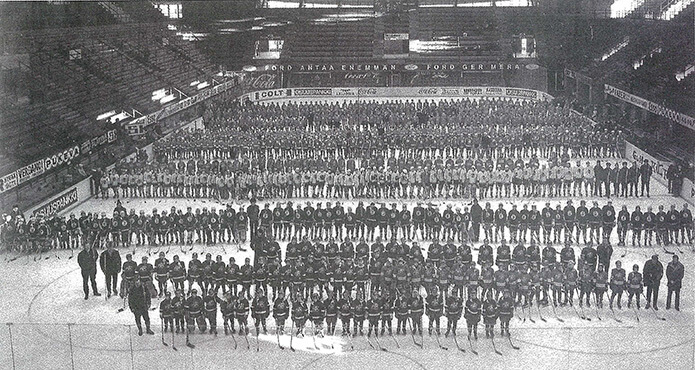
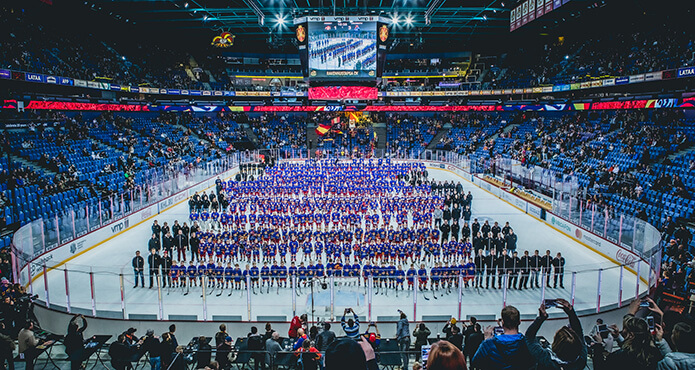
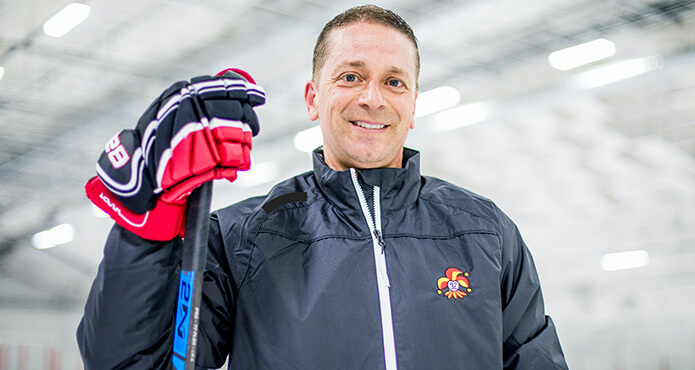
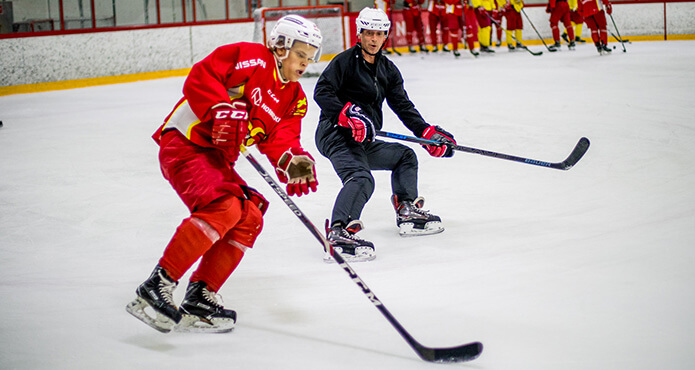
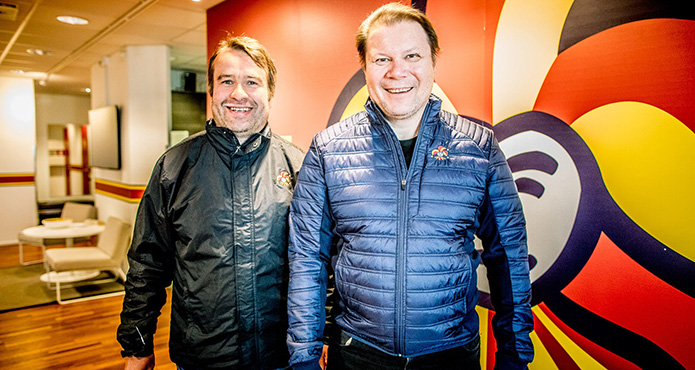

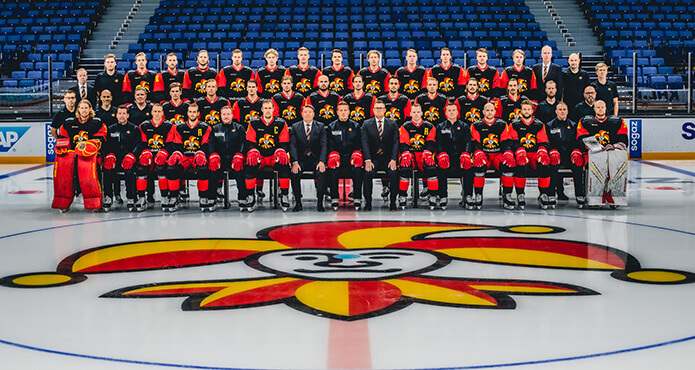
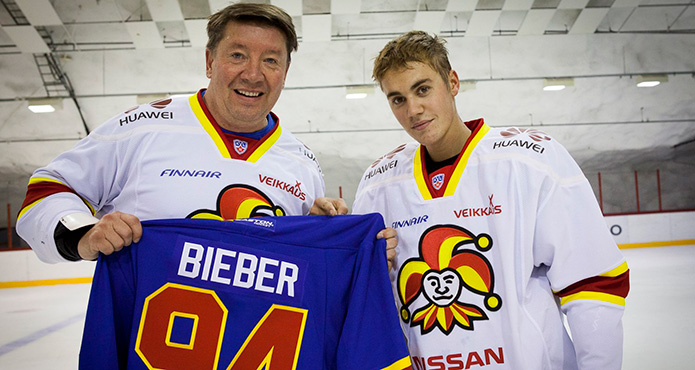
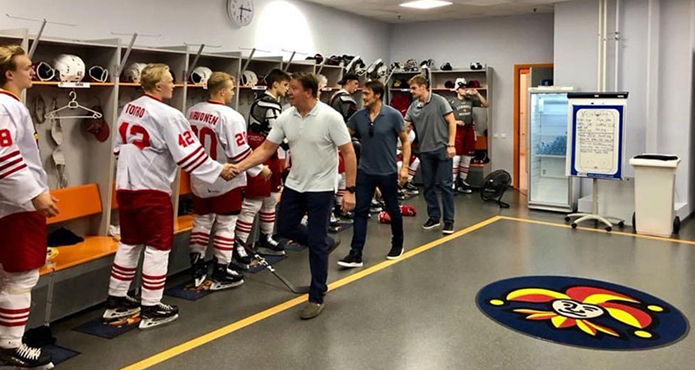

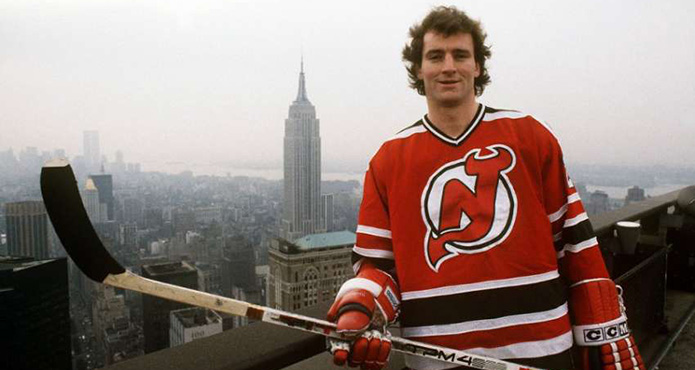
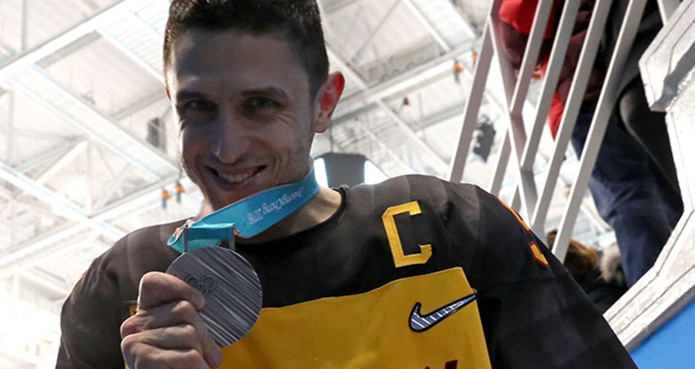
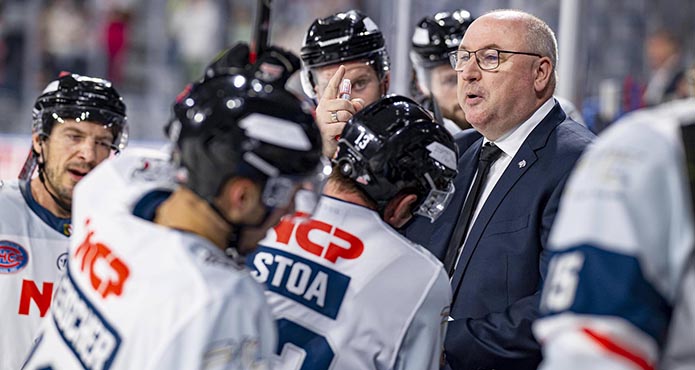
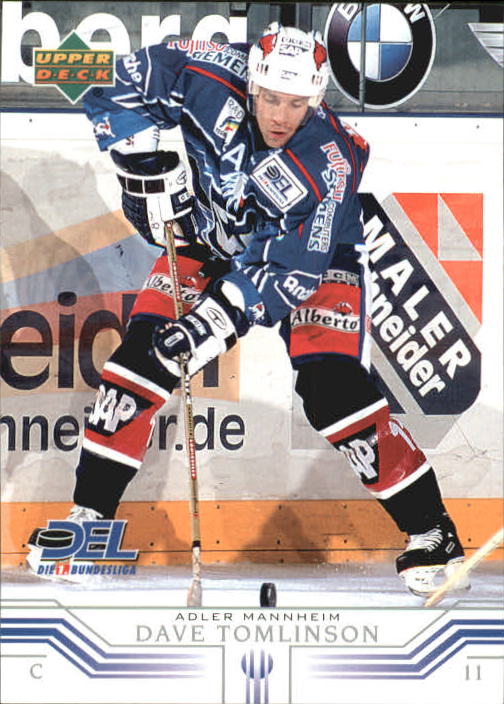
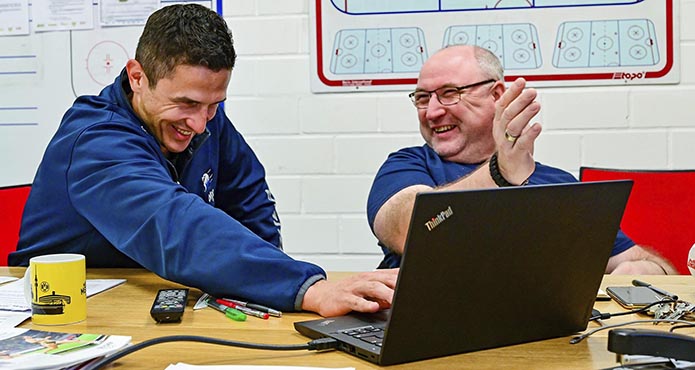

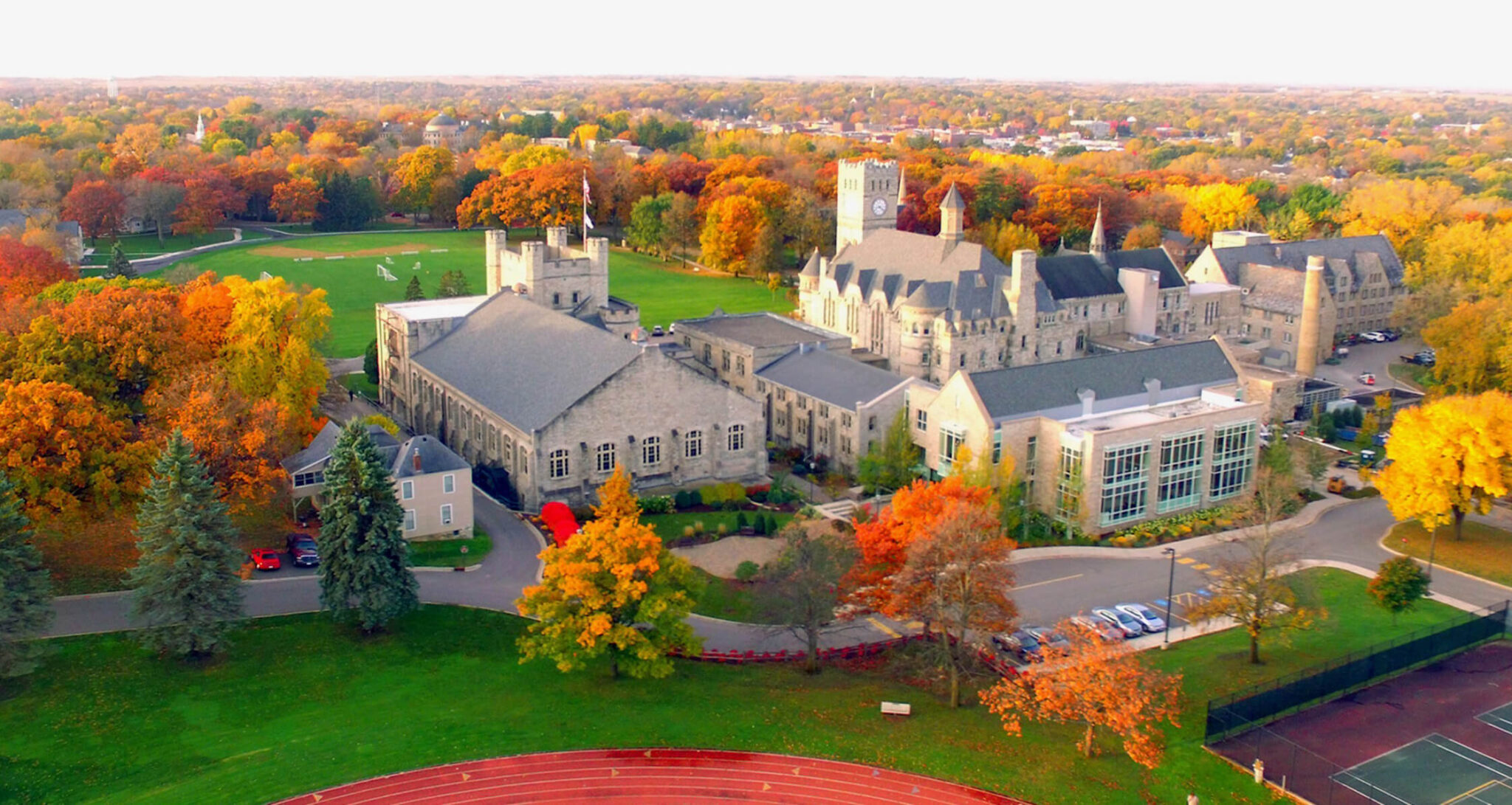 The campus sits on 250 acres about an hour south of Minneapolis. The home to Centers of Excellence in engineering, bioscience, vocal performance, soccer, figure skating, golf and hockey.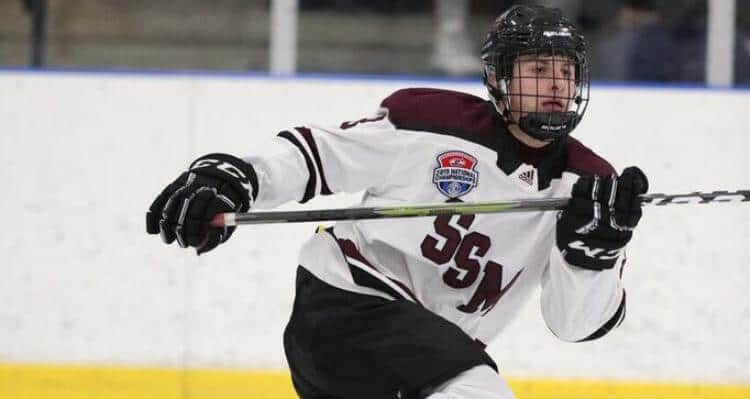

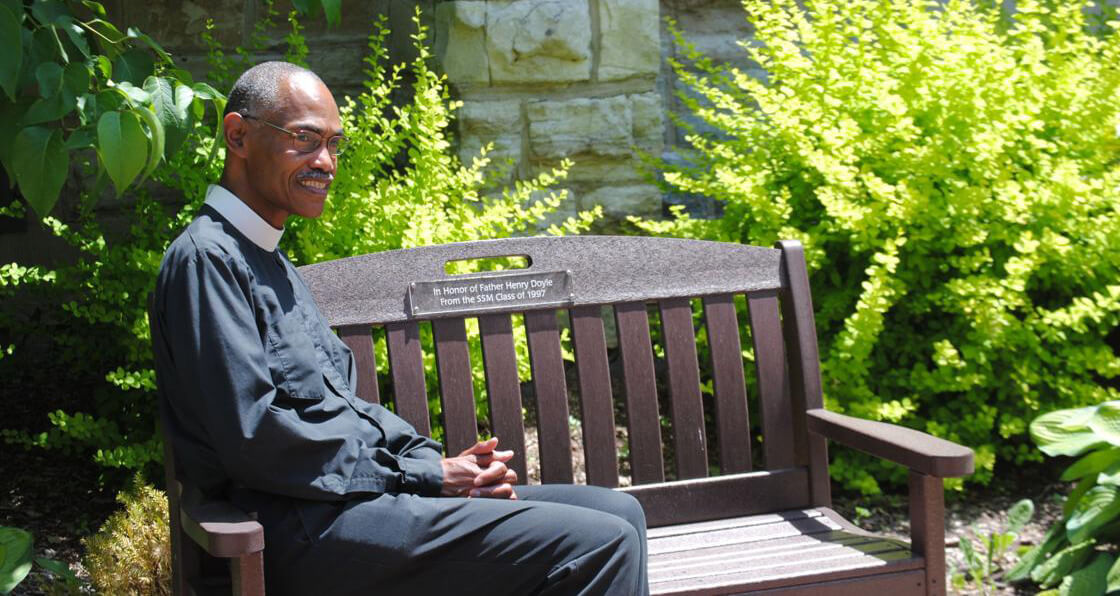 One of the more impressive things in Father Doyle’s back pocket may be his address book.