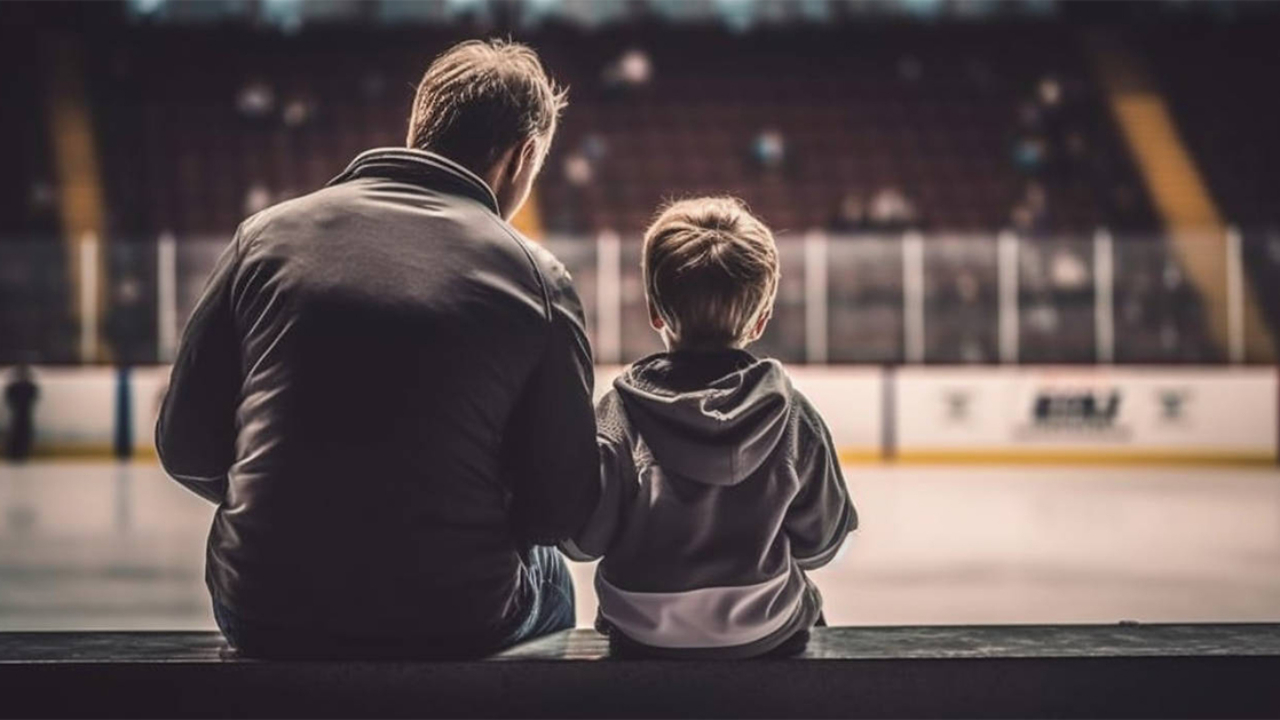
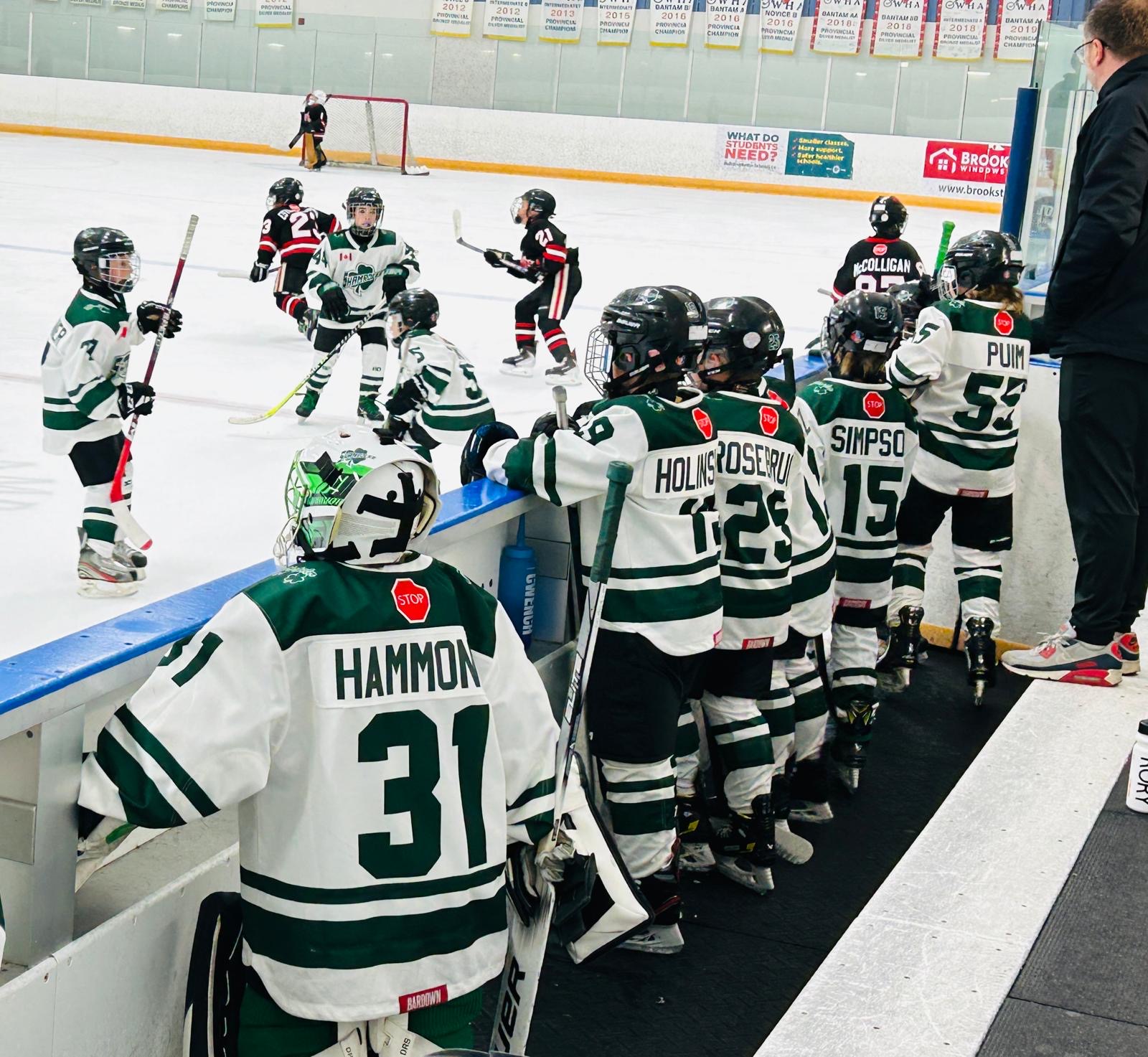
Every coach in hockey has seen it. A talented kid skates off the ice after a tough game, head down, already dreading the car ride home or the phone call that is coming. Not because he played poorly. Because he knows what's coming.
That conversation — what researchers now call "the most dangerous 20 minutes in youth sports" — can undo everything a coach built that day. And in 2026, it does not require a car ride. It happens in a hallway, in a locker room, or on a bench outside the rink. A phone, a familiar number, and suddenly the game is being replayed in the worst possible way.
I work at a residential hockey academy. That means I see the parent dynamic from a unique vantage point. Our student-athletes live here. They train here. They grow here. And what I have observed over time of working with players at the academy level is this: a player's ceiling is almost never limited by their talent. It is far more often limited by the environment surrounding that talent — and parents are the single most powerful force in that environment.
This is not a criticism of hockey parents. Most of the parents I work with are deeply loving, highly invested, and genuinely want the best for their sons. The problem is not intention. The problem is the line — and how easy it is to cross it without realizing it.
What the Research Actually Shows
The science on parental involvement in youth sport is clear and consistent across decades of study. Parental support is not just helpful — it is essential. Parents remain the primary social agents shaping adolescent experiences and participation in sports throughout childhood and adolescence. PubMed Central
They provide financial support, emotional stability, logistical infrastructure, and belief — all of which matter enormously.
But the same research draws a sharp distinction between support and pressure. Positive and supportive parental behaviors are associated with greater sport enjoyment, continued participation, and higher self-esteem, while negative or pressuring behaviors have been linked with fear of failure, anxiety, and burnout. College of Education and Human Services
The difference between those two outcomes often comes down to one thing: whose goals are being pursued — the player's or the parent's.
Three Types of Hockey Parents
Hellstedt was the first to describe the relationship between parents and children by placing family systems theory into a sports context, resulting in a descriptive model with three categories: overinvolved, moderately involved, and underinvolved parents of young athletes. Idrottsforum
Published in The Sport Psychologist in 1987 and replicated across dozens of studies since — in hockey, soccer, tennis, and swimming — this framework remains one of the most durable and validated models in youth sport research. I see it play out at the academy level every single season.
The Underinvolved Parent — Little interest or engagement in the player's development. These kids often lack structure, support, and accountability away from the rink. They can struggle with motivation because nobody at home reinforces the discipline the sport demands.
The Moderately Involved Parent — The sweet spot. Moderately involved families balance firm parental direction with the child's power to make their own decisions about goals, participation, and commitment. PubMed Central These players tend to develop the most sustainably because they feel both supported and autonomous.
The Overinvolved Parent — This is where the line gets crossed. These parents are present at every practice, analyzing every shift, coaching from the stands, and debriefing every game on the drive home or over the phone. Their intentions are good. Their impact is often the opposite.
The Car Ride and The Phone Call After the Game
One of the most researched moments in youth sport parenting is what happens immediately after competition. Research suggests that parents focused on winning, punishing, or offering critical feedback tend to appear expressionless or angry in the stands. This can cause adolescents to de-embed themselves from the game situation, reflect on the correctness of their actions, and become anxious or fearful. PubMed Central
Contrast that with this: if parents can give their children feedback with a nod or a smile when they look, it can be extremely motivating and encouraging. PubMed Central
The difference between an expressionless face and a thumbs up in the stands is not a minor detail. It is the difference between a player who skates with freedom and one who skates with fear.
For most hockey families, the car ride home is where this plays out. Twenty minutes, windows up, nowhere to go. A player who just gave everything on the ice now has to sit through a full breakdown of what he did wrong. Researchers have called it "the most dangerous 20 minutes in youth sports" — and anyone who has coached long enough has seen the damage it does.
At a residential academy, the car ride disappears — but the phone call after the game does not. What changes is the format, not the pattern. I have seen players walk off the ice, phone in hand, already bracing for a conversation with a parent hundreds of miles away. The physical distance does not eliminate the emotional weight. What it does do is make the dynamic more visible. When a player's mood shifts after a phone call — when the confidence he carried off the ice an hour ago is suddenly gone — you notice it clearly.
And what I consistently observe is this: the players who thrive here are not the ones whose parents disengage. They are the ones whose parents have learned to separate their love for their son from their judgment of his performance. Those are two very different car rides. Two very different phone calls.
When Investment Becomes Stress
One of the most overlooked dynamics in hockey families is what happens when financial investment becomes psychological pressure — often without anyone intending it.
If parents view the time and resources they give to their children's participation in sports as sacrifices they make themselves, it can have a significant impact on causing psychological stress in youth. This stress is often transferred to adolescents and becomes a shared stressor. PubMed Central
Hockey is an expensive sport. When a family is spending tens of thousands of dollars on development, it is natural to feel emotionally invested in the outcome. But when a player feels that weight — when they sense that their performance is tied to family sacrifice — it changes how they play. They play not to express themselves, but to justify the investment. That is a fundamentally different and far more fragile mental state.
Studies show that parental expectations are a source of stress among young athletes, possibly due to the awareness of their parents' efforts. PubMed Central
The player who feels he owes his parents a scholarship does not play with joy. He plays with debt.
What Positive Parental Involvement Actually Looks Like
The research on this is also clear. Positive parental involvement is that which enhanced children's enjoyment and their performance. A foundation of positive parental involvement was parents communicating with their children about their goals in sport, and aligning with their child in these objectives. Casem-acmse
Notice what that says — aligning with the child's goals, not imposing the parent's goals onto the child.
In practical terms, this means:
Before the game: "Have fun. Play your game. I love watching you."
During the game: Cheer the effort, not just the result. Smile. Let them look up and see a parent who is enjoying watching them — not evaluating them.
After the game — the car ride or the phone call: Ask "How did you feel out there?" before offering any analysis. Better yet, follow the research-backed 24-hour rule — give it a day before discussing performance. Let them decompress. The best call a parent can make after a game is a short one. "I love you. Proud of you. Get some rest." That is it. Everything else can wait.
At home: Keep hockey talk in proportion. If every dinner conversation and every phone call is about hockey, your son will either feel suffocated by it or, worse, begin to define his entire identity and self-worth through performance.
The Boarding School Lens
At a residential academy, the parent dynamic does not disappear — it evolves. Parents who send their sons here are making an enormous act of trust. They are saying: I believe in this program, I believe in these coaches, and I believe in my son enough to give him the space to grow on his own terms.
That trust is the foundation of everything. And the parents who honor it — who resist the urge to process every game over the phone or replay every shift on the drive home when they do visit, who ask about friendships and classes and not just ice time — those are the parents whose players flourish.
The players who struggle are rarely the ones with talent deficits. They are the ones carrying an invisible weight — the pressure of a parent's expectations transmitted through a screen, across hundreds of miles, five minutes after the final buzzer.
Distance does not solve the problem. Awareness does.
Where the Line Is
So where exactly is the line?
It is not a fixed point — it shifts depending on the age of the player, the stage of their development, and the individual relationship. But the research offers a reliable compass:
You are on the right side of the line when your player calls you after a game because he wants to — not because he has to. When the car ride home is filled with easy conversation, not interrogation. When he picks up the phone with something good to share, not braced for a debrief.
You have crossed the line when he sees your name on the screen and hesitates before answering. When the silence in the car says more than the words do.
Even supportive parents will take missteps. They will get swept up in the intensity of a moment of competition, voice their disappointment with what they perceived as a poor effort, or fall into a heated disagreement over a coach's decision. Casem-acmse
What matters is awareness — and the willingness to recalibrate.
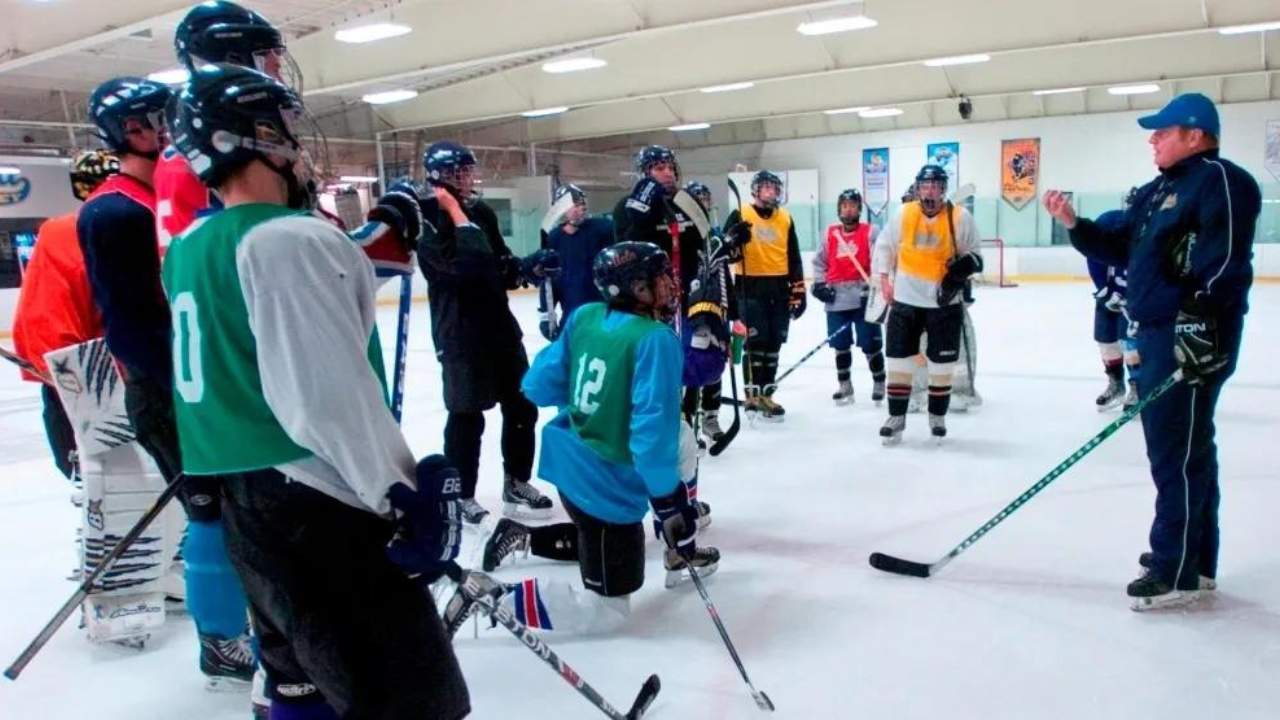
The best hockey parents I have worked with are not the most knowledgeable about the game. They are the most emotionally intelligent about their child. They understand that their role is not to coach — that is what we are here for. Their role is to love unconditionally, support consistently, and let their son own his journey.
That is where the line is. And when parents stay on the right side of it, remarkable things happen on the ice.
References
- Hellstedt, J.C. (1987). The coach/parent/athlete relationship. The Sport Psychologist, 1(2), 151–160.
- Hellstedt, J.C. (1990). Early adolescent perceptions of parental pressure in the sport environment. Journal of Sport Behavior, 13, 135.
- Knight, C.J. & Holt, N.L. (2014). Parenting in youth sport: From research to practice. Routledge.
- Knight, C.J. (2019). Influences on parental involvement in youth sport. American Psychological Association.
- Harwood, C.G. & Knight, C.J. (2015). Parenting expertise in sport: A narrative review. International Review of Sport and Exercise Psychology.
- Dorsch, T.E., Smith, A.L., & Dotterer, A.M. (2016). Individual, relationship, and context factors associated with parent support and pressure in organized youth sport. Psychology of Sport and Exercise.
- Elliott, S. & Drummond, M. (2017). Parents in youth sport: What happens after the game? Sport, Education and Society.
- Burke, S. et al. (2023). Parental behavior on the field of play and its effects on adolescent athletes. Frontiers in Psychology.
- Kovács, K. et al. (2022). Private space exchanges and shared stress in youth sport families. Frontiers in Psychology.
- Fraser-Thomas, J., Côté, J., & Deakin, J. (2008). Understanding dropout and prolonged engagement in adolescent competitive sport. Psychology of Sport and Exercise.