
1 on 1 battle drill that promotes angling and checking skills without taking penalties.
 00:00:00
Why Simple is Best, with Minnesota State’s Luke Strand
“It’s our job to know how the player learns.”
Subscribe: Apple Podcasts | Spotify | Google Podcasts
For episode #227 of the Glass and Out Podcast, we were fortunate to attend the Minnesota Hockey Directors Conference and be joined by Luke Strand, newly named Head Coach of the Minnesota State Mavericks.
Strand is a friend of The Coaches Site, and needless to say our team is pumped for him and the Mavericks program. He’s earned this opportunity and has put together an amazing staff that knows how to prepare players for the rigours of professional hockey.
Listen as shares the importance of getting players out of their comfort zone, why simple is best, and how to handle player mistakes.
VIDEO TIMESTAMPS:
- 2:10 Getting the opportunity with Minnesota
- 3:30 Building culture with a new team
- 5:00 Team building with young players
- 6:40 Advice to players looking to play in NHL
- 8:30 His ability to develop individual players
- 10:48 Getting players out of their comfort zone
- 12:30 Being an efficient coach
- 14:00 Why simple is best
- 16:45 Foundational skills for youth players
- 19:00 Helping players who make mistakes during games
- 20:35 How communication and relationships have changed with players
- 22:00 What analytics have told us about overlooked aspects of the game
- 25:05 Using video for one on one interactions
- 27:00 Part – whole – part approach to teaching 2
- 29:20 Allowing players to play with instinct
- 31:55 Learning from other coaches at Hlinka Gretzky Cup
- 33:35 How to implement lessons learned from mentors
- 35:15 Learning from other sports
- 37:00 Balancing being a players coach with holding players accountable
 00:00:00
U9 Minor Hockey Curriculum
Find the confidence to deliver an enriched experience this season.
At U9, players are eager to learn and ready to take on bigger challenges. The U9 Minor Hockey curriculum gives you the tools, drills, and practice plans to keep hockey fun while teaching the skills and teamwork needed to compete. It’s the perfect balance between player development and a competitive edge. Give your U9 players the foundation they need to grow, compete, and love the game for years to come. Enroll today and coach with confidence.
This curriculum, free for TCS members, features:
Skills That Grow with the Team
- Progressive drills that match your players’ abilities while pushing them to improve
Fun Meets Focus
- Practice activities that keep kids smiling while building real hockey skills.
Teamwork From Day One
- Games and drills that teach players to work together and support each other on the ice.
 00:00:00
Explained: Diamond Penalty Kill Formation
What is the Diamond Penalty Kill in hockey?
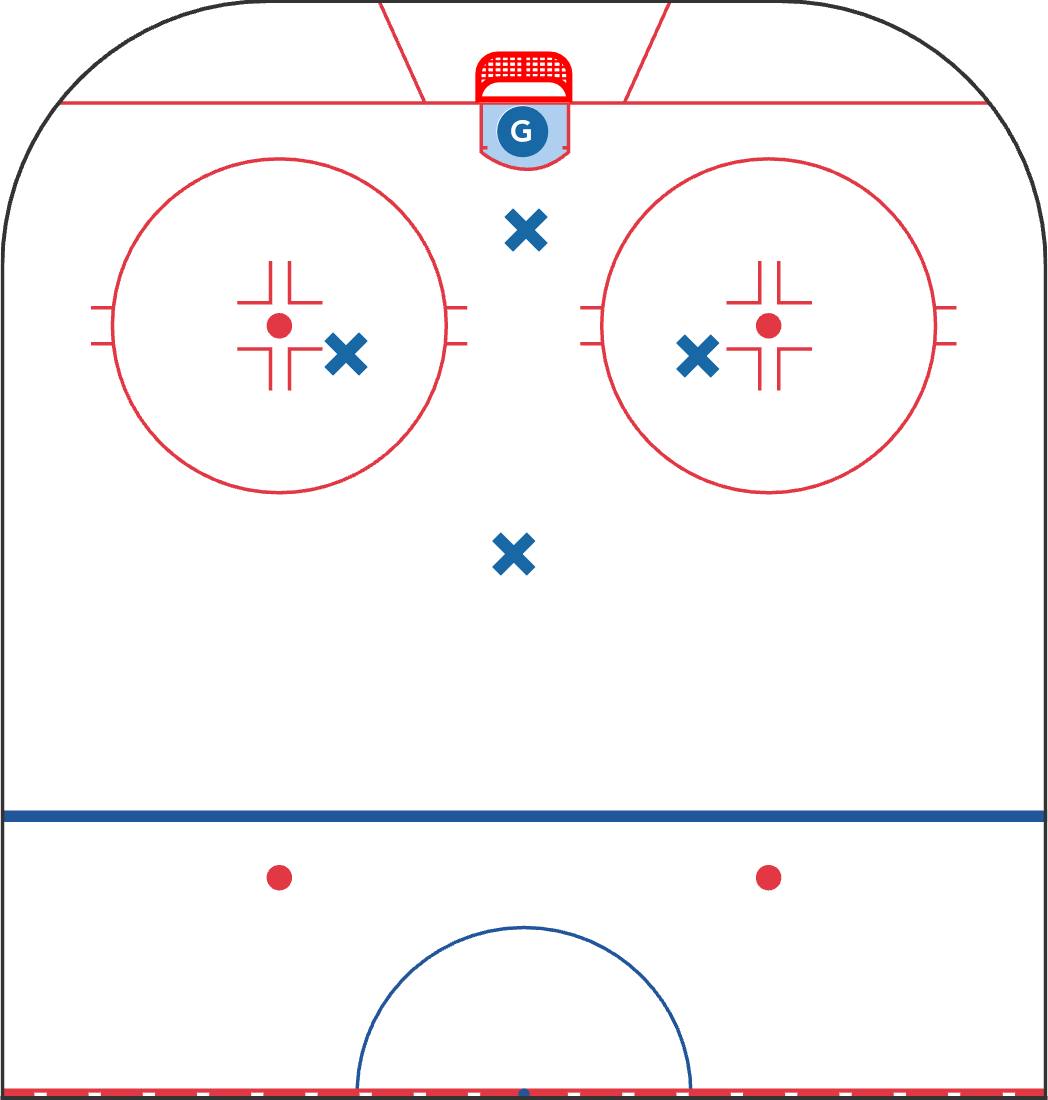
The Diamond Penalty Kill in hockey is a shape that contains the power play to the outskirts, or the periphery, of the defensive zone. The Diamond is used to prevent high danger scoring chances from the inner slot area directly in front of the goalie by stationing one player on the top of the crease, one in the middle of the ice (in the high slot above the tops of the circles), and two players protecting the goalie’s flanks on either side of the slot.
What are the benefits of using the Diamond Penalty Kill in hockey?
The primary benefit of the Diamond Penalty Kill in hockey is the predictability of the chances the power play team will receive. Because the diamond sets up in a mostly stationary formation, it means the power play will only be able to take shots from the periphery of the defensive zone. The penalty killers are positioned tightly in front of the goalie, thus it’s nearly impossible to get dangerous scoring chances in the low slot area simply by passing the puck around. It is also relatively simple for players to play their positions, as the system doesn’t call for very much aggression. The Diamond is content to keep shots to the outside while it waits for the penalty kill clock to wind down.
What are the disadvantages of using the Diamond Penalty Kill in hockey?
The disadvantages are twofold: the time and space given to the power play, and the potential for that time and space to result in rebound chances.
A power play with time and space will be able to pass the puck through its players easily, but with the Diamond Penalty Kill, those passes are unlikely to result in a glorious scoring chance. That is until a shot is taken from the periphery that makes it through traffic and creates a rebound. Goals scored off a rebound are among hockey’s most likely goals. A Diamond Penalty Kill will allow shots from the periphery, but once those shots are taken, even if the goalie stops the original shot, a rebound produced in the low slot area is a highly dangerous chance.
What are the forward responsibilities for the Diamond Penalty Kill in hockey?
The diagram of the Diamond Penalty Kill above looks quite incomplete without the corresponding power play, but it’s important to note that this is normally a starting point for teams. The forwards are usually placed at the top near the blue line and then on either side of the goalie, or the flank. These forwards are responsible for standing in the way of potential shots, or blocking shots, in order to prevent them from getting to the net. The forwards are also responsible for intercepting passes between the power play players and icing the puck.
What are the defenseman responsibilities for the Diamond Penalty Kill in hockey?
The defencemen in the Diamond are responsible for the net front position first and foremost, which usually means they’re charged with tying up the player who is stationed there on the power play and preventing them from scoring a rebound goal or screening the goalie. This player needs to be strong and possess good anticipation skills in order to find loose pucks after shots and clear it down the ice.The second defenceman will be positioned to the side and be responsible for blocking shots and intercepting passes as well as clearing the puck.
Which coaches use the Diamond Penalty Kill in hockey well?
Coaches who use the Diamond efficiently are coaches who have prepared well and understand the threat of an incoming power play. This might mean the team is facing a particularly strong opponent, or simply possesses players who might not be the fastest, and therefore need a simple penalty kill system that eliminates the most dangerous opportunities. Coaches who have goaltenders with strong rebound control are also more likely to use the Diamond.
What skills or strengths does a team or player need to run the Diamond Penalty Kill in hockey?
The primary skills required by a hockey team proficient running the Diamond Penalty Kill are anticipation, stick-checking (for intercepting passes), and physical strength (to clear rebounds away from the front of the net).
Which teams are the best examples that use the Diamond Penalty Kill in hockey?
Using high danger scoring chances as a metric, these NHL teams were the most proficient in preventing scoring chances from inside the low slot area in the 2022/23 season.
Rankings from Natural Stat Trick
Boston Bruins
Toronto Maple Leafs
Los Angeles Kings
What other types of power play formations are there in hockey?
 00:00:00
Explained: 5-on-3 Penalty Kill Formation
What is the 5-on-3 Penalty Kill in hockey?
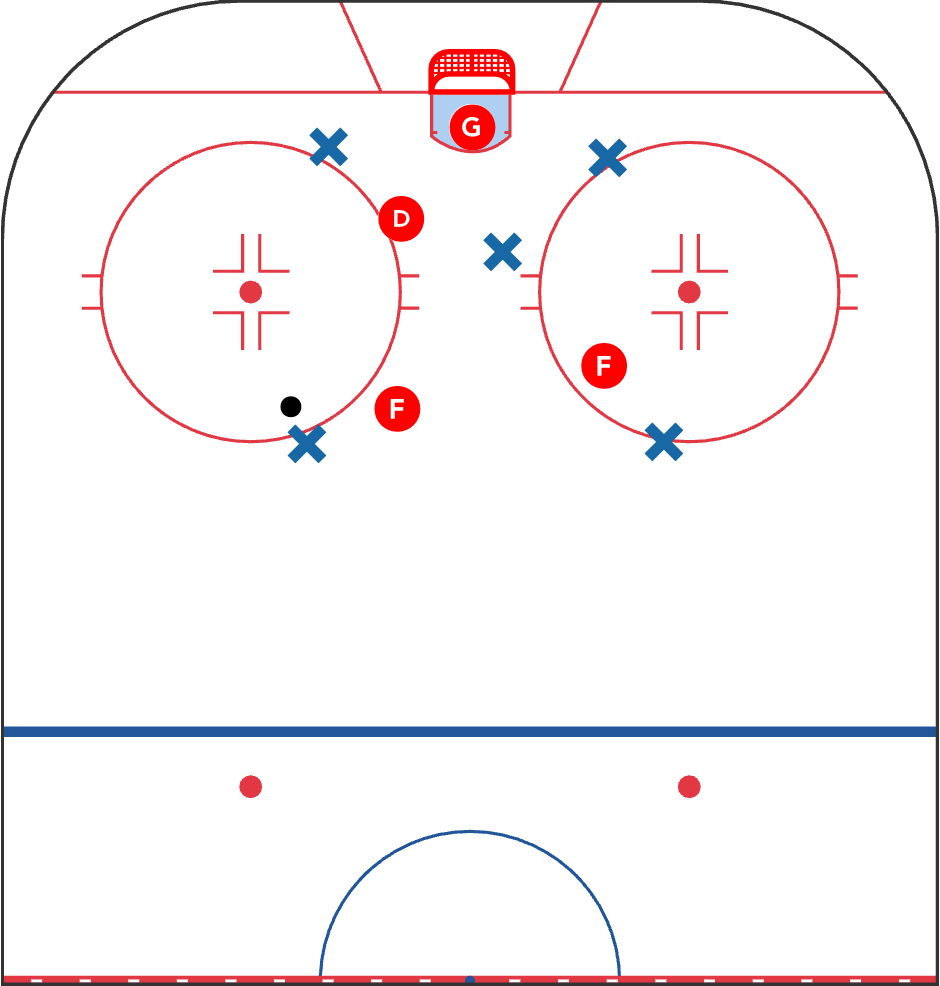
A 5-on-3 Penalty Kill is, besides the penalty shot, the most exciting or stressful situation in the game, depending on which team you’re on. A team that commits a subsequent penalty infraction following an original penalty kill must remove the guilty player, which results in that team being two players down, or three players to five. This is an extremely challenging situation for the penalty killers, as there will always be two players open on the powerplay.
What are the benefits of using a standard 5-on-3 Penalty Kill in hockey?
While it’s difficult to completely cover every option on a 5-on-3 powerplay, a 5-on-3 Penalty Kill should still be organized to prevent the most dangerous of scoring chances. Most teams will use a triangle formation that positions two players on whichever side the puck is on during a standard 5-on-3 powerplay. This prevents cross-ice passes, which are nearly impossible for the goalie to stop. An organized 5-on-3 penalty kill will also instill confidence in the penalty killers, which is often all a coach can ask for in these situations.
What are the disadvantages of using the standard 5-on-3 Penalty Kill in hockey?
The disadvantages of a 5-on-3 penalty kill are mainly the fact you’re killing a 5-on-3 in the first place. There is too much ice to cover for three players playing against five. An additional disadvantage, however, rests in simply being unprepared. Of course the situation is daunting, but players who are prepared to at least follow a formation, even if it’s simple and straight-forward, are more likely to make a mistake, when perhaps the best course of action is to stand your ground and force the powerplay to make a mistake.
What are the forward and defensemen responsibilities for the standard 5-on-3 Penalty Kill in hockey?
Teams can either use two forwards and one defenseman or two defensemen and one forward (or three players who normally play the same position), because the even strength positions don’t matter much to the 5-on-3 penalty kill. Each of the three players has the same responsibilities: intercept cross ice passes, stand in shooting lanes to block shots, clearing pucks down the ice when given the chance, and prayer.
Which coaches use the standard 5-on-3 Penalty Kill in hockey?
The best 5-on-3 penalty schemes are created by coaches who have distinct knowledge of an opponent’s 5-on-3 powerplay formation. Let’s say an incoming team has a player with a blistering one-time slapshot. 5-on-3 situations are rare, but if a coach doesn’t know about that player’s specific strength, the 5-on-3 penalty kill could be over quickly. Many coaches will use their timeout when they’re awarded a 5-on-3 powerplay, which gives the penalized team’s coach a chance to draw their preferred penalty kill formation out for the incoming players.
What skills or strengths does a team or player need to run the standard 5-on-3 Penalty Kill in hockey?
Besides luck, teams need the right level of preparation to defend against a 5-on-3 powerplay in addition to anticipation skills, good stick-checking skills, and effective communication.
Which teams are the best examples that use the standard 5-on-3 Penalty Kill in hockey?
The best examples of teams who find themselves killing a 5-on-3 penalty are actually the worst examples. This is a statistic in which a team doesn’t want to lead. If a team leads their league in time spent killing penalties, any penalties, that’s not a good thing. The best examples of teams who use the 5-on-3 Penalty Kill are the teams who use it the least.
What other types of power play formations are there in hockey?
 00:00:00
Creating Positive Learning Environments, with Kalle Väliaho
“If it’s fun to go where the coach is, you’re able to get your message through."
Subscribe: Apple Podcasts | Spotify | Google Podcasts
In episode #230 of the Glass and Out Podcast, Kalle Väliaho, Director of Development for the IIHF, stops by.
Väliaho has a fascinating role that encompasses balancing having a pulse on the latest trends in the game, specifically when it comes to individual player development, in addition to how we design learning environments that engage with young players and foster the growth of the game.
Listen as he shares the importance of having passionate people to grow the game, building positive learning environments for players, and how Finland has grown into one of the top nations in hockey.
VIDEO TIMESTAMPS:
- 1:30 Evaluating the health of hockey
- 2:45 The game growing in Asia and South America
- 4:30 How to encourage the growth of hockey worldwide
- 6:30 Key things coaches learn at clinics
- 9:00 Rules for including fun in youth practice
- 12:10 On the correct amount of drills for kids
- 15:30 Go to drills/games at learn to play level
- 18:15 His role with the IIHF
- 22:10 Learning at Vierumäki
- 24:30 Ambitions early in coaching career
- 28:00 How long it takes for a country to be competitive at hockey
- 33:00 His role of adapting/changing the culture of new hockey countries
- 37:00 The Finnish coaching and development system
- 40:00 Keys for youth hockey that lead to success in Finnish National team
- 44:50 Learning from other sports leaders
- 46:00 Goals for this season
- 49:20 Evaluating if his season was a success
- 52:30 Experience coaching in Aspen, Colorado with USA Hockey
- 59:30 Predicting countries for 2050 World Championships
- 1:02:00 Tips for all coaches

 0:00:15
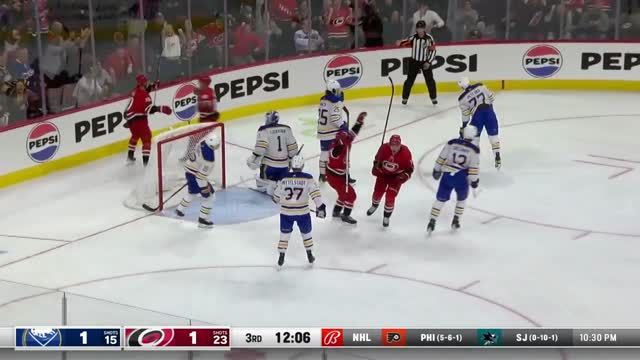
Two cone forecheck drill
On the whistle, Coach dumps the puck on the net. Goalie sets the puck to the side. D goes around the bottom cone as F goes around the top cone. D uses deception to get away from F but cannot go behind the net. F pressures to contact and tries to separate the puck from the D.
 00:00:00
The Prinicple of Player Success, with Roger Rönnberg
“One of our most important principles is that everybody will be successful. Not may be.”
Subscribe: Apple Podcasts | Spotify | Google Podcasts
In episode #235 of the Glass and Out Podcast, we sit down with Roger Ronnberg, Head Coach of the Frolunda Hockey Club.
Ronnberg is widely considered one of the top coaches in Europe, his name routinely comes up when the topic of European coaches breaking into the NHL is mentioned. He is respected by the top coaches in the game as someone who has demonstrated that putting people first, and prioritising individual development, in all facets, is the process that leads to sustained performance by a team.
Listen as he shares why he wants no thinking and no excuses from his players, breaking down systems into habits, and why coaches should strive to make every player successful.
VIDEO TIMESTAMPS:
- 0:10 Lessons learned while coaching Sweden at the World Juniors
- 2:30 Having the right mindset for practice
- 5:00 Important behaviours to have implemented during a season
- 7:30 Puck possession, always attack, always pressure
- 11:00 Challenging players to make their own reads
- 14:00 Helping player's improve their reads
- 18:10 Working with a performance coach
- 24:00 Reframing the message
- 28:00 Every player will be successful
- 34:50 Having the mindset of constant development
- 38:20 Core values in Frolunda
- 40:40 Joel Lundqvist's impact in the community
- 45:15 Getting a pulse on the team from captains
- 48:30 Mindset of developing players/people
- 50:40 Creating a safe environment for coaches