
Explore the complete series to learn how each system works:
Or start with the complete guide to defensive zone coverage, which compares all three systems and explains when coaches choose each one.
What is defensive zone coverage in hockey?
Zone Defensive Coverage
Everyone in their assigned seats, please!
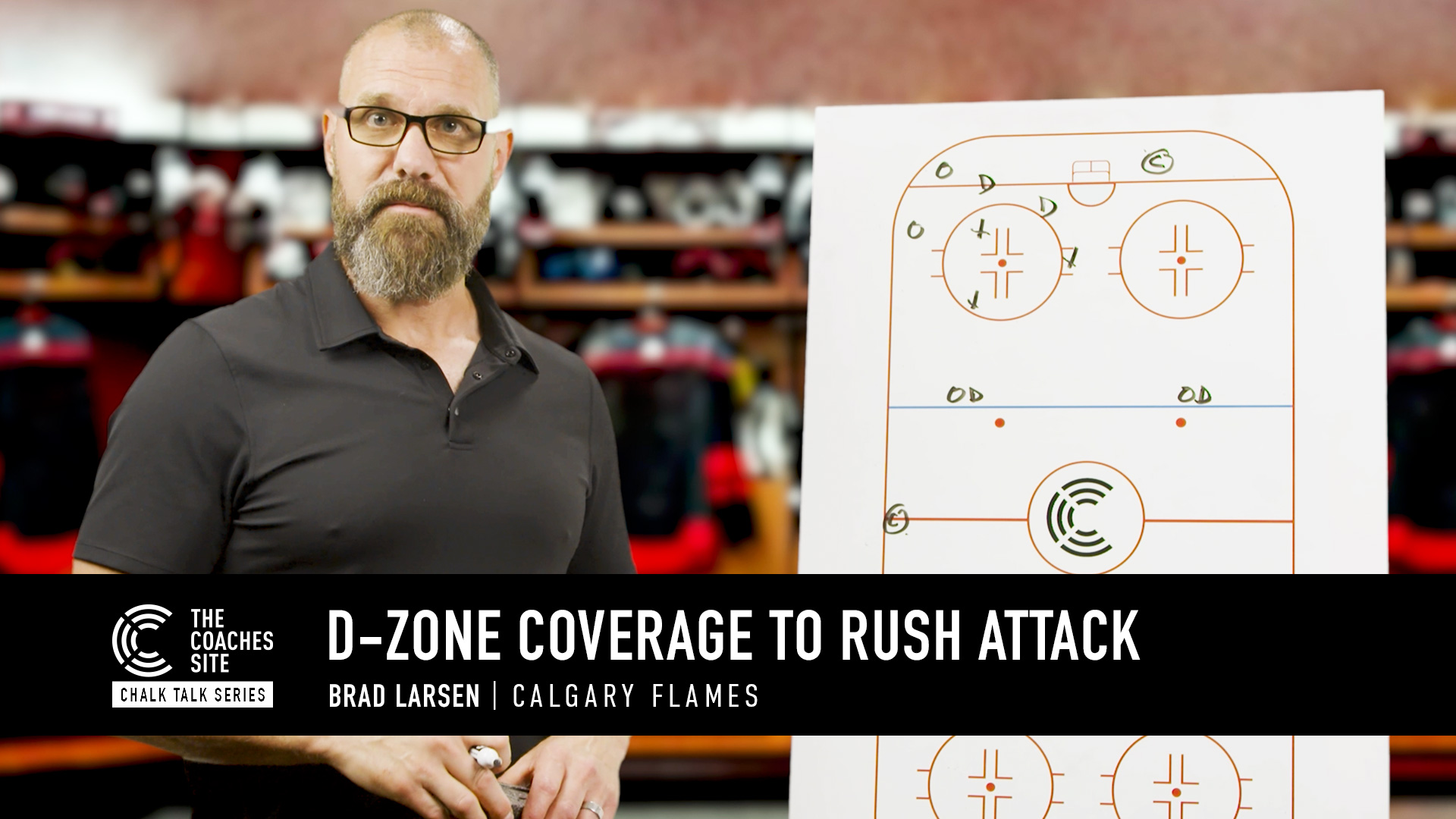
The core principle for zone coverage is simple. In man-to-man, you're assigning bodies. In zone, you're assigning ice. Every player owns a fixed area of the defensive zone, and their job is to defend the puck or the offensive players who skate into or through that area. When the puck carrier leaves that area, responsibility for that player leaves with them, and the next player picks them up.
Imagine a normal set of dice. That's what zone defence looks like: the five on a die.
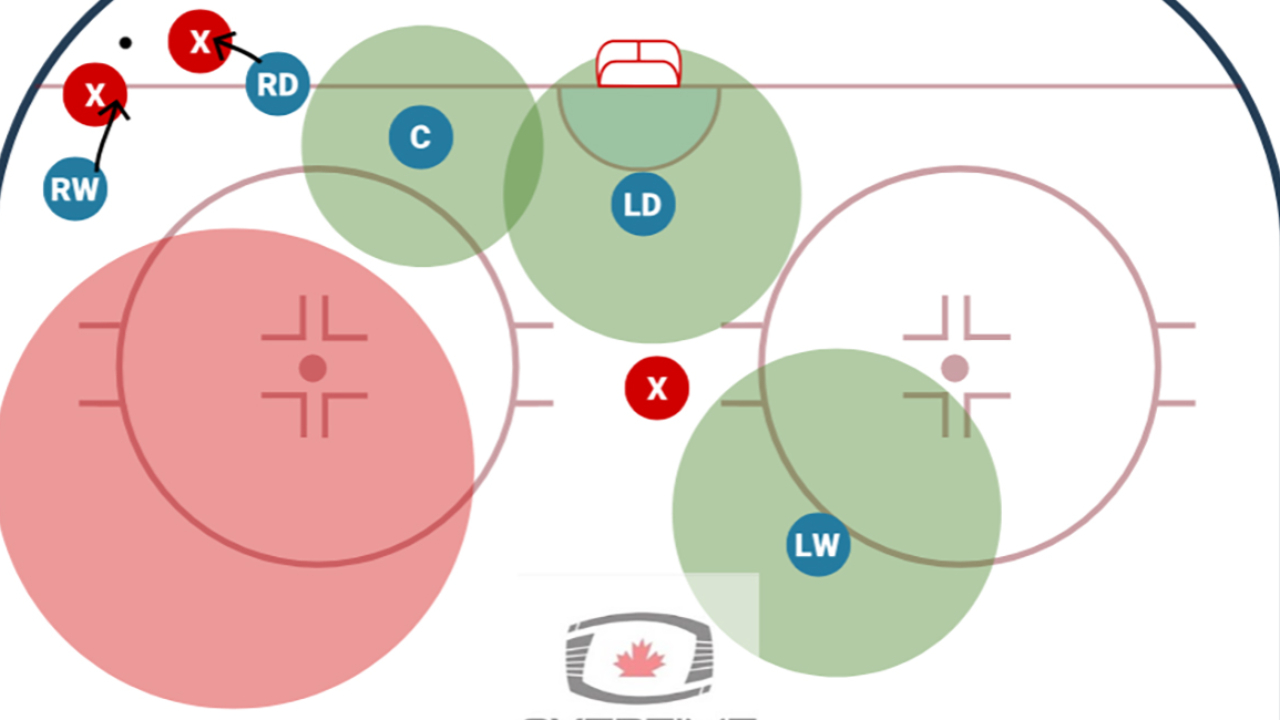
Zone coverage is more dependent on assigned positions (forwards and defence) than man-to-man or hybrid coverage. To keep it simple, let's start with the puck down low in the corner and divide the zone into quarters. The defenders closest to that area collapse, while the rest of the group holds its shape and stays ready to help if the coverage breaks down.
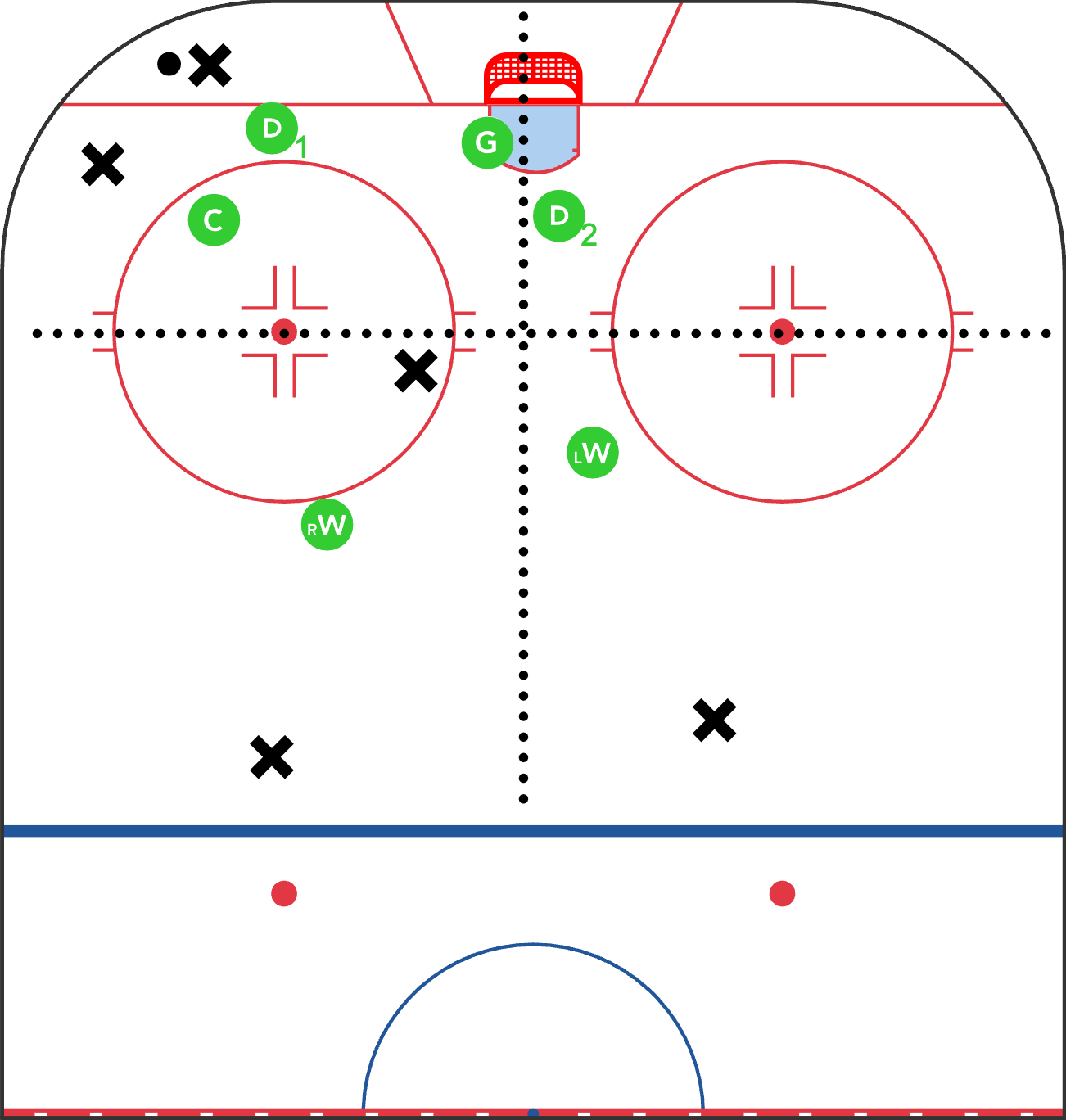
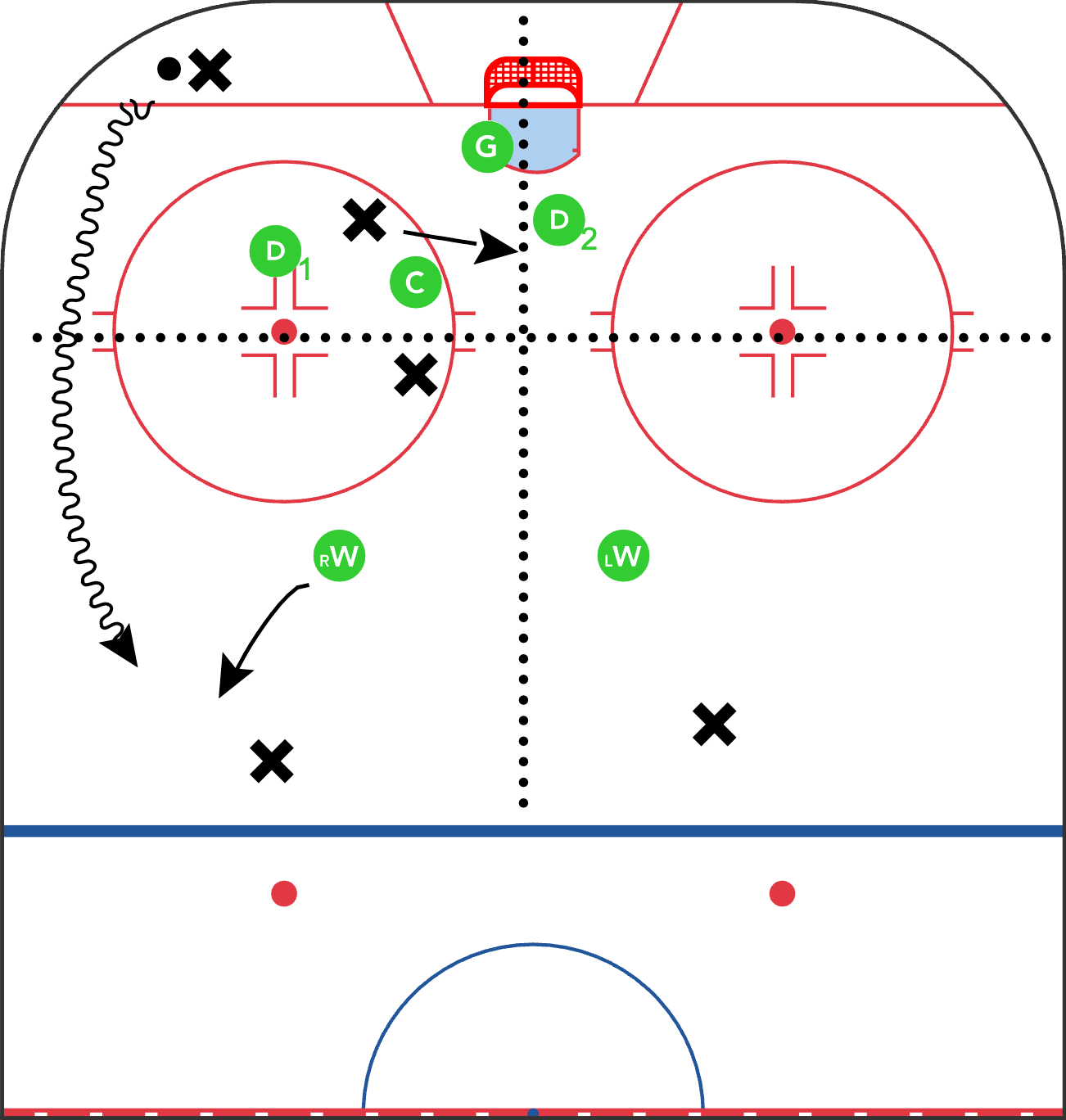
Now watch the coverage as the puck moves. Nobody's tracking across the ice. Whoever enters your area is your assignment for as long as they're there. The instant the play shifts into a teammate's zone, you release him and reset into your own space. The key is to keep the puck on the perimeter: let them skate around the outside of the zone until you can get it back.
What are the benefits of using zone coverage?
The biggest advantage is that it's a mental system before it's a physical one. The players aren't burning their legs chasing a matchup around the defensive zone. Instead, they're reading the play and trusting their spacing. That keeps the group compact, protects the house and the front of the net, and forces the offence to work from the perimeter, where their scoring chances are lower percentage. It also levels the ice for teams that don't have elite foot speed up and down the lineup.
What are the disadvantages of using zone coverage?
The tradeoff is that this system runs entirely on communication, and communication breaks down under speed. When it breaks down, there are seams or gaps offensive players can slip through. Or, if two players both assume the attacker in front of the net is the other one's assignment, that's a missed assignment, and skilled teams can exploit that quickly. Cross-ice passes, quick give-and-goes, and any sequence that moves faster than your group can recognize and hand off will expose the soft spots between coverage areas. Man-to-man guarantees a body on every attacker regardless of scheme discipline, but requires elite fitness and skating. Zone coverage, on the other hand, asks five players to read and rotate together, which demands more practice reps and more in-game communication to execute cleanly.
What are the winger responsibilities in zone coverage?
Wingers are generally responsible for covering the opposing defencemen at the blue line, or the points. But that changes quickly if their defenceman leaves the blue line! They have a big area, but it's far away from the net. They collapse to the low slot to support the low defenders, but they're primarily accepting switches or handoffs from the defencemen and centres when the puck moves from low to high. This means a defenceman might initially be defending a puck carrier, but when that puck carrier moves into the winger's zone, they become the winger's responsibility. Communication is the single biggest responsibility for all three forwards in this system. It's important to call out when these switches happen, or communicate with body language (pointing, checking).
What are the defencemen responsibilities in zone coverage?
First and foremost, both defencemen own the house, meaning the slot and the front of the net, regardless of which opposing player is occupying it. From there, each defenceman owns their corner up to the hashmarks beside the net. The job isn't to chase a jersey number; it's to deny that space to anyone who enters it. That requires active stick positioning, box-outs on second and third chances, and the patience to hold ground instead of getting pulled out of position by a screen or a decoy. The centre splits responsibility between supporting the defencemen down low and reading the middle lane, and often functions as the quarterback of the coverage, calling out assignments and switches for the group.
What are the centre responsibilities in zone coverage?
The centre mostly helps out down low and is tasked with skating more than anyone in a zone coverage system. They will cross in front of and behind the net when the puck is moved from one side to the next. When the puck goes to an opponent at the blue line, the centre will find an extra check in and around the net to tie up.
In zone defence, the same principle applies across every position: when the puck leaves your area for a teammate's, release the assignment and get back into your own space. Trust the next player to take it from there.
Which coaches use zone coverage effectively?
Coaches who run zone coverage well tend to prioritize communication and positional discipline over raw team speed. It's a strong system for a younger group still developing the ability to read plays, and for a team that needs to conserve energy against a faster opponent rather than run around chasing matchups for sixty minutes. The system rewards structure. If your group is willing to communicate and hold its shape, zone coverage will cover for a team that isn't the fastest on paper.
What skills or strengths does a team or player need to run zone coverage?
Communication is the non-negotiable skill here. Positional discipline follows close behind, as players have to hold their assigned area even when instinct tells them to chase the puck. Hockey sense and anticipation matter more than pure skating ability in this system, since reading the play half a second early is what keeps the coverage intact. Active stick work to take away passing and shooting lanes rounds out the skill set.
You can watch a thorough breakdown with NHL examples from long-time NHL coach Glen Gulutzan here.
Which teams are the best examples?
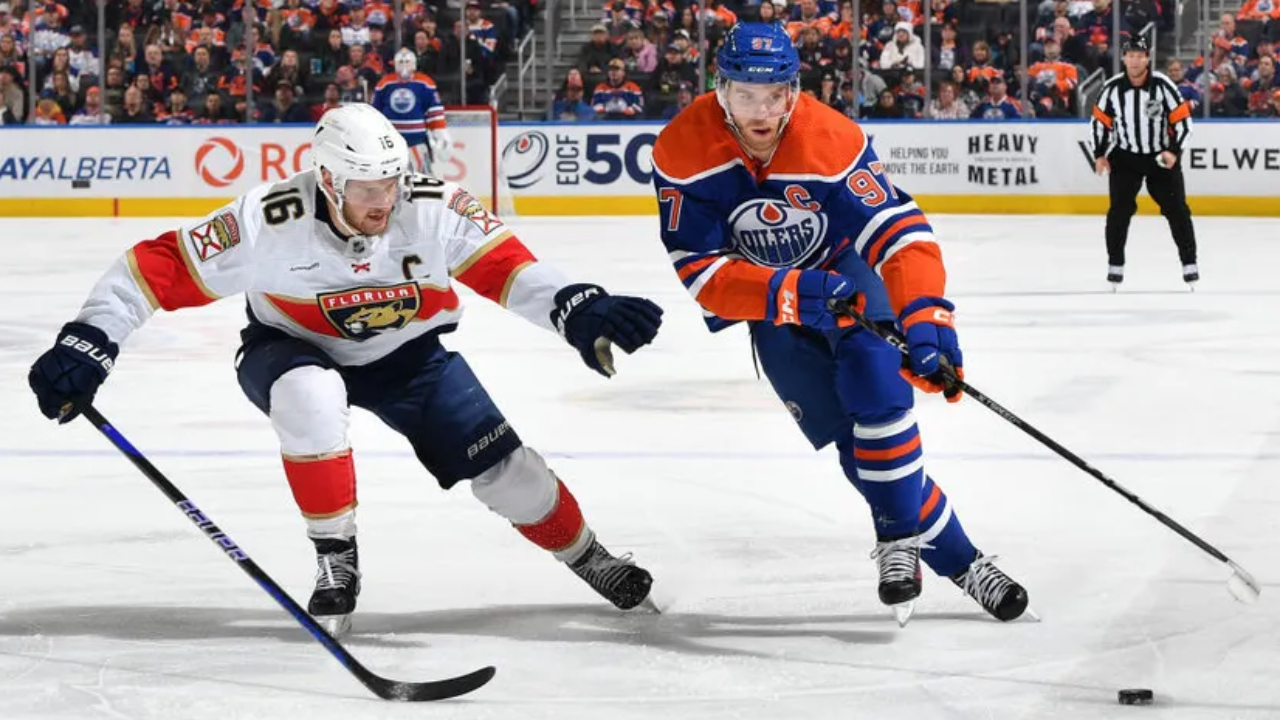
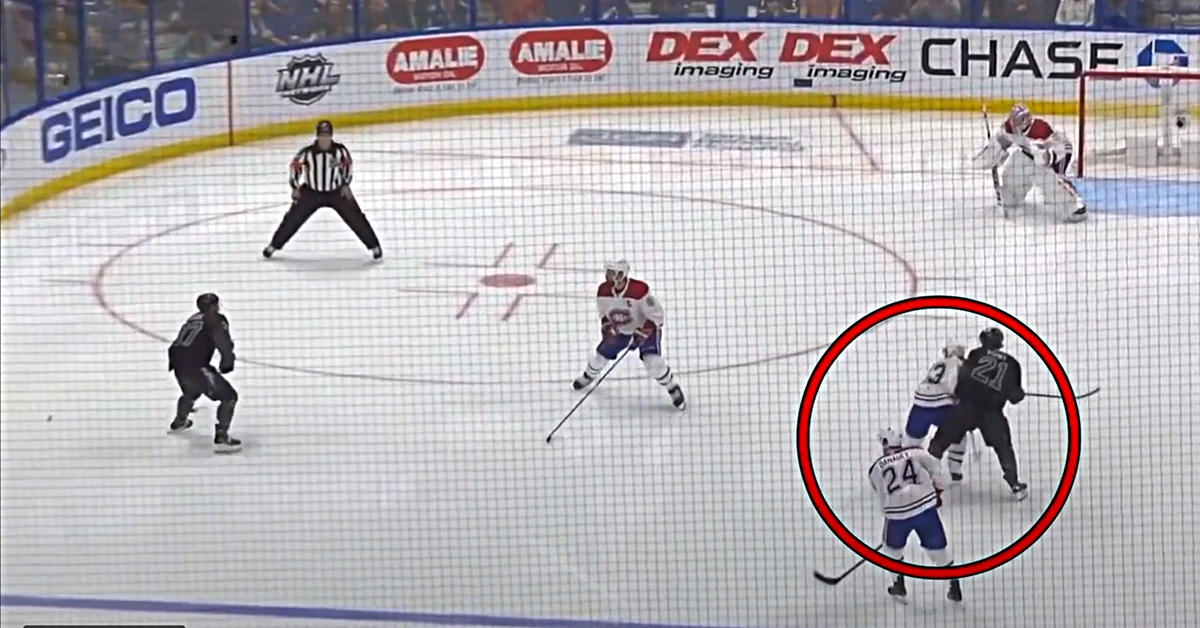
When the Vegas Golden Knights hired Bruce Cassidy as head coach for the 2022–23 season, he installed a structured zone coverage system that became the backbone of their championship run. It kept the group compact and positionally sound rather than chasing individual matchups, and it showed up directly in how they played. That structure held up against two very different challenges on the way to the title: Connor McDavid and Edmonton's transition speed in the second round (a 4–2 series win), and Florida's forecheck and net-front pressure in the Stanley Cup Final (a 4–1 series win), both largely neutralized by trusting the zone rather than matching up man-to-man. In the clip below, watch the defenceman stop before climbing too high in the zone, and then watch the Florida player skate right into the Vegas forward's coverage area.
What types of defensive zone coverage are there in hockey?
No single defensive zone coverage is right for every team. The best coaches choose a system that fits their roster, their philosophy, and the situations they'll face throughout a season. Understanding the strengths and tradeoffs of each approach will help you decide which one is the best fit for your group.
Explore the complete series to learn how each system works:
Or start with the complete guide to defensive zone coverage, which compares all three systems and explains when coaches choose each one.