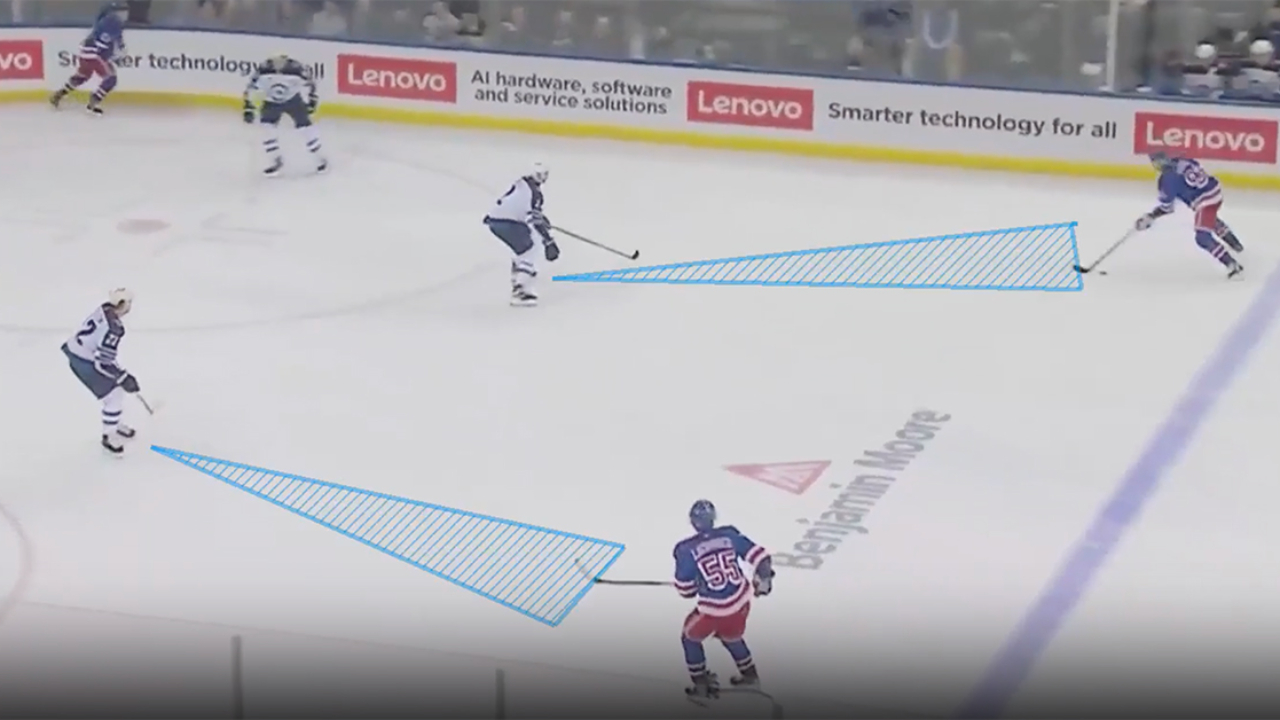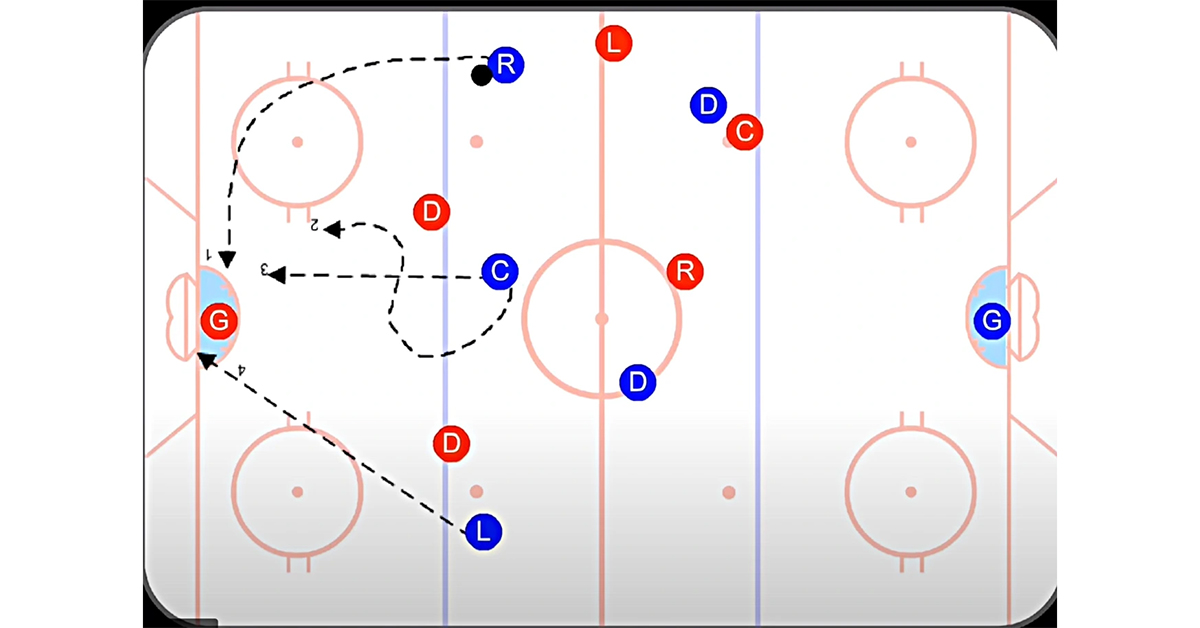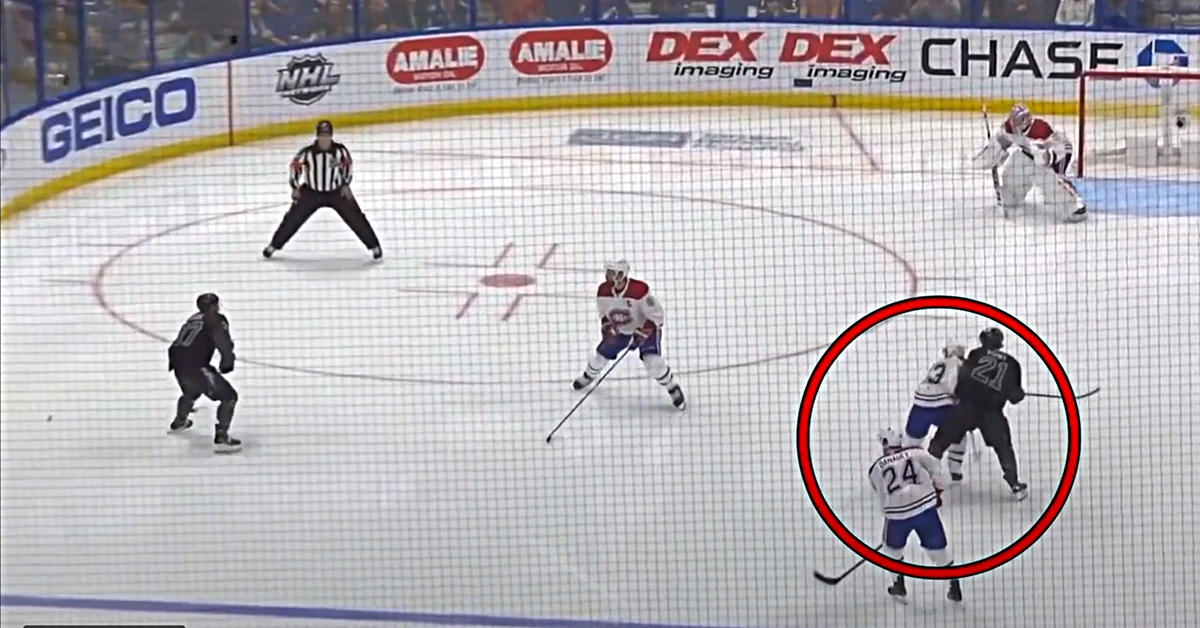

Explore the complete series to learn how each system works:
Or start with the complete guide to defensive zone coverage, which compares all three systems and explains when coaches choose each one.
What is defensive zone coverage in hockey?
Hybrid Defensive Zone Coverage
Hybrid coverage is a combination of two distinct defensive zone systems: zone defence and man-to-man coverage. It's a real-time switch between the two depending on where the puck is. Below the goal line, or below the hash marks depending on how you teach it, the defending team plays a swarm, which means three players defend the area where the puck is located.
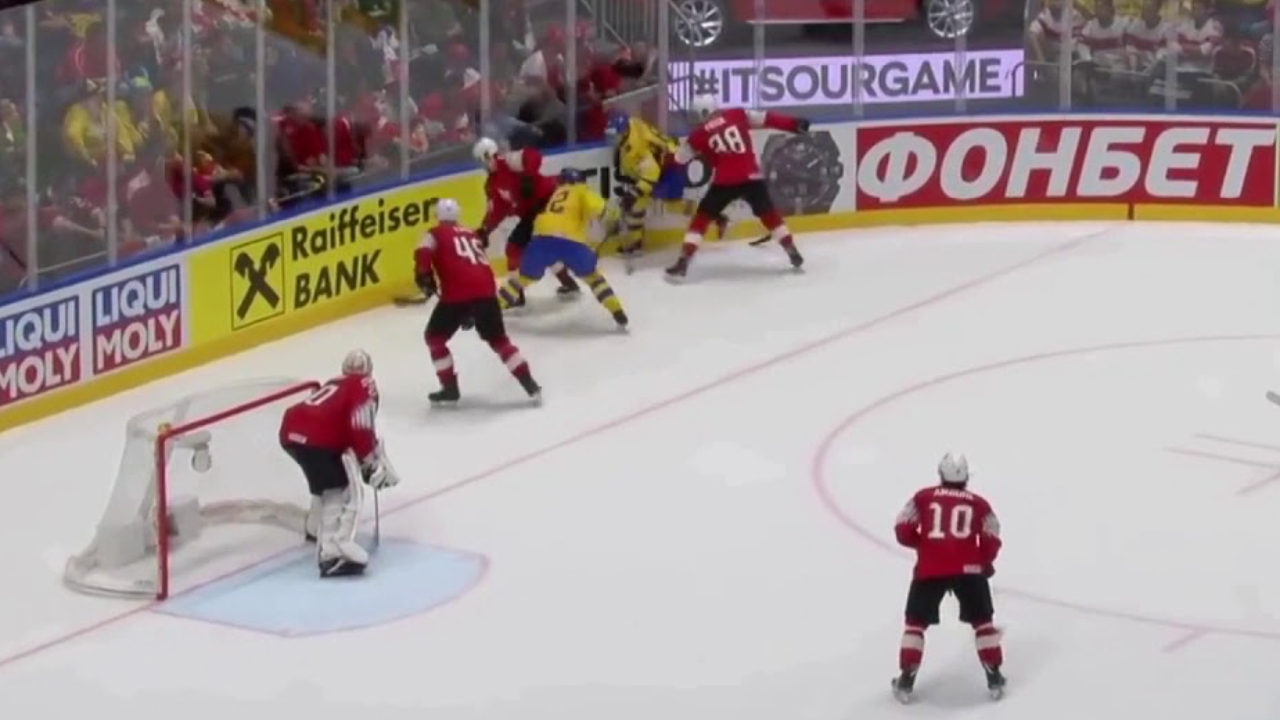
Picture the puck below the goal line or in the corner. That's swarm territory, so multiple players converge on the puck to outnumber the offence and pressure the puck carrier until it comes loose.
Down low, this is the zone coverage portion of hybrid defence.
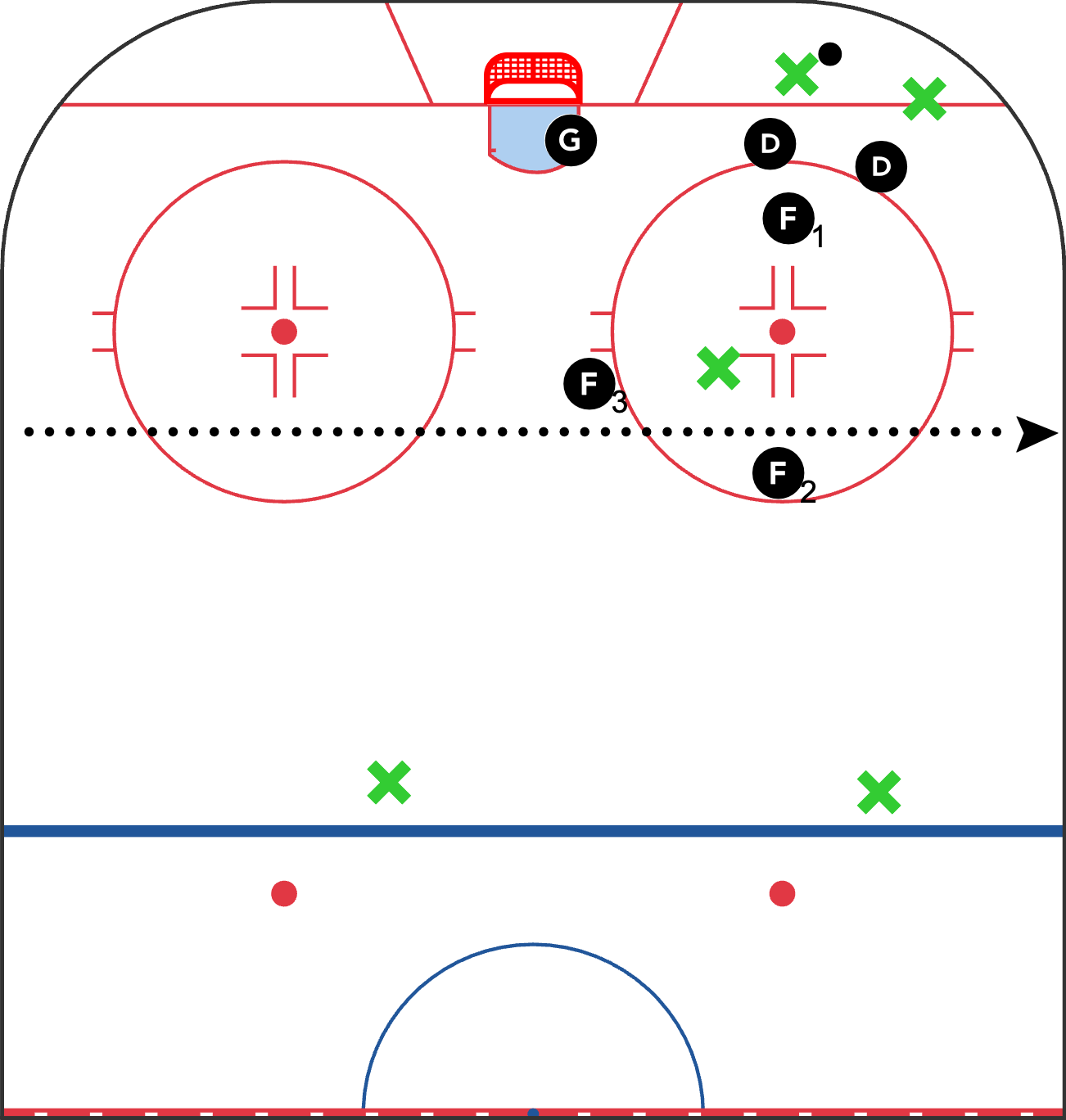
Hybrid coverage outnumbers the puck carrier by sending extra bodies to win the battle and force the turnover in the area where puck battles matter most.
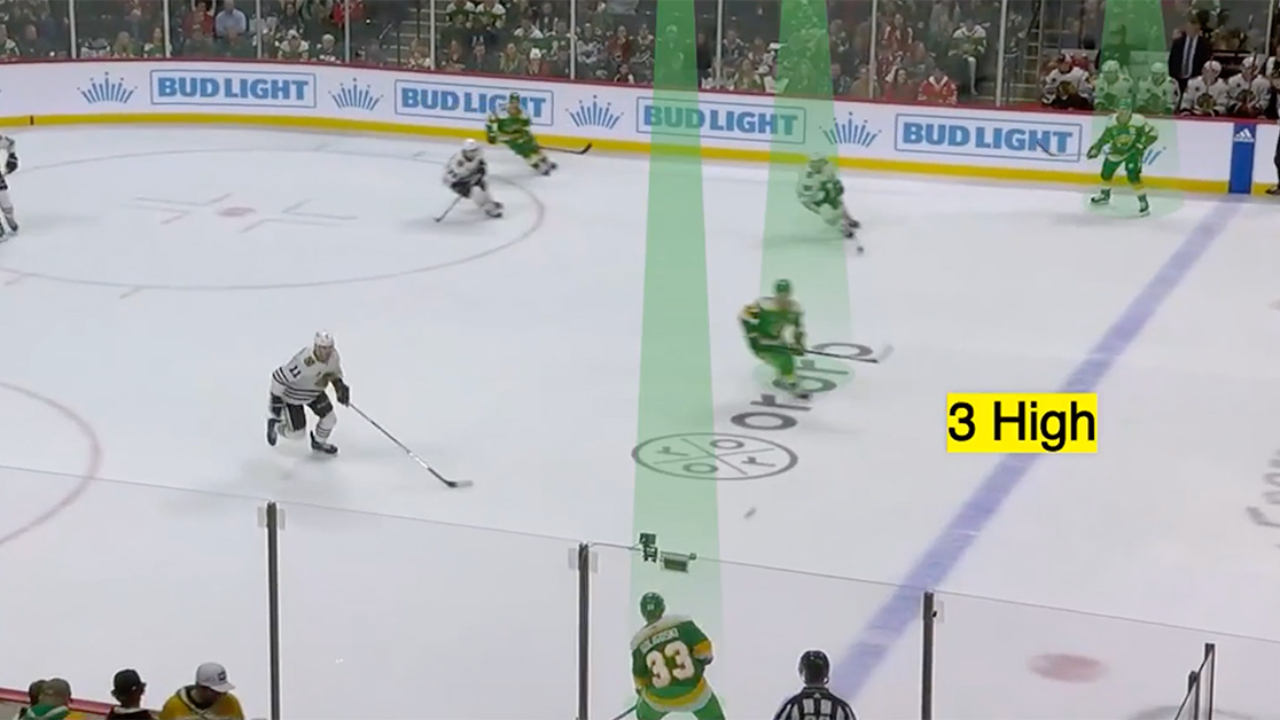
Now imagine that battle in the corner is lost by the defenders. An offensive player wins it and carries it up the boards, past the hash marks and above the tops of the circles. The swarm disappears instantly, replaced by man-to-man coverage. The extra defender in the corner retreats to the net, and every player finds their check and locks on, one-on-one, the same way they would in a pure man-to-man system. That transition, from outnumbering low to individual coverage high, is the entire concept of hybrid defensive zone coverage.
The moment the puck moves above the tops of the circles, the system flips. It becomes five individual matchups, man-to-man, with every player locked onto a check.
This is the man-to-man coverage portion.
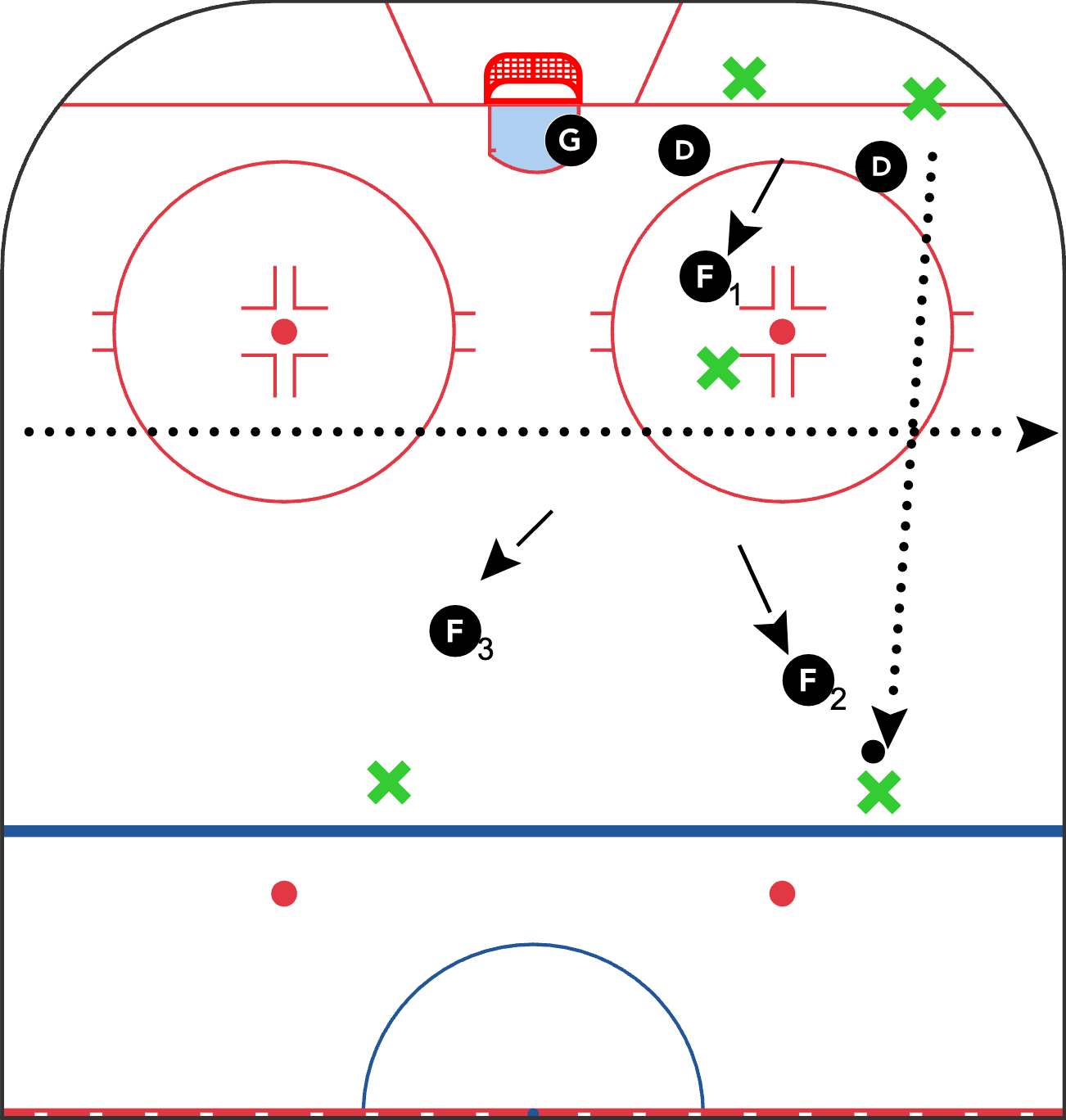
Now, it should be noted that hybrid coverage can also mean the opposite of this description: man-to-man coverage down low and zone defence up top, or above the tops of the circles. The principles remain the same: the team is combining elements of both systems and switching responsibilities based on where the puck is located.
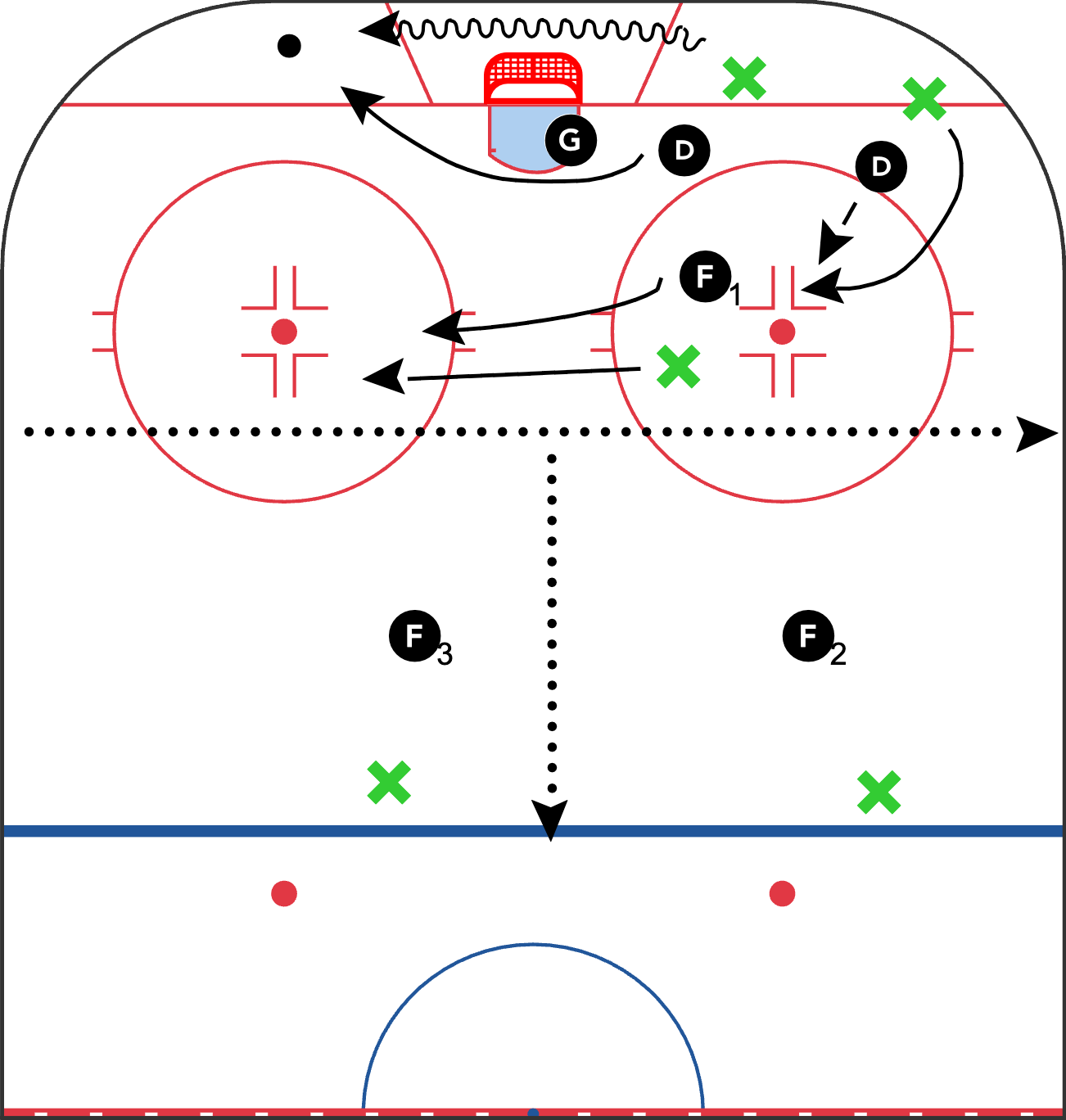
Either way, the most dangerous area of the ice from a defensive perspective is the front of the net, or the slot. The swarm aims to prevent the puck from ever getting there by overwhelming offensive players with extra numbers.
What are the benefits of using hybrid defensive zone coverage?
This system is built to take the strongest piece of each scheme and apply it where it matters most. Down low, pucks are contested more than they're passed, so outnumbering the area is the most efficient way to win those battles and start a breakout. High in the zone, above the circles, the offence is looking to make plays and find seams, so that's exactly where you want tight, individual coverage, denying time and space rather than a zone that can be picked apart by cross-ice passing. Done well, hybrid coverage gives you aggressive puck pursuit in the danger area below the goal line and airtight individual defending everywhere else.
What are the disadvantages of using hybrid defensive zone coverage?
The obvious challenge is that you're asking your team to run two systems and recognize the exact moment to switch between them. It will take time to learn. If players are still thinking swarm once the puck is above the circles, you end up outnumbered on the perimeter with attackers left wide open. If players lock into man-to-man too early while the puck is still below the goal line, you lose your numbers advantage in the one area where outnumbering the puck actually pays off. This system demands the communication of zone coverage and the individual defending and skating ability of man-to-man, which makes it the hardest of the three to teach and the least forgiving when the transition trigger gets missed.
What are the winger responsibilities for hybrid defensive zone coverage?
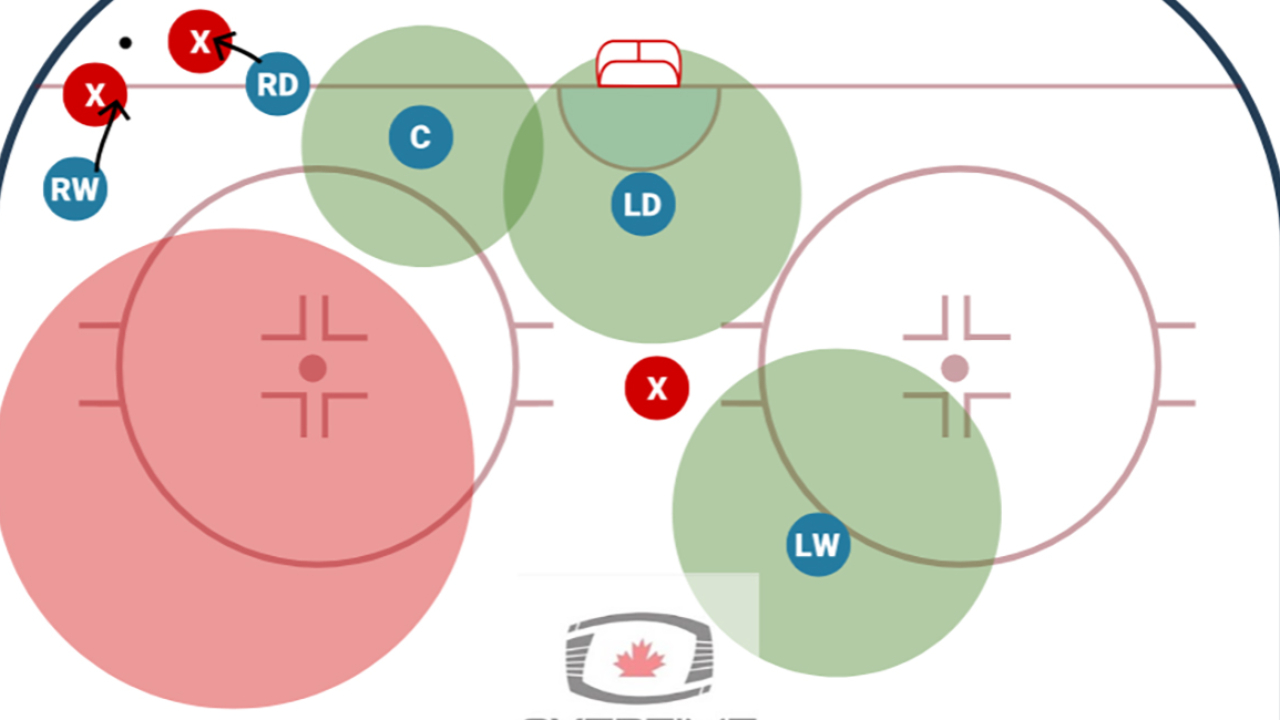
Below the goal line, the wingers are part of the swarm only by cutting off passing lanes to extra offensive players. In the diagram above, you see the wingers low in the zone protecting the middle of the ice. The moment the puck crosses above the hash marks or the tops of the circles, forwards peel off the swarm and find their individual assignment, the same way a winger picks up their check in a straight man-to-man system. Recognizing that line in real time is the job. There's no signal from the bench; the players have to see it and react together.
What are the defencemen and centre responsibilities for hybrid defensive zone coverage?
Defencemen are heavily involved in the swarm below the goal line, often the ones initiating puck pressure down there while a partner stays central in support. Once the puck moves above the circles, the defencemen match up individually against whichever opposing player is most dangerous in the slot or at the points, with the same accountability you'd expect from man-to-man coverage. The centre tends to be the organizer of the whole system, calling out when the group should be swarming below the goal line and when it's time to lock into individual coverage above it. That communication is what keeps the transition clean.
The rule holds across every position: puck below the line, you're part of the numbers advantage. Puck above the line, you've got a check and you stay with them until the puck comes back down.
Which coaches use hybrid defensive zone coverage effectively?
Coaches who run hybrid well usually have a group that's comfortable with both underlying systems already, since this scheme is really zone and man-to-man stitched together with a trigger point. It tends to show up with more experienced or higher-level teams that can handle the mental load of recognizing the switch instantly, rather than younger groups still learning either system individually. It rewards a team that communicates constantly and trusts its details.
What skills or strengths does a team or player need to run hybrid defensive zone coverage?
Players need the communication and anticipation that zone coverage demands, combined with the individual skating and defending ability that man-to-man requires. On top of both of those, they need to recognize the trigger point instantly, the moment the puck crosses above the hash marks or the circles, without hesitation. A willingness to commit fully to the swarm below the goal line, without worrying about getting caught out of position, rounds out the skill set.
You can watch a thorough breakdown with NHL examples from long-time NHL coach Glen Gulutzan here.
Which teams are the best examples?
The Dallas Stars are a strong real-world example. Dallas plays a hybrid zone coverage system: down low, four players hold a "quadrant" as a group while the nearest defender pursues the puck. Once it moves up toward the blue line and the perimeter, that structure shifts into tight, aggressive man-to-man coverage, denying time and space to shooters and passers.
That system was the backbone of a remarkable run of sustained playoff success: Dallas reached the Western Conference Final three seasons in a row, from 2023 through 2025, the first team in NHL history to do that. They fell to the Golden Knights in 2023, then to the Oilers in both 2024 and 2025, so the system didn't get them over the top. But it consistently got them further than all but three other teams in the league each of those years.
What types of defensive zone coverage are there in hockey?
Hybrid coverage combines elements of two different defensive systems, but it isn't the only option available to coaches. Every approach comes with its own strengths, challenges, and teaching points. The best coaches understand the differences between each system and choose the one that best fits their roster, their philosophy, and the situations their team will face throughout a season.
Explore the complete series to learn how each system works:
Or start with the complete guide to defensive zone coverage, which compares all three systems and explains when coaches choose each one.