Skating is a fundamental aspect of the goaltender’s role: the ability to move in position, quickly change direction, maintain balance at all times, and match the speed of play makes skating technique a critical point in the development of young goalies.
Often, coaches focus on shooting drills and technical skills from the very first practices, neglecting skating because it’s seen as less fun for young athletes. To keep them smiling, there’s a tendency to do less skating and more shooting drills. Is this the right choice? In my opinion, no. A goalie can be as coordinated as possible, but if they can’t reach the shooting lane, it’s all pointless.
The first step (especially with the youngest) is to build a solid foundation. This means that when the team skates, goalies should be able to do everything the players do (after all, a goalie is just a player with different equipment). When working specifically with goalies, it’s useful to dedicate at least 15 minutes (twice a week) to a structured skating routine.
Why a routine?
Having a routine speeds up the learning process. As goalie coaches, we don’t have a lot of time, so every minute counts. A defined structure means you don’t have to explain every drill each time; you can start right away (corrections are made actively 1:1 during the exercise). This also allows you to adapt the structure based on the group’s level without really slowing down the process.
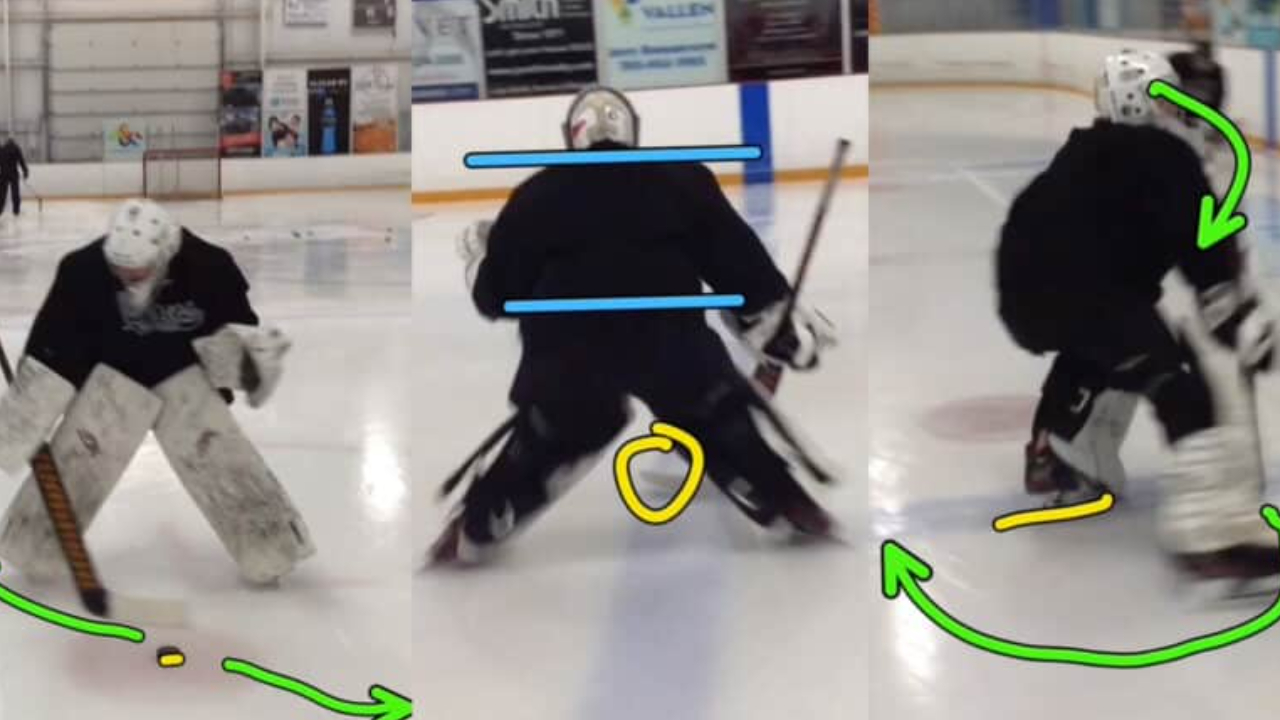
Depending on the stage of development, we focus on correcting different key points. For U9–U12, the main priorities are stick on the ice, proper hand position, and maintaining bent knees throughout the movements. Technical corrections are tailored to these fundamentals at this age.
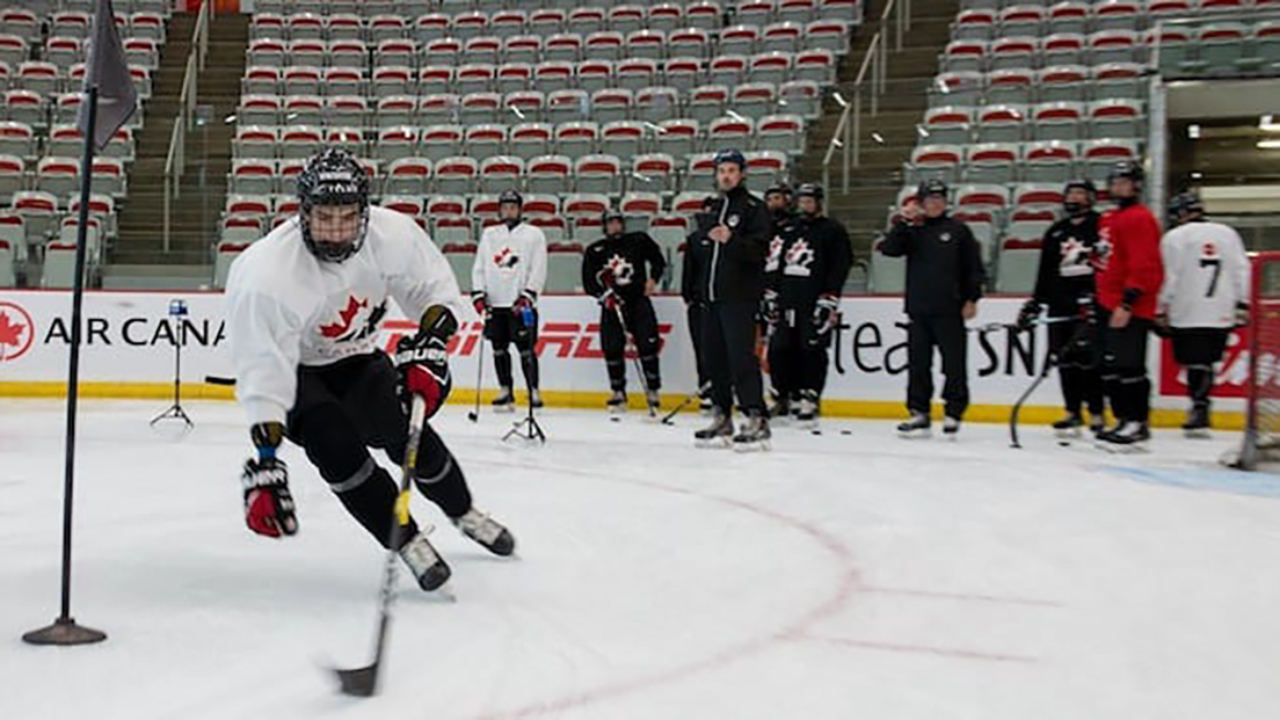
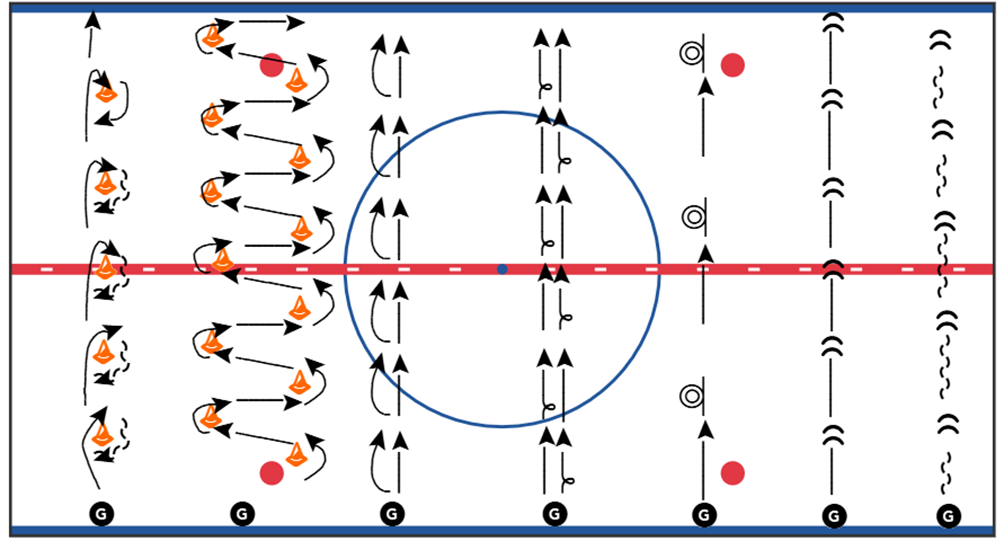
The structure I’ve used for over 10 years typically includes the following straight-line skating drills, from boards to boards (often we have at most a third of the rink or just the neutral zone to work with). For younger goalies, skating in a straight line allows for greater focus on technique and little particulars.
That said, this is just one way to organize skating work. Depending on the space available, we sometimes use different setups or drill structures—but regardless of the format, skating is always a core part of the session.
For older age categories, we adapt the structure further. With fewer goalies on the ice, we work more in the net and shift toward game-like skating drills that closely replicate in-game movements and scenarios. This progression ensures that as goalies advance, their skating skills remain directly relevant to real-game demands.
Training Structure:
-
Warm-up: 2–3 minutes of free skating for the goalies
-
Part 1: General Skating
- Single C-Cuts forward/backward (first right leg, then left)
- Double C-Cut forward/backward (basic, with a 180° turn after each C-Cut, with jump)
- Forward skating in position with stop & go
- Alternate knee-down
- Skating in position with 360° turns (in stance or butterfly)
- If we have cones and time:
- Skate around cones forward/backward in stance or not (depends on development stage)
- Slalom in stance or not
-
Part 2: Specific Goalie Skating
- T-Push
- Shuffle
- Slide
- If the level allows, also Powerslide
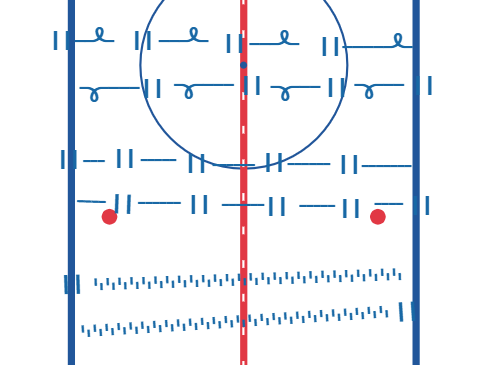
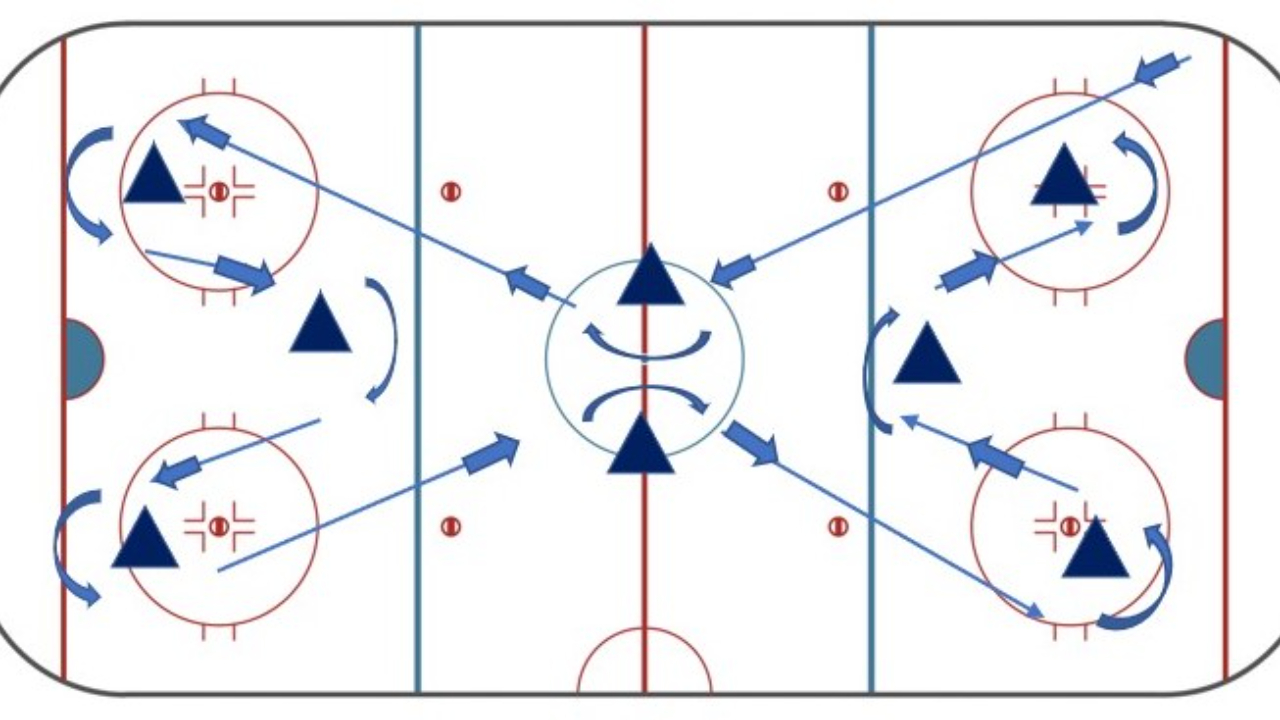
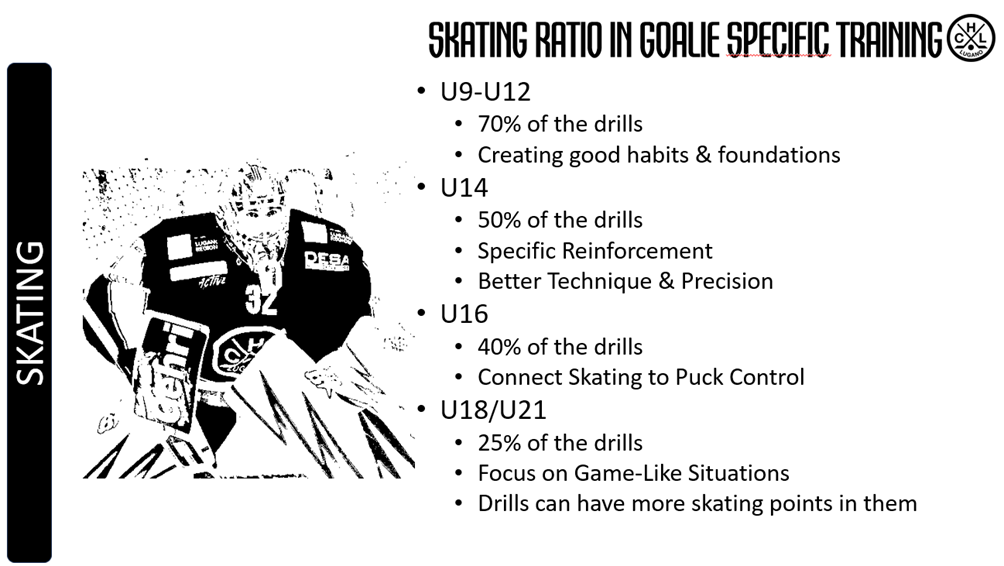
In Lugano, we repeat this routine twice a week with all U12/U9 goalies, and the same structure—adapted for skill level (see also the explanatory image)—is used with older age categories, where we focus more on net-based and game-like skating drills.
It’s important to note that even though this structure is set, it doesn’t mean we don’t use other drills. This is simply an example of what we do with young goalies—our approach is flexible, and we adapt to the needs and context of each group.