The beginning:
My face was flush. With a bald head, I probably looked like a tomato under the arena lights.
“My player is f$#&n face down on the ice—and neither of you saw how that happened?!!?!”
Ryan, one of our assistant coaches, was already out on the ice with him. Our best scorer was down after what looked like a blindsided open-ice collision to the head. No call. No acknowledgement. Nothing.
For clarity, this is U11. No-contact league.
I lost it.
I’m not proud of that sentence, but it’s the only honest way to say it. I was yelling at the officials from the bench, fully out of character, fully in it. If I had to guess, they still had their parents driving them to the rink because they’re not even old enough for graduated licences yet.
We were down 8–3 in a game that mattered. First place on the line. The “big dog” in the league in front of us. And we weren’t just losing—we weren’t really in it.
Even our start told the story. Warm-up was sloppy. Disconnected. Those two minutes disappeared fast, and I’m not even sure our goalie saw more than a handful of pucks.
After my outburst, Darcy and Adam, our other coaches, just looked at me. Not angry. Not reactive. Just… stunned. And rightly so. This wasn’t me.
Usually I’m calm on the bench. Measured. I try to keep things tight—specific when needed, quiet when not. I talk a lot with our players about respect. Officials, opponents, staff, everyone. That’s not just messaging for us—it’s a foundation.
And in that moment, I had stepped completely outside of it.
I finished the game quietly after that. If I’m honest, “coaching” might be a generous word. I was still there physically, but mentally I was somewhere between frustration, embarrassment, and just wanting the clock to move faster.
After the final buzzer, the result wasn’t the only thing sitting with me. The embarrassment was one thing. I would need to own that with the team and parents.
But the second thing sat deeper.
Because I knew better. And yet I still did it. It wasn’t just that I lost my temper. It was that I recognized it while it was happening. Like I had stepped into a version of coaching I’ve always said I’m not.
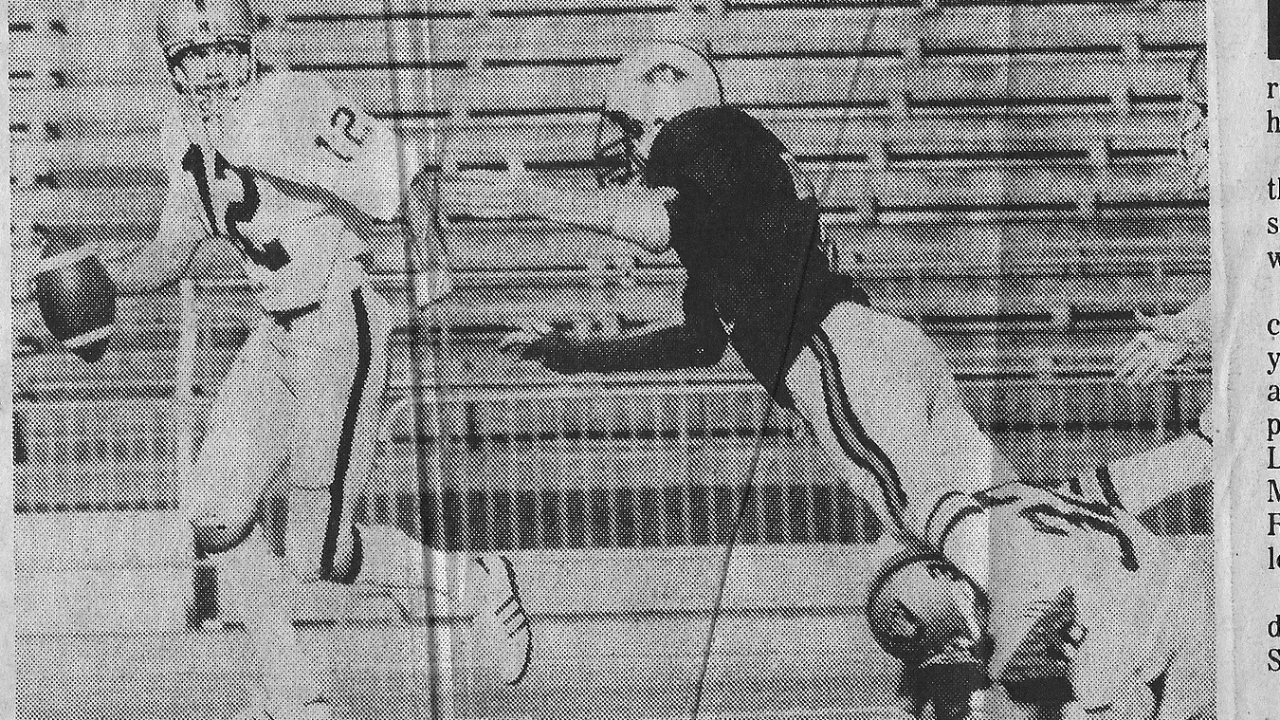
It felt familiar. Too familiar. It felt like someone I used to know. It was my Peewee coach.
And in that moment, I understood why. That’s what unsettled me most. Not just what happened.
But what I became. That was the uncomfortable part.
Not that I had lost control for a moment. That happens in sport, in life, in coaching. The part that stayed with me was that I didn’t feel like I was inventing something new in that moment. It felt like I was repeating something. Almost like I had seen this version of myself before, somewhere else, a long time ago, and when the pressure rose, I didn’t choose how to respond—I defaulted.
And that raised a question I couldn’t ignore: if I know what “good coaching” looks like, and I’ve built an entire philosophy around it, why is it still possible for me to become something else when things speed up, get emotional, and stop feeling controlled?
That question doesn’t feel like a tactical question. It feels like a learning question.
Or more specifically, a question about what kind of coaching behaviour actually gets embedded in us over time—and what it takes to change it.
Taking a step back, I wondered how we change our coaching, not just temporarily, but an actual change that sticks and from which we can build from. This question took me on stroll down memory.
Twenty years earlier, while completing my doctoral work in education at the University of North Dakota, I spent years studying how teachers change their practice. My research was grounded in Albert Bandura's work on self-efficacy, and one idea has stayed with me ever since.
Information rarely changes behaviour by itself. Confidence does. Seeing someone else succeed does. Trying something small and discovering it works does. That's what Bandura meant by self-efficacy.
As a physics teacher, I had to break away from teaching like I was taught. I need to find the confidence in aligning my personality, teacher identity, and self-efficacy to become me, not a replica of my teacher. Or in this case, my coach.
I need to be me. Not “Red”.
This last point is tied to a concept called the “Apprenticeship of Observation.” As teachers prepare to become teachers, they are a product of the thousands of hours they watched their teachers teach. That’s why they often start their teaching careers teaching the way they have been taught. They imitate their teachers – consciously, and often unconsciously.
Hockey players turned coaches are not different. Players spend thousands of hours watching coaches coach.
Before coaching our first practice, most of us have already observed thousands of them. We watched our own coaches. We watched junior coaches. We watched NHL coaches. We watched moms and dads behind benches. We watched television analysts tell us what "good coaching" looked like.
None of that was formal learning. But it shaped us anyway.
The hard part isn't copying our best coaches. The hard part is deciding what we're willing to leave behind.
In this way, old coaching styles feel “safe” because: they are socially validated, they are visible, and they match how we were evaluated. New coaching feels less certain because: quieter practices look less “like coaching”, and learning is less visible in real time.
What is now more prevalent than ever before is that the environment shapes our coaching behaviour as well. We now have more parents watching either live or via Livebarn. We have increased expectations of delivering “good practices” with all kinds of measures of this, including the degree of player “sweat”. We now have a focus on coach and team culture.
While Conversation 2 focussed on players, here I argue that coaches also act within affordance-rich environments.
What this is not.
This is not a critique of your coaching. Nor is this a suggestion of laziness or inability to become a better coach. Rather, this is a reminder that even good coaches default to visibility over clarity. They default to complexity over learning simplicity. Often, they choose activity over perception design.
I know I'm not the only coach who has stepped off the ice wondering, "Where did that come from?"
What I changed:
I gave myself permission to fail. As in, I test-drove new approaches for my coaching. New drills, new ideas, new influences – knowing that the ones that didn’t “feel right”, whatever that means, were discarded without pressure to hold on to. I knew that a busted drill at practice was a learning opportunity – not a final judgement on my ability as a coach. I let go of the need to always have things “look” perfect in the eyes of invested onlookers.
This freedom let me explore new ideas and to elevate my coaching identity and skills without the shackles of resorting to “old ways” and coaching like I was coached.
I was not Red. And that’s ok.
One season I stopped blowing the whistle every thirty seconds. It felt wrong. Parents probably thought I wasn't coaching. The players talked more. Solved more. Looked around more.
I never went back.
Tuesday night
Look at your practice plan. Find space to run a new drill, something that excites you that you have never done. Something uniquely yours – as in, you think it matches the coach you are, and see how it goes.
Then reflect on not only how the drill went, but how you felt about it.
The ending:
Your coaching identity is not broken. As in, you don’t “fix” coaching identity. You re-train it though repetition of new design habits. You become a reflective coach. Most importantly, you expect, then elevate your discomfort tolerance as you learn and try new things.
I've started believing that becoming a better coach isn't mostly about collecting new drills. It's about becoming aware of the invisible coaches we carry with us every time we step behind the bench. Some deserve to come along. Others deserve our gratitude...and then our goodbye.
I still think about those officials sometimes. Not because of the missed call.
Because they unknowingly gave me one of the most important coaching lessons I've ever received. They reminded me that becoming the coach I want to be isn't something I decided years ago.
It's something I choose every Tuesday night.
Let’s continue the conversation.
If this article made you curious, here are the two thinkers who helped shape my own thinking on this topic.
I don't expect you to read everything. One good idea that changes Tuesday night's practice is enough.
This conversation sits at the intersection of two ideas that have profoundly shaped the way I think about coaching.
Albert Bandura introduced the concept of self-efficacy—the belief that our confidence to act grows through successful experiences, observing others, encouragement, and reflection. If you've ever wondered why simply attending a coaching clinic doesn't automatically change the way you coach, Bandura helps explain why.
Recommended starting point: Bandura, A. (1997). Self-Efficacy: The Exercise of Control. New York: W.H. Freeman.
The second idea comes from education.
In Schoolteacher, Dan Lortie described what he called the Apprenticeship of Observation. Before teachers ever stand at the front of a classroom, they've already spent thousands of hours watching teachers teach. Those observations quietly become their default model of teaching.
I think the same thing happens in hockey.
Long before we coach our first practice, we've already watched thousands of them.
Recommended starting point: Lortie, D. (1975). Schoolteacher: A Sociological Study. University of Chicago Press.
My Notebook
It is easy to plateau and continue to coach the same way season after season. Many coaches fall into that comfort zone. Many teachers do that as well.
I ask here, if coaching is something we inherit more than something we choose, then the real question becomes: what am I trying to redesign? And perhaps more insightfully, how will I know when I get there?
Next conversation: If coaching is teaching, how do we design better learning?
We’ll pick up the next conversation next Tuesday! In the meantime, if this one got you thinking—or you just want to talk coaching—I’d love to hear from you. Reach me at coach@wheatlandhockey.ca, and follow what we’re learning on the ice at Wheatland Hockey.