The beginning:
“What did you see there?”, I asked quietly, while sitting beside my D-man on the bench.
“I don’t know”.
That was more impactful of a response than he realized.
I thought, as I stood back up on the bench (I am not exactly a towering giant, so I need as much help to see the ice as possible) “what happened there?” Although to be fully transparent here, my thoughts used far more colourful language than that.
“Rich, you have leaky-face right now.”
Lars, one of our Assistant Coaches, was right. I did. My mouth slightly open, eyes bewilderingly wide, and my raised eyebrows were proof.
This was a bad look for me. I try not to give away my inner thoughts and emotions through my face – but in this case I clearly failed. Usually I am a quiet, calm, coach. I seldom overtly share my emotions, nor do I yell from the bench, or slam the gates. That’s just not my personality – so this was an unusual moment.
The truth was, I was flabbergasted. It was written all over my face.
Well, here’s what happened.
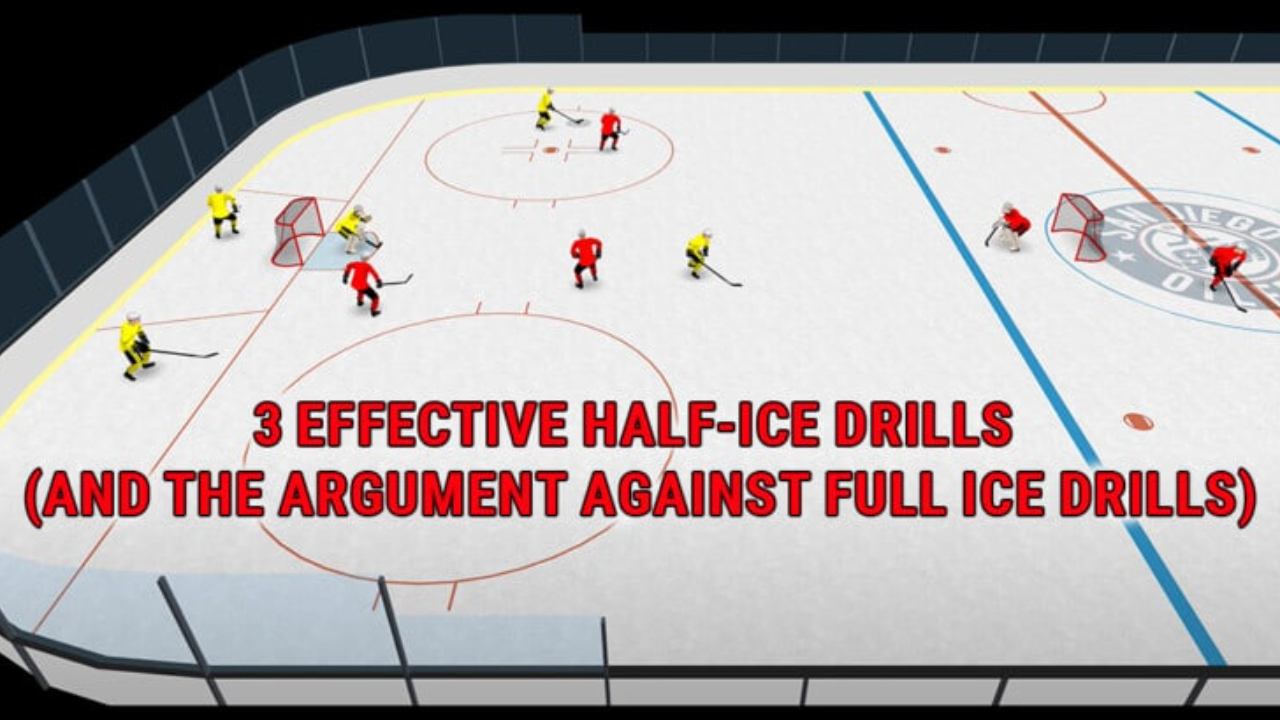
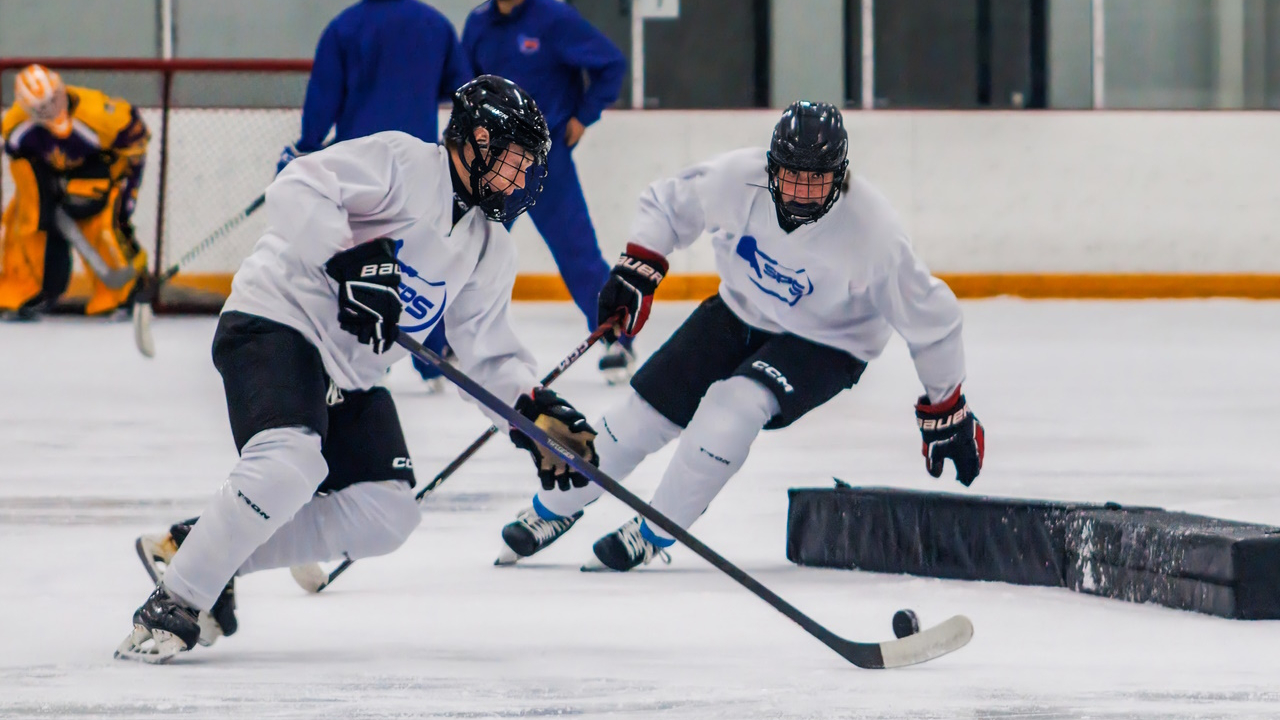
Two nights before, we finished practice by working on our team breakout. Puck rebounds off our goalie, D retrieves it behind the net, strong side winger opens-up, center cycles low, and weak side winger breaks for the neutral zone. Truly a basic breakout. As a team, we subscribe to the belief that our offensive attack starts in our defensive zone, not on offensive zone entry. The outlet pass, the one that evades structured forechecking, and gets us heading north quickly is one we practice a lot. At this late practice at Sargeant Park Arena in early December, I watched our D make a perfect breakout initiation pass in practice five times in a row.
In short, what I saw then was: the shoulder check, the ice scan, and the resultant selection of the outlet pass was flawless. We were cooking with fire – let’s goooo!
Jamie, one of other assistant coaches smiled wryly at me. This was it. We finally found our gear and now it was time to elevate our team play just in time for a standings-critical game.
I agreed. It looked fantastic.
Back to the leaky-face moment.
The same player that looked fantastic the other night, just rimmed the puck around the boards under no pressure. The puck was picked off easily, and it ended up in the back of our net.
If this was Instagram, I would insert the perplexed looking emoji with the shrugged shoulders and palms up here.
I drove home, and called Josh, the other assistant coach, to talk this through. I was bothered by that moment in the game. Not for what the player did as mistakes are part of the game, and life, but how I seem to have set him, and other players, up for moments like this. Sadly, the “set up”
is not in a good way.
What really happened there?
I really needed to think about this. Not from a ‘he made a mistake” perspective, but deeper. Perhaps more uncomfortably, how/why did this happen?
In reflecting over this, it reminded me of years ago when I was a high school physics teacher. I remember I watched a student ace every problem I gave them on Newton's Laws. Then we wheeled out the lab equipment for a hot-wheels inspired inclined-plane experiment, and suddenly nothing transferred.
And that was it. It was the transfer. Where was the snappy outlet pass? Why was it replaced so casually by a soft rim to no one?
What really happened is that I mistook repetition for recognition. I taught the movement instead of the moment.
It turns out making an outlet pass isn't really about making a pass. It's about seeing something. Seeing the pressure. Seeing the open space. Seeing an opening that exists for only a second or two.
In practice, I'd spent a lot of time teaching the mechanics of the pass. What I hadn't spent enough time teaching was what to notice before making it.
That realization led me to Ecological Dynamics.
Rather than asking, "How do I teach this skill?", it asks, "What information does the player need to notice in order for this skill to emerge?"
Ecological Dynamics helped me realize something important. Players don't simply learn skills. They learn to notice. Notice pressure. Notice space. Notice opportunities. The skill is only useful if it emerges because the player has recognized something meaningful in the environment.
Suddenly I wasn't coaching the pass anymore. I was coaching what happened before the pass.
I hate to reveal this so publicly, but I assumed he was scanning the ice with his eyes up. I assumed he “saw” the sometimes real, and sometimes imaginary, pressure and was reacting.
I was wrong. Looking back, I realized I had been evaluating the outcome instead of the perception that produced it.
In short, I assumed that with these skills, they would magically be able to read the in-game pressure and availability of space to make the right decision to either make the outlet pass, or carry it up if necessary.
This moment revealed that I had not helped transfer those skills.
Looking back, I realized I hadn't given him enough opportunities to actually read the game. I'd given him opportunities to make the pass, but not enough opportunities to decide whether the pass was the right decision. Ecological Dynamics calls those opportunities "affordances"—possibilities that the game presents to the player.
What this is not
These “affordances” are NOT instructions. Rather, they are possibilities the player perceives and acts on. For example, here, if that D saw the forechecker covering the winger, the affordance is that there is now space to skate the puck up the ice. Conversely, if the forechecker is angling in on the D, the affordance here would be a quick up or a D-to-D reverse.
What I changed
This was a hard realization as a coach. I thought I had done a reasonably great job as skill development. And maybe in some areas I had. But here, I needed to plan differently. Here I needed to focus on the tight connection between what a player sees and what they do. This coupling is where ‘thinking’ and ‘doing’ are not separate ideas. They are mutually dependent, and they evolve together.
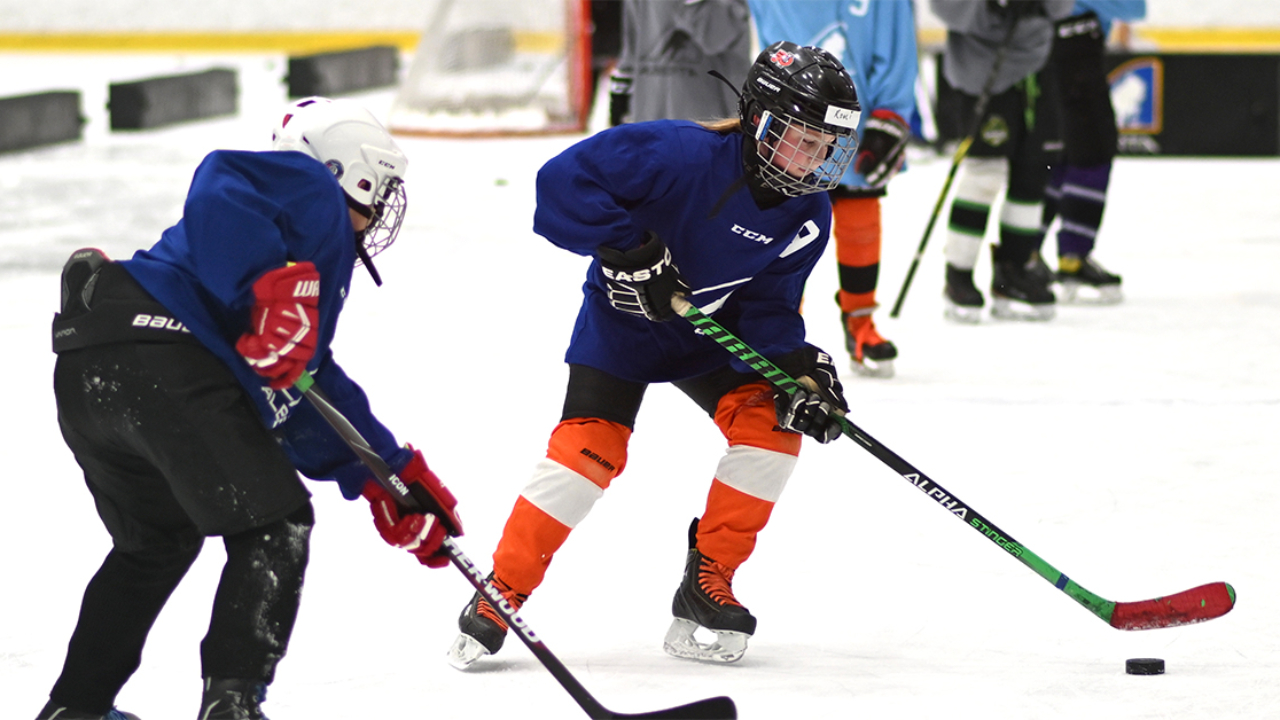
This is where I needed to change my practice plans to include drills and experiences that did this better. To address this specific moment, I used a small area game that re-enacted this scenario in a fun way that had no prescribed ending.
The ending:
Designing good practices is imperfect. There must be elements of a full range of different aspects of player and team development and growth. Practices ebb and flow, and knowing when to accelerate drill conclusions, or stay with them a bit longer than planned is a skill developed over experience and “seeing” what you hope to see.
In this story, what I believed I was designing for practices was affordances to help in skill transfer. What I was really allocating too much of my limited practice time on was practicing individual skill development.
Practice makes habit, not perfection (a common fallacy). The habit I needed to help players make is reading and reacting, not, simply rote memorization. That may work for solving physics problems, but not in a game as fluid as hockey.
Tuesday night
This week, choose one drill you've run dozens of times.
Before it starts, ask yourself one question. What do I want my players to notice?
Not what do I want them to do. What do I want them to notice?
If you can't answer that question...your players probably can't either.
Let’s continue the conversation.
This article introduced one idea from Ecological Dynamics, a growing area of research exploring how athletes learn by interacting with their environment rather than simply repeating movements.
If this conversation sparked your curiosity, I highly recommend the work of Rob Gray, whose writing and podcast have significantly shaped my own thinking about skill acquisition and coaching.
A good place to start is:
- Rob Gray. How We Learn to Move: A Revolution in the Way We Coach & Practice Sports Skills.
- The Perception & Action Podcast
You don't need to agree with everything you read. I certainly don't. But wrestling with good ideas is one of the best ways I've found to become a better coach.
My Notebook
I'm still wondering how much representative practice young players actually need before transfer begins to occur. That's a question I'll keep exploring with my own teams this season.
If I can clearly see what better learning looks like, why is it still so difficult to step out of the coaching habits I grew up with?
Next conversation: Why Is It So Hard to Change the Way I Coach?
We’ll pick up the next conversation next Tuesday! In the meantime, if this one got you thinking—or you just want to talk coaching—I’d love to hear from you. Reach me at coach@wheatlandhockey.ca, and follow what we’re learning on the ice at Wheatland Hockey.