The beginning:
After practice, our players gathered in the arena lobby. Not because we had planned a team event, but because the canteen sells bags of candy for $1.50. They're probably not worth $1.50, but every kid seems convinced they're the best deal in the building. After taking off my gear and picking up the puck crate, I too found my way to the lobby. Not for the candy, but because that is the only way to the parking lot.
As I loaded my coach’s bag into my car, one of our parents stopped me.
"Great practice tonight," he said. "I knew it was a good one because my son came off the ice sweating."
I smiled.
"Yeah," I replied. "We had a good one tonight."
Driving home, I kept thinking about his comment.
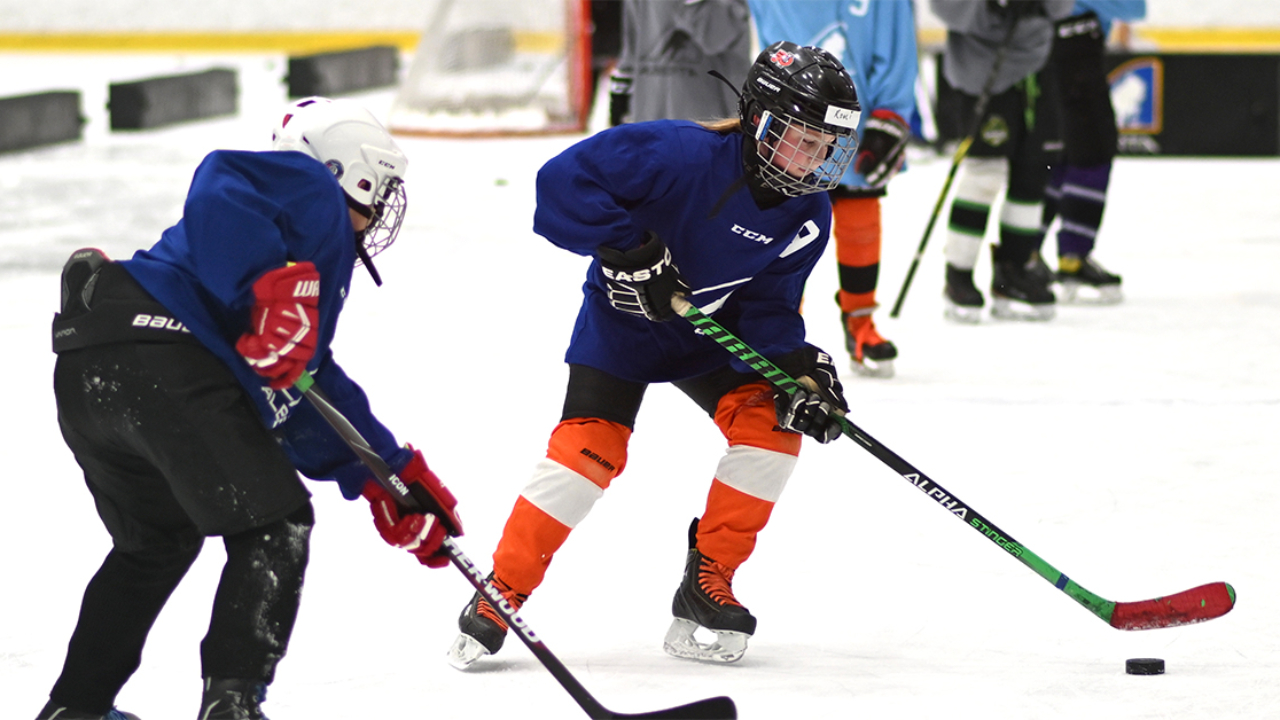
It wasn't wrong. The practice had been fast paced. Competitive. Full of energy. Exactly what many of us picture when we think of a successful hockey practice.
Thinking over the drill progression, one drill stood out. It included communication, a simulated breakout, a neutral-zone regroup with an activating D, a three-on-two attack with a chaser, and a point shot with traffic at the net. Players were constantly moving. Pucks were flying. It looked like hockey.
But the parent's comment stayed with me.
His measure of success was sweat. That made me wonder: what was mine? What is my litmus test?
A few hours later I found myself opening LiveBarn, not to critique my coaching (which I often do), but to watch the practice through a different lens. Watching the practice a second time, I changed hats. Off came the burgundy coaching helmet. On went the doctoral tam.
During this review I wasn't asking whether the drills flowed well. I equally wasn't asking whether the players stayed busy. I wasn't even asking whether the practice looked game-like.
Instead, I found myself asking a different question: What were my players actually learning?
And perhaps more honestly: Were they learning at all, or were they simply busy?
That question sent me somewhere unexpected. Not to another hockey book. Not to another drill library. It sent me back to education.
One of the ideas that has shaped my thinking as an educator is Cognitive Load Theory. At its heart, it asks a remarkably practical question: What might be interfering with learning?
The theory begins with a simple observation. Working memory—the part of our brain that processes new information in real time—is limited. When too much information competes for our attention at once, learning begins to break down.
Three careers ago, when I was teaching high school physics, I saw this all the time. Students could solve a problem one step at a time, but when too many ideas arrived at once, they often froze. It wasn't because they weren't capable. They simply had too much to think about at once.
Watching my practice again, I began to wonder if I had created the same problem on the ice.
The drill I had admired only hours earlier suddenly looked different.
· Communication.
· Breakout.
· Regroup.
· Timing.
· Support.
· Reading pressure.
· Three-on-two decisions.
· Net-front traffic.
Each individual element had value.
But for U11’s A2 on this Thursday night at Varsity View Arena, all these elements together, may have been asking too much of players who were still trying to understand the first idea before moving to the fifth. The drill wasn't bad. It simply wasn't as learnable as I thought it was.
That realization has stayed with me. As coaches, we often assume that adding more realism automatically creates better learning. Sometimes it does. Sometimes it simply creates more noise.
I've come to believe that one of our responsibilities isn't just designing practices that look like hockey. It's designing practices that allow players to notice what matters.
Sometimes that means reducing unnecessary complexity. Sometimes it means slowing down before speeding up. Sometimes it means removing a layer instead of adding another one.
What This Doesn't Mean
Before we go further, let me be clear. This doesn't mean hockey practices should become easy. It doesn't mean players should never struggle.
Quite the opposite.
The goal isn't to reduce challenge. The goal is to remove unnecessary challenge so players can devote their attention to the problem we're actually trying to help them solve.
I've started using one simple question whenever I design a practice: What might be getting in the way of learning?
It has changed the way I think about coaching.
What I Changed
The next time I ran that practice, I didn't scrap the drill. I simply removed two layers. Instead of adding the regroup, I started with the breakout.
Instead of asking players to communicate, attack, and screen all in the same repetition, we focused first on recognizing pressure.
As you can imagine, the drill looked far less impressive. But the players made better decisions. They began talking about why they made those decisions. Ironically, by making the drill simpler, I think we made the learning richer.
The ending:
Great practices aren't measured by how busy they look. They're measured by what players carry with them when they leave the ice.
I've spent most of my coaching career trying to design harder drills. Lately, I've begun trying to design clearer learning. I’m not convinced that's the same thing.
Maybe, before we ask whether a drill looks more like hockey, we should first ask whether it helps players learn hockey. That's the question I'll be taking with me to my next practice.
Maybe you'll take it to yours.
Tuesday Night
Before your next practice, choose just one drill.
Then ask yourself three questions before the players step on the ice:
· What is the one thing I want my players to learn?
· Is there anything in this drill that doesn't directly support that learning?
· What could I remove without changing the objective?
After practice, ask yourself one final question on the drive home:
If I had to describe what my players learned tonight in one sentence, could I?
If that question is difficult to answer, it might not be because your practice lacked effort. It might simply be because there was too much happening for learning to emerge.
Let’s continue the conversation:
In this article, I introduced Cognitive Load Theory, one of the most influential ideas to emerge from educational psychology over the past forty years. While it wasn't developed for hockey, I believe it offers coaches a powerful way to think about practice design and player learning.
If this conversation sparked your curiosity, here are two excellent places to begin:
· John Sweller — Cognitive Load Theory (the foundational research behind the theory).
· Oliver Lovell — Cognitive Load Theory in Action, an exceptionally practical book that translates the research into everyday teaching. Although written for classroom teachers, I found myself constantly thinking, "This applies to hockey too."
You don't need to become an expert in cognitive psychology. I certainly haven't. But understanding even a few of these ideas has completely changed the way I think about designing practices.
My Notebook
One of the habits I've developed over the years is keeping a running list of coaching questions rather than coaching answers.
Right now, the question I'm wrestling with is this: How much of the difficulty in my practices is helping players learn...and how much of it is simply making the drill look impressive?
One part keeps pulling at me: even when players do learn a skill in practice, why doesn't it always appear in games? That's where I'm heading next.
Next conversation: Why Doesn't This Skill Show Up in Games?
(We’ll pick up the next conversation next Tuesday! In the meantime, if this one got you thinking—or you just want to talk coaching—I’d love to hear from you. Reach me at coach@wheatlandhockey.ca, and follow what we’re learning on the ice at Wheatland Hockey.