The Beginning
The U13 A2-level drill progression was simple.
We started at roughly our blueline and moved through the neutral zone. As we looked up the ice, a puck carrier started on one side, with two forwards on the other. The winger with the puck moved to the middle of the ice and passed it to the streaking weak-side winger, who became F1. The centre moved to the new weak side and filled the F3 role. The initial passing winger drove to the net as F2 for our zone entry.
This is standard neutral-zone breakout and zone-entry stuff and, truthfully, not unique or complicated. While it was a 3-on-0, players filled their lanes like robots who had memorized their lane patterns.
Open passing. Easy shot. Easy-peasy.
But then we inserted coaches as low-pressure D, just to add a new look and force some decision-making.
It broke down.
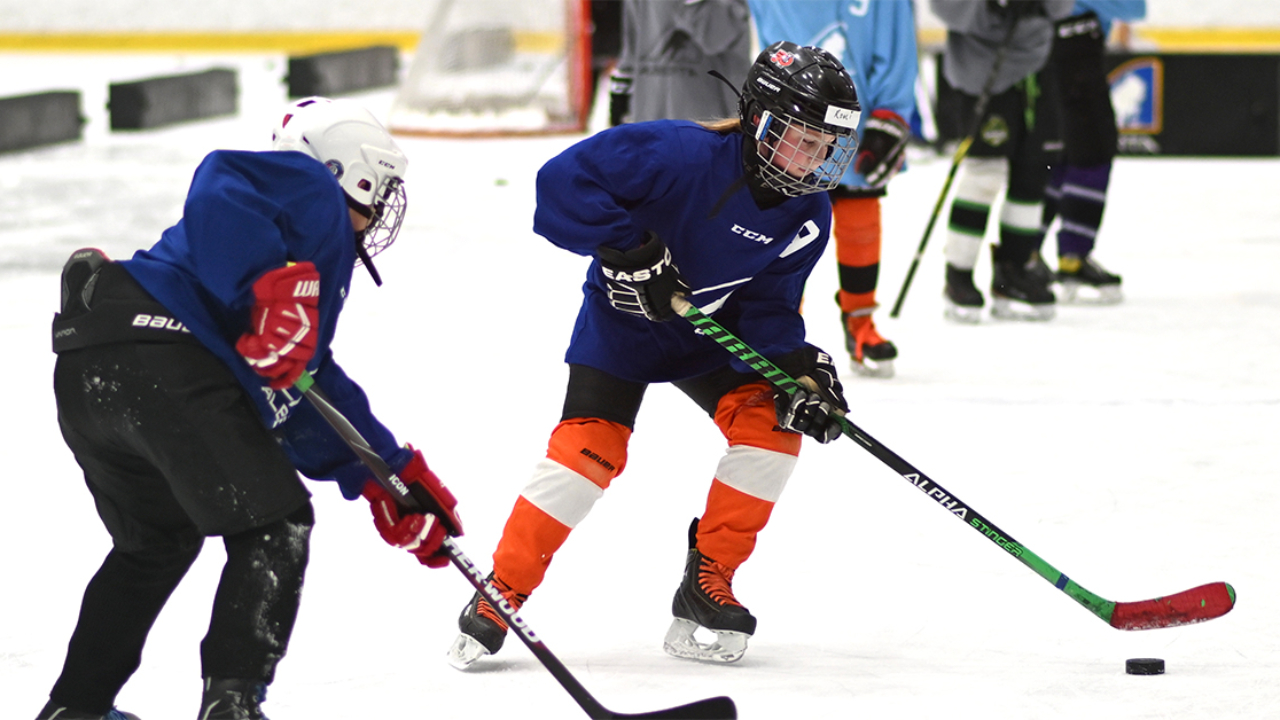
The F1 took the puck outside, which we practice a lot. But when the D closed in and forced them to the wall, the F1 just stopped. As in, paralyzed as to what to do next.
We know there are many options here. A button curl protecting the puck. A punch turn cutting inside. A pass down low to an F2 who swoops through the cemetery and pops open. Or a slow drag to give time for the F3 to creep across the seam to the open pocket up high.
But there, in that moment, none of that happened.
Neither the F1 nor F2 could figure out that if the pass to the F2 streaking toward the net wasn't there, F2 needed to keep moving to an open space to support the puck—rather than plant roots and set up a small lemonade stand in front of the crease.
There is a time for that. This was not that time.
I knew what they needed to do. I knew the answer.
And every time the play died on the wall, some kids looked at me like:
Coach… aren't you going to tell us the answer?
No. No, I was not. Not yet.
This wasn't indecision. I was waiting on purpose.
The players kept running the drill. And despite every thread of my coaching telling me how easy it would be to interrupt, explain the solution, and get everything moving smoothly again, I stayed silent.
Three seconds. Five seconds. Seven seconds.
It felt like forever.
Finally, another player stepped in and said: “What if you go over here?”
The drill restarted. Problem solved.
Without me.
That seven seconds might have been the longest coaching decision I made all week.
But there was another version of those seven seconds unfolding upstairs.
Reflection
In this arena, parents watch from a heated upstairs area with tables and chairs, peering down onto the ice. They can watch practice while enjoying wings and chicken fingers from what is essentially a glorified pub-food kiosk.
During this practice—and this drill—one dad was watching. He saw confused players. He saw a drill that wasn't working.
And, apparently loudly enough for my wife and everyone else nearby to hear, he wanted me to stop it.
Immediately.
He bemoaned the fact that I was letting the drill continue while his kid was visibly confused. His solution was simple: abandon the drill.
It was unfortunate that he momentarily forgot that I could not hear him. But even if I could have, I wouldn't have stopped it.
Because the struggle he wanted me to eliminate was the reason I was waiting.
His approach was to rescue by abandonment. Mine was not.
And that's what I find so interesting about this moment. We were watching exactly the same thing.
He saw confusion as evidence that the drill wasn't working.I saw confusion and wondered whether learning might finally be starting.
Why?
Because I had seen this before.
Just not at a hockey rink.
What Physics Taught Me About Waiting
Years earlier, as a high school physics teacher, I encountered this exact moment all the time. There are a few reasons for this.
High school physics is a language. It's a language that is very clear once you understand it, but difficult if you don't.
The language of physics is mathematics, yet our job as teachers is to take that math—those variables and concepts—and translate them into English (or whatever language you teach and learn in), so students can then convert those words back into mathematics and “do” physics.
In that conversion stage, students often struggled. Not because they couldn't do algebra or calculus, but because connecting concepts—either conceptually or mathematically—can be subtle.
I remember one problem involving a dangling weight on a spring, oscillating up and down. Another asked students to determine the launch angle of a basketball from the foul line to sink a free throw, given the height of the shooter.
A simple idea. A difficult mathematical problem. And inevitably, someone would stall.
“Dr. Rich, what do I do?”
I knew the answer. Of course I knew the answer.
But somewhere along the way, I had learned that giving it to them immediately wasn't always teaching.
So I would wait.
Three seconds. Five seconds. Seven seconds.
Then I might ask them what they thought.
"Talk me through what you know."
"What have you tried?"
"What happens if we change this?"
And we'd go from there. I had learned as a teacher that the pause mattered.
Sometimes a student didn't need me to rescue them. Sometimes they needed me to stay with them long enough to figure out what to try next.
Years later, standing on the ice while a winger planted roots and opened a lemonade stand in front of the net, I was drawing on the same idea.
I just hadn't always thought of it as hockey coaching.
The Research Behind the Wait
There is actually a substantial idea about learning underneath those seven seconds.
Manu Kapur calls one version of it Productive Failure.
His work asks us to consider what can happen when learners are given opportunities to grapple with a problem before being given the solution.
The failure isn't the point. The struggle is part of the learning process.
That idea is beautiful to me.
It also connects to Robert Bjork's work around Desirable Difficulties—the idea that learning that feels easy in the moment isn't necessarily learning that lasts. Sometimes making learning more difficult in the short term can help make it more durable.
That's all most coaches need to know. Because it changes how we interpret what we're watching.
A drill breaking down doesn't automatically mean the drill is bad. A confused player doesn't automatically mean the coach needs to speak. A messy rep doesn't automatically need to be stopped.
Sometimes confusion might be evidence that the challenge is too great. Sometimes it might mean our instructions weren't clear. Sometimes we absolutely should step in.
But sometimes - maybe it means learning has just begun.
What This Doesn't Mean
This doesn't mean that we should let kids flounder. Nor does it mean that we let them fail endlessly and waste precious practice time hoping they eventually figure everything out themselves. And it certainly doesn't mean refusing feedback.
No.
We still design. We still observe. We still teach. And we still step in.
Like surfing the high slot to activate the forecheck strategy at the right moment, timing matters. The goal isn't to eliminate struggle.
The goal is to recognize when struggle is productive—and when it isn't.
That's an important distinction.
Because standing silently while players are completely lost isn't sophisticated coaching. It's just standing silently.
The coach still has to read what's happening.
Are they searching? Are they experimenting? Are players talking? Is someone starting to see another option? Is the problem within reach? Or has the learning simply stopped?
Those are different situations.
And our job is to learn to recognize the difference.
What I Was Trying to Do
That day, I wasn't refusing to coach. I was delaying my intervention.
There's a difference.
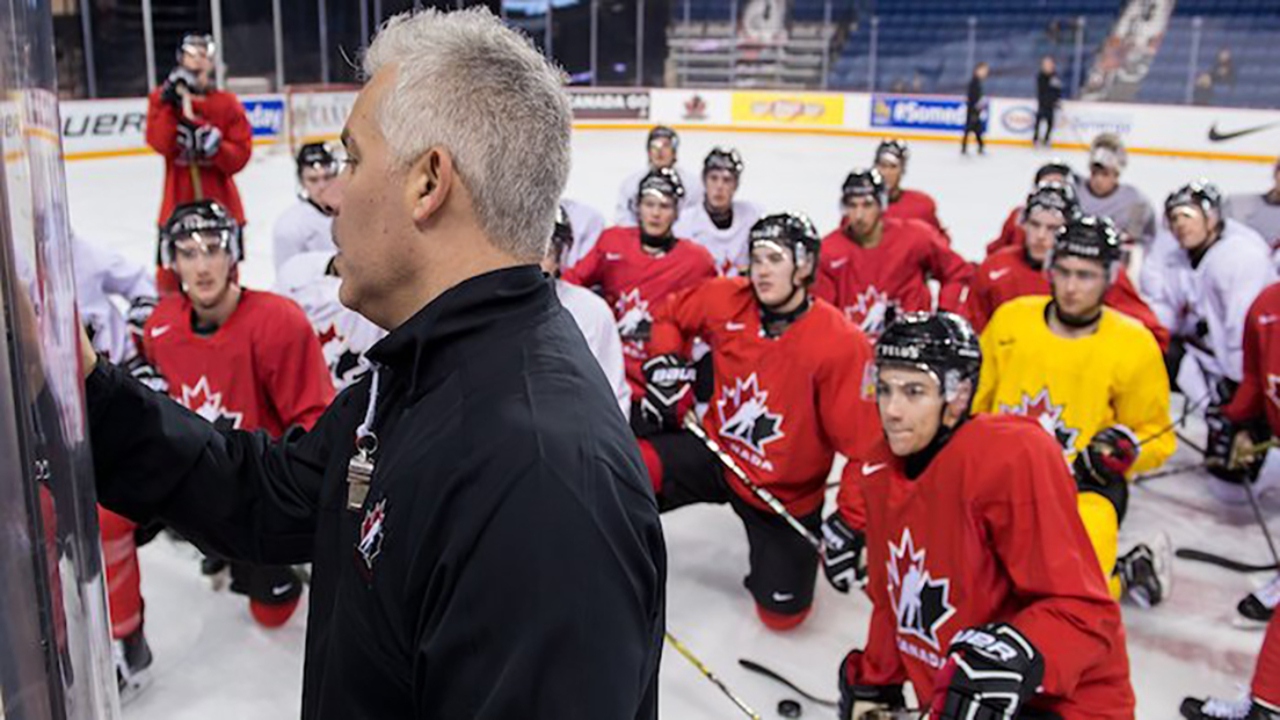
I knew I could blow the whistle, bring everyone in, draw the solution on the board and tell F2 exactly where to go. The next rep probably would have looked better.
But I wasn't sure the players would have learned more. So I waited.
And when I do step in now, I try not to begin with the answer.
I go back to some of the same questions I used as a teacher:
What are you seeing?
What would happen if…?
What if the D closes?
What if the D cheats to the middle?
What have you tried?
What options do you have here?
Better yet: Don't answer with words. Show me.
Sometimes I'll still tell them. Sometimes I'll demonstrate. Sometimes I'll stop everything and teach.
But sometimes I count silently before speaking.
Three seconds. Five seconds. Sometimes ten.
It can feel like forever. The players probably don't notice.
I do.
Tuesday Night
For you, the Tuesday night coach, the next time a player asks: "Coach, what do I do?”
Don't answer immediately. Count to five.
Watch. Maybe another player answers. Maybe they try something. Maybe they figure it out. Maybe they don't. Then decide whether to coach.
The five seconds aren't magic. They're simply permission not to rescue immediately.
Ending
From upstairs, those seven seconds looked like a drill that wasn't working. From the ice, they looked different.
A player was stuck. Another player was thinking. A coach was waiting. And then: “What if you go over here?”
The drill restarted. No whistle. No whiteboard. No answer from me.
Just a group of players working their way through a problem. That's the strange thing about learning.
Sometimes the moments that look least like learning from the outside are the moments when something important is happening underneath.
Maybe great coaching isn't knowing exactly when to speak.
Maybe it's knowing when not to.
Continue the Conversation
In this conversation, I introduced two ideas that have changed how I think about struggle and learning: Productive Failure and Desirable Difficulties.
Manu Kapur's work on Productive Failure has made me think differently about what we see when learners struggle. A messy first attempt isn't necessarily a failed lesson. Sometimes it is the beginning of a better one.
Robert Bjork's work on Desirable Difficulties pushes that idea further. If learning is always easy, immediate and comfortable, we shouldn't automatically assume that learning is therefore better.
Both ideas raise a question that I think matters enormously in coaching: are we sometimes making practice easier for ourselves at the expense of making learning better for our players?
If you want to go deeper, Kapur's Productive Failure is a great place to start, and Bjork's research is collected through his professional work at UCLA.
The ideas are bigger than hockey. But I think they belong on the ice.
My Notebook
Every time I resist rescuing a player, I'm reminded that learning and comfort aren't always teammates. Sometimes the best thing I can give a player isn't another answer.
It's another thirty seconds. It's an extended opportunity to put the pieces together.
The question I'm carrying now is this:
If players learn by solving problems… then how should I design better problems?
Next Conversation: Why Do Some Drills Teach Better Than Others?