Before the Gym Gets Heavy: What 12–14-Year-Old Hockey Players Really Need in the Off-Season
By Magnus Ågren
The off-season always arrives with a familiar pressure. Parents ask what the plan is. Players want to train harder than last year. Coaches feel the gap between where the team finished and where it needs to be. And somewhere in that noise, the 12–14-year-old hockey player gets handed a program built for an athlete he is not yet ready to be.
This article is about why that is a problem — and what actually serves the player at this stage.
The age group we keep getting wrong
Twelve to fourteen is not one thing. It is a range that can include athletes at wildly different stages of physical maturation. Two players born in the same year can be months or even years apart in biological development, and that gap changes everything about how they respond to training load, volume, and complexity.
Research in youth hockey is clear on this: early maturers tend to look better in adolescent competition. They are bigger, faster, and stronger than their late-maturing peers — for now. But late maturers who stay in the system and receive appropriate development often catch up, and in some studies perform at higher levels in adulthood. Biological age is not destiny. It is context.
The mistake is treating chronological age as a training prescription. It is not. A 13-year-old in the middle of his growth spurt and a 13-year-old who has not yet hit it are not the same athlete. They should not train the same way.
What the growth spurt actually does
During rapid height velocity, the body changes faster than the nervous system can fully reorganize around it. Limbs get longer. The center of gravity shifts. Coordination that was smooth six months ago can look suddenly rough. Timing and fluidity can temporarily decline.
Coaches and parents read this as regression. Often it is not.
A player who looks awkward, slower, or less confident in the middle of a growth spurt may be in one of the highest-potential development windows of his entire career. The body is not failing — it is restructuring. The question is whether the training environment is intelligent enough to support that process rather than fight it.
The right coaching response is not to back off entirely or panic and load harder. It is to reduce complexity, protect tissue tolerance, reinforce basic movement patterns, and give the athlete the tools to reorganize his movement as his body settles.
What actually transfers to the ice
If the goal is long-term on-ice development, the off-season should be built around transfer — not just workload.
At this age, the qualities that transfer most reliably are not hockey-specific. They are movement fundamentals: the ability to squat, hinge, lunge, push, pull, brace, jump, land, decelerate, and rotate with control. These are the building blocks of every skating edge, every contact, every change of direction the game demands. Build them well and the athlete has a platform. Build them poorly and later hockey training sits on a weak foundation.
Spatial awareness matters equally. Hockey is a perception game before it is a power game. Players who can scan, read, and move in relation to opponents and space are more coachable, more adaptive, and more dangerous later. That kind of awareness is built through varied, open, and reactive movement experiences — not by repeating closed drills in a predictable environment.
The practical point is this: a better mover becomes a better hockey player. An early specialist often becomes a more limited one.
Why gymnastics and judo belong in this conversation
Two activities deserve serious consideration as primary off-season tools for this age group.
Gymnastics develops balance, body tension, landing mechanics, rotational control, and the ability to manage the body in space. Those qualities are directly relevant to skating. Research on young athletes shows clear benefits to coordination and stability from gymnastics-type training — not because we are trying to produce gymnasts, but because the motor demands of gymnastics develop exactly the kind of proprioceptive richness that serves athletes in contact and balance sports.
Judo contributes differently but equally. Systematic review evidence demonstrates improvements in strength, coordination, balance, flexibility, and posture in children and adolescents up to age 15. For hockey players, judo also introduces something most off-season programs do not: the experience of generating and absorbing force in dynamic, unstable, and reactive positions. That is close to hockey. Closer, in fact, than many hockey-specific circuits.
Neither activity needs to replace structured training. But both can anchor an off-season in a way that builds the right movement vocabulary before the barbell becomes the main language.
What to de-emphasize
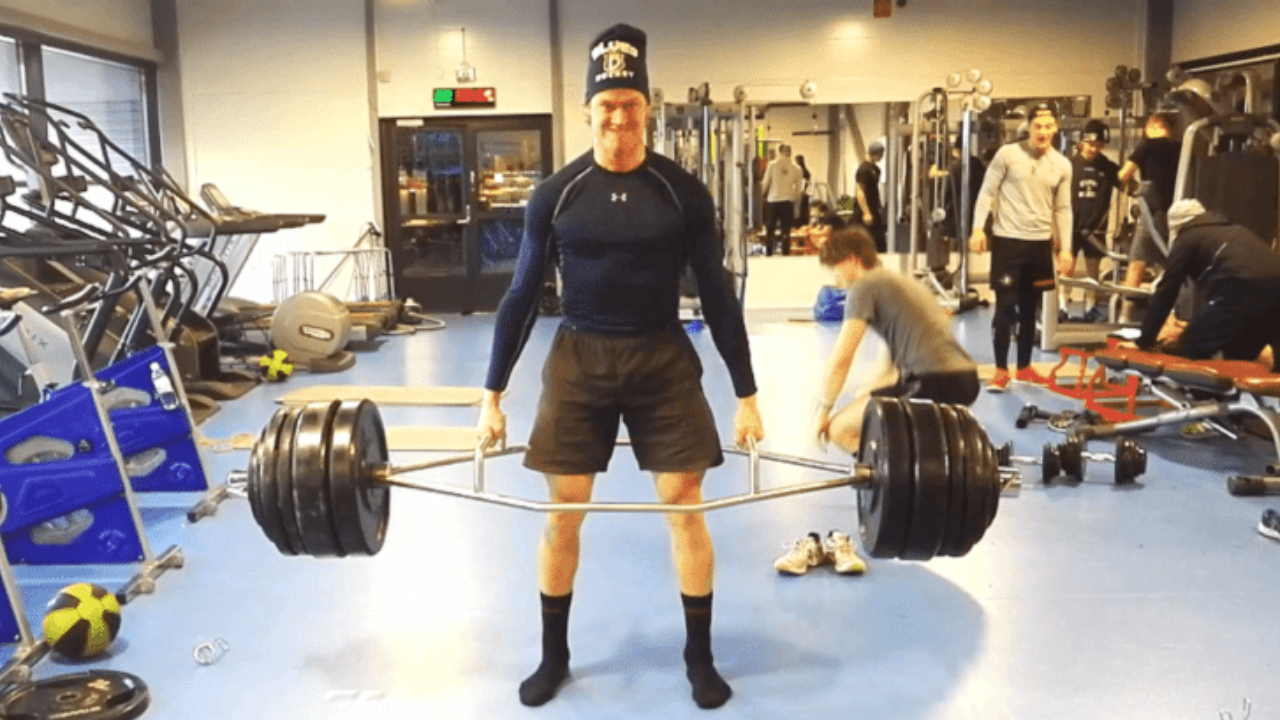
Heavy gym training should not anchor the off-season at this age.
That is not a statement against strength. Strength training absolutely belongs — but in a secondary, maturity-appropriate role. The athlete who enters heavy loading before fundamental movement patterns are established is not training efficiently. He is practicing compensations at higher forces.
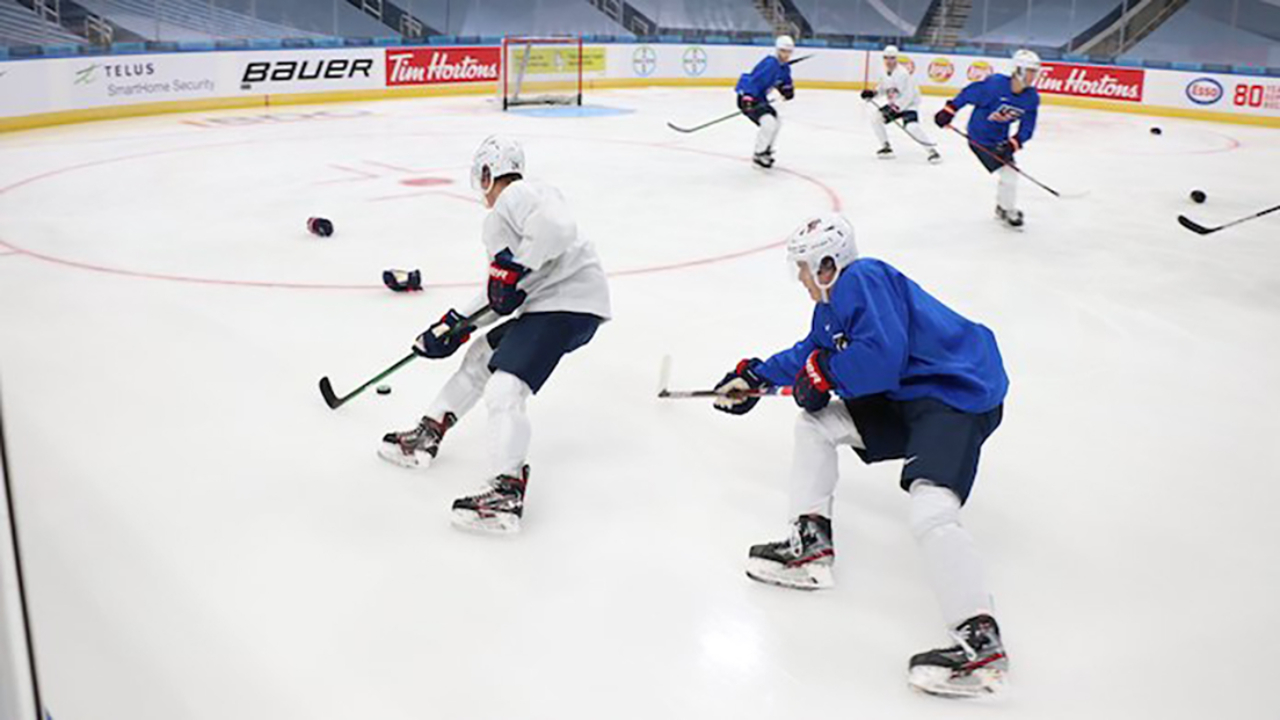
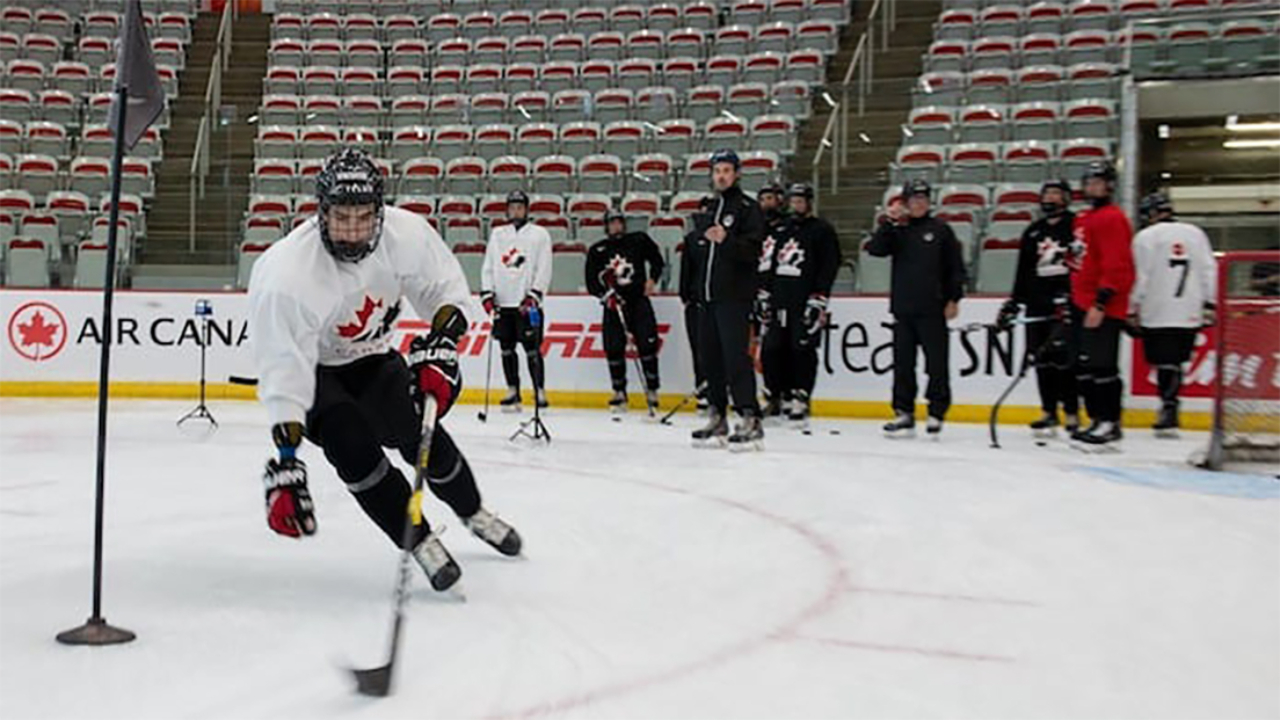
The same applies to repetitive, high-volume hockey-skill work with low variability. Repetition without variation builds habits. It does not build adaptability. A player who has spent five hundred hours on predictable drill patterns may still struggle to read and solve the chaos of real game situations.
The question to ask is not "how much training?" — it is "what will this training still be worth in three years?"
A practical off-season lens
For coaches and parents working with 12–14-year-old hockey players, the off-season priorities should look something like this:
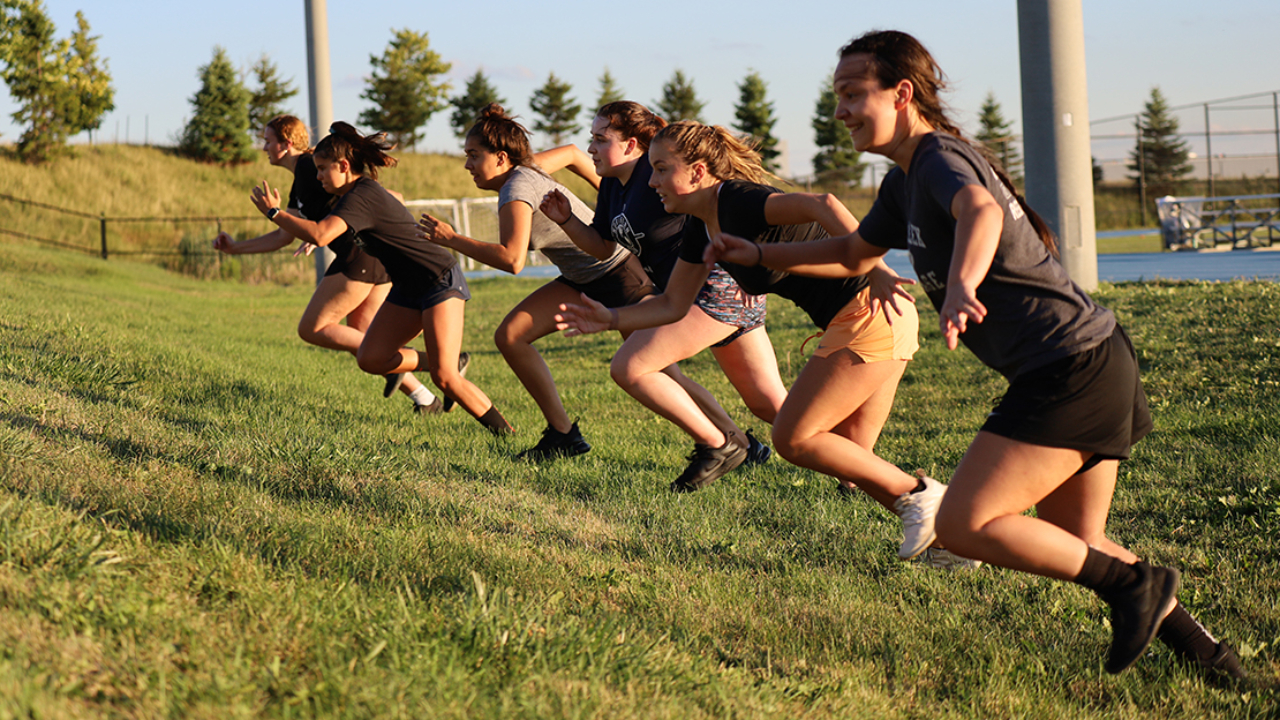
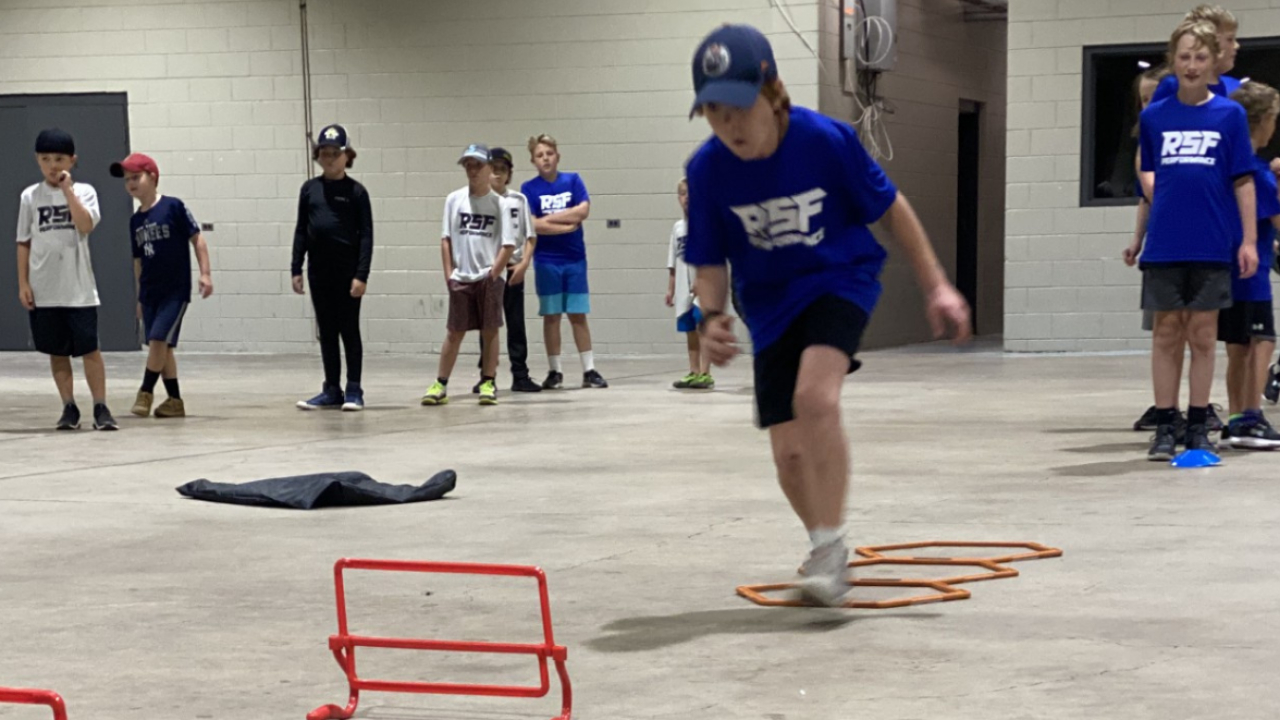
Fundamental movement patterns first. Squat, hinge, lunge, push, pull, rotate, brace, jump, land, decelerate. These are not warm-up drills. They are the program.
Balance and body control. In changing positions, under fatigue, in reaction to external cues.
Spatial awareness and reactivity. Games, constraints, and open tasks that require reading space and solving movement problems in real time.
Multisport or cross-training exposure. Gymnastics, judo, sport climbing, wrestling. Anything that builds motor-skill richness beyond the hockey pattern.
Strength work matched to maturity. Safe progressions, technically sound, in support of movement quality — not as the headline.
Patient management through growth spurts. Reduce load variability, reinforce basics, do not read temporary movement disruption as a failure of development.
The long view
Youth hockey development is not about winning the off-season. It is about building an athlete who can keep improving when the game gets faster, the contact gets harder, and the demands become more specific.
The players who develop well over the long arc are rarely the ones who dominated at 13. They are often the ones who kept developing when others plateaued — because their foundation was built correctly, at the right time, matched to where their body actually was.
That is what this age group deserves. Not early specialization. Not heavy loading too soon. Not the illusion of progress through busyness.
Just better movement, better awareness, and better preparation for the years that will actually define their careers.
Magnus Ågren
Performance and Leadership Development · Consultant · SHL - NL - DEL
Thirty years in elite sport. Seven seasons as Head of Performance and Medical in the Swedish Hockey League. Olympic cycles since Sydney 2000. Designs the systems that integrate coaching, medical, and sports science into one performance structure.
People. Purpose. Performance.