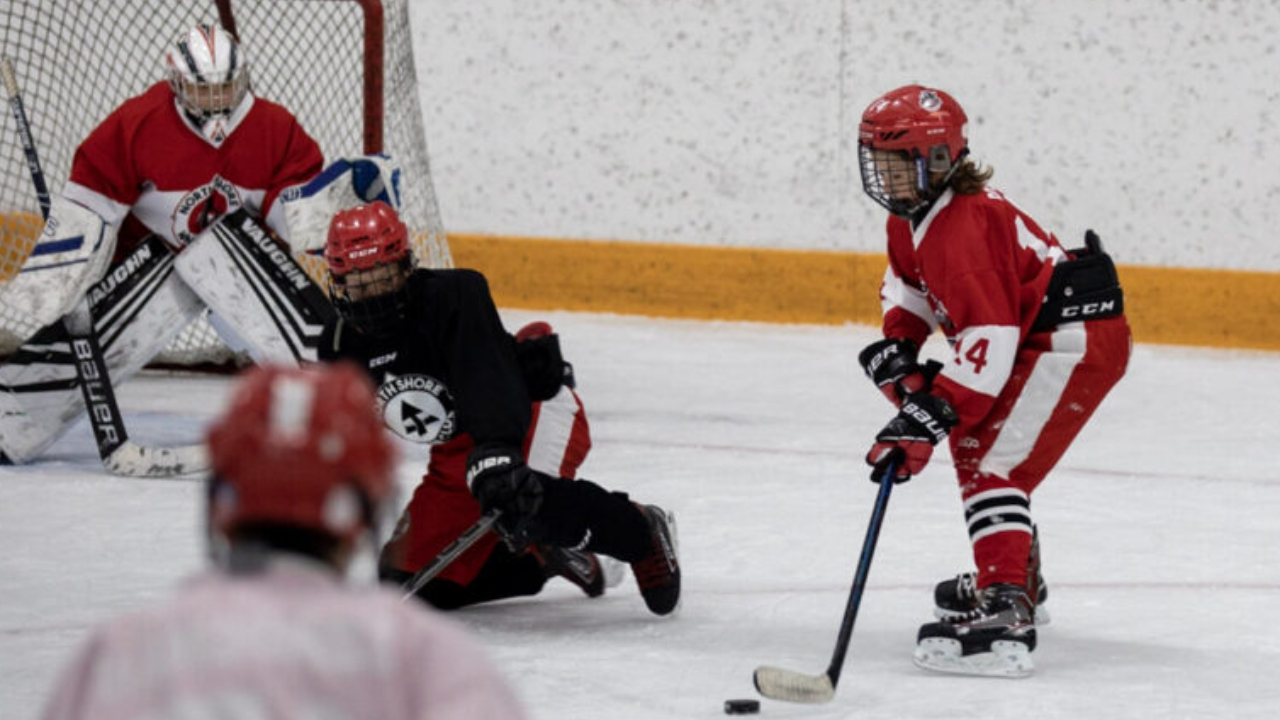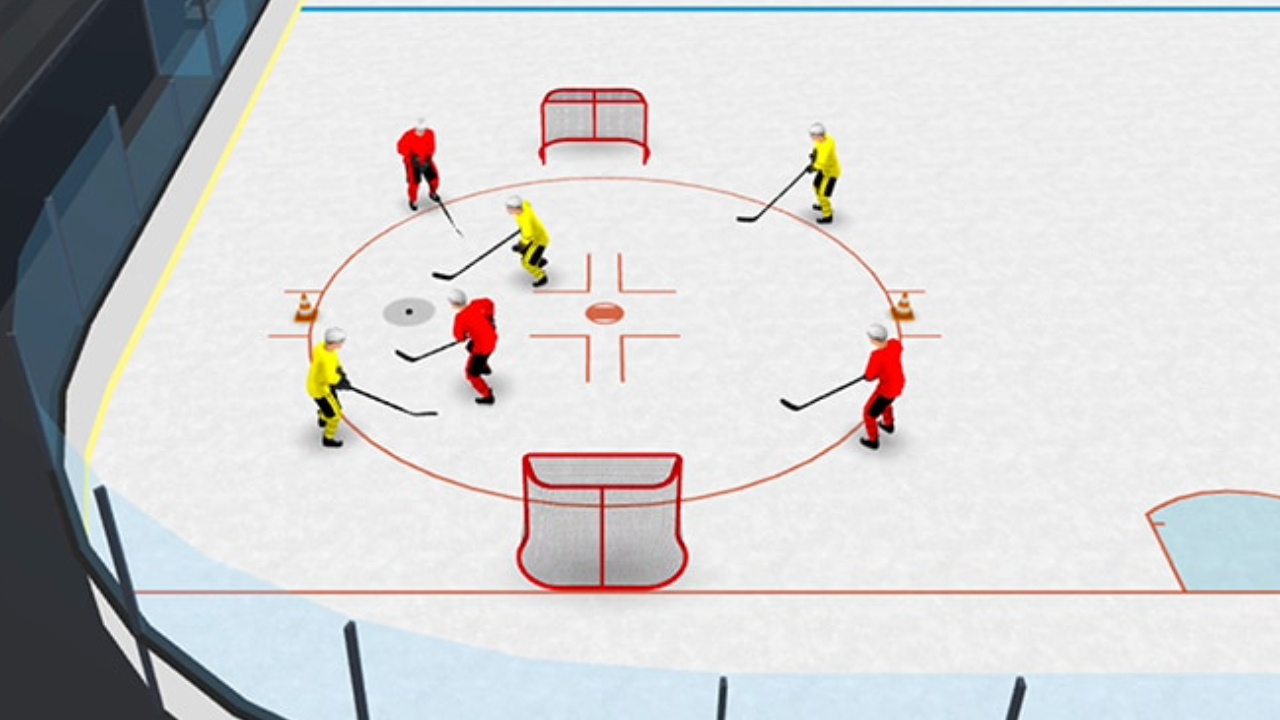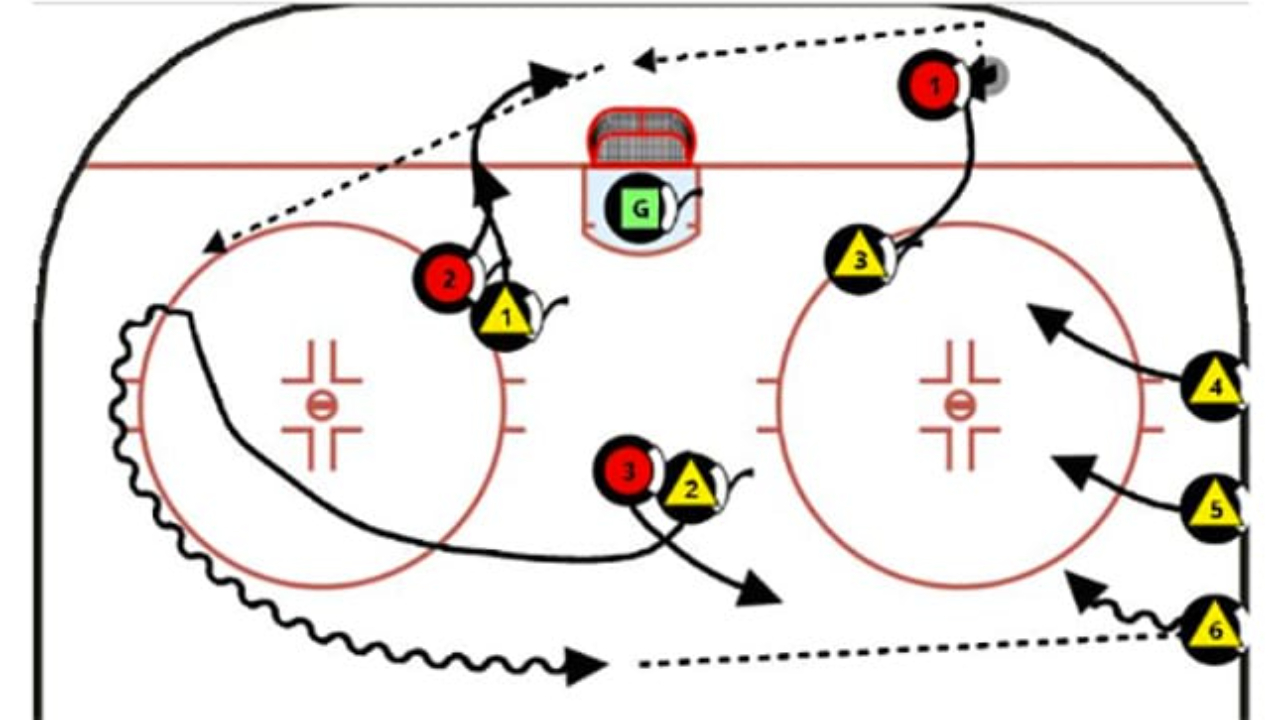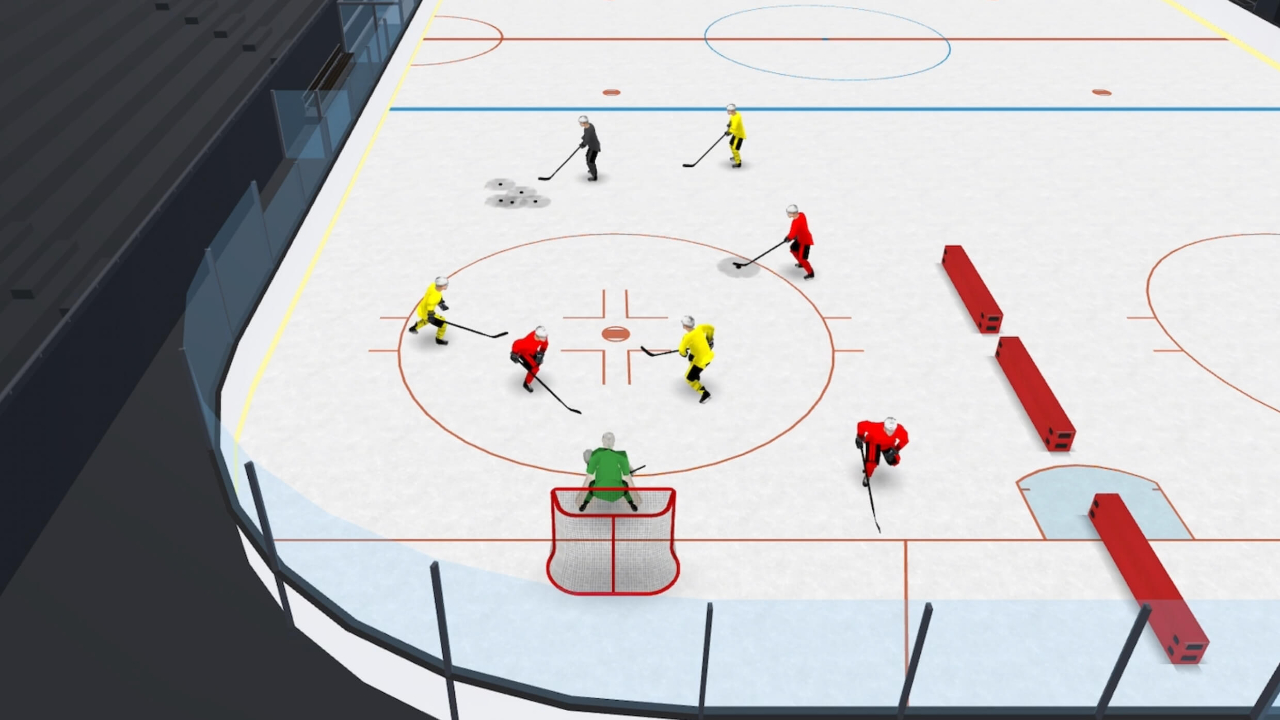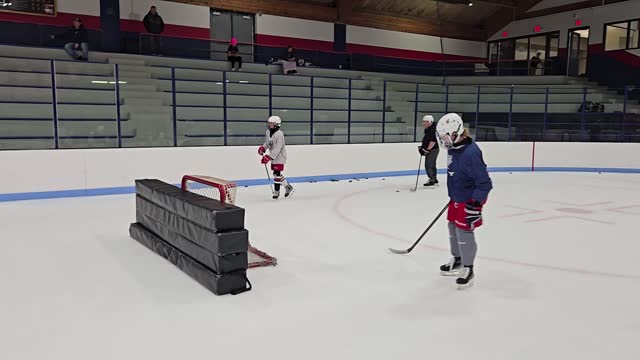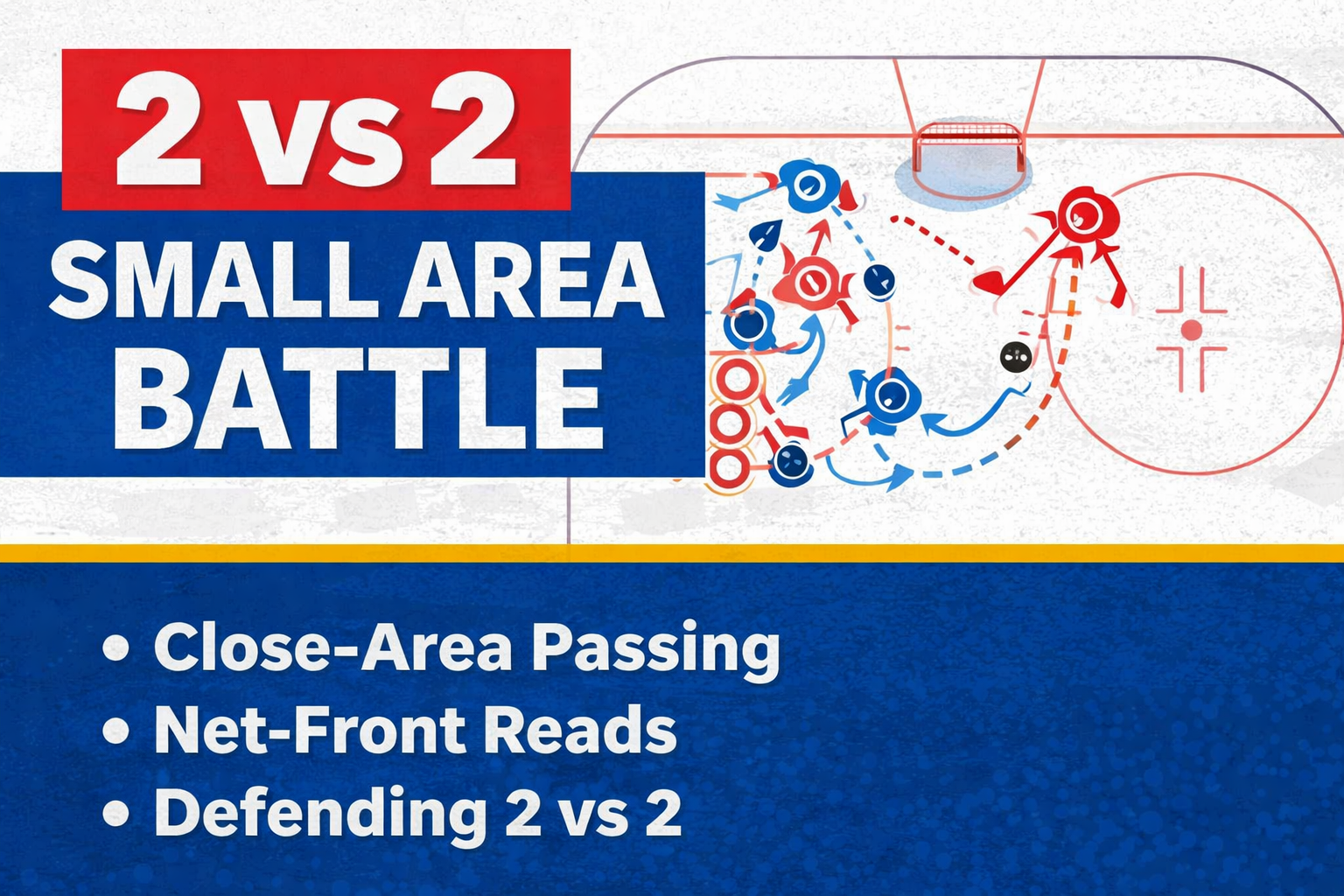
This small area game became a really valuable drill for our team because it forces players to solve game-like problems in a tight space. The setup is simple, but the habits it teaches are important. Two players compete against two defenders in a confined area around the net, with the coach putting a puck into play and the group immediately having to sort out possession, support, attack, and defending. Once a goal is scored or the puck leaves the area, a new puck is spotted in and the next rep begins.
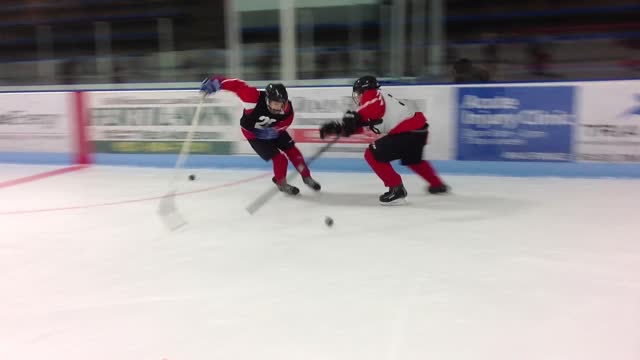
What makes this drill special is how many key game details it brings out in a short amount of time. We used it to help our players make better passes in small areas, stay under control with the puck, and learn how to read a 2 on 2 situation instead of forcing plays that were not there. In games, we were struggling at times around the net front, both offensively and defensively, so this drill gave us a way to directly challenge that part of our team game. Players had to get to the inside, fight for body position, find sticks, protect space, and make quick decisions under pressure.
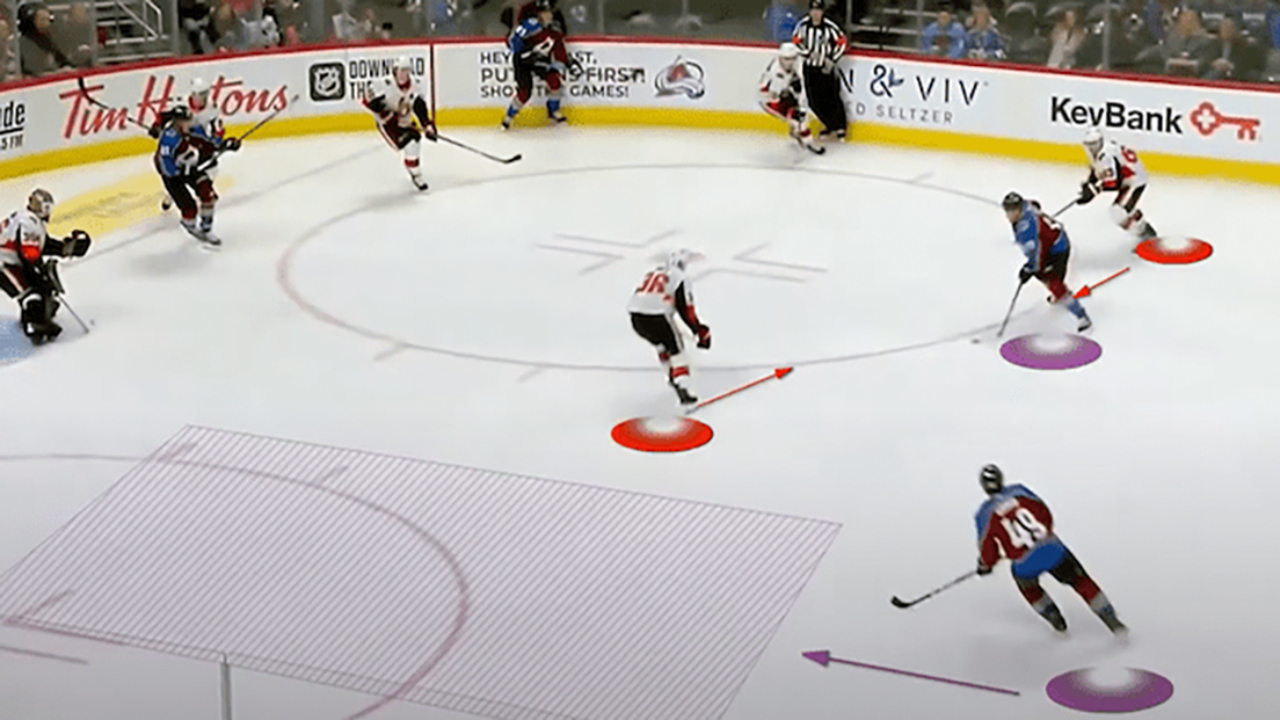
Offensively, the drill teaches players to support the puck in tight space and complete short, accurate passes under pressure. Because there is not much room, players cannot rely on hope plays or soft decisions. They have to move to open ice, present a stick, protect pucks, and recognize when to pass, when to attack the net, and when to take space away from defenders. It also encourages quick puck movement around the slot area, which is where many scoring chances are created in real games.
Defensively, it puts players in situations where they must read a 2 on 2 properly. Instead of chasing, they have to sort out who has the puck, who has net-front responsibility, and how to take away sticks and second chances. That was a big reason we liked this drill. It exposed players who could think and compete around the net, not just players who looked good in open ice. It made them defend with purpose in a hard area of the rink.
Another reason this drill worked well for us is that it can easily be adjusted. We can run it as a 2 on 2 to work on puck support and defensive reads, but we can also simplify it to a 1 on 1 version to really isolate compete level, body positioning, puck protection, and willingness to get to the hard areas. That flexibility makes it a drill you can come back to throughout the season depending on what your team needs most.
One of the ways I have been preparing to use this drill even more is during tryouts. A variation I plan to run is setting it up out of all four corners with four nets, creating multiple stations at once. That format gives a really good look at players in a true tryout situation because it highlights close-area compete, awareness, passing ability, offensive instincts, and how players handle pressure in a confined space. In a tryout, that matters. It is one thing for a player to look good skating in lines or in open ice, but this type of game quickly shows who can process, compete, and execute when space and time are taken away.
Key teaching points:
- Win body position early and get to the inside.
- Make short, firm passes in tight space.
- Support the puck quickly after possession is won.
- Read the 2 on 2 instead of forcing low-percentage plays.
- Attack the net with purpose and be ready for rebounds.
- Defend sticks and net-front space with urgency.
- Compete through contact and stay engaged after the first play.
At the end of the day, this drill is special because it teaches more than just skill. It teaches players how to think, compete, and execute in the areas of the rink where games are often won and lost. For our group, it helped address close-area passing, 2 on 2 defensive reads, and net-front habits, while also giving us a great tool we can use in both practices and tryout evaluations.