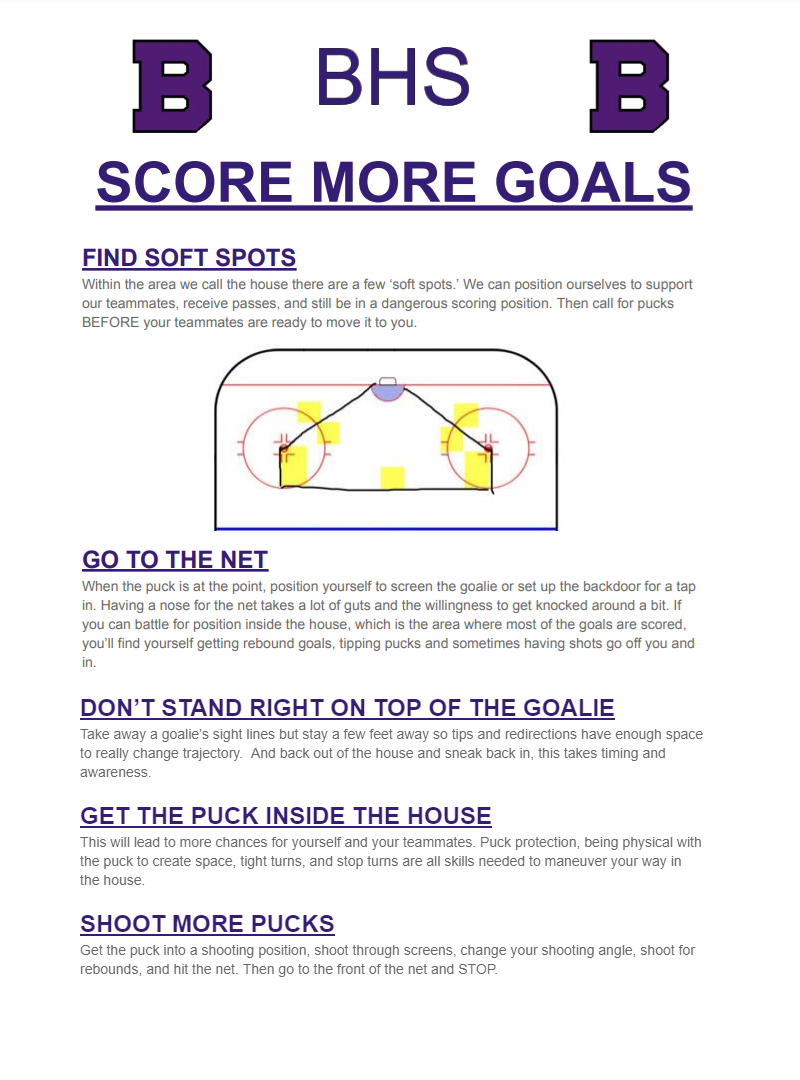
Key Teaching Points
- Knee and ankle bend
- Strong push-free leg is controlled/locked and pointed
- Rotation into the turn
- Stay balanced throughout the turn.
 0:01:07
Key Teaching Points
 0:00:09
Every time you receive the puck, go into the crossover and pass the puck again (away from pressure).
 00:00:00
My mentor, Dr. Saul Miller, once shared a story with me which included an insight about the legendary Michael Jordan. It was not a picturesque scene on the basketball court one evening when Jordan found himself in a slump, shooting but not sinking his shots. One of his teammates, puzzled by his persistence, questioned his relentless pursuit of the basket. Jordan's response was stark and to the point: "I make my shots." This moment speaks volumes about the power of belief and self-trust - two qualities which are important not only in sport, but in life.
What is Belief?
Belief typically follows a sequential progression. It starts with a thought, then moves to a feeling, and finally evolves into knowing. Jordan knew something that evening. He makes his shots. Even though he was missing his shots in that specific moment in time, his belief in his abilities never wavered. As humans, we engage in cognitive processes every single day where we think about a concept, idea, or information. These thoughts then spark emotional responses, which leads to the second stage where belief is intertwined with feelings and emotional reactions. Over time, as we continue to ponder and emotionally connect with a belief, it solidifies into a knowing—a sense of certainty and conviction about that particular belief. Assuming it is a healthy belief, this is where the magic happens. So, how does one foster a sense of belief in themselves? There are three specific approaches you can deploy right now to acheive it.
As a hockey player, you have experienced your fair share of moments of triumph and adversity. Both have instilled lessons which can be gleaned to enhance your level of belief. Again, belief starts as a thought or reflection, moves to a feeling, and then develops into knowing. The goal in this case is to be intentional on focusing on your past performances but with a more concentrated attention on your successes rather than failures. The goal is to use your past successes as beacons of inspiration and draw strength from them. Whether it was a game-winning goal or a stellar defensive play, compile these instances into a mental highlight reel to serve as a testament to your capabilities. Harness the power of retrospection to fuel your confidence, knowing the triumphs of yesterday pave the path to success tomorrow.
Exercise: Document the Evidence
After each game, take a moment to reflect. Identify two areas where you excelled and one aspect warranting improvement. By acknowledging your strengths and areas for growth, you cultivate a mindset primed for continuous improvement and self-belief.
Beliefs are powerful. However, a belief can become limiting if you let it. When a belief is first embraced and genuinely accepted, it can inspire and motivate individuals to achieve their goals and dreams. But, if this belief remains unexamined and unchallenged, it may gradually become limiting. I will give you a few examples. Have you ever found yourself thinking:
As hockey players repeatedly encounter situations that confirm beliefs like the above, they may unintentionally reinforce their limitations, constraining their perspectives and actions. With that being said, it is vital to prevent beliefs from becoming limiting. In order to acheive this goal, it is essential to engage in ongoing self-reflection. This process encourages beliefs to remain empowering and adaptable rather than restrictive.
Exercise: Identify Your Limiting Beliefs
Take a moment and identify a few of your limiting beliefs or negative thoughts. Once you have them listed, the next task is to challenge them. Are they really true? The answer is "No." Prove they are wrong by creating a new set of 3-5 beliefs which capture the real you like: "I am the hardest worker on my team" or "I am calm and composed under pressure." Keep them positive and in the present tense.
Dr. John Demartini created a transformative philosophy centered around the concept of "Be, Do, Have." It is a philosophy that holds immense relevance for hockey players. I will break it down in greater detail. "Be" involves imagining oneself in the future as the ideal hockey player, embracing the mindset of a confident, skilled, and accomplished athlete. Not tomorrow, next week, or even next month. Right now. Be that person. This mental image sets the stage for the subsequent stages. With the proper mindset in place, hockey players can transition to "Do," where they actively engage in actions and behaviors aligned with their envisioned future selves. They execute plays, make decisions, and hone their skills with unwavering dedication. Over time, this consistent action culminates in the realization of "Have." Players begin to manifest the outcomes they desire, experiencing success on the ice.
Dr. Demartini's "Be, Do, Have" approach underscores that it is not enough to simply visualize the end result. Rather, it is about embodying the right mindset in this present moment, being willing to put in the work and achieving your desired outcomes. In other words, focus on your mindset first and "Be" who you want to be right now. The results will follow.
Exercise: Who Do You Want to Be?
Who you want to "Be" is the most powerful part of "Be. Do. Have." Carve out a few minutes and answer the following:
What is your main goal as a hockey player?
How will you feel if you accomplished this goal?
What actions can you take today to move you closer to achieving that goal?
Belief serves as the bedrock upon which great hockey players are forged. Remember, like the Jordan example, it is not merely about making shots - it is about believing you will. Trust your past successes, kill those limiting beliefs, and prioritize your mindset, and you will begin to experience a heightened sense of belief and confidence.
 0:00:12
Compete early and often! Start 2v1 then add a backchecker to make it 2v2. First team to 5 wins.
Add challenges for bonus goals
-one timers
-rebound goals
-back door goals
-give and go
-# of passes = # of goals
 0:00:51
1v1 using body to protect the puck, use deception to beat the defender and create a scoring chance.
 00:00:00
For my family and I, supporting the Toronto Maple Leafs in the playoffs is a tradition intertwined with emotional highs and lows. So, it broke our hearts, along with the rest of the Leafs Nation, when William Nylander's recent "Stop f**king crying bro...this isn't f**king junior hockey" comments signaled the implosion of a team we care for so deeply. It not only underscored the weight of negativity within teams, but also put a spotlight on a broader issue of toxicity permeating locker rooms and team benches.
In my own journey, I have grappled with negativity and have witnessed firsthand the toll negativity can take on any team - sports or business. All this to say, with over 20 years of leadership experience, I recognize the importance of addressing negative influences head-on. It can not be put on hold or swept under the rug. It requires intention and swiftness centered around three key strategies.
But first, I need to categorize the types of negativities we encounter: Naysayers and Toxics.
Negative players (Naysayers or Toxic) can be a drain on a hockey team, harming team morale and hindering performance. As a hockey coach, it is important to learn how to manage and neutralize negative behavior to keep your team motivated and on track. Since negative players are the reality of any team, you need to first determine if the individual is a Naysayer or a Toxic and then act accordingly. The path is simple:
If they are a Toxic, get rid of them and help them find a new team. Plain and simple. Cut your losses and move on.
If faced with Naysayers, there is still possibility for change. Consider these three approaches to neutralize their negativity:
Encourage Naysayers to write down their objections. This process promotes reflection and shifts their perspective away from automatic negativity and devaluation which fosters a more thoughtful approach to discussions based on evidence and data.
Practical Application: Write It Down
Ask your Naysayers to write down their objections when they are tempted to shelve new ideas or reject positive change. Their objections need to contain evidence supporting their position and must include solutions rather than just a statement of the objection or problem.
In his book, "Teaching the Elephant to Dance: The Manager's Guide to Empowering Change," James Belasco shares a powerful analogy about the conditioning of young elephants. Trainers would shackle them with heavy chains connected to a stake to keep them in place. As the elephants grew older, they never attempted to leave, despite having the strength to do so. The chains had conditioned them to stay still, even though they were capable of breaking free.
Naysayers, like conditioned elephants, may be stuck in a pattern of resistance. Challenge this inertia through coaching interventions or impactful events that shake up their perspective which fosters a willingness to embrace change.
Practical Application: Break the Pattern
Naysayers have been programmed to be still and comfortable with their negative perspective. This type of stillness is a limiting belief, so you need to be intentional about breaking the pattern. You can do this by facilitating a discussion which encourages the Naysayer to identify and challenge their limiting belief or pattern of resistance.
Several years ago I had the honor of reading Carol Dweck's book, "Mindset: The New Psychology of Success," where she introduces the concept of fixed versus growth mindsets and explores their profound impact on achievement and personal development. She highlights how the main difference between a fixed mindset and a growth mindset is that those who have a growth mindset believe learning and growing can always be achieved. With dedication, effort, learning, and perseverance anything can be achieved. Conversely, someone with a fixed mindset has placed an imaginary ceiling on themselves. They believe that their abilities, intelligence, and talents are static and unchangeable.
All this to say, Naysayers must be encouraged to adopt a growth mindset by reframing challenges as opportunities for personal and team development. This can be accomplished by introducing empowering language to cultivate optimism and openness to change.
Practical Application: Expand Their Thinking
Teach your Naysayers to expand their way of thinking by tackling challenges as opportunities or start introducing words like "yet" to their vocabulary. For instance, instead of allowing Naysayers to embrace a negative outlook like "We haven't won a game against that team" have them change their perspective to something so simple as "We haven't won a game against that team...yet."
Negative players can disrupt team dynamics and hinder performance, but with proactive strategies, coaches and players can neutralize their impact. By addressing toxic behavior decisively and implementing targeted approaches for naysayers, teams can cultivate a positive and cohesive environment conducive to success on and off ice.
 00:00:00
Detroit had all the pieces to be a championship team. In the 1993-94 season, they finished 46-30-8, totaling 100 points and finishing first in the NHL’s Western Conference.
The two previous seasons ended with semifinal losses, despite regular season point totals of 103 and 98 respectively.
In the first round of the 1993-94 playoffs, Detroit hosted the 8th seed San Jose Sharks, who were making their first appearance in the Stanley Cup playoffs in franchise history.
Their run would last longer than the mighty Red Wings.
Detroit led the series 2-1, then trailed it 3-2, before scoring a 7-1 victory at home to force a Game 7.
As it turned out, their win in Game 6 was their last of the year.
Jamie Baker scored at 13:25 of the 3rd period and the Sharks eliminated Detroit with a 3-2 win at Joe Louis Arena.
It was the first time an eight seed beat a top seed in NHL history.
I remember it well.
I was a 13-year-old, who was just really starting to get into hockey, living in Windsor, Ontario.
At the risk of sounding like Sarah Palin’s ill-fated line about Russia, I could see Detroit from my house.
The Red Wings had endured, at that time, nearly 40 years without the Stanley Cup. They had a Hall of Fame Head Coach, a line-up as deep as any in history and a fan base starving for something to celebrate.
The Detroit Red Wings had to do something.
A visit to Sweden that summer by Red Wings Assistant Coach Barry Smith set off what would be the Team of the Decade, the birth of a system that changed the way Detroit played and altered the history of hockey.
==============
“I went over to Sweden, I had some friends over there, and there were a couple systems I was looking at,” Smith recalls. “With European hockey, playing on the big ice sheet, there are a lot of things they can do there that we can’t do here, but what they were doing was interesting.”
Detroit was a very offensive minded group, yet Scotty Bowman, their Head Coach, knew defence won championships.
As Smith remembers with that team, they could win 6-4 or 7-5, but had no way of winning 2-1, and a 1-0 victory was completely off the charts.
They did not have the mentality for that.
“If you can’t play defence, I don’t know how much success you’re going to have,” Smith admits. “There are only so many track meets you can win with, so this gave us a chance to play good two-way hockey.”
“I wanted to offset our offence with better defence,” he continues. “We figured out if we did a better job in the neutral zone, our defence would have a much easier job of identifying what the rush was and because we had a good offensive team, we were looking for turnovers and that quick strike mentality.”
It helped that Detroit’s top left defensemen were two of the greatest to play the position – Paul Coffey (left) and Nicklas Lidstrom (right).
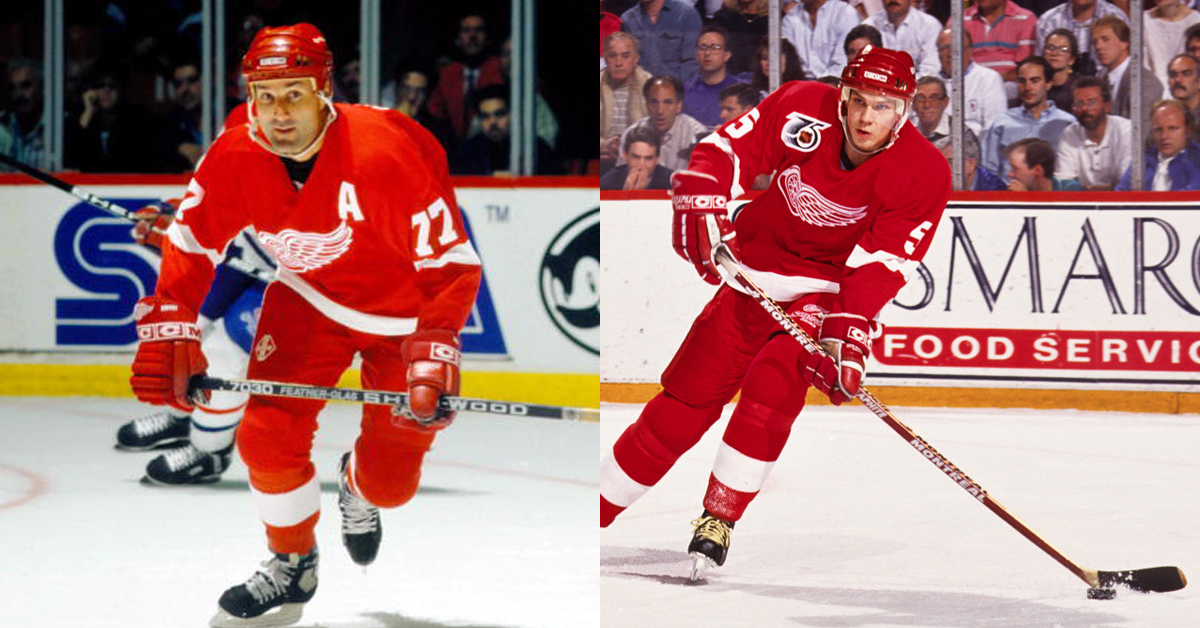
“With our left D being as good as they were, we could play those two guys 30 minutes each, so we were good on that side of the ice,” Smith boasts. “I sat down with Scotty that summer, and we talked about this system and called it Left Side Back, which sets up, so you’ve got your left defenseman in the middle of the ice.”
A system similar to the trap, as your opponent breaks out with the puck, the left winger drops back from his normal position, almost lining up as a third defenseman, and moves the other defenders to their right – creating a 2-3 alignment.
The centre moves over towards the spot where the left winger would be and the right winger is coming across to push the puck to the left side of the ice and try to create turnovers.
The entire unit would have to read off each other, knowing exactly where everyone was going to be and being able to cover if things broke down.
If the left winger has a chance to go at the puck carrier to create a turnover, the centre drops back and the right winger moves to the middle.
It’s seamless when executed properly. It can be a mess if it’s not.
Roots of the Left Wing Lock appear to have originated in Czechoslovakia, as a way to survive games against the dominant Soviet Union teams of the 1970s.
Taking pieces from the neutral zone trap, the left wing drops back in line with the defenseman, where the trap would force the puck carrier out of the middle of the ice and seal off the boards, which not only made it hard to make passes in the neutral zone, but also prevented teams carrying the puck into the offensive end – resulting in a lot more dump and chase.
“Teams in Sweden,” Smith says, “were playing a torpedo system at the time, which was two wingers racing out of the zone and playing way up by the offensive blueline was a bit too much and I wasn’t sure the guys would buy into it.”
Barry Smith and the coaching staff brought the system into training camp in the 1994-95 season and he says the transition was pretty easy to teach.
“There were a couple hiccups, at first, the left winger had to stay back all the time. That doesn’t translate to good hockey because he may end up being the first guy who can get to the puck,” Smith explains. “We had to make sure the left wing could go as well and then the centre would cover that side, so they had to learn to read off each other on that side. The right wing was the one pushing the play, forcing things up ice and creating chaos so the other guys can pick up the loose change.”
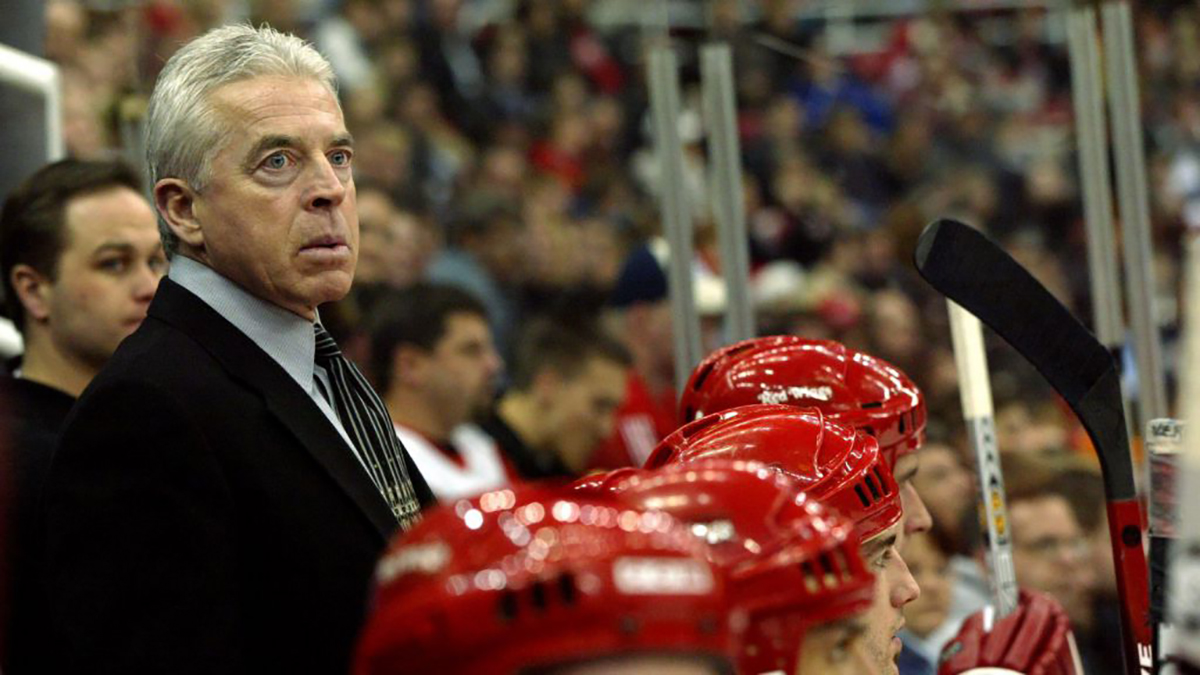
The players, Smith says, weren’t sceptical of it at all.
“The left D loved it because it gave them a chance to free wheel, go back and create offence,” Smith expressed. “It also put the centre in the middle of the ice a lot, which they liked, so if you can have the middle of the ice covered by your two best players, you have something positive happening.”
As Smith explains, coaching wise, there is no one single system that is successful. A system just means where you are trying to line up and play off each other.
“It helped us create turnovers and create scoring chances off those turnovers, have less shots in our end, it helped us not play in our zone very much,” Smith highlights. “If the left wing has a chance to pressure and go, he’s gone, and we immediately have to take that spot. In the D zone if the right D stood up at the blue line and the puck got into the right corner, now the left D has to go and the left winger has to move into the middle, which is not normal for him, and the centre plays in the spot. Everyone had to be in sync.”
Smith emphasises it’s the execution and it’s the players that have to understand the teaching points that make it work.
“Nothing works if the players don’t buy in,” Smith points out a few times in our talk. “We had a great leadership group, and we couldn’t have done anything without them being ok with it or understanding it so when we first brought the idea to them, they jumped on. I know the two left D were smiling.”
The team had the benefit back then of the two line pass, a rule the NHL eventually removed in 2005.
At the time, teams could not pass the puck directly across two lines coming out of their own zone – the defensive blueline and the centre ice redline.
With a shortened neutral zone passing rule, the Left Wing Lock was even more formidable.
He also gives credit to Scotty Bowman, who he compliments for knowing his team so well and what it was capable of.
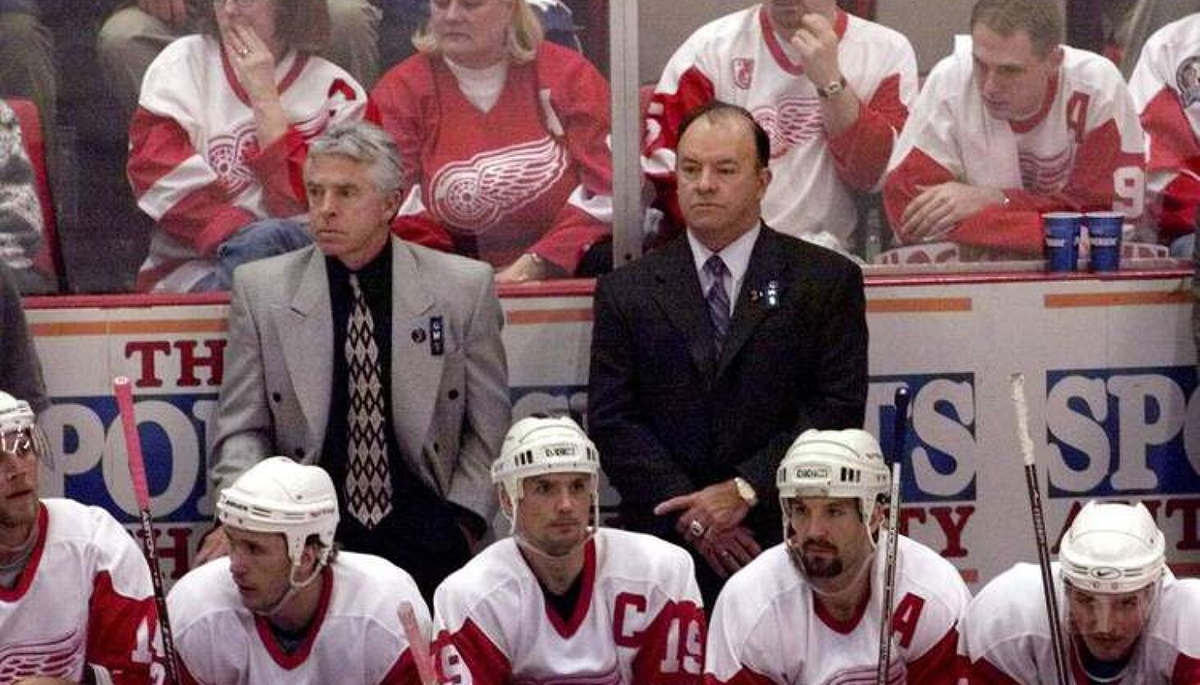
“Whatever team you have, whatever they think they are going to use, you have to understand what your players can do, and you have to honestly evaluate your team,” Smith continues. “In a football analogy, if you’re deciding you want to go to a West Coast offence, but your quarterback can’t read past one pass pattern, you have no chance.”
The system started working.
In the strike shortened 1994-95 season, Detroit once again finished first in the Western Conference and cruised through the playoffs, beating Dallas in five games, sweeping San Jose and stopping Chicago in five before crashing to a halt in the Stanley Cup Final, being swept by Martin Brodeur, Scott Stevens and the New Jersey Devils.
The left wing lock, despite the major shift in entertainment value for the fans, was turning things around.
“At that time, there was no redline, so that really stymied teams that tried to stretch you and honestly, we could sometimes go an entire period without the other team getting through our blueline,” Smith details. “I think the opposition got stymied because they had pressure on the forecheck and the neutral zone, it wasn’t like the 1-3-1 where you are sitting back a bit, we were on top of you, creating chances in the offensive zone because both guys could pinch hard along the boards, it really worked for what we were trying to do and it was extremely effective.”
=============================
Another famed part of Detroit’s hockey history was born from this system.
With all the offence these teams had – guys like Sergei Fedorov, Steve Yzerman and Brendan Shanahan – it was three hard nosed, lunch bucket players, like the city itself, that became fan favourites.
The Grind Line.
“It was our secret sauce in the 1990s,” shares former Red Wings right winger, Darren McCarty. “Scotty Bowman knew his team so well and what he had and when it was Kirk Maltby and Kris Draper and I, it was so much more important for us to not allow goals than it was to score goals. We took a lot of pride in that.”
The three, along with Joey Kocur, became as formidable a group as the top scoring units. As an opponent, if you were matched up against the Grind Line, you were in for a long night.
McCarty looks back fondly on when the system was installed.
“I loved it because as the right winger I didn’t have a lot of responsibility other than chasing the puck,” he remembers. “I’m not the best skater, I had good hockey IQ, but Draper and Maltby were the best penalty killers in the era, so I got to open up some physicality and really jump into it. Especially in the playoffs, we would just shut teams down, there was no answer to it.”
Maltby agrees.
“Obviously, we had success with it. It didn’t take a real long time to get used to it, but you had to learn sometimes you want to finish a check or run around a bit but at times that wasn’t the role, you had to be patient and allow your linemates to do what they were doing, but once the puck was turned over, especially in the offensive zone, it was time to go.”
Maltby was a late comer to the Detroit run, he joined the team for the 1995-96 season after a trade from Edmonton, but would spend the next 14 seasons wearing the Winged Wheel.
“Coming from Edmonton, we were a young team, so I was learning the NHL game and then ended up in Detroit, which was a well coached team with a ton of talent and expectations,” Maltby explains. “We didn’t play Detroit that much and I don’t remember seeing the lock very much to be honest, because they had the puck the whole time.”
When Maltby arrived in Detroit, he was on the right wing – not his normal left side – but over the next couple games he was shifted over to the left after Kocur was brought in during the 1996-97 season.
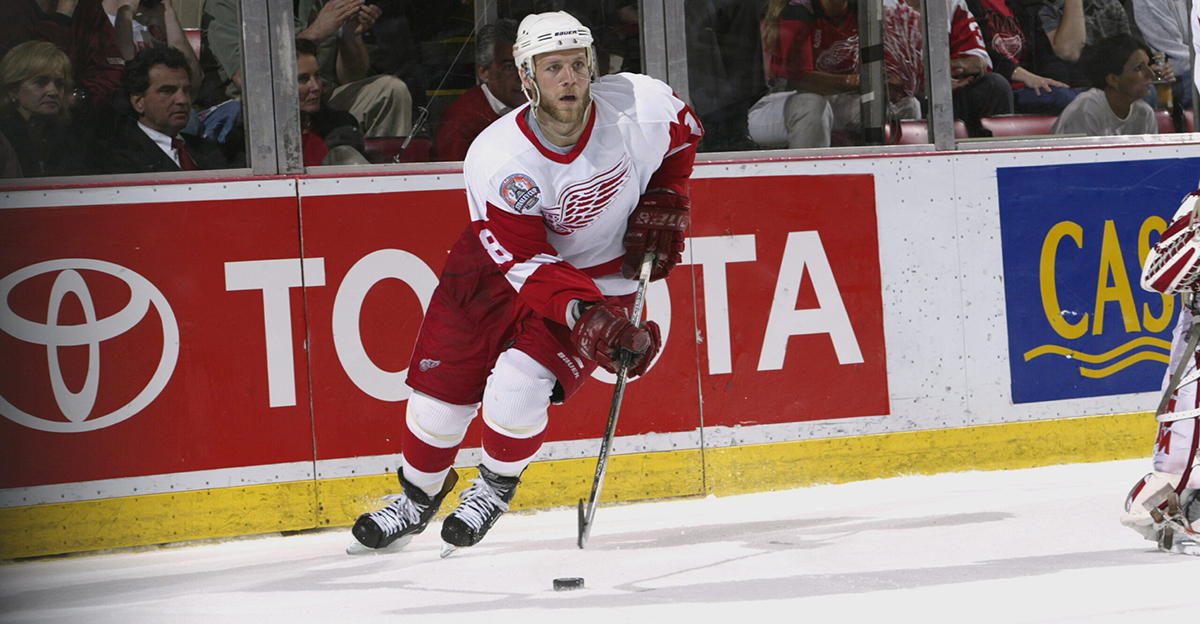
“The first thing I remember with Barry, I was new, and I didn’t really know anyone on the team, but he came up to me and we were talking and his first question to me was “Can you skate backwards?” Maltby laughs, “I thought it was a bit of a joke because at the NHL level everyone can. I didn’t really know how to answer it, I thought I was almost being set up for a joke or something.”
Smith was quick to credit The Grind Line for their adaptation of the lock.
“We had good players in Detroit and they weren’t just good players because of their skill, they were good players because they had hockey sense and hockey IQ,” Smith highlights. “Especially that group, with their reads, it was automatic. If the left winger is gone, the centre comes back. I remember later on, we could play guys like Draper, Maltby and Kocur or McCarty and those guys could all rotate together, that’s how good they were covering for each other.”
Going from a heavily offensive minded, run and gun team to a defensive lock, a tight system could not have been easy for everyone.
These teams were not only built on skill and speed, the hockey IQ was off the charts.
“It did change some of the guy’s roles from the previous way of playing where we used to freelance. Now there’s more responsibility for the left side and the centre and you gave your right wing a little more freedom because he was the pressure guy,” Smith admits. “I think the simplicity of it helped because there weren't a lot of rotational reads to it.”
“The less you make a player think, the more likely you are to have success. You can’t play thinking, you have to be ready to go in microseconds, so I can’t screw up their reads or their anticipation of the actual game.”
“The part that took the most getting used to for me was going back sometimes first, like a defenseman, knowing someone was coming down on you behind your back looking to run you or hit you into the boards,” Maltby adds. “But when the two defensemen knew with the left winger going back for the puck, they could stand their ground. Overall, it was the trust, whether it was me having to leave the position or coming back to support, but when you are all on the same page and you know what you are trying to accomplish it makes it that much easier.”
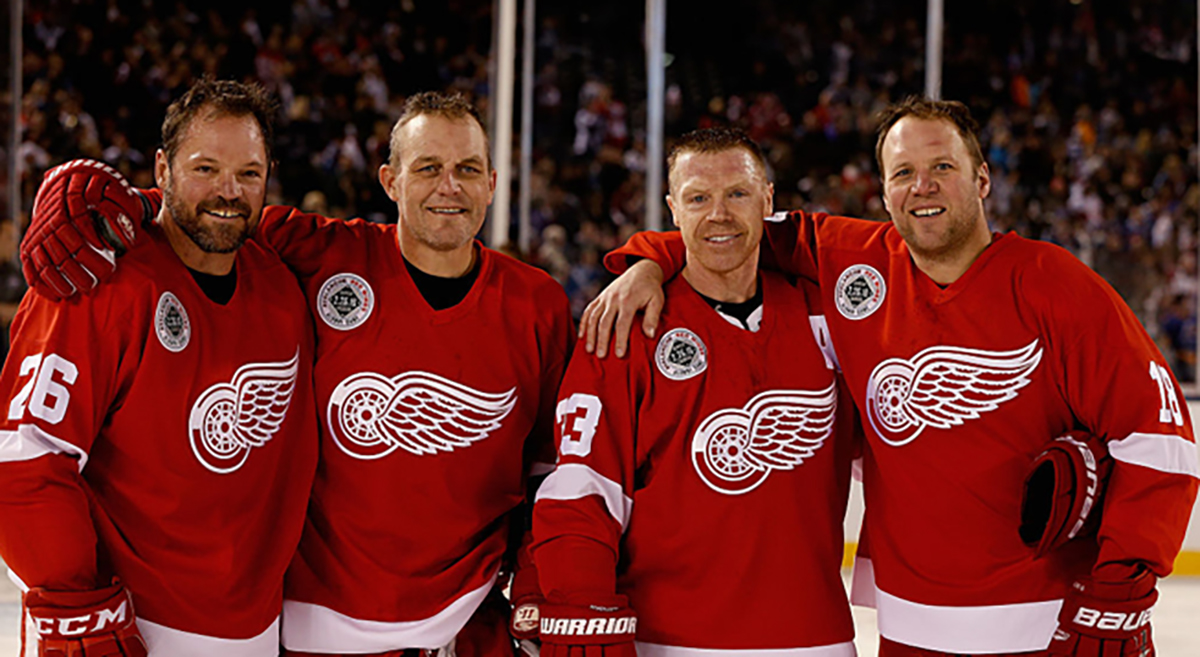
Trust is a word that came up a lot in these conversations.
Darren McCarty hit on it a couple times.
“The biggest thing when you are introduced to a new system is that it just takes time, but we had such great skill it caught on really quick,” McCarty says. “It gave us an extra weapon, we trusted the system and we trusted the other guys would be in the right spot and I didn’t have to think, I can just go because those guys know what I was thinking.”
Kirk Maltby was no different.
“I feel like part of it was hockey sense but a good part of it is chemistry and trust,” Maltby reiterates. “You need all that to go along with any system you’re playing. For me, once we got playing a few games we just complimented each other the way we all played, how Scotty wanted us to play that system and we read each other well, we knew what we were trying to accomplish as individuals playing a team sport.”
The Detroit Red Wings broke through in 1996-97.
They took down St Louis in six games, swept the Mighty Ducks in the semifinals and then, in a series that may have meant more to Red Wings fans than the Cup itself, knocked off Patrick Roy, Claude Lemieux, Peter Forsberg, Joe Sakic and company, finishing Colorado in six.
They were back in the Stanley Cup Final and made quick work of the Philadelphia Flyers, sweeping the series with McCarty scoring the biggest goal of his career in Game 4, to bring the Cup back to Detroit.
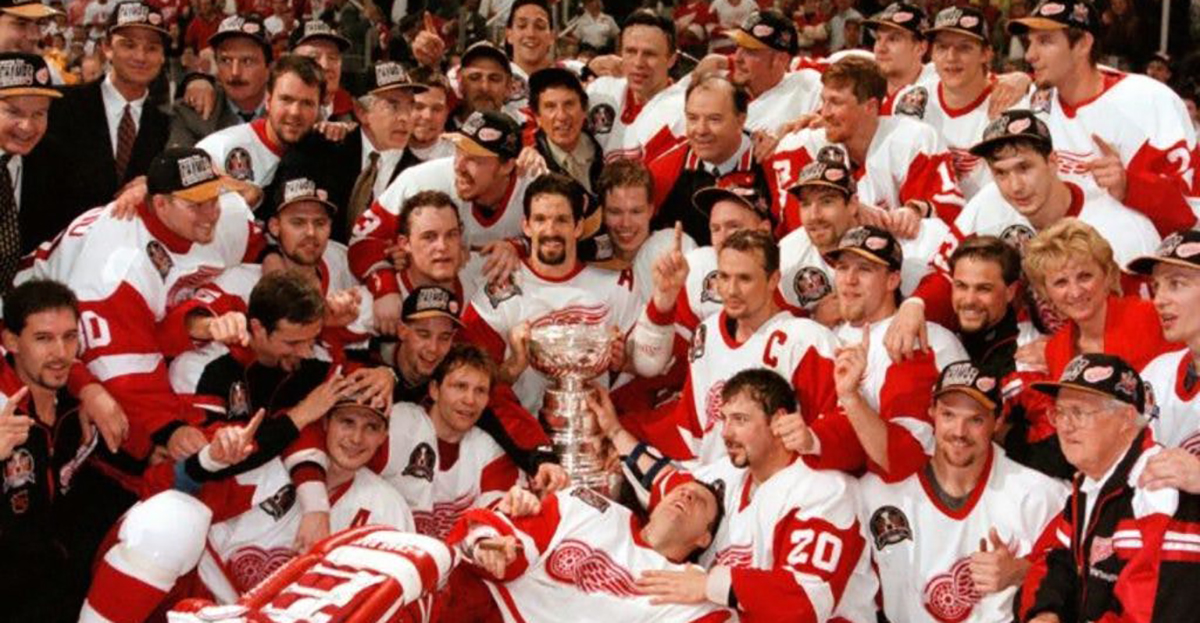
I remember watching that goal in the sunroom of my parent’s house.
Poor Janne Niinimaa.
Just this past year, my son and I went to Little Caesars Arena on a night that ended up being Darren McCarty Night.
They showed his two crowning moments over and over, the Stanley Cup goal and the Claude Lemieux turtle.
I couldn’t pick a favourite, but the goal still gives any Red Wings fan chills.
“You can’t sustain any system if you aren’t having success,” Smith states. “If it’s not working for you, I don’t know how long you are keeping with that system until someone says ‘time out, there must be a better way to play.’”
Smith brought the system to Assistant Dave Lewis and Head Coach Scotty Bowman and they had found their missing piece.
“One of the most amazing things about Scotty was his ability to ask questions to everybody. He goes and gets a haircut and comes back with a new forecheck,” Smith chuckles. “He hears a lot of people and he’s not afraid to try new things. Once he understood the nuances of it, he’s got such a good hockey mind – and still does – and so if you bring him something where we are able to put our best players in a position to be successful and we can create defence so the opposition can’t get into our zone, he’s all for that.”
“Your hockey IQ had to be off the charts to play for Scotty,” McCarty recalls. “It was beautiful, with the talent we had, the Hall of Fame guys, they were elite teams.”
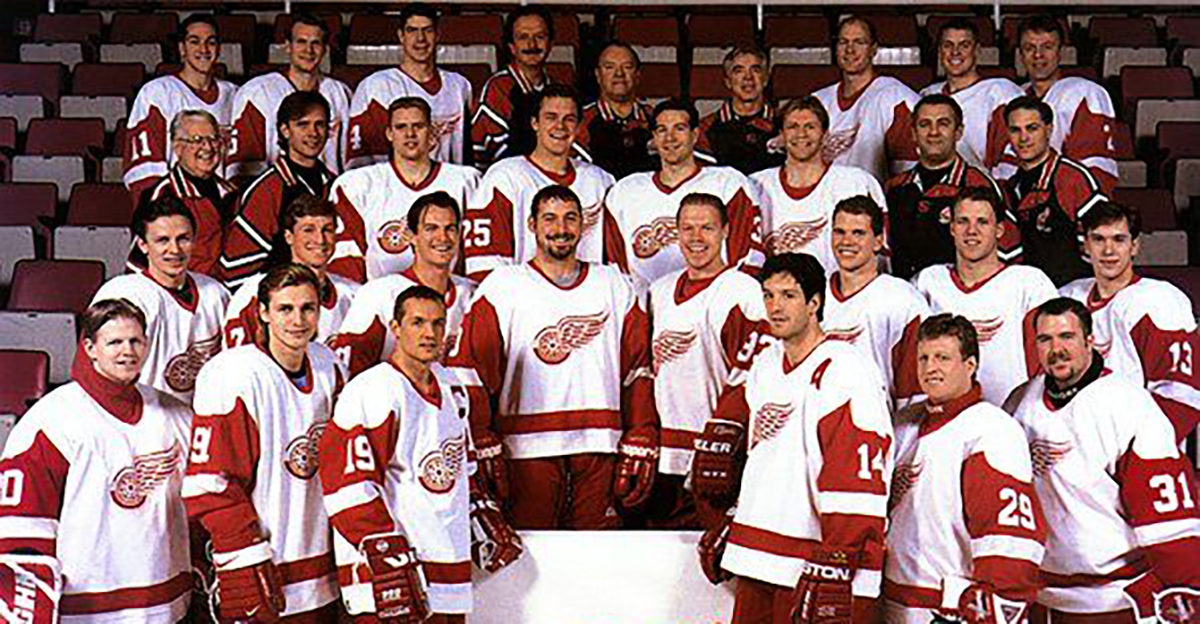
Could it work in the NHL now?
The consensus is split.
“I don’t know if it would work in today’s NHL without the clutching and grabbing, but my responsibility was just to lock a guy up, wrap your stick around his waist or chase the puck and try to create havoc,” McCarty chimes in.
Maltby doubles down on that thinking.
“I don’t know if it would work with every team in the league but with this group, we had so much skill, guys who were good skaters and we had elite defensemen, this system just allowed us to have the puck more and then create turnovers or force teams to make plays they don’t want to, which allowed us to get the puck back.”
Smith’s take is a bit different.
“In today’s game it’s easy because everyone is 1-2-3 now, if you take a look at Colorado right now and what Cale Makar can do, he would be in the rush all the time, which is great because he’s better than most of your forwards.”
The game is constantly evolving.
Detroit evolved too.
“For the longest time, the league couldn’t figure it out,” McCarty boasts. “But when they did, we evolved, and it became the Russian Five. The Grind Line was the same though, we didn’t want the puck because we wanted to hunt after it and when we got it, we’d give it back so we could hit guys.”
Detroit took a very similar path the next season.
In 1997-98, after finishing third in the Western Conference, the Red Wings eliminated Phoenix, St. Louis and Dallas in six games each before completing another four-game sweep to win back-to-back Stanley Cups.
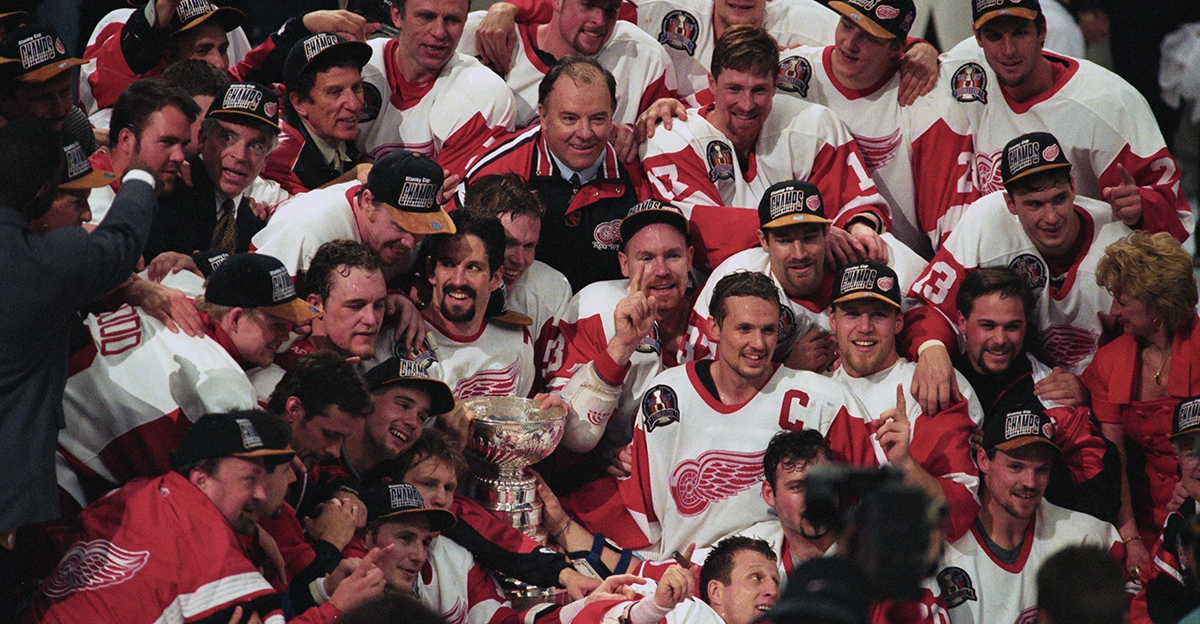
Mission accomplished.
The Detroit Red Wings did something.
The left wing lock turned out to be the final piece of the puzzle.
As I put this article together, I watched some old games and highlights and scrolled through name after name of some of the most elite players that came through The Joe at that time, I had to ask Barry Smith:
Could the whole system have even worked if Detroit didn’t have a Hall of Fame roster?
Smith laughs.
“I don’t know. If we would have had great right defence, maybe we would have called it Right Side Back.”

 00:00:00
An awesome angling drill that can be used at different levels. Remind players of good stick detail and checking skills i.e. stick on the ice, flush away from middle ice, stick on puck, check through hands.
Can be used to challenge players to create offensively and attack heels on the offensive side.
End of content
No more pages to load
copyright (c) 2026 The Coaches Site