The best organizations in youth sports are not the ones with the best players at 12 years old.
They’re the ones that still have players at 17.
Think about that for a second.
We spend so much time in youth sports talking about:
• Selection
• Rankings
• Elite pathways
• Winning now
• Identifying talent early
But almost never ask the bigger question:
How many kids are we actually keeping in the game long enough to develop?
Because development is not linear.
Some kids dominate early.
Some plateau.
Some struggle physically until later.
Some don’t gain confidence until they finally find the right coach, team, role, or environment.
And some are just late bloomers in every sense.
But if the environment becomes:
Too expensive…
Too political…
Too stressful…
Too exclusive…
Then kids leave before we ever get to see what they could have become.
That’s the real danger of systems obsessed with early success.
They unintentionally narrow the pipeline before development is even close to finished.
Imagine if:
• Josh Allen stopped after getting no offers
• Dennis Rodman quit after being overlooked
• Jamie Vardy gave up in non-league football
• Antonio Gates believed basketball was his only path
Late developers exist everywhere and I feature them every Thursday on my page.
The problem is many systems aren’t built to keep them around long enough.
And honestly?
This conversation is bigger than sports.
Because the child who stays involved in sports longer is more likely to experience:
• Teamwork
• Failure
• Leadership
• Accountability
• Resilience
• Belonging
Those lessons matter whether they become a pro athlete or not.
And statistically…
Almost all of them won’t.
So maybe the question organizations should ask isn’t:
“How do we find the best players earlier?”
Maybe it’s:
“How do we create environments that keep more kids developing longer?”
Because THAT is where long-term success — for both people and programs — is really built.
If you’re involved in youth sports:
What’s one thing that would help keep more kids in the game longer?
👇
These are exactly the conversations driving the work I’m doing with organizations right now.
 00:00:00
 00:00:00
Hockey Factories FREE E-book: A DEEP DIVE INTO THE WORLD’S TOP HOCKEY FACTORIES
“Is that Arendelle?”
My 7-year-old daughter, Evelyn, jumps off the couch and comes running to my desk at the site of a beautiful photo of a village perched on a lake, with rolling hills as a backdrop and small European homes, nestled amongst the steeples of churches and castles.
Her eyes light up, like it’s somewhere familiar to her, but there is no Elsa or Anna of “Frozen” fame here.
“No, hun,” I explain. “This isn’t Arendelle, this is a town called Zug. It’s in a country called Switzerland.”

I scurry to the next tab to Google a map of the world to show her where Switzerland is compared to our home in Windsor, Ontario, Canada.
“Why are you looking at this place?” she inquires, still not taking her eyes off the screen.
“Dad is writing a story about this town and their hockey program,” I offer.
Now she makes eye contact with me.
“They play hockey there!?” she asks with a stunned look on her face. “It’s beautiful!”
She’s not wrong. Searching images of this town of about 30,000 residents, you’ll think they are drawn from someone’s imagination. It’s quaint, charming and, on the banks of Lake Zug, looks exactly like what you would think a historic, European town would look like.
Zug, in some ways similar to Arendelle, has a secret.
But that secret is getting harder and harder to keep.
Past those hills and beyond the beautiful lakeside is a factory.
It’s a nearly 40 thousand square foot, eight story laboratory founded by pharmaceutical mastermind Dr. HP Strebel, with the goal of combining sports and science into something unmatched around the globe.
Hockey players, along with athletes from nine other sports, come here to not only train, but to learn. To develop not just their athletic abilities, but their minds and bodies as a whole.
When Dr. Strebel became President of EV Zug, his overarching mandate was to develop local players.
What he’s created is something far more impactful and profound. It’s changed the game.
It’s changed everything.
***
Development takes time.
Gathering, sorting and implementing data takes time.
Patience is always the key.
No one knows that better than Dr. Hans-Peter Strebel.
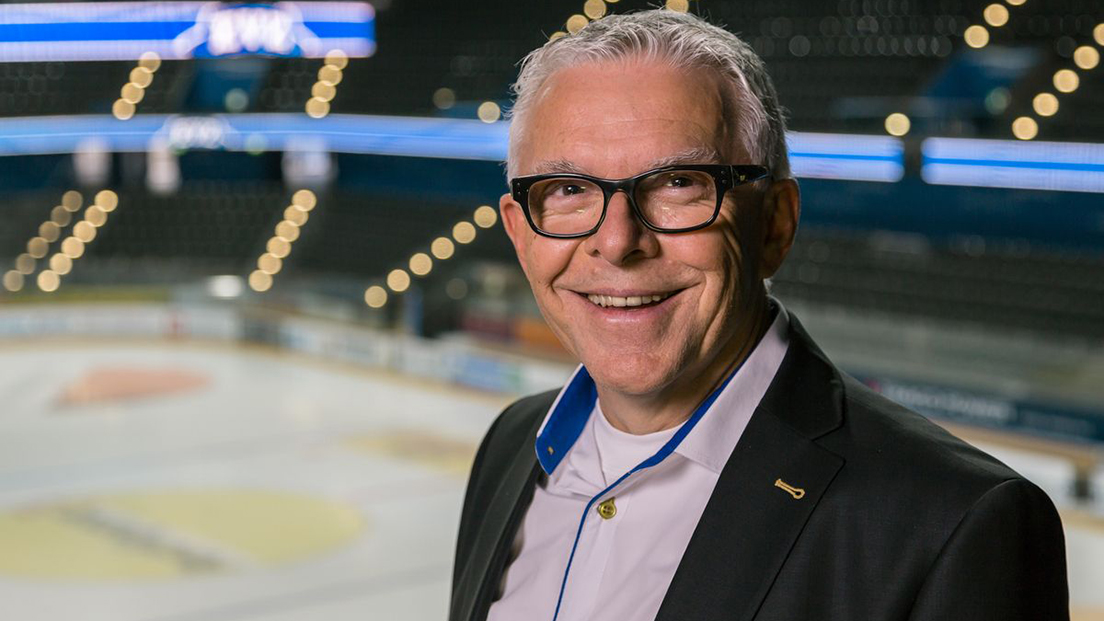
Dr. Strebel is a pharmacist, who was part of inventing a drug that helps against multiple sclerosis.
“Doing medical research, it’s never done in two days, it takes years – and you learn to be patient,” Strebel says. “It’s a process and that’s the main thing. You can’t think this will be done in one year or two years, it takes more, and it has to be done step-by-step.”
Strebel points to the chain reaction that comes from being able to live in that type of freedom, not just as a player, but as a coach.
“If the coach is afraid to bring in young players, then they cannot develop. And if the players are afraid to make mistakes, they will never develop. They must know, I can play, no one is killing me if I make a mistake, I am here to learn. That is the process.”
When the EV Zug Academy was launched in 2014, the target of the program was to develop players and create a pipeline where half of their first team were players from Zug.
That’s not an easy task, considering the aforementioned population of 30,000.
Switzerland’s state, or canton, system is very unique in that the country itself is divided into 26 different regions, all with different rules, timelines and, most impactful for Zug, school schedules.
In an area that is roughly 2.5 times smaller than the US state of Ohio, kids go to school at different times of the day and there is also a heavy cost for students who want to go to school outside of their respective canton.
Without over-emphasising it, you are dealing with the smallest of small percentages when it comes to building up a hockey program.
For some people, like current General Manager Reto Kläy, it was a challenge they were excited to take on.
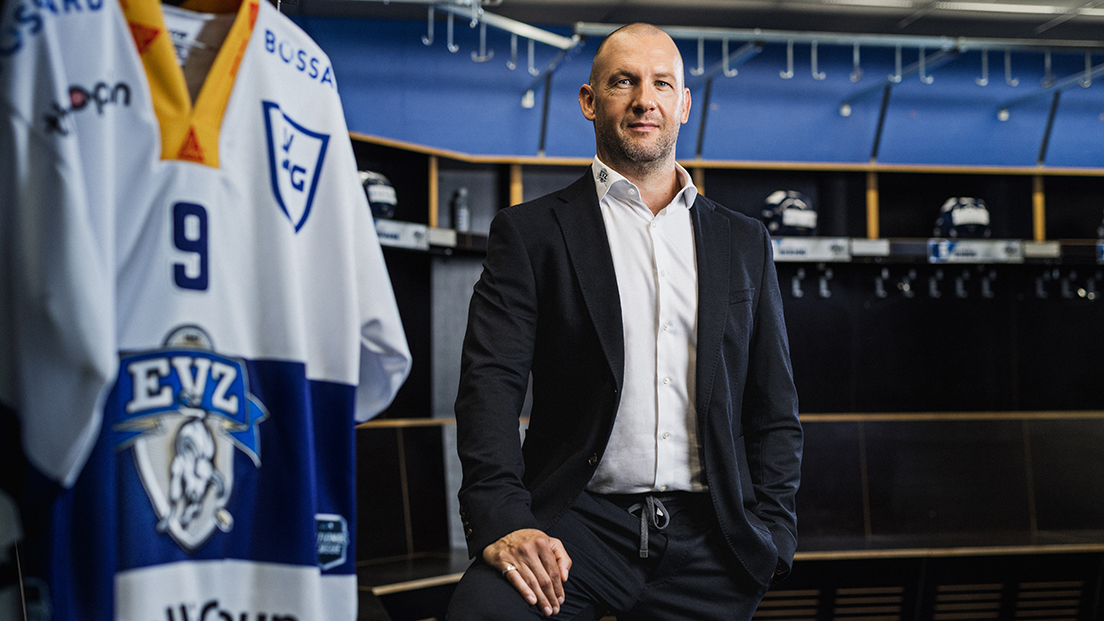
“I came from a small club and when I wanted to do some stuff, I had to be really creative because there wasn’t much in place, but here it becomes a bit bigger,” Kläy shares. “On top of that, the strategy was impressive because one of the main goals was to use our youth program as a foundation to reach the club’s next championship.”
Zug won a Swiss National League championship in 1998, but has not moved the needle much since.
The Academy was in its first year when Kläy joined the club so he was part of its birth, setting up the education side, along with schedules for practices and working out when and where the programming would even begin.
“To be honest, at the beginning I was not quite sure how it would go,” Kläy reflects. “The board was telling me with the academy in place they wanted half of our first team to be pulled from there in the next six years. And they wanted to be fighting for a championship. I thought that was a pretty ambitious goal, but let’s try it.”
Let’s be honest – they wouldn’t really even know if it’s working or not for years.
Kläy thought the same.
“I really didn’t see things working until a few players from our first class were able to reach the pro league and fit in, so that was four years from the start.”
As if creating the academy program from its infancy wasn’t enough, Kläy was also responsible for the first team, forcing the balance of wanting to win at that level and cultivating its future growth at the same time.
“When you see the NHL and they are talking about a rebuild, they are also not trying to win a championship,” Kläy notes. “With us, though, it should always be at the same time. The expectation was always you have to play the young guys, but you also have to be successful at the top level, so you need to balance those.”
The program also saw a massive growth in staffing – including full-time coaches at the U15 and U13 levels, along with a head of youth development, Corsin Camichel, and a head of player development, Ted Suihkonen.
Camichel had been coaching Zug’s U20 team until he was approached about taking on this new youth development model.
This role has now given Camichel an opportunity to see the program from a much higher level.
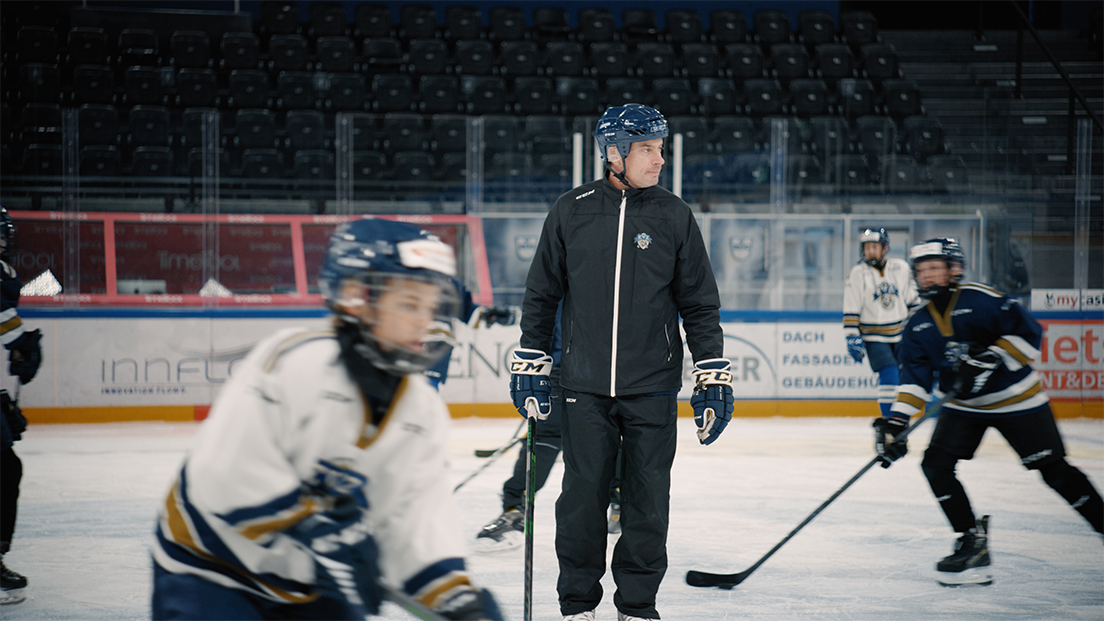
“I go on the ice with U15, sometimes I run the practice, sometimes the head coach runs the practice and then we will discuss things that we can do better,” says Camichel, as he describes part of his role. “I can see different things because they are in the daily structure, so I can see it from a bigger picture.”
As much as the player development is important within this position, the coaching theory and philosophy is just as valued.
“I try to give the players development on the ice, but also off ice, and help them grow as people,” Camichel states. “Same with the coaches. I mean, maybe two players get to the pros, but if we can give all of them something for the future of their lives, I think this is a big part of coaching.”
Camichel is just one example of the people that Kläy has put in place as the philosophy has developed and grown.
Having control over both the youth development and the first team successes, one of Kläy’s first challenges was to find a head coach that can blend the two.
One thing Kläy hits on the first time we speak is a way of thinking that seems straightforward and common sense, but even when you look to the top of the pyramid of hockey, it’s almost the opposite.
“It was not easy to find that person who is able to work on both sides,” Kläy admits. “We have a clear vision and clear philosophy because it’s only when that is in place that we can find a coach that fits. We are not looking for a coach and asking him for his philosophy. We know what we are doing here, and we need a coach that will come in step.”
***
For Kläy to find that man, he had to find someone who had worked with a similar structure.
There weren’t many hands up at that point and, unlike most hires in Switzerland, he wasn’t looking for the typical profile.
“When we signed Dan, in my opinion, he was that guy because I knew he could do it even without the proof at the time,” Kläy speaks of Dan Tangnes, a Norwegian coach who joined the club in 2018 after numerous years coaching in Sweden. “I was more interested in a guy where I knew what he could do in the future, as opposed to what he had done in the past.”
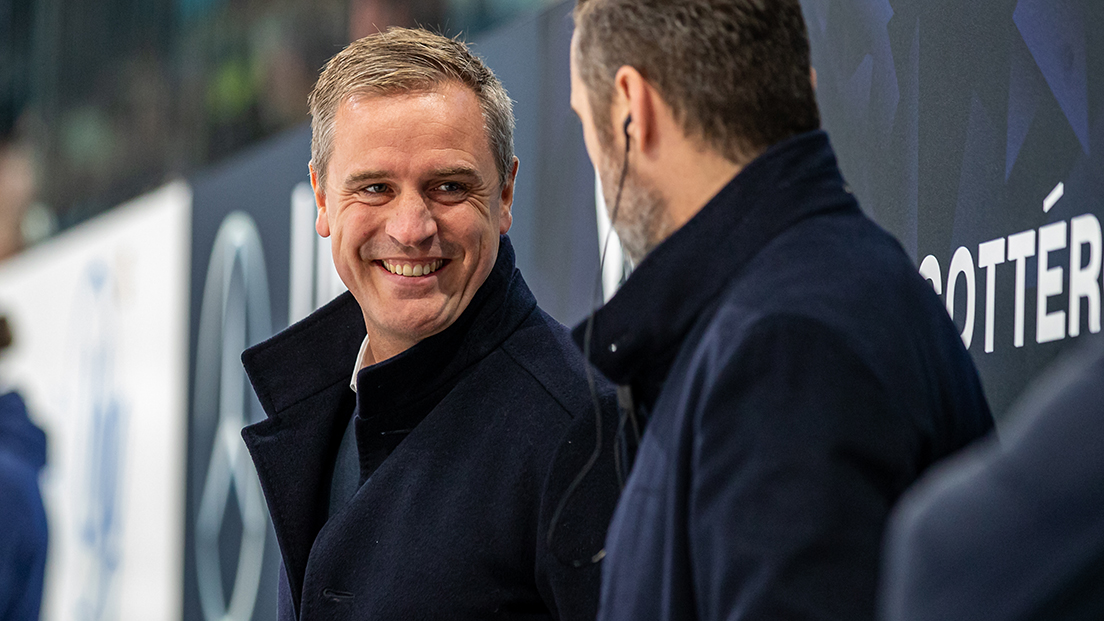
“I didn’t have a lot of Cups on the shelf, but I think I ticked most of the boxes of what they were looking for,” Tangnes admits, looking back on his now five-year run with Zug. “We shared a lot of the same thinking, but for them it was probably a bold decision to go with someone without long term experience. I was 39-years-old when I came here, and I know I wasn’t the hottest name on the coaches market, but most importantly we shared the same philosophy of how to work together with people.”
For Tangnes, it was a once in a lifetime opportunity to come to a club where he had his hand in shaping the science facility and the future of the club. There is a brain trust of five people that are the “decision makers” at Zug, and he’s got a seat at that table.
“This is my fifth year now, I would say a big part of our success is that the club has a clear identity,” Tangnes comments. “They communicate that pretty well to players, staff and personnel that get recruited here. They’ve done a great job of setting the expectations – this is what you can expect from us, this is what we expect from you and this is why we think you’d be a good fit to our organization.”
The return has been immediate and fruitful for both sides.
All Tangnes has done since joining Zug was win a Swiss Cup in 2018-19 and back-to-back NL Championships in 2020 and 2021.
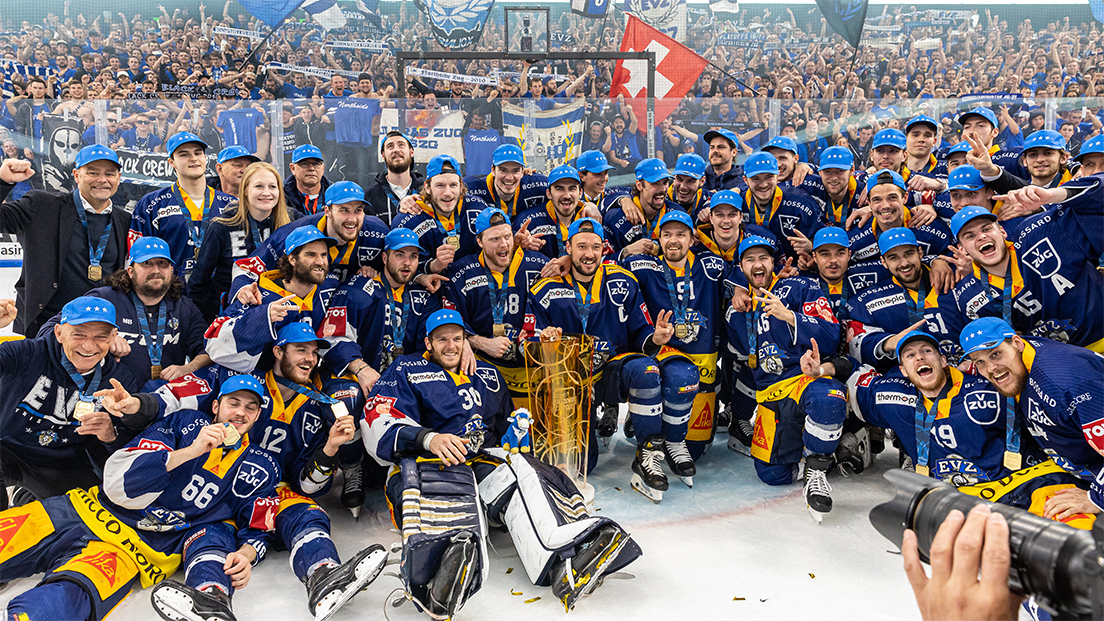
“The hardest part is that you can draw a lot of stuff on paper, but to see how fast the development goes takes a lot of patience,” Kläy includes. “But in 2020 we became Champions and half of the team was our own developed players and we were also the youngest team in our league, so we knew then it was possible we could match those two together.”
For years it seemed like the club was keeping its head above water at the pro level, while trying to pull a boat up from the bottom of Lake Zug for reinforcements.
Was there ever time for concern? For sure.
Was there ever a doubt in the philosophy? Never.
“When things are not going the way you expect, it’s the biggest challenge,” Kläy explains. “We don’t start thinking that it’s not working though, it’s the patience part that most people don’t have and that’s where they fail. Sometimes there are adjustments, but at many points we don’t know anything at all, and we have to stick with what we think is the right path.”
Back-to-back Championships with the youngest team in the league is a constant reminder that the right kind of development plan, skills training and on ice work can do wonders.
But, that’s not the only trick Zug has up its sleeve.
***
Enter science.
Dr. Strebel wanted to give back to his community in the most impactful way possible.
A lifelong sports fan, especially hockey, he found a way to marry his love of sport and his love of science into something you have to see to believe.
An idea in 2016 turned into an opening in 2020 of a complex you will not find anywhere else in the world.
OYM is a fortress. Just look it up.
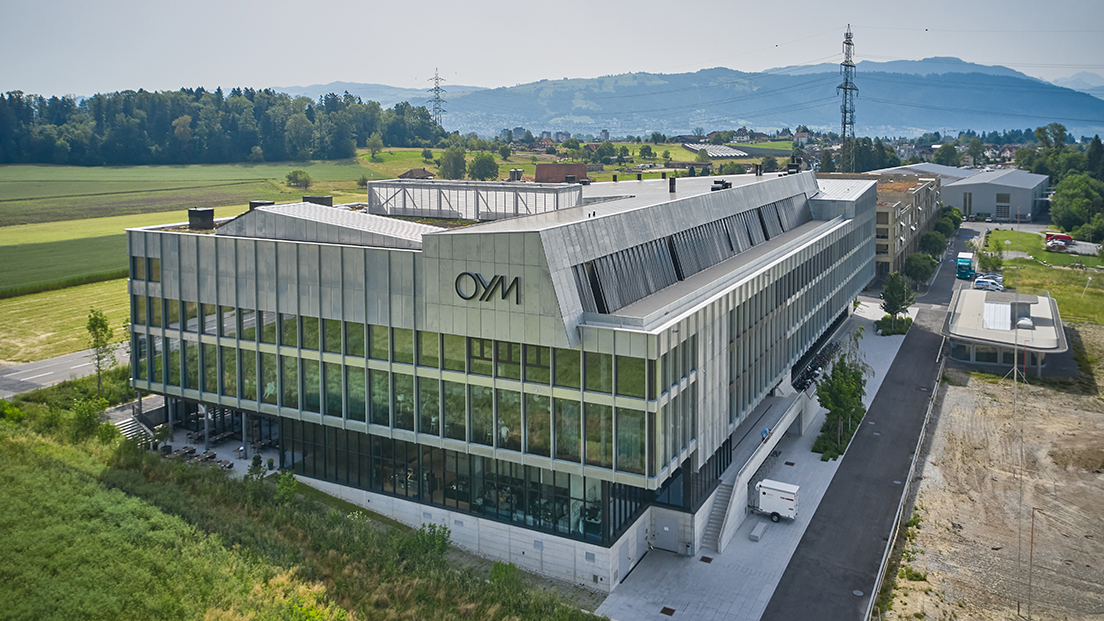
Inside you will find state of the art technology, workspaces, practice venues and so much more it doesn’t do it justice to rhyme off.
Did I mention the full-time chefs making world class, healthy meals for everyone who enters?!
You’ll also find scientists, people who spend their days dissecting the individual breakdown of the human body in each athlete, running countless tests and data and creating a training package for every player to reach the personal maximum of that body.
For Dr. Strebel, it’s paradise.
“When I was first watching an athlete train, I would ask them ‘why do you do this or that a certain way?’” Strebel recalls. “The answer I would hear is ‘we’ve always done it this way.’ But with OYM we are challenging every type of thinking with hard data and science.”
In our 30 minute conversation, Dr. Strebel hits on one particular thing over and over again – nutrition.
Proper nutrition, he says, holds 50% of the capacity any person can reach.
Strebel admits there was certainly a buy-in to the thinking, especially when it comes to food.
“The first reaction, of course, is if it’s healthy food then it’s not going to be tasteful,” Strebel mentions. “When they all came to OYM they were very surprised how good the food was. After maybe 10-15 days they realized their body had changed. They could feel it.”
Strebel remembers conversations he was having with some of those first classes at OYM and those players talking about how they were not tired in the afternoon, they are not hungry in the afternoon or they can start training sooner after they eat.
Once they started experiencing that, the sell job was over.
“I think the biggest mistake was the scientists tried to sell it first, but scientists are not the best salespeople,” Tangnes chuckles. “They pushed all the wrong buttons and the players thought they were going to jail here, 24-hour surveillance on every calorie going into your body. But when you do try to explain something of this magnitude and you don’t know, it’s human nature to be skeptical.”
Yet what was once frightening, in fact, is now the new way of life for nearly every athlete in the facility.
“Teams would have lunch at OYM and now players take boxes home with them for dinner,” Strebel says. “When we have big games, we have to do catering from OYM because they will not eat other food.”
Just like the individual training programs the players have, the meal prep is the same.
Players get individual boxes because not all players can eat the same. Some players feel bad if they eat after a game, so the chefs will make them shakes. Some guys would wait till they got home from a game, sometimes around 1:00 am and make something and go to bed, which throws their system off completely.
“I think the most important thing is that the athlete understands with science-based data we can look very deep and give them back all the information they need,” Strebel points out. “We can show them what’s missing, what we need to do more or less of and then as they see the results improving, the player gets confidence in what they are doing and it makes all the difference.”
The staff, to put it lightly, are believers.
“To be totally honest I thought I knew a lot about it before coming here,” Tangnes admits. “But the longer I’m here and see OYM in action, you don’t understand close to enough.”
Recovery is one of the segments of information that intrigues Tangnes the most.
“When you plan your week there isn’t much room for practices or workouts and we understood that what we are doing right now has to be more efficient,” Tangnes targets. “It comes down to what happens between practices and between games to optimize our recovery and being as fresh as possible.”
There is always a balance between quantity and quality.
The club has always put an emphasis on having a clear purpose, plan and focus going into practices, training sessions or games.
As Tangnes says from experience, there is a mental balancing act to playing the game where you need to find the right focus and adrenaline level, where you have to be tuned in, but also a little pissed off to go into these games.
What tends to be forgotten is what happens after those games and how quickly players can enter into some kind of recovery mode.
“What are we eating after a game, when are we eating after a game, are we doing breathing techniques to get your heart rate and adrenaline levels down so you can get into recovery mode quicker,” Tangnes rhymes off some of the things he gauges with the information from OYM. “I know it’s a common thing for hockey players to not get a great sleep after a game, but if we can improve that by even one or two hours, there is a huge benefit and advantage to that.”
The easy comparison is to Premier League in soccer and how they would run a program on a completely different level from monitoring and controlling nearly everything that happens with their players.
Tangnes is quick to point out how beneficial it is to train, study and focus on everyone as an individual, making the point that all forwards are not created the same, all goalies are not created the same and an 18-year-old has to do many different things than a 36-year-old from the same team.
Strebel insists that is not what is happening at OYM, but instead it organically builds amongst the people inside.
“All these athletes in all these sports are all together in the gym. They are all driven by being the best and it’s beautiful. The spirit of sport is in that building,” Strebel says, beaming with pride. “Every day you feel the spirit of sport. All of these athletes are happy, it’s a beautiful building, there are a lot of windows to see out and it’s just gorgeous. And we’re only just getting started.”
***
So, what do you do with all this information?
I just imagine rows and rows of chalkboards and formulas and computers and no clue whatsoever what to take from it.
Trust me, no one is going to confuse me for a scientist any time soon.
“In the end for me, the million dollar question is do you know how to use it?” Kläy proposes. “Because if you are just collecting numbers just to do it and it’s not going towards our goal, then it’s not going to help.”
Ted Suihkonen had been in Russia, working with Yaroslavl as a skills coach and director of player development for five years until he got the opportunity at Zug.
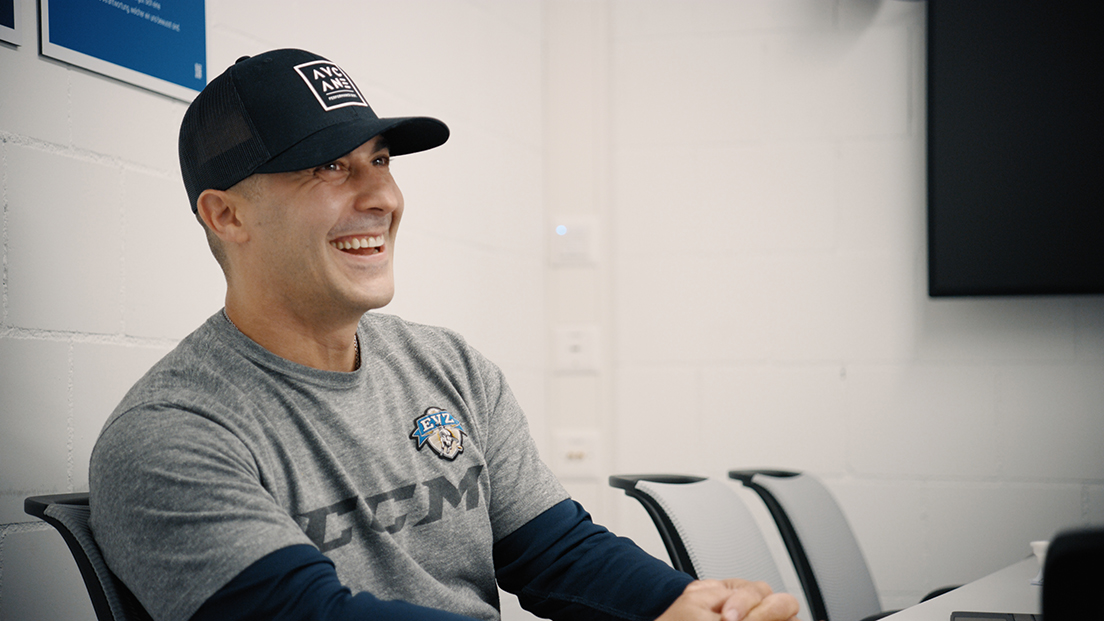
“It was supposed to be a nine month contract,” Suihkonen shares with a laugh.
“I got a few more contracts after that and we were in the middle of our development process, so it was important for me to stay. But when the opportunity with Zug came up, it gave my family and I a chance at a better life.”
“When we started talking with Zug, it was a perfect fit because they had the same goals as Yaroslavl,” Suihkonen continues. “They wanted to build up the academy and build up young, local players into their pro team, so the mindset and philosophy was a match made in heaven.”
Suihkonen goes on about the similarities between Zug and Yaroslavl, a program that has three titles in Russia’s junior hockey league.
His role with the club is twofold. On one hand Suihkonen acts as an advocate for the players, where they can come and air everything out and come up with solutions. On the other hand, it’s the skills side, where he will provide individual reports so players understand who they are and how they can use their assets in the team game.
“OYM is obviously a game changer in every way,” Suihkonen states. “When kids come in here it’s the first time they are looking at the holistic style of themselves and not just on ice. You have to get the whole player because that’s where you will see meaningful change.”
In his first season with Zug, Suihkonen came in quietly at the start, then through a series of player meetings, reports and conversations, he was able to establish trust with a more personal approach.
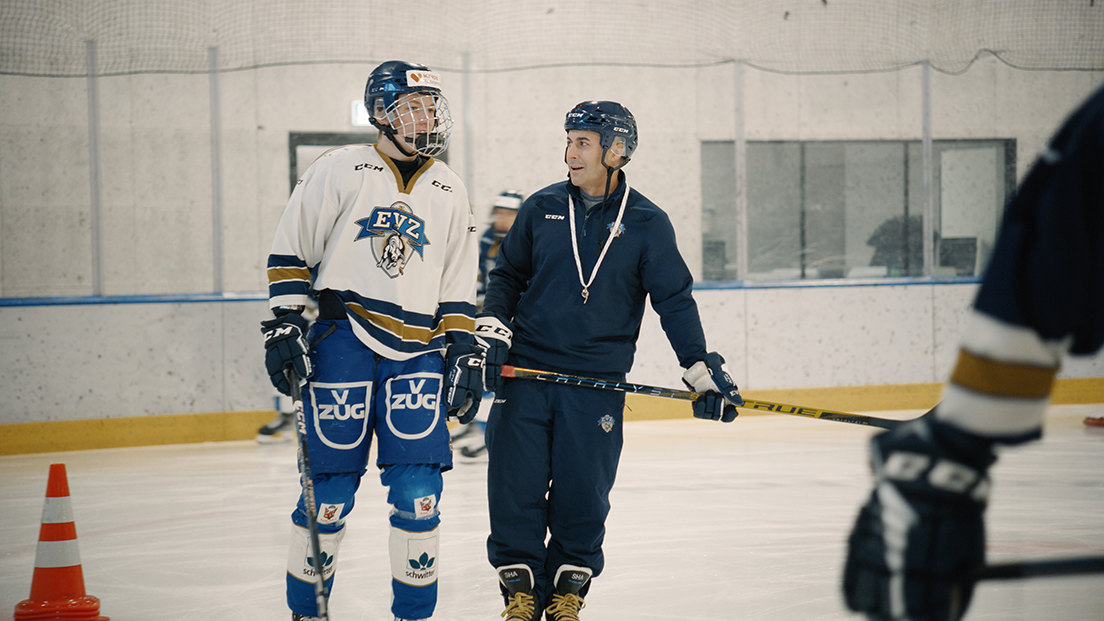
“Surprisingly, they were sponges. There was no push back,” Suihkonen reiterates. “The most important part is when you speak with the players the first time you don’t feed them bullshit. You give them individual tactics to the team game, then they start seeing success and see how it can be used and the buy-in will naturally happen.”
Camichel chimes in from a youth level, the two connected by development.
“It’s a difficult discussion, what’s the best way to develop a kid,” Camichel admits. “We have to develop 20 guys the same way, but not everyone’s the same. We must find the right ways with the basic stuff like skating and stickhandling, then we go to smaller groups to determine which guys need more work on a particular aspect.”
Dan Tangnes agrees.
“With the club we are running, everybody has to develop and get better,” Tangnes promotes. “I see myself as a coach who likes to win, but development and winning go hand in hand. Whether they are 18 or 36, what the next step is for the older player is just as important as it is for the younger players.”
That’s where science comes in.
That’s where the individual training for a team game rears its head.
Suihkonen is quick to use comparisons to his time in Russia and now Switzerland to what is happening in North America. It’s a stark difference and a nearly opposite mindset in a lot of ways.
“In North America, you don’t have that chain of events in development,” Suihkonen shares. “What you have is a lot of supplementations of players going to different camps or hockey schools just getting better, but that’s not tied to what the team is trying to do. Here, it’s like training to be a tennis player for a team game.”
Suihkonen says he sees a lot of kids that are good at a particular skill or skills, but it’s not transferring in the game. The cause of that, Suihkonen says, is clear.
“Families are not talking to the coaches or understanding the structure, so there’s a disconnect,” he points out. “In North America, in U16, the coach only has them for 8 months, on the side the player is paying someone else for skill development and when you’re paying all this money everywhere, everyone wants results now.”
Even though everything has happened so fast for Zug, the one thing on their side has always been time.
“We don’t have to rush. If we get these kids when they are 15, we’ve got them for the next 5-6 years possibly,” Suihkonen points out. “There’s no rush to get them somewhere because they won’t be making that jump too fast too soon, so you’ve got the time to really work with them.”
The biggest gains come in practice.
Camichel and Suihkonen both suggest at the youth level, the amount of games is not what matters, but what the practice, like what they study in the lab, has to coordinate.
“There was a study during the COVID year, when the players didn’t play they just practiced,” Carmichel recalls. “The players grew, got bigger, stronger and they were technically better. So, we are always talking about needing to play games, but when we look back at this past year we just practiced, and the kids got better. I think the games are overrated in junior – especially with the travel and such, when you could get in a good hour of practice.”
As much as nutrition drives Dr. Strebel and recovery interests Tangnes, it’s sleep that catches Suihkonen’s attention.
“When we have babies, they sleep 18 hours a day sometimes and they grow so much. I have a nine-year-old and he is still sleeping 12 hours a day and he keeps growing,” Suihkonen launches into. “At some point, we get to an age where we don’t think it matters any more, but it really, really does.”
Suihkonen regales research he has done on the patterns your brain follows when you sleep, first to declutter and store information and then recovering for growth. He notes some of the biggest athletes in the world, LeBron James and Tom Brady, nap during their day to prioritize that function.
“You start looking at some of these younger kids, you’re 15, you’re growing, you’re a little weak but then you ask, ‘how much are you sleeping at night?’ and they are saying 5-6 hours,” Suihkonen states. “In Western culture, you think you can fix everything with a pill or something else, but there is no substitute for the benefits of whole foods and the power of sleep.”
“Sports science was always a topic, the off-ice part was always interesting, the nutrition part was always a topic, but since we came to OYM it’s amazing,” Kläy pronounces. “There are a lot of people in that facility that when you talk to science guys they look at things totally different. Sometimes it’s really interesting and both sides can definitely benefit from each other.”
There are still a lot of unknowns with the data and studies being done at OYM, but Zug is starting to see the impact it’s having on a global scale – and they’ve got some big named fire power to promote it.
***
If you’ve followed the Hockey Factories series or listened to the Hockey Factories podcast, you will know I’ve had the opportunity to speak with any number of high profile hockey people.
Well, add Peter Forsberg to the mix.
The two time World Champion and two time Stanley Cup champion makes his home in Zug now and has two boys playing in the program.
Forsberg, who wanted to live in a hockey town while he has business dealings in Zurich, says it was really easy to get involved with the program.
“Everything is very organized and structured. There is a plan and everyone is following it, which is a great start,” Forsberg shares. “It’s big in the long run for the program. It’s run very professionally and when you look at the academy, they don’t take school lightly. You aren’t doing school just to be there, they are pushing the education and getting a degree and setting the kids up for their futures, not just on the ice.”
Forsberg can admit to the differences between his native country of Sweden and the program he played through as a kid, MODO, but he is also blown away by what players have available to them at Zug.
“I don’t think there is anything in the world like OYM. It’s a great story,” Forsberg says. “You have an owner who loves hockey and loves his community and comes from the science community, it’s an amazing mix between the two sides. From food to weightlifting to rehab to ice time, it’s world class.”
Forsberg, like more and more people daily, is a believer in what the data OYM is collecting can show.
“For me, I was a little afraid to try new things. It worked for me to eat the pasta and meat sauce and corn flakes in the morning, so until it was really proven I didn’t want to change,” Forsberg reflects. “But the things we learn here, like, the food is organic, the chefs are professionals, you know all about the food you are putting in your body. You barely knew what a calorie was back in the day. It’s a different world, but to give yourself the best shot to be a really good player you have to do these things.”
And where does Forsberg fit into the mix at Zug, under the title of Ambassador to Zug Academy?
“I don’t think I can teach too much like shooting or the technical side any more,” Forsberg admits. “I just know those years were one of the best times of my life and I can use my experience going through hockey to help these younger guys. I had Markus Naslund with me when I was younger and he made sure we got to practice on time and we took care of ourselves. I want to show it’s worth it to invest the time to be a hockey player because you get it back 10 times more when you’re older.”
Forsberg and his family have made a life for themselves in Zug. He is proud of his Swedish heritage, but is also very quick to wave the Zug flag for anyone who wants to see it.
“I hope I can help people around the world realize this is an incredible place. I can help teach them about Zug, they can learn about the facility and show players and families if they are serious about being a hockey player this is the place to go after it.”
***
After the opening of the world’s most impressive training facility and back-to-back league championships, Zug has made itself a major player in Swiss hockey.
However, the vision of the club is on a far larger scale.
OYM is the catalyst to everything, the secret Zug does not want to keep secret.
“The European scouts don’t travel much to Switzerland, but we think that is going to change too,” Tangnes predicts. That might be my most important job: to influence those NHL scouts to book more flights to Switzerland to see how much has changed here. We are not as connected as Sweden or Finland in that regard.
“We would love a European title as well, that would be a big statement if we could win the Champions League here because that would impact Swiss hockey entirely, that’s the next goal for us.”
Carmichel is still blown away by what has been built within this club.
“With the facility we have with OYM and the ability to bring our club together with the fitness and nutrition and science, it’s crazy,” Carmichel says almost still in awe. “When I was 20, we didn’t even have a dressing room, now they have dressing rooms, flat screens, hot tubs. We just have to make sure these kids don’t think it comes this easy anywhere else.”
Former NHL head coaches have come to Zug to see what is happening. Former players too. Each one of them tells Dr. Strebel how fascinated they are with OYM.
That fact is not missed by anyone in the organization, especially the General Manager.
Everyone is saying we have such great development in Switzerland, but the outcome has not been what I’ve expected,” Kläy says honestly. “The benchmark is always the top nations. We have reached the top, but staying at the top is another thing. We must control the drop off.”
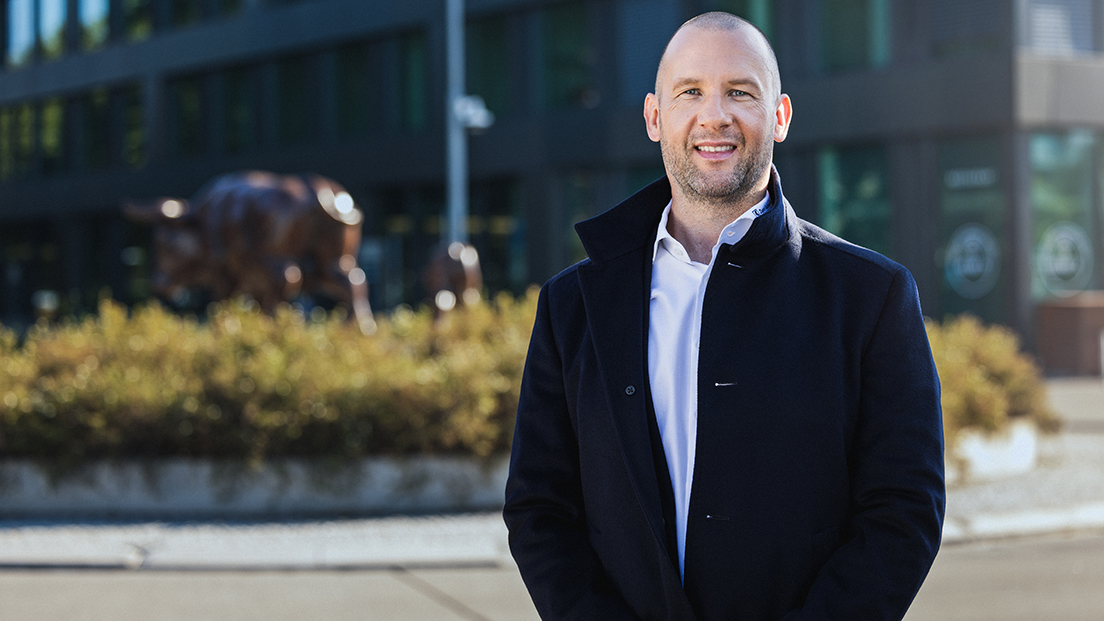
Kläy speaks of both the club and of OYM when he looks to the future, getting players to the NHL and getting the NHL to Zug.
“I believe it would be beneficial to both sides if there was a team that was open minded and not just thinking from the East coast to the West coast,” Kläy announces. “It could be really interesting to help develop a draft pick from North America. I think we have to do a better job of networking and bringing scouts and NHL GMs to Switzerland and start to build some of those relationships.”
Discovering the magic of ice nearly destroyed Arendelle (don’t pretend like you haven’t seen Frozen.) But while Zug has been seeing historic success on the ice, it’s in the labs where its magic comes to life.
The best part is, it’s only just begun.
“I’ve learned a lot since working with OYM, but it’s important to remember that we are really still at the start of this,” Tangnes says, almost giddy.
“It will take a lot more data to find some clear trends and hard facts to offer them, so it’s very exciting.”
 00:00:00
There is a hunger from players and parents to use this prevalent teaching tool to improve and get better.
Virtual coaching is the present and the future. If you haven’t embraced it yet, you’re falling behind. While in-rink coaching is extremely valuable, the best coaches understand there is unbelievable value to leaving the rink and working with players virtually.
The current crop of players all grew up with iPads and tablets in their hands and are used to working with technology. They are used to this kind of teaching and thrive in that environment. There is a hunger from players and parents to use this prevalent teaching tool to improve and get better.
Traditional practices offer difficulty when it comes to personalizing practice to each individual. Virtual/video work allows for a more personalized experience. For example, you can now pull LiveBarn footage and send that to players with teaching points.
Another example would be technique work. How does that work?
- Players are able to upload a video of themselves
- I then analyze and add commentary
- Once done, I send back the commentary and video for the player to digest and train
- Repeat the cycle
This is a highly personal coaching process that players absolutely love.
Benefits
1. Cost-effective
Virtual coaching is cost-effective for both the player and the coach. Virtual coaching doesn’t require ice time and can work on all aspects from on-ice to off-ice skills. This could be for mental training, strength & conditioning, technique, etc.
A personal example would be having players send videos of themselves shooting in their driveway. No ice time and just requires a dropbox for video uploads.
2. Freedom and Flexibility of Time
No longer do a student and teacher need to be at the same place at the same time on the earth.
For example, I have European clients while I live in North America. Their games are in the afternoon or mid-day for me. I pull their games off of InStat or other video platforms before dinner time. While they are sleeping, I’m able to watch, analyze, and have a package ready (Video, micro-stats, and commentary) for them and sitting in their inbox before they wake in the morning.
3. Tracking Progress & Continuing Year-Round
With everything on video or in writing, progress is extremely easy to track.
I have videos from when I first started working with a player. Now they are away at college, they send updated videos and we continue to fine-tune their technique. For a specific example, we were working on skating. I showed the player the progress from the first lesson and compared it to where the player was at the end of summer. That’s actionable proof and a quick confidence boost that their hard work is paying off.
4. Non-Location Bound (Beyond the Shire)
You can reach out beyond just your town to find the best person for you.
The best coach for players may not live in the same town, same providence/state, or even country. The internet allows players and coaches to go beyond their town and into the wider world to find the best fit for them. There are players now that I work with that were seeking a coach that just wasn’t available in their area. While I still have local clients, the majority are now out of a day’s drive of where I live.
Wrapping Up
There are many ways to go about this. Whether you’re a college coach working with players in the summer or a house coach helping little Johnny and little Sarah work on basic technique, virtual coaching is for you. A local youth organization in Columbus even incentivizes coaches to send video clips to players from practice and games.
There are so many benefits and efficiencies that can be gained by coaching virtually. It’s a large reason why I started the Hockey IQ Newsletter and Hockey IQ Podcast. Heck, I’ve gained more clients via Twitter DM than anywhere else!
If you aren’t doing some level of virtual work… you’re falling behind.
This content is available exclusively to members of The Coaches Site.
 1:47:05
"We have no reason to belittle ourselves because someone else belittles themselves and brings themselves to a lower level."
Subscribe: Apple Podcasts | Spotify | Google Podcasts
In episode 220 of the Glass and Out Podcast, we had the honour of being joined by John Paris Jr., the first black coach in professional hockey. His incredible story is one of perseverance as his ability to have an optimistic mindset despite the many challenges he faced throughout his journey in hockey is incredible.
Paris Jr. grew up in Windsor, Nova Scotia, excelling at many sports as a youth; he gained notoriety as a star hockey player, despite being undersized and one of the only Black people playing the game in his area.
At 25, he nearly lost his life due Hodgkin Lymphoma and Ulcerative Colitis, resulting in the removal of part of his colon. This circumstance resulted in him discovering his life’s work: coaching hockey and helping others discover the best version of themselves.
During the 1993-94 season, he was hired by the Atlanta Knights of the now defunct International Hockey League, marking the first time a person of colour had been appointed Head Coach of a pro hockey team. The move paid off as the Knights captured the Turner Cup and an IHL Championship that season.
All throughout this time, he faced adversity as a Black man in a predominantly white sport. Despite the challenges, his mindset has always been one of positivity, with him always having a strong belief in himself.
“I’ve had people spit on me, call me names…it never stopped me from playing. We have no reason to belittle ourselves because someone else belittles themselves and brings themselves to a lower level.”
Listen as Paris Jr. discusses how he overcame the adversity of being a Black hockey player and coach, the story of being scouted by Scotty Bowman, and the drive to get him inducted into the Hockey Hall of Fame.
 1:17:06
John O’Sullivan's mission is to give Youth Sports back to the kids.
Subscribe: Apple Podcasts | Spotify | Google Podcasts
In episode 222 of the Glass and Out Podcast, we’re pleased to be joined by John O’Sullivan, Ted Talk speaker and the Founder & CEO of the Changing the Game Project.
He has written two bestselling books: Changing the Game: The Parents Guide to Raising Happy, High Performing Athletes, and Giving Youth Sports Back to our Kids and Every Moment Matters: How the World’s Best Coaches Inspire Their Athletes and Build Championship Teams.
In his newest book, The Champion Teammate: Timeless Lessons to Connect, Compete and Lead in Sports in Life, he shares wisdom accrued from decades of consultation with well over 100 conference, national, and world championship teams and dozens of Hall of Fame coaches. You can check out a sample chapter here.
O’Sullivan’s work and mission are to give Youth Sports back to our kids. And while many of us have lamented on the ‘good ol’ days’ when kids played sports simply for fun, O’Sullivan has made it is life’s work to provide us the blueprint to providing our kids a more holistic sporting experience, in which success is not predicated on kid’s eventually earning a paycheque or a college scholarship.
Listen as he discusses the optimal mindset for a coach, how both youth and professional coaches need to focused on relationship building, and the impact of a positive sports experience for young people.
 0:51:44
"We know that there is going to be some turbulence. We got guys ready for that early."
Subscribe: Apple Podcasts | Spotify | Google Podcasts
Subscribe: Apple Podcasts | Spotify | Google Podcasts
In episode 218, we welcome two friends to the show: Matt McIlvane, newly named Head Coach of the AHL’s San Diego Gulls, and Ben Cooper, his former Assistant Coach with EC Red Bull Salzburg.
Fresh off a second consecutive win2day ICE Hockey League championship with Red Bull, the two joined to give us a behind the scenes look on their road to a repeat. Like most championship seasons, it featured its fair share of adversity.
After going up 3-1 in the final series against the Bolzano Foxes, Red Bull lost Game 5 in triple overtime, Game 6 by one goal and then found itself down 1-0 with 9 minutes to go in the 3rd of Game 7. Salzburg completed the incredible comeback and scored the winning goal with just a minute and a half left, defeating the Foxes 2-1.
For McIlvane and Cooper, the win boiled down to their team’s ability to stay composed, execute and trust the process.
“We know that there is going to be some turbulence. We got guys ready for that early…all we did was play close games and battle through injuries and short lineups,” said McIlvane. “This was all built in, reinforced, talked about on a weekly basis that we were preparing for Game 7, being down a goal with eight minutes left.”
Listen as they share the incredible story behind their final series comeback victory, why composure was a key element to overcoming adversity, and why championship teams need to get the locker room right.
 1:21:15
"If we can defend well, we give ourselves a chance in every game."
In episode 217 of the Glass and Out Podcast, we welcome Brian Idalski, Head Coach of the St. Cloud State women’s team.
Idalski is coming off his first season leading the Huskies’ program and was named the US College Hockey Online National Coach of the Year, as his team made significant strides in virtually every defensive and offensive area of the game.
The Huskies doubled their win total from the previous season, jumping from 9 to 18, aided by the fact that they set a program record and led the NCAA with 576 blocked shots.
Aside from shifting the culture around the team, Idalski credits the turn around to an emphasis on improved team defence and special teams.
“For me, knowing where we were and that we’re not out-talenting people, everyone wants to play puck possession we started with we have to defend well. If we can defend well, we give ourselves a chance in every game.”
Listen as he shares why pattern recognition is key to helping players process the game, coaching Team China in the Olympics, and how to get your team to buy into blocking shots.
 1:39:19
"I don't think it's 24/7 hockey for me. I think you've got to stay fresh, you've got to stay energized, you've got to find some things to do away from the rink."
In episode 215 of the Glass and Out Podcast, we we’re joined by Detroit Red Wings Assistant Coach Jay Varady.
Currently in his first season with Detroit, Varady has had a remarkable trajectory since his early coaching days with Union College and the WHL’s Everett Silvertips. With over 20 years of experience under his belt, he credits his success and longevity in the game to his ability to balance life at and away from the rink.
While the stereotype of the coach who never leaves the rink is common in the hockey community, Varady stresses the importance of finding an environment and scheduling that works for each coach as an individual. For him, you have to be able to leave what happens at the rink, at the rink.
“I don’t think it’s 24/7 hockey for me. I think you’ve got to stay fresh, you’ve got to stay energized, you’ve got to find some things to do away from the rink.”
Hear Varady discuss the origin of analytics in hockey, implementing process & structure into a program, and how to navigate when to make the jump in one’s coaching career.
 1:29:44
"My mindset at that point, was I'm willing to die before giving up here."
In episode 214 of the Glass and Out Podcast, we welcome former NHLer and current Cognitive Performance Coach Aaron Volpatti.
He is also the author of the book FIGHTER: Defying the NHL Odds, an autobiography on how he turned tragedy into triumph on his unlikely journey to playing in the National Hockey League.
While playing for the BCHL’s Vernon Vipers, Volpatti was involved in an accident during a team party that had him airlifted to the burn unit in Vancouver in critical condition. His miraculous journey from that point to a career in the NHL is truly made for Disney.
“I made the choice in that burn unit, I had this epiphany that I was going to come back and play hockey…My mindset at that point, was I’m willing to die before giving up here.”
Listen as we discuss how he learned to leverage his mind to make an unlikely return to the ice following his severe burns that almost took his life, how that experience became a skill later in his career, and how coaches can offer support in their athletes visualizing their own peak performance.
 1:08:36
"You can't do player development if you don't have good coaches."
In episode 213, USA Hockey’s National Coach-in-Chief Mike MacMillan joins the show.
MacMillan’s role, along with the regional coach-in-chiefs, is to make decisions on how to best educate hockey coaches, and ultimately have a direct influence on the development opportunity afforded to young players in the US.
With hockey being as big as it ever has in the US in terms of number of players, MacMillan credits the success to their coach education system, which he believes is the gold standard in the hockey world.
“I’d like to say, I’m very prideful in the fact that we’ve gotten better as a country playing hockey. You can’t do player development if you don’t have good coaches.”
Listen as he discusses the pageantry that is the Minnesota High School Championships, how tech is evolving coach education, and the positive role the game plays in supporting the overall development young boys and girls.