
What 20+ Years in Hockey Taught Me That Today’s Game Forgot
A Leadership Perspective on Where We’ve Been, Where We Are, and Where We Need to Go
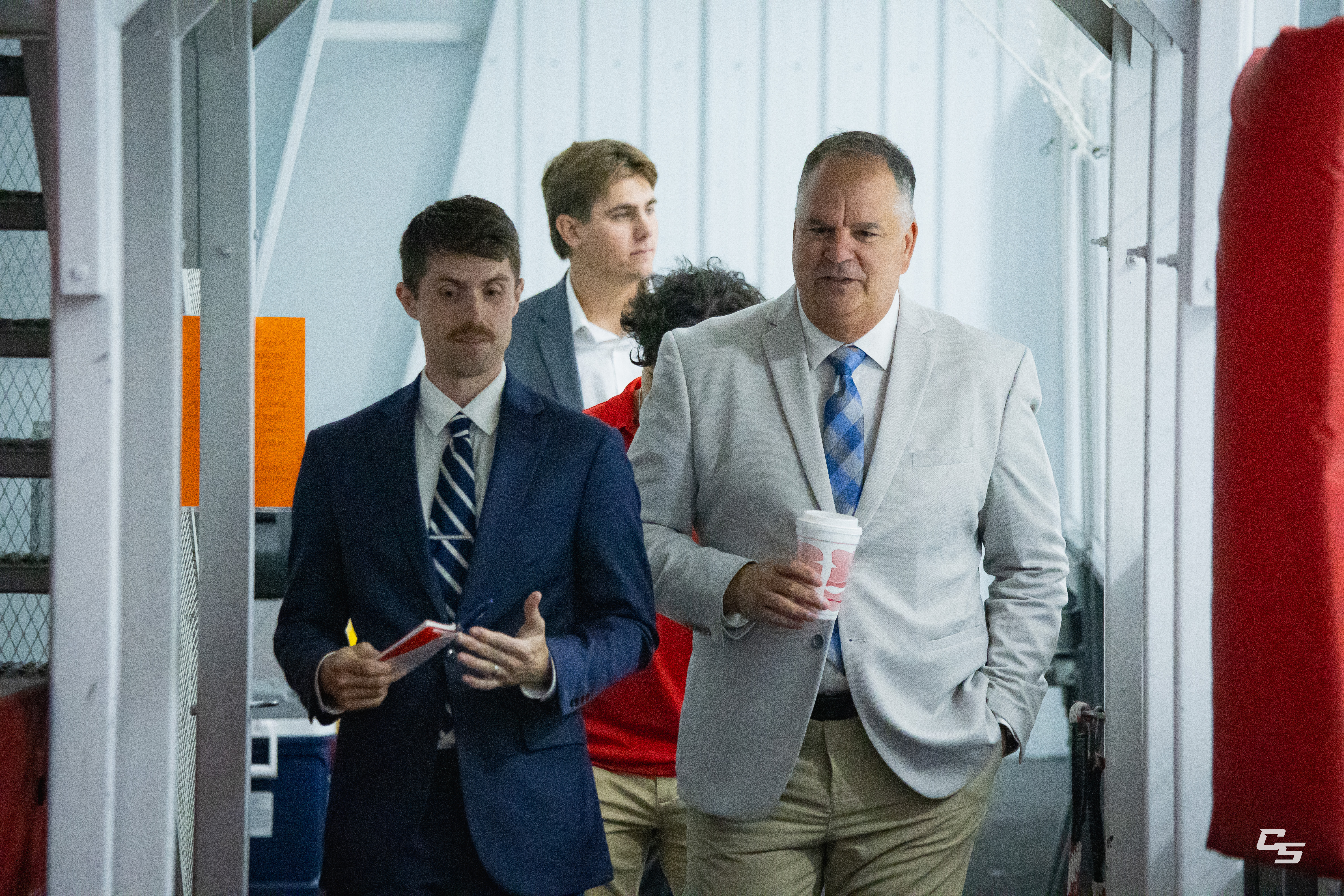
By Jeff German, Head Coach, Albright College, NCAA DIII
I’ll start with this, because it matters how you read everything that follows: I’m an older coach.
That label gets thrown around a lot in today’s game, usually with an implication that you’re behind. That the old man is just set in his ways. That the game has evolved past you. And, if you didn’t come up in the era of constant video, skills coaches, and year-round hockey, you’re somehow trying to keep up.
I’ve never seen it that way. Because what time in this game gives you, if you’re paying attention, isn’t just experience, it’s perspective. And perspective is where leadership starts.
Experience gives you some worn-in advantages. You begin to see patterns. You begin to understand what lasts and what comes and goes. You learn the difference between what looks good and what works. Most importantly, you learn that the game doesn’t change nearly as much as people think it does. The environment changes. The tools change. The language changes. But the demands of winning do not. And that’s where I think today’s game, and more specifically today’s leadership within the game, has drifted.
Not in a catastrophic way. But enough that it’s worth addressing.
Who do I think I am to make these statements? Before I go any further, it is a fair question to ask. The honest answer is this. I am not claiming to have all the answers. I am not above the game, and I am not close to saying I’ve finished learning it, or that I know a fraction of what I should. I have been wrong more times than I can count. I have made dozens and dozens of decisions I would take back. I have had seasons that forced me to reevaluate everything I thought I knew.
But what I do have is time in the game, and I have tried to pay attention to it. I have coached different types of players, in different environments, through different versions of the game. I have seen what works for a short period of time, and what holds up over years. I have experienced success, and I have experienced failure, and both have taught me something equally. So, this is not coming from a place of certainty. It comes from a place of observation and reflection. If anything, the longer I coach, the more I respect how difficult this game really is. Not just to play, but to lead. And that respect is what makes me willing to write this, not because I think I am right about everything, but because I believe the conversation matters. So here it goes.
The Evolution of the Player and the Leadership Gap
There’s no question today’s player is more skilled. Faster. More dynamic. More comfortable with the puck. The level of creativity in the game right now is something I genuinely appreciate. Players are trying things that weren’t even considered years ago, and that’s a good thing. Necessary rule changes made the game so much better, but not without consequences. There is nowhere to hide in today’s game, I think it’s harder to play than ever.
The preparation is better too. Strength training, recovery, and nutrition; players take their development seriously in ways that weren’t as common before. Those are real improvements.
But leadership isn’t built on tools. It’s built on habits. And that’s where the gap is showing up. I see more players today who are capable, but inconsistent. They can reach a high level, but they don’t live there. Their habits fluctuate. Their urgency comes and goes. Their attention to detail depends on the day, the drill, or the situation. That’s not a talent issue. That’s a leadership issue, because leadership, at its core, is about ownership.
Years ago, ownership was internal. Players held themselves accountable before anyone else had to. Standards were understood, not constantly explained. If something slipped, the room corrected it. Now, more often, accountability is external. It’s driven by ice time, by feedback, by correction after the fact. And when accountability becomes external, consistency becomes optional.
That’s not sustainable in a competitive environment.
The Coaching Shift and the Responsibility That Comes With It
There’s also been an observable shift in coaching, and this is where leadership really comes into focus. There’s a new generation of coaches entering the game. They bring energy, new ideas, and a willingness to challenge convention. That’s valuable. The game should evolve, and it needs people pushing it forward. But leadership in coaching isn’t just about innovation. It’s about responsibility. And one of the things I’ve observed is a level of confidence that sometimes gets ahead of experience, a false bravado. It often shows up as certainty; certainty in systems, certainty in approach and certainty in what will work. But this game has a way of humbling certainty. Knowing a system is not the same as leading a team through adversity. Drawing something up is not the same as adjusting it when it breaks down. Understanding concepts is not the same as managing people.
Leadership requires a level of humility that only comes from time, from failure, and from being forced to adapt. And when that humility is missing, what you get is direction without depth.
That’s where we, as a coaching community, need to be better. I’m not advocating pushing back against new ideas, but by grounding them. I’m saying that it’s paramount that we are creating an environment where experience is not dismissed, and innovation is not blindly accepted, because the best leadership blends both.
What the Game Has Gained and What It Cannot Afford to Lose
The modern game has gained a lot. Skill development is ahead of where it’s ever been. Access to information has never been greater. Players and coaches alike have more resources than any generation before them. But in that growth, there are foundational elements that cannot be lost. Because they are the difference between potential and performance. Here are some keys to continuous improvement:
Consistency
Doing the right things, the right way, every day. Not occasionally. Not when it’s convenient.
Accountability
Owning your role, your effort, and your impact on the team. Without needing it to be pointed out.
Compete Level
Not just in games, but in practice. In habits. In preparation.
Attention to Detail
The small things that don’t show up on a stat sheet but decide outcomes. The standard!
Team-First Mentality
Understanding that success is built collectively, not individually.
These aren’t outdated concepts. They are the foundation of every successful team I’ve been around, regardless of era. And leadership is what protects those standards.
A Call to Players: Raise Your Standard
If you’re a player reading this, here’s the reality. You have more opportunity than any generation before you. More access. More development. More exposure. But those advantages don’t separate you. Your habits do.
If you want to stand out, don’t just chase skill, chase consistency. Don’t wait to be held accountable. Hold yourself accountable first. Don’t look for shortcuts in development. Embrace the process, especially when it’s uncomfortable. Leadership isn’t a title. It’s behavior.
Players who understand these points are the ones who become reliable, trusted, and ultimately successful.
A Call to Coaches: Lead with Balance
If you’re a coach, especially early in your career, understand this.
Your ideas matter. Your energy matters. Your willingness to push the game forward matters. But so does perspective. Be confident but stay curious. Be prepared but stay adaptable. Be willing to lead, but also willing to listen. Seek out experience, don’t dismiss it. There’s value in what’s been learned over time, not because it’s old, but because it’s been tested.
At the same time, those of us with experience have a responsibility too. We can’t be rigid. We can’t rely on “this is how it’s always been done.” We must evolve, to learn, and to stay open. Leadership isn’t about choosing a side between old and new. It’s about building something better by understanding both.
The Standard Moving Forward
After more than 20 years in this game, here’s what I know; The game itself hasn’t forgotten what it takes to win. It still rewards effort. It still exposes inconsistency. It still demands that individuals come together and function as a team under pressure. What has changed is how easily we can get distracted from those truths.
Leadership is what brings us back. It’s what reconnects talent with discipline. It aligns preparation with performance. And, it’s what turns a group of individuals into a team.
Right now, that’s the opportunity in front of us. Not to go backward, but to move forward with clarity. To take the best of what the game has become and anchor it in what has always worked. That’s the standard and the people who embrace it, who live it daily, they’re still the ones who separate themselves.
They always will be.