Standing in front of the net is not enough. An elite goalie must move, anticipate, read — and react before the puck even arrives.
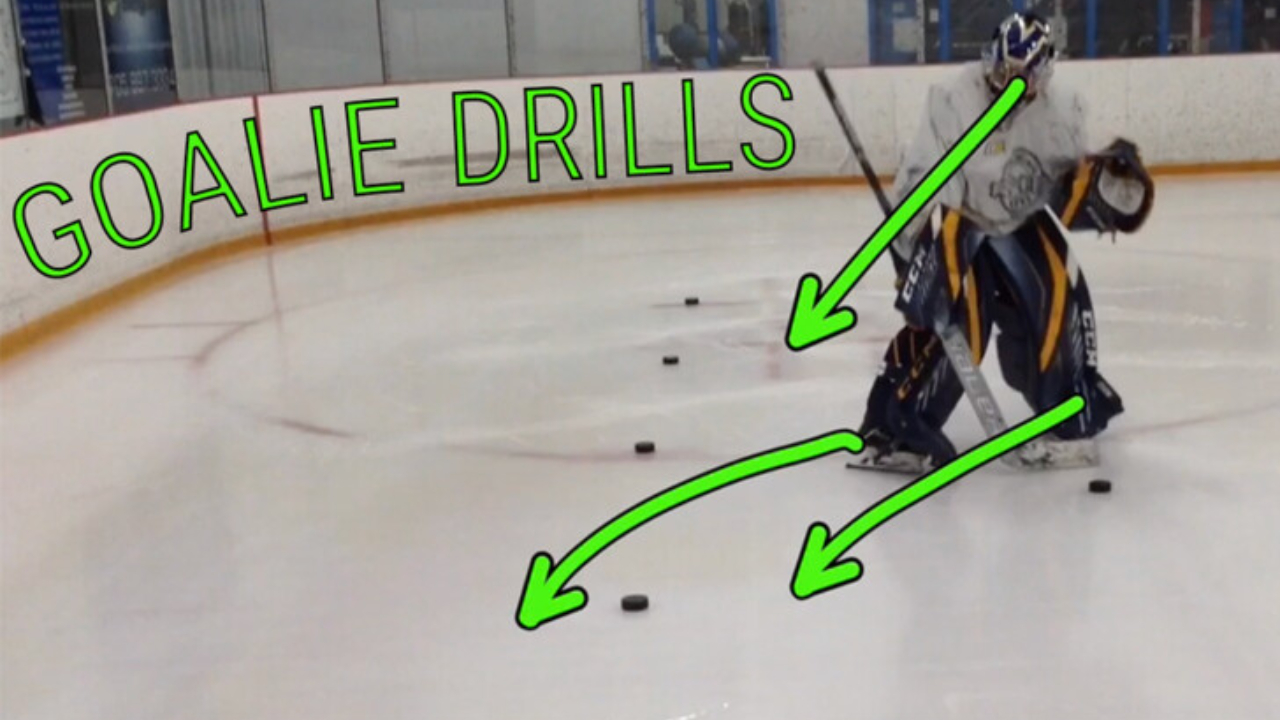
That principle is at the heart of one of the most complete and demanding drills in advanced goalie development: a puck-tracking drill combined with angle and depth work, where the goalie must manage two players in motion, sequential passes, and continuous lateral transitions.
The drill works three fundamental pillars that define an elite goalie: puck tracking, angle management, and depth positioning. These three elements never operate in isolation during a game — they activate simultaneously, in fractions of a second, as the puck moves from one player to another.
The objective is simple to state but hard to execute: the goalie must follow the puck through a series of passes and player movements, repositioning correctly every time the threat changes.
This is not a drill for beginners. It is designed for the goalie who already has the fundamentals — and now wants to take things to the next level.
How the Drill Works: Step by Step
Setup
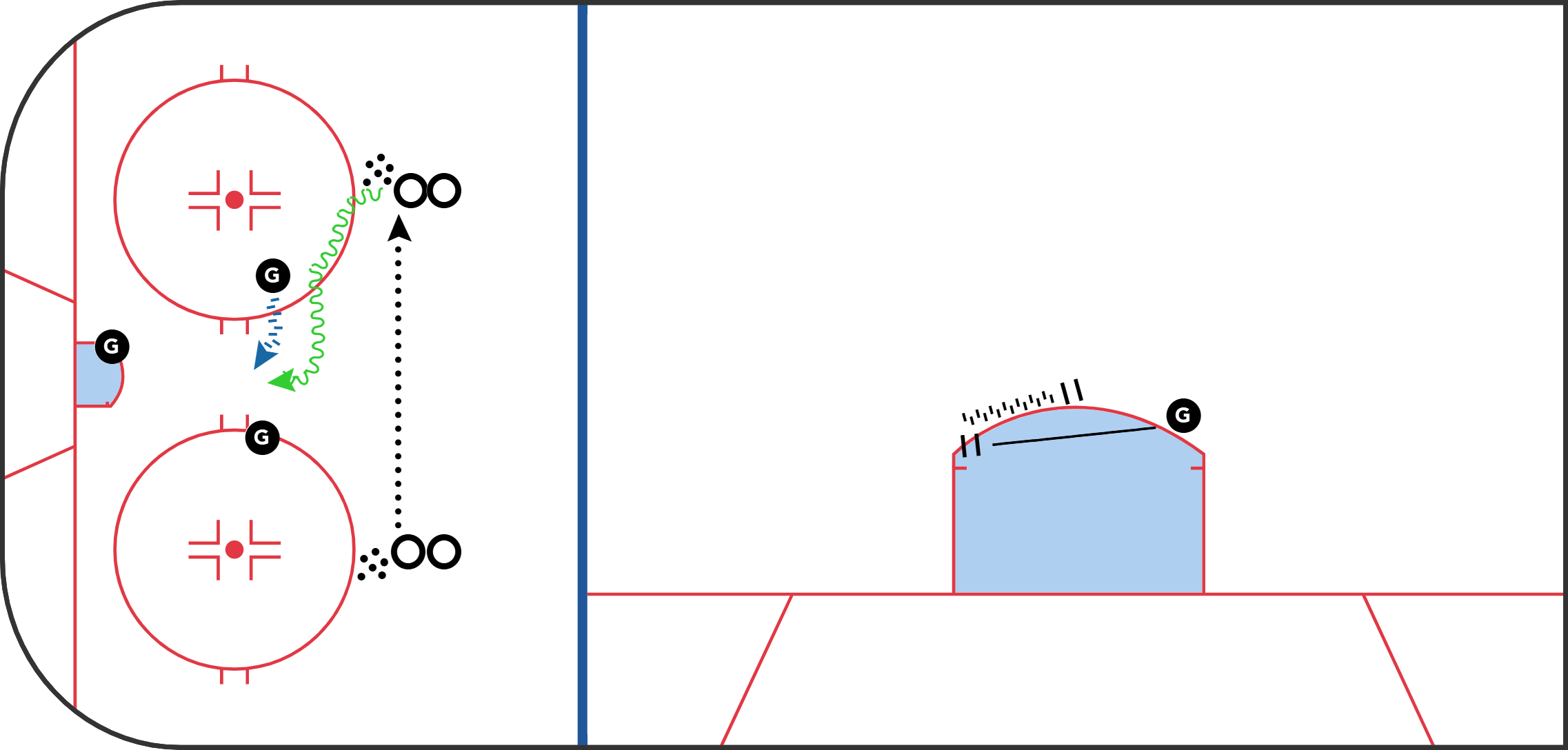
Two skaters position themselves just outside the circles, on the dot lane — one on each side. The goalie sets up in the crease, engaged and ready.
Phase 1 — The Pass Across the Royal Road
The drill begins with a single pass across the Royal Road, from one player to the other. The moment that puck moves, the goalie must react: an explosive T-Push to track the disc as it crosses the ice. This is not a passive adjustment — it is a committed, decisive movement to get back onto the angle relative to the new puck carrier.
This first phase tests whether the goalie is reading the puck or just reacting to sound. The goalie who sees the pass before it happens arrives in position. The goalie who waits until the puck lands is already behind.
Phase 2 — The High Walk-In
Once the pass is received, there is no second pass. The player who received the puck now walks in — a high walk-in from the dot lane toward the net, advancing with the puck under control. This is where the drill shifts from reaction to sustained tracking.
As the skater moves, the goalie shuffles laterally and forward, maintaining position on the shooting line. The angle and depth both need to adjust dynamically as the threat gets closer. The goalie who stops moving after the initial T-Push and waits for the shot is giving up real estate. The goalie who keeps reading and keeps moving is in control.
Phase 3 — Staying on the Shooting Line
As the walk-in continues, the goalie's job is to hold the correct position throughout — on the shooting line, at the right depth, never giving the shooter a clean look. The area being managed runs from the dot line all the way through to the slot: a long skating distance for the player, but what should feel like a short, controlled adaptation for the goalie. That asymmetry is the goal. The goalie who has trained this drill correctly makes the walk-in feel compressed, contained, controlled.
This drill is a foundation, not a ceiling. Coaches should build progressions on top of it to continuously raise the challenge. Once goalies are comfortable with the base version, add a shot at the end of the walk-in. Introduce a second player as a late passing option so the goalie cannot cheat toward the shooter. Vary the starting position of the walk-in to change the angle and depth demands. Add a rebound situation after the initial shot to train recovery and reset. The drill is modular by design — each layer you add makes the rep more game-realistic and the goalie more adaptable.
The Screen Variation: Training with Multiple Goalies
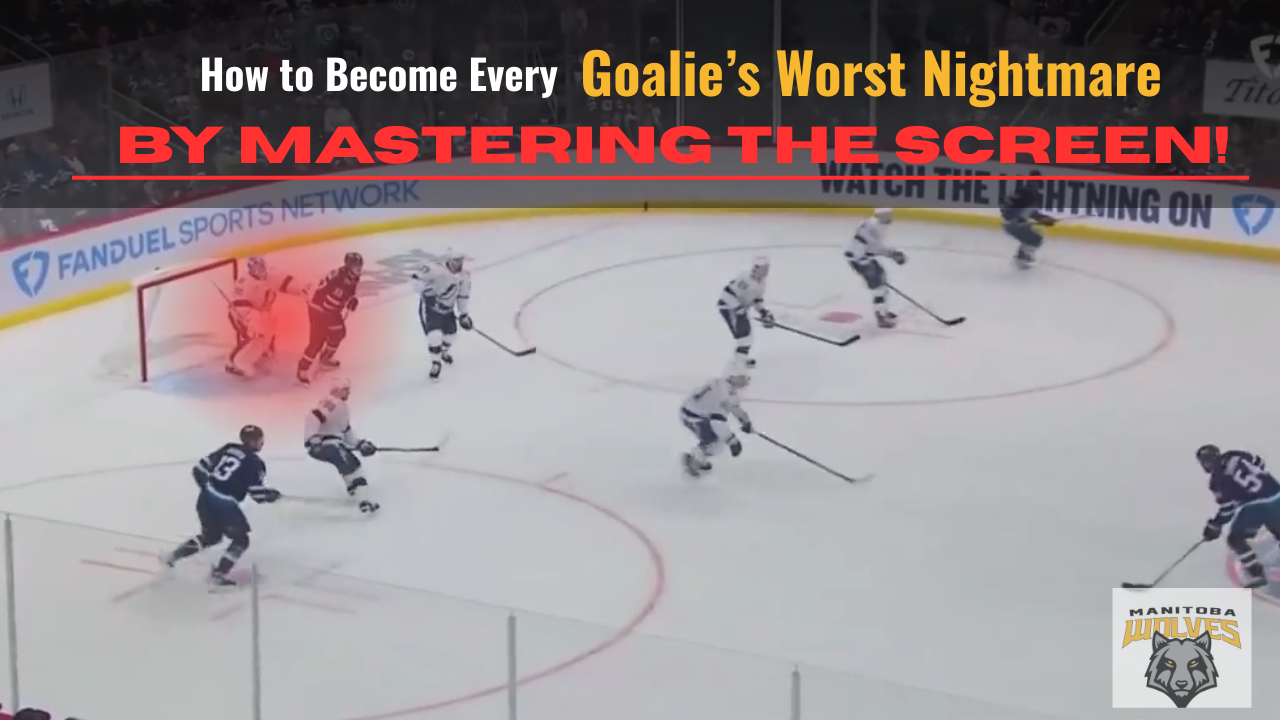
When running this drill in a group session where multiple goalies are on the ice, there is an outstanding opportunity to add a layer of game-realism that most practice environments never intentionally create: the screen.
Position one or more of the non-working goalies in the high slot or in front of the crease — exactly where an opposing forward would park themselves on a power play or in a net-front battle. The working goalie must now track the puck through a physical obstacle, fighting for sightlines the way they would in a real game.
Traffic in front of the net is one of the most frequent and high-stakes situations a goalie faces. Yet it is almost never trained with specific intention. Drilling it systematically builds a skill set that most goalies only develop slowly through game experience — and doing it on purpose accelerates that curve dramatically.
What the screen variation trains:
- Finding passing and shooting lanes through traffic — the working goalie can no longer rely on a clean sightline and must learn to find the disc around bodies
- Tracking and vision under obstruction — forces active tracking by the head, shoulder depth, and positional awareness rather than passive waiting
- High-pressure game simulation — deflections, tips, and second-chance rebounds all begin with a screen situation; the goalie who practices this thrives in it
- Body positioning for the screening goalie — the goalies acting as screens are not passive participants. They learn to position their body effectively in front of the net, understanding what creates the most obstruction from a shooter's perspective — a skill that translates directly to understanding what opponents are trying to do to them in a game
How to scale the difficulty: Start with the screener stationary — a fixed obstacle the working goalie must read around. Once that feels manageable, progress to the screener moving laterally as the puck advances, mimicking a forward who is working to stay between the goalie and the shooter. The most advanced version has the screener moving dynamically and attempting to deflect passes, which creates the kind of chaotic, high-stakes situation that separates prepared goalies from reactive ones.
Every goalie on the ice is working at the same time. No one is waiting at the boards for their turn. That alone makes this variation one of the most efficient uses of ice time in a multi-goalie session.
Key Coaching Points: What the Goalie Must Focus On
Puck Tracking : Eyes never leave the puck. The goalie trains to "feel" the crease with their feet without looking down to find their position. The head is always oriented toward the disc — and the body follows.
Angles: The Goalie's Geometry: Every time the puck changes position, the optimal coverage angle changes.
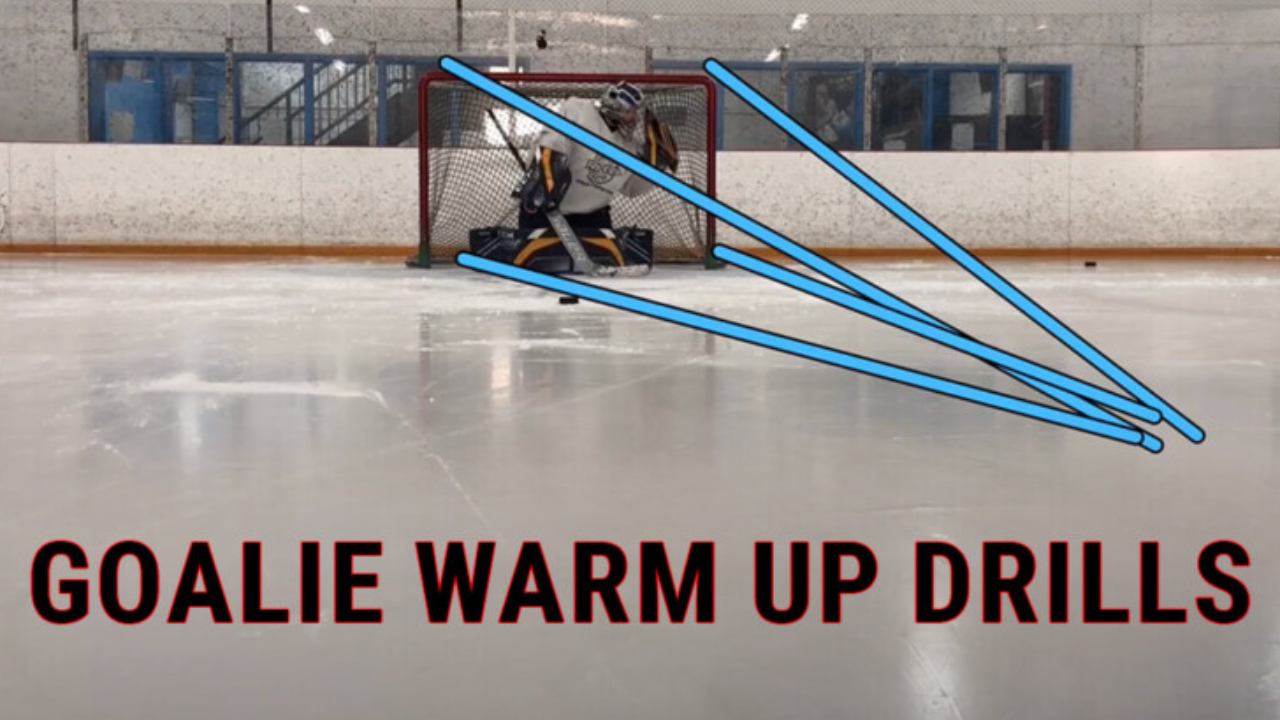
Correct positioning requires the body to be on the imaginary line connecting the puck to the center of the net — with the right degree of depth out of the crease to reduce the shooting angle visible to the attacker.
Lateral Movement and Post-to-Post Transitions
Throughout this drill, the goalie also faces wide lateral transitions. The quality of that movement — speed, balance, efficiency — determines whether they arrive in position on time or a fraction too late. The goal is not just to reach the right spot, but to arrive ready to make the save: feet set, weight centered, eyes on the puck.