Give Your Players a Self-Evaluation Tool for Every Shift
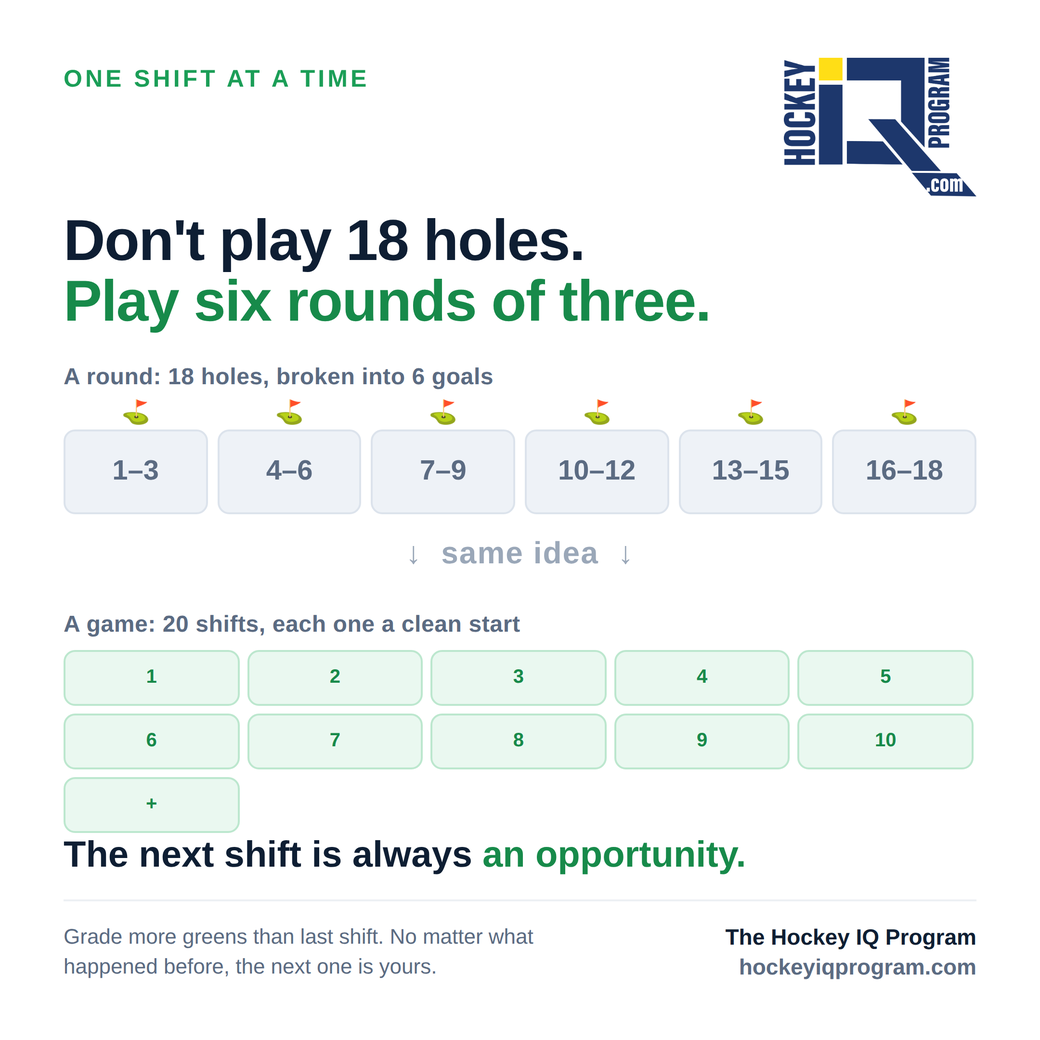
My golf coach growing up had one rule that changed how I played every round. Don't play 18 holes, he'd say: Play six rounds of three. Give yourself a goal for each three, one number you want to beat, and when those three are done you start fresh. A four-hour round turned into six thirty-minute rounds, and a bad triple on the 5th didn't follow me to the 12th. Every three holes I got a clean start and a new goal.
Hockey works the same way, and the shift is your three holes.
A game is 20-ish shifts, sometimes more, sometimes less. Most players walk off thinking about the whole thing, the goal they scored, the one they didn't, the turnover in the third everybody saw. That's playing all 18 holes in your head at once. The players who get better play the next shift, and only the next shift.
A self-evaluation tool players can actually use
The Puck Carrier Scorecard is a free self-evaluation tool that lets a player grade their own game, one play at a time. Every play they make with the puck grades out green, yellow, or red.
Green = right play for the situation, Yellow = ok, Red = not ideal. The target is 80% greens. A great green is the one nobody saw coming, the play that opens the ice when the easy read was to just dump it.
Here's how a player uses it shift to shift. They come off, and before they look at the scoreboard they ask one thing, did I create more greens that shift than the last one. Last shift, one great green. This shift, go get two. No matter what happened before, the next shift is a clean three holes and a new goal.
PS. This is a great tool for PARENTS to use while following their players as it focuses on their player's path to develop vs just looking at points or why their son/daughter should be on the PP over the other players. If they ever question it...ask them how many Green plays "Johnny" is creating vs Red!!
The kid who graded their way to the pros
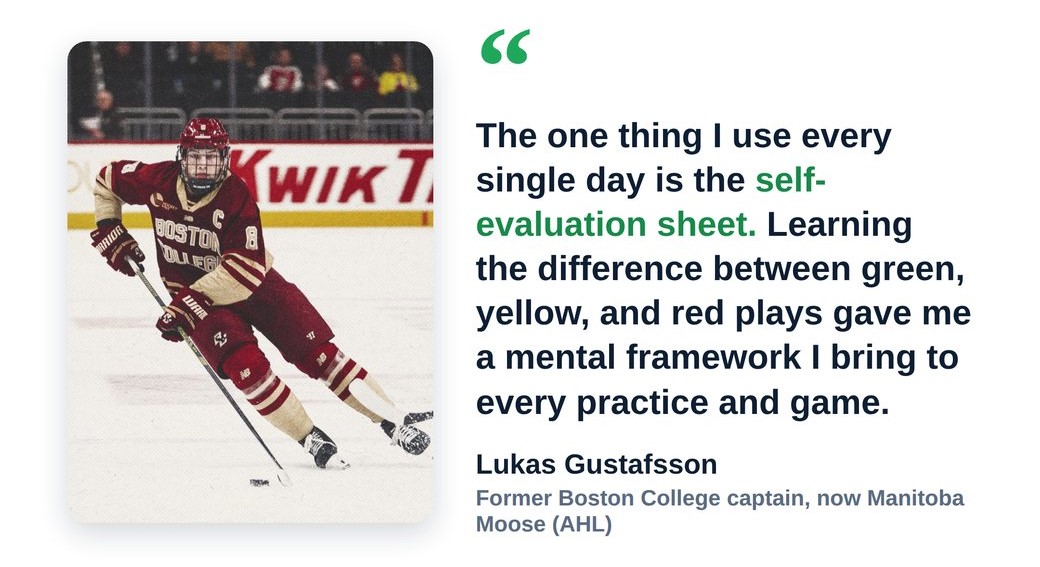
Lukas grew up in Atlanta, not exactly a hockey town. He worked his way to prep at Cushing, into the USHL, captained Boston College, and signed with the Manitoba Moose in the AHL. Ask him what carried him, and it isn't a shooting drill.
"The Hockey IQ program completely changed how I see the game. Going through the lessons helped me understand what makes a great hockey play, but the one thing I use every single day are the self-evaluation sheets. Learning the difference between green, yellow, and red plays gave me a mental framework I bring to every practice and game. Now I always know what I'm looking for on the ice, and I understand exactly what high-level coaches want to see."
He plays defense now, and he grades that side the same way. "Having the knowledge of what the program teaches when it comes to goal scoring has helped me a lot as a defenseman in the defensive zone. I try to make sure that the goalie gets the easiest shot for him to make the save and take away the high percentage scoring chances with my positioning and stick."
That's a pro still grading green, yellow, red every day. Your players can start tonight!
Give the line a number
It gets better when the whole line thinks the same way. A coach can hand a line a goal for the shift, and now three or five players are chasing the same thing and grading themselves on it.
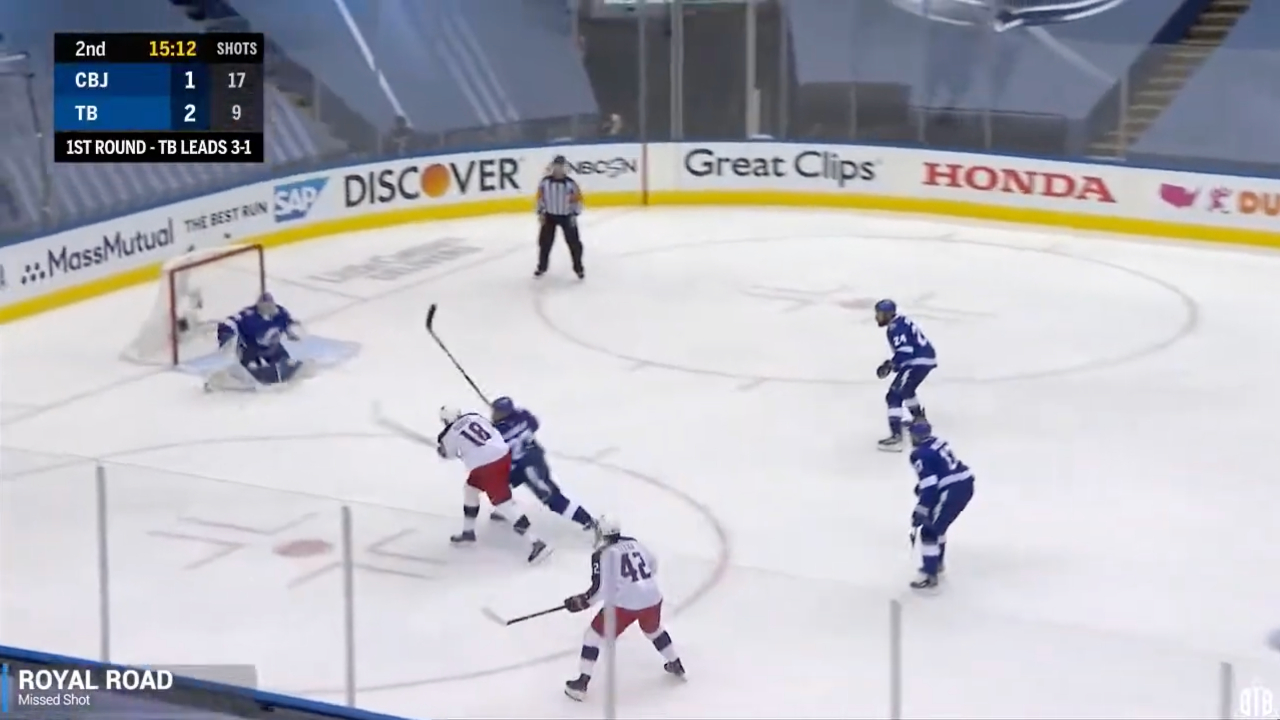
Top line, go create two green scoring chances this shift. If you get zero, find a way to get two next time out. If you got two, the challenge is three. Fourth line protecting a lead, the goal flips, get out there and don't give up a single scoring chance, and grade the shift on that. Everybody counting the same numbers, everybody knowing what a green looks like for their role right now.
That's what playing with the lead comes down to. The situation changes, the goal for the shift changes, and a smart line reads the number the coach gave them and plays to it.
Three great shifts out of 20 isn't enough
Most players get three or four shifts a game where everything clicks. The other 16 run on autopilot, waiting for the puck, hoping it turns out. That's the gap, and it isn't talent or skating, it's shifts thrown away because nobody gave them a point.
Break the game into shifts, give each one a goal, and grade it green, yellow, red coming off. The reds turn into yellows, the yellows into greens, the greens into great greens, and the player who stacks greens for a full season is a different player in March than they were in October.
The Scorecard grades the puck carrier, and that's where it starts. That same green, yellow, red thinking runs through the rest of the game too, defending, playing without the puck, reading the numbers, and that's the whole Hockey IQ Program, one piece at a time.
Get your team on the free Puck Carrier Scorecard at hockeyiqprogram.com, and give your players a way to win the next shift instead of replaying the last one.
About The Hockey IQ Program
The Hockey IQ Program trains the Head, the fourth H almost nobody coaches. It's 59 short video lessons over about 30 weeks, built around one idea, Create Green, the right play for the situation. Players learn the reads, the roles, and the thought process that decides who keeps advancing when the game speeds up. Coaches get a road map that loads the thinking off the ice, so practice time stays for skating and skills and the whole room is speaking one language by November. Parents get the words to help on the car ride home instead of turning it into a second practice. One plan, $49.99 a month per player, cancel anytime, and when 15 players from one team sign up, that team's coach gets a free license for a year.