THE PSYCHOLOGICAL GAME - Noise Fear Pressure (2:6)
By Coach Barry Jones IIHF Level 3 High Performance | USA Hockey Level 3 Performance | Head Coach Perth Inferno AWIHL
- Part 1: THE PSYCHOLOGICAL GAME : The Invisible Constraint
- Part 2: THE PSYCHOLOGICAL GAME : Noise Fear Pressure
- Part 3: THE PSYCHOLOGICAL GAME : Safety, Identity and Belonging
- Part 4: THE PSYCHOLOGICAL GAME : The Collective Mind
- Part 5: THE PSYCHOLOGICAL GAME: Anchors, Stability and Environment Design
- Part 6: THE PSYCHOLOGICAL GAME : Coaching in Real-Time Environments That Think Back
When Pressure Shrinks the Game
Your players have seen the situations. They have interacted with the problems. They have adapted to your small area games. They have shown they can navigate the chaos in training.
But then the game starts.
Pressure arrives. Noise rises. Emotion shifts the environment. And suddenly, the same problems feel very different.
Pressure rewrites perception. Perception rewrites decisions. Decisions rewrite behaviour.
Under stress, the perceptual field collapses. Players see less process and trust less.
Scanning disappears. Support options become invisible. Athletes default to familiar habits even when those habits do not fit the moment.
Fear Redirects Attention
Fear rarely looks like fear. Sometimes it looks like rushing the play, avoiding puck battles, skating fast to escape pressure, dumping pucks, overhandling or hiding behind structure.
Fear pulls attention away from affordances and toward self-protection. Fear reshapes the athlete’s affordance landscape.
Noise: The Invisible Opponent
Noise is anything that competes with attention. Athletes carry role confusion, social tension, self-comparison, leadership uncertainty, mental fatigue, fear of disappointing teammates and external expectations.
Noise fogs the perceptual system, blurring cues, delaying recognition and reducing confidence in action.
Pressure Distorts the Data Stream
Decision-making is built on environmental data. Under pressure, the data becomes distorted.
The defender appears faster. Time feels shorter. Options seem fewer. Risk feels higher.
Telling a player to slow down never works because the issue is information distortion, not tempo.
Limited Ice Time Forces Psychological Innovation
In Perth, we often operate with minimal ice time. That limitation changed the way I coach.
Psychological constraints accelerate learning. We use shot clocks, goal down starts, time left scenarios, short-term overloads and 5v3 to 5v4 to 5v5 transitions to build emotional and cognitive regulation.
The Case of the High Speed Forward
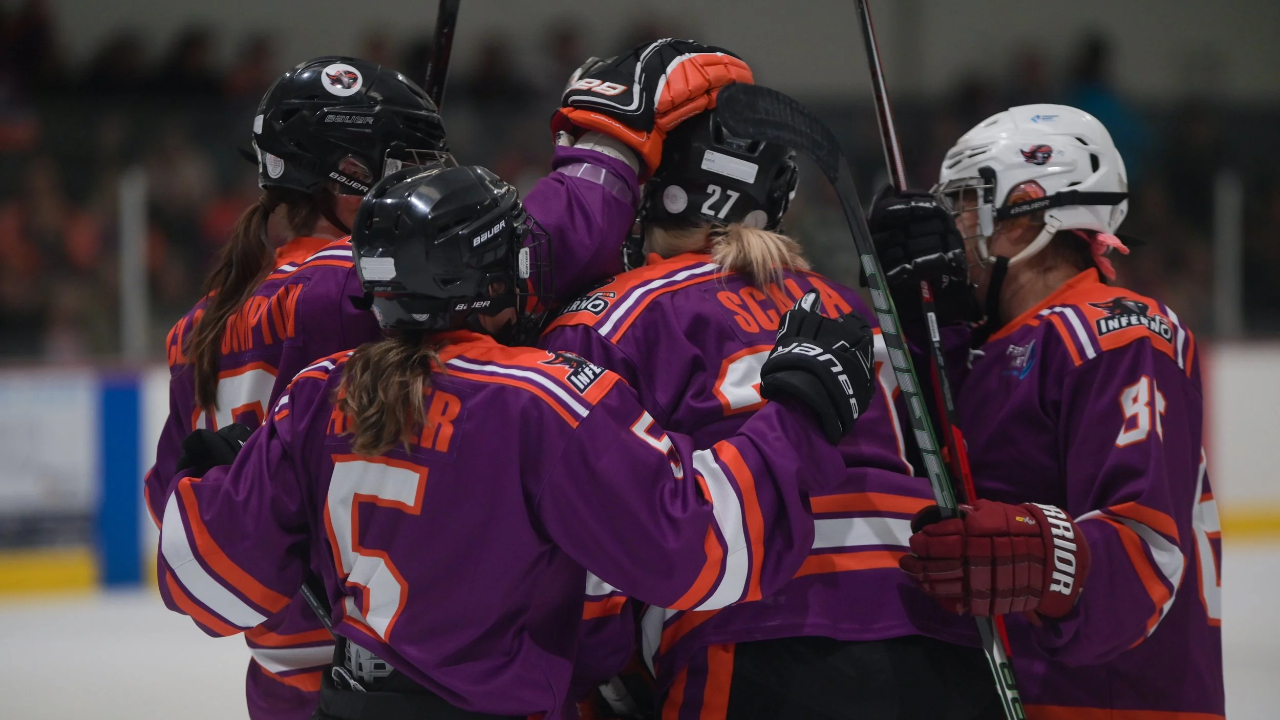
One of our Inferno forwards avoided puck battles. Speed became a protective strategy.
After designing constraints that slowed her down and forced deceptive skating, she saw new affordances, trusted new decisions and regulated her emotions. The environment changed, so she changed.
Coaches Feel the Same Pressure
Coaches feel expectation, responsibility and internal stress. I have misread cues, set wrong constraints and reacted instead of designed.
Each failure gave me information. Coaches also fail forward, redesign the environment and adapt.
Why This Part Matters
Pressure changes perception. Noise reshapes the game athletes think they are in. Psychology is a foundational constraint.
Part 3 will explore belonging, identity, safety, clarity and how emotional security expands affordances and unlocks performance.
Author Bio: Barry Jones is an IIHF Level 3 High Performance Coach and USA Hockey Level 3 Performance Coach. He currently serves as Head Coach of the Perth Inferno (AWIHL) and leads the Blaze Development Program. His work blends ecological dynamics, nonlinear design, and athlete-centred leadership to build adaptive teams that thrive in uncertainty.