
Offensive-zone faceoff plays are often designed to generate quick scoring opportunities, but the best ones don't simply create open players, they create difficult decisions for defenders.
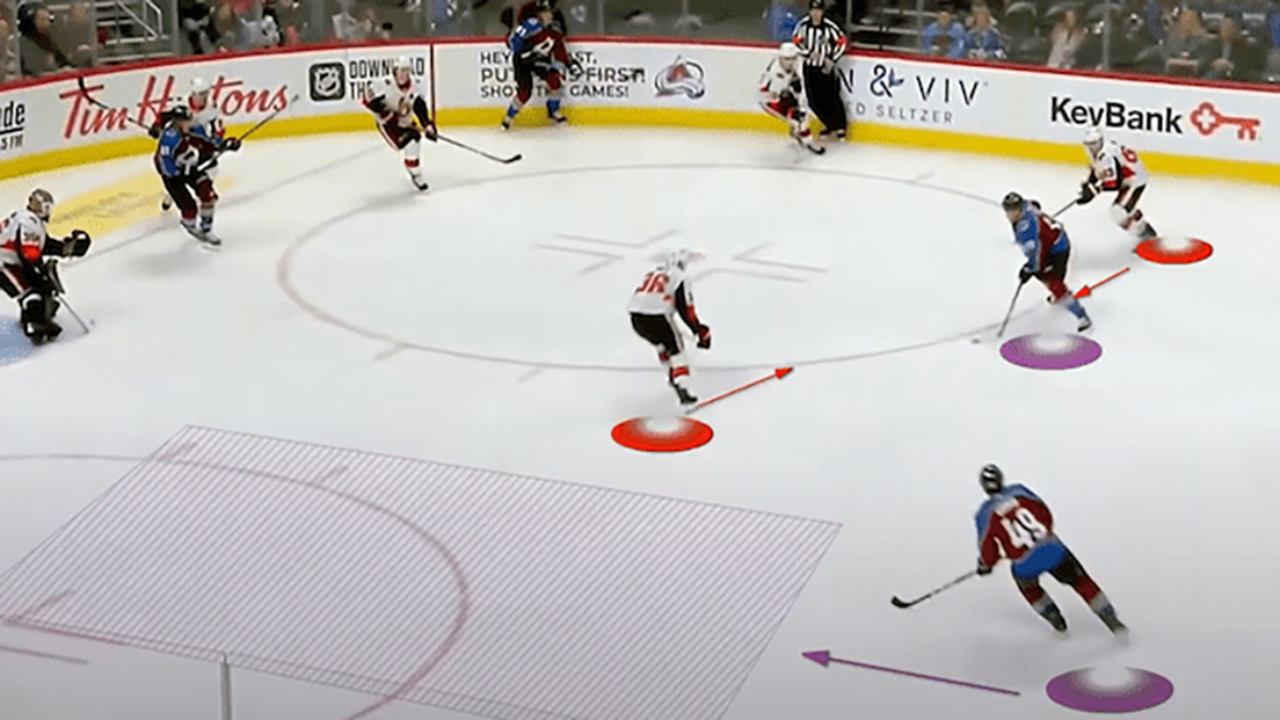
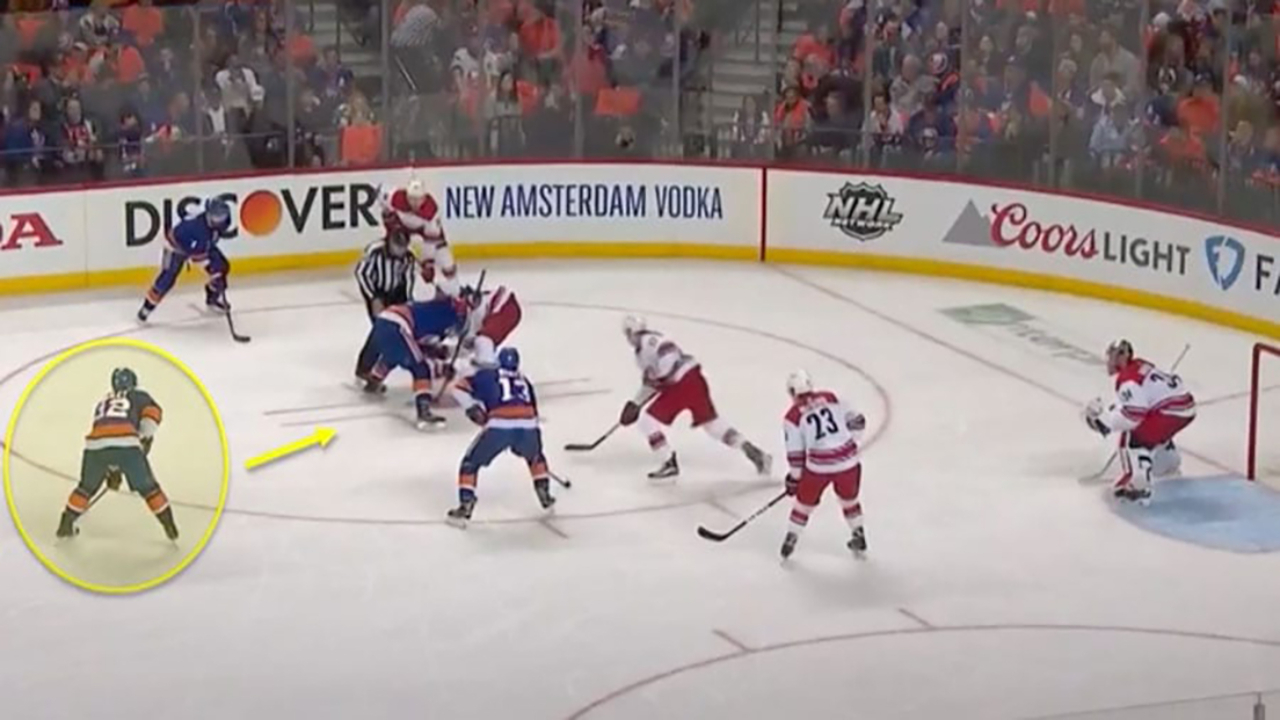
Montreal begins this defensive-zone faceoff using a common NHL setup. If they win the draw cleanly, their defensemen are already positioned to transition into the breakout. However, the moment Buffalo gains full possession, Montreal immediately shifts into their man-on-man coverage.
That's where Buffalo's play begins.
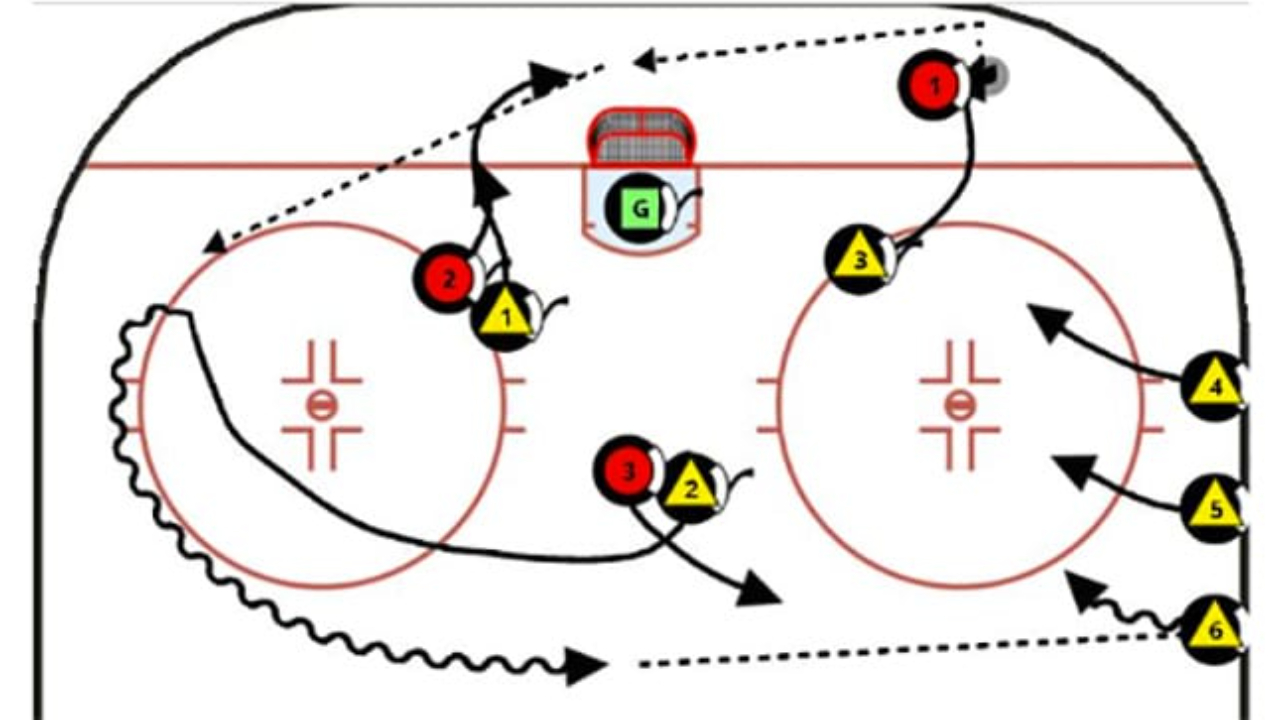
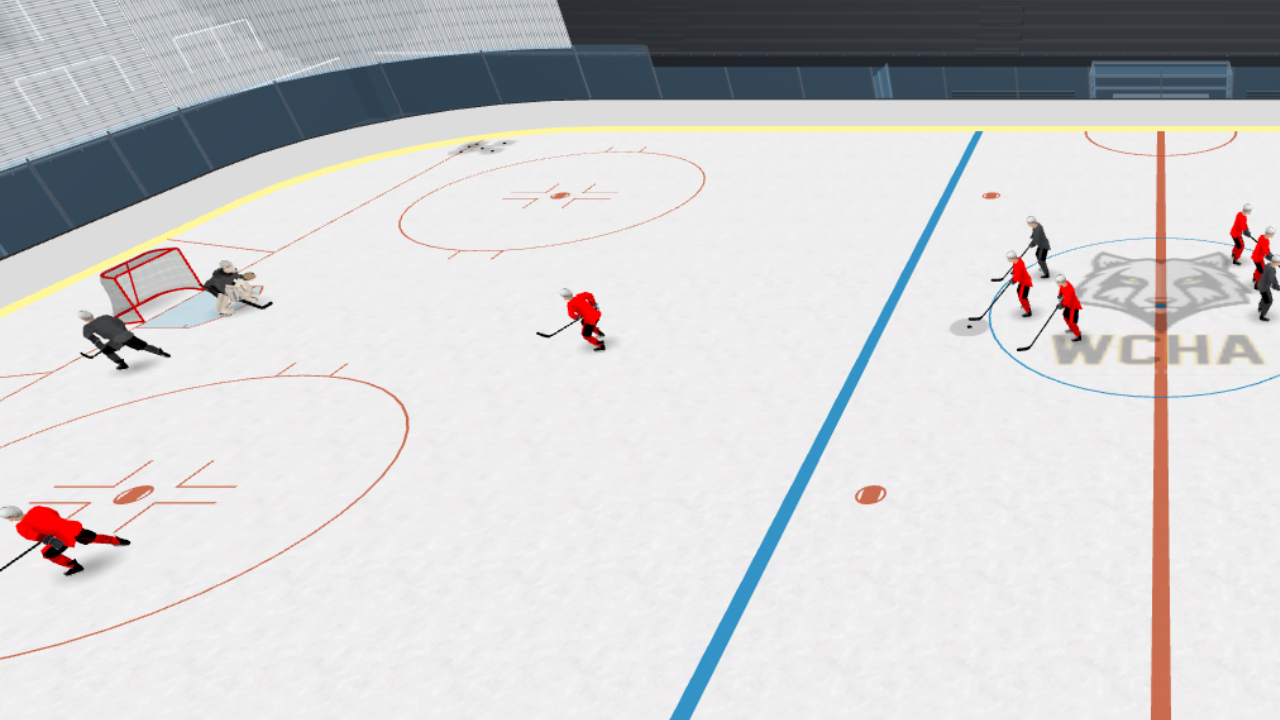
As Buffalo gains possession off the faceoff, their left winger immediately attacks the middle of the ice. That movement pulls Montreal's right defenseman away from the half wall, creating the space Buffalo's defenseman needs to walk the puck down the boards.
As the play develops, Buffalo creates a subtle pick near the slot. On its own, the pick doesn't completely free a player, but it forces Montreal's left defenseman into a decision. Does he go with his original assignment (sabres right winger) who is in a soft area, or does he switch to the Buffalo forward now driving toward the net (left winger)?
That split-second hesitation changes everything.
Instead of defending one clear threat, Montreal's defender is forced to process two threats in rapid succession. By the time the decision is made, buffalos F3 has found open ice for a grade-A scoring opportunity.
This is what makes the play so effective. Buffalo doesn't rely on a player simply losing coverage or a perfectly executed pass. They layer movements together to force the defender into consecutive decisions, knowing that even a brief moment of uncertainty can create the offensive advantage.
The coaching point isn't to create an open player. It's to create a defensive decision. The best offensive-zone faceoff plays don't beat defensive coverage with skill alone, they manipulate the defender's ability to process multiple threats, creating the space needed to generate high-quality scoring chances.