
Ulmer's full TCS Live presentation is now available: WATCH IT NOW!
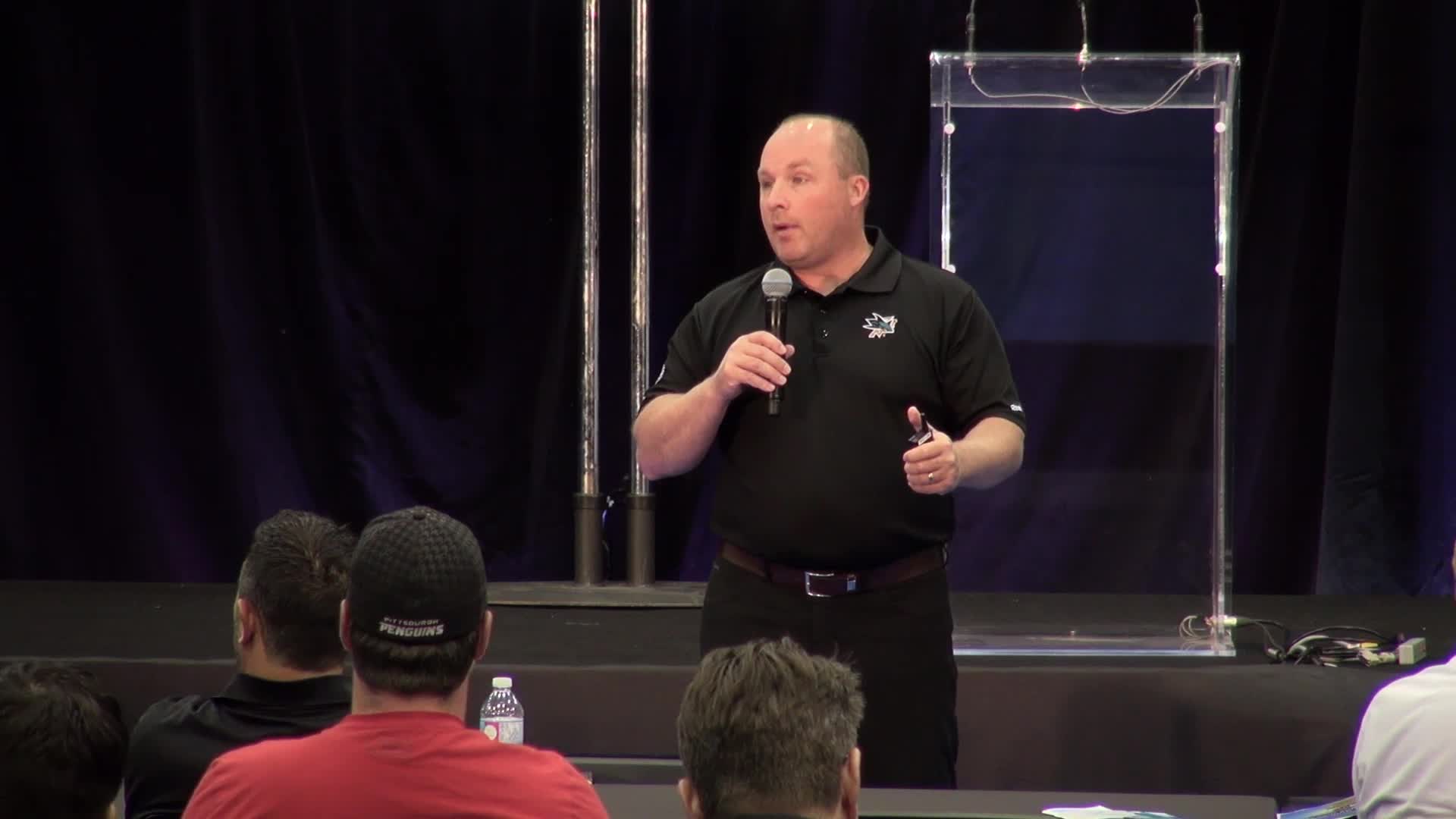
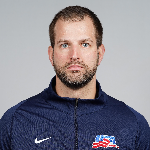
Jeff Ulmer, a former hockey player with 19 years of experience in professional leagues who is now an Assistant Coach with the San Jose Sharks, stepped onto the TCS Live stage on Day 2 to discuss the idea of the “Rookie Road Map,” which he and the rest of the San Jose Sharks coaching staff have been adopting and implementing as a strategy to best develop their elite young talent and prepare them for success in the National Hockey League.
The Sharks undoubtedly have one of the most exciting young cores in the NHL on their roster. With breakout stars like Macklin Celebrini and other exciting young talent such as Will Smith and Michael Misa, the future of San Jose’s hockey club is on a fast and exciting trajectory. To keep up with this momentum, the organization and coaching staff has to ensure that their developmental methods are fine-tuned to get the absolute maximum potential out of their core of future All-Stars. And for Ulmer, who has a front-row seat to one of the most exciting shows in hockey, one of the most important tools in the Sharks’ training and development kit is video analysis.
In today’s NHL, coaching staffs have less on-ice time with their players than ever. CBA mandated breaks and time that has to be spent with more player and skill-specific trainers has continued to eat into the amount of time the coaches and assistant coaches have to spend working with their team. Coaches must ask themselves the question, “How do you accelerate the development of young players into NHL readiness under these constraints?”
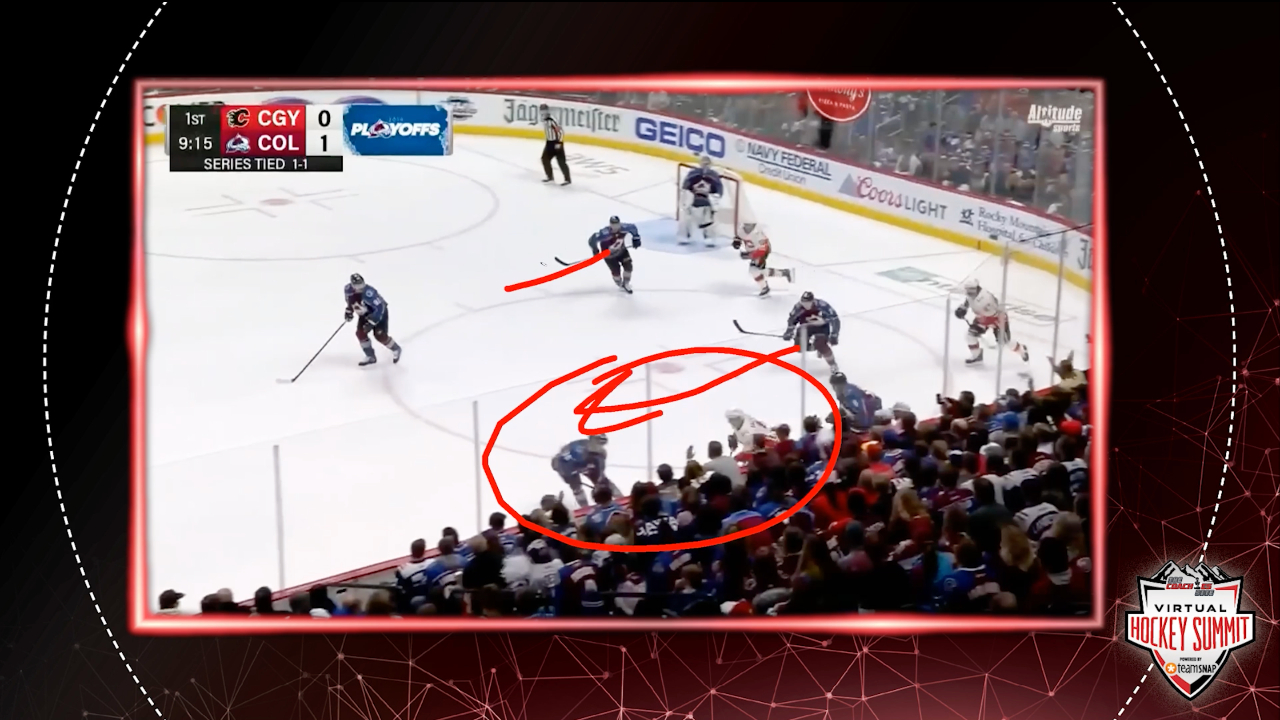
To work around these coaching roadblocks, Ulmer emphasizes the importance of being extremely deliberate with what video clips the coaching staff saves, how they present them to players, and what they decide is important to the success of their players and the team as a whole. Ulmer and the Sharks are taking a systematic approach to video study and drill design to develop habits among their young players that fast track their growth and development.
When working with the development of young forwards, specifically, Ulmer and the Sharks focus on mastering specific habits that aid the specific player’s individual play in all situations of a game and all areas of the ice.
“These forward development habits, we came up with six categories, six habits,” says Ulmer. “I catalog these, I save the clips during the game that we have…then I would sort them and keep them for the players.”
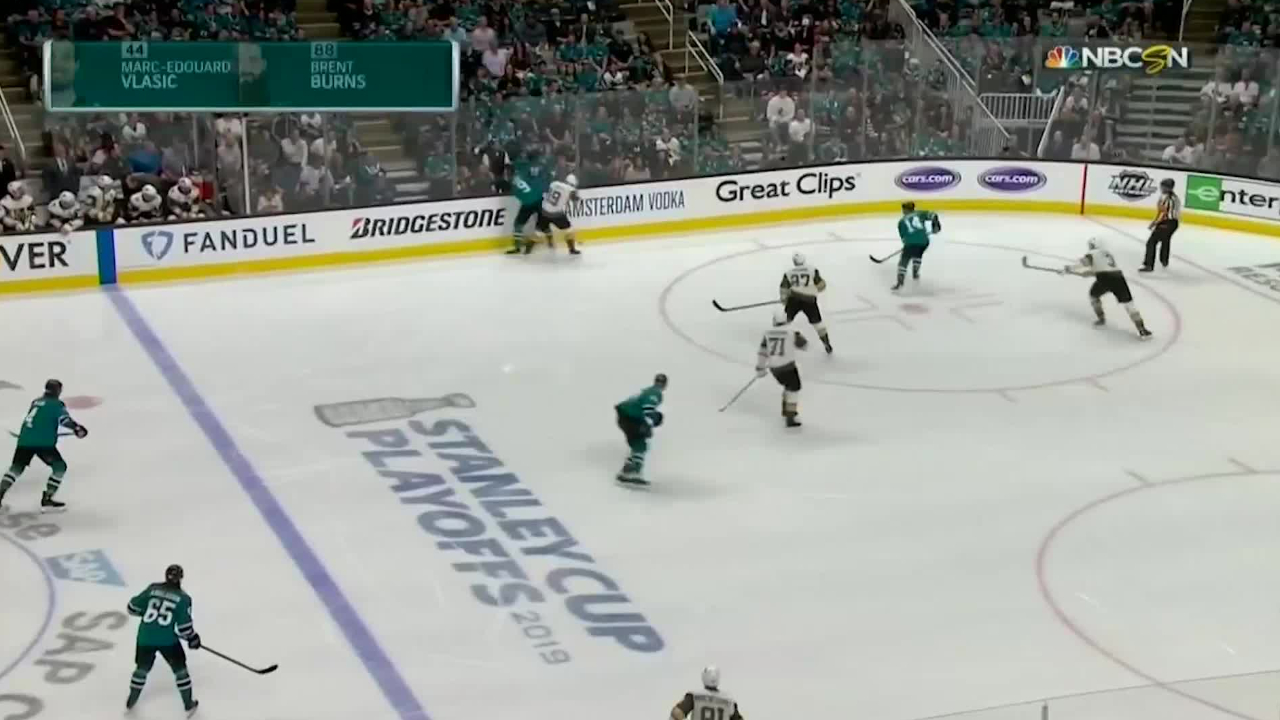
These habits include puck plays under pressure and maintaining spatial awareness, puck protection and “feeling the bump” off of defenders to disallow checks and create space, neutral zone entries and attacking the weak-side D to force defensive readjustments, maintaining defensive zone details with hip and stick positioning, and finally, what Ulmer calls “the fun zone”: elite shooting skills.
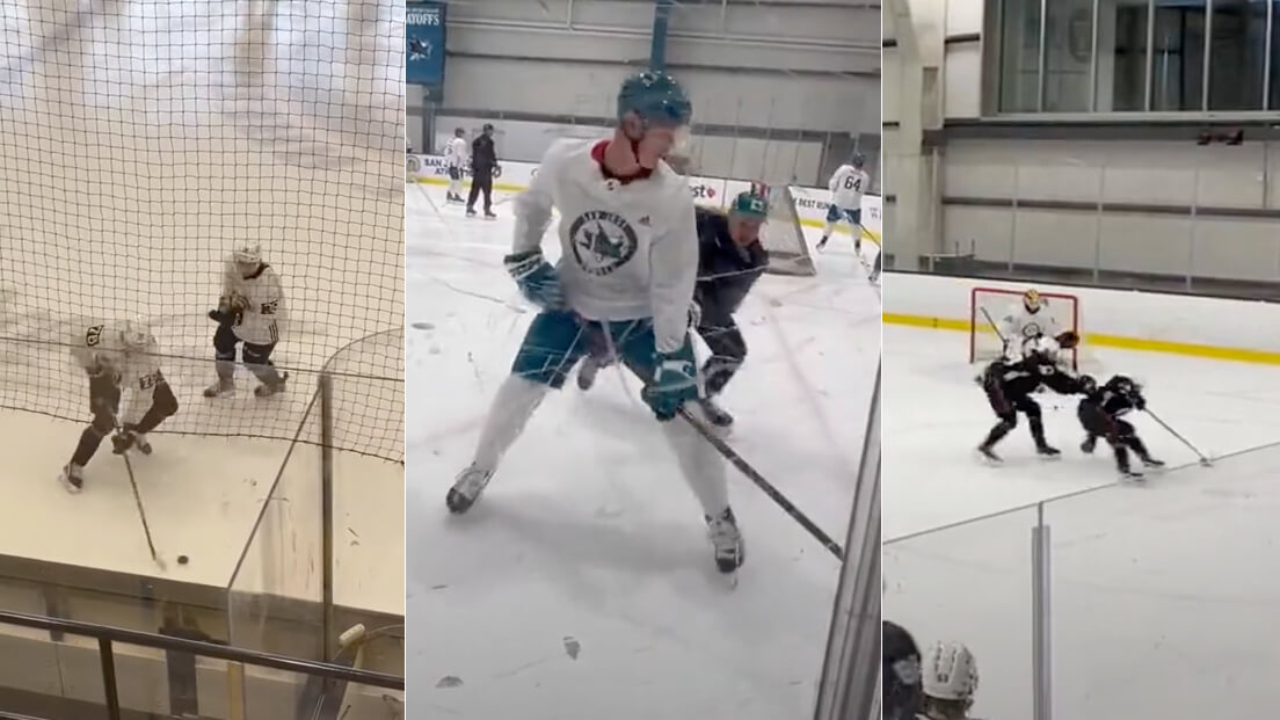
Many of these skills are necessary to learn because they are tailored to work in the unpredictable environment of a hockey game. To accurately teach these skills, says Ulmer, drills must be chaotic and game-realistic.
“These drills are a bit unscripted, meaning you have to throw in a little bit of chaos for the guys,” explains Ulmer.
Drills like these involve putting your forwards into uncomfortable situations, ones that force them to avoid exposing the puck by self-passing against the boards while scanning through multiple defenders to read possible passing lanes and playmaking options. The Sharks will have defenders bump on and trap their forwards, to teach them to use their arms and hips to bounce off checks before they happen and force the defender to recalibrate and create more offensive options for their team.
“We like to add a little bit of the unknown, a little bit of chaos with another player.”
Different players want to work on and improve different things, and part of Ulmer’s job is to be aware of these goals and work with the player to develop specific skills.
“For example, Macklin [Celebrini] likes to see a lot of his defensive zone clips. Every couple weeks, he might come in - and he knows he’s the highlight of the show on a lot of these - but he’ll come in and just say, “Can I see my D-zone? How have I been doing in the D-zone?” And I’ll sit with him, and show him that.”
To organize and streamline these fast-paced paths to the development of young players, Ulmer and the Sharks have developed “rookie roadmaps.” Ulmer used the example he and the Sharks coaching staff developed for Sharks centre Michael Misa in his rookie year to explain this approach.
Misa made the Sharks roster out of camp, and then had to learn to navigate the size and speed of his NHL opponents. Partway through the year, in early November, Misa was injured, keeping him out of the Sharks lineup until early December. The young forward had a brief conditioning stint in the AHL and then appeared in the World Juniors to represent Canada, before returning to San Jose.
Despite the number of missed games, the Sharks coaching staff worked hard to keep Misa on his developmental track, showing him video packages of Misa’s Sharks teammates such as Celebrini and Alex Wennberg to remind him of his goals, and made sure to maintain communication with him and keep him involved with the team. The approach worked – Michael Misa returned and, despite some expected time to settle back into NHL action, quickly found himself back on the developmental path the Sharks had laid out for him.
“His last quarter of the season, his NHL speed improved, faceoffs improved. We didn’t have to shelter him with D-zone starts…and he ended on a four-game point streak,” said Ulmer. “Just rewarding as a coach to see a guy get it, work at it, and then succeed in it.”