"Take at least three!”
That was my answer to the big defenceman when he asked:
“Coach, how many strides should I take before I move—or pass—the puck up ice?”
It was a simple question, but there was a bigger concept behind my answer, and his question revealed a teachable moment.
I wanted him to gain space.
In hockey, space is likened to valuable real estate. Particularly when a group has possession and is moving north. Every stride with the puck can create a little more separation from checking pressure, force an opponent to adjust routes, and give the puck carrier another second to see what is available ahead.
So, in my simple coaching language:
Take at least three.
The instruction wasn't about counting strides for the sake of counting strides. It was about creating a reference for the D-man that he could remember again and again. It would allow for his consistent execution in a predictable way.
And then, as often happens at practice, the coaching lesson started to spread.
“Coach…How Many Steps Should I Take?” A forward had overheard the conversation.
“When he gets it to me, how many steps should I take before I’m looking to pass to my guy?”
“Take at least three!”
There it was again.
But this time, the three strides had a slightly different application. A different player, a different area on the ice…
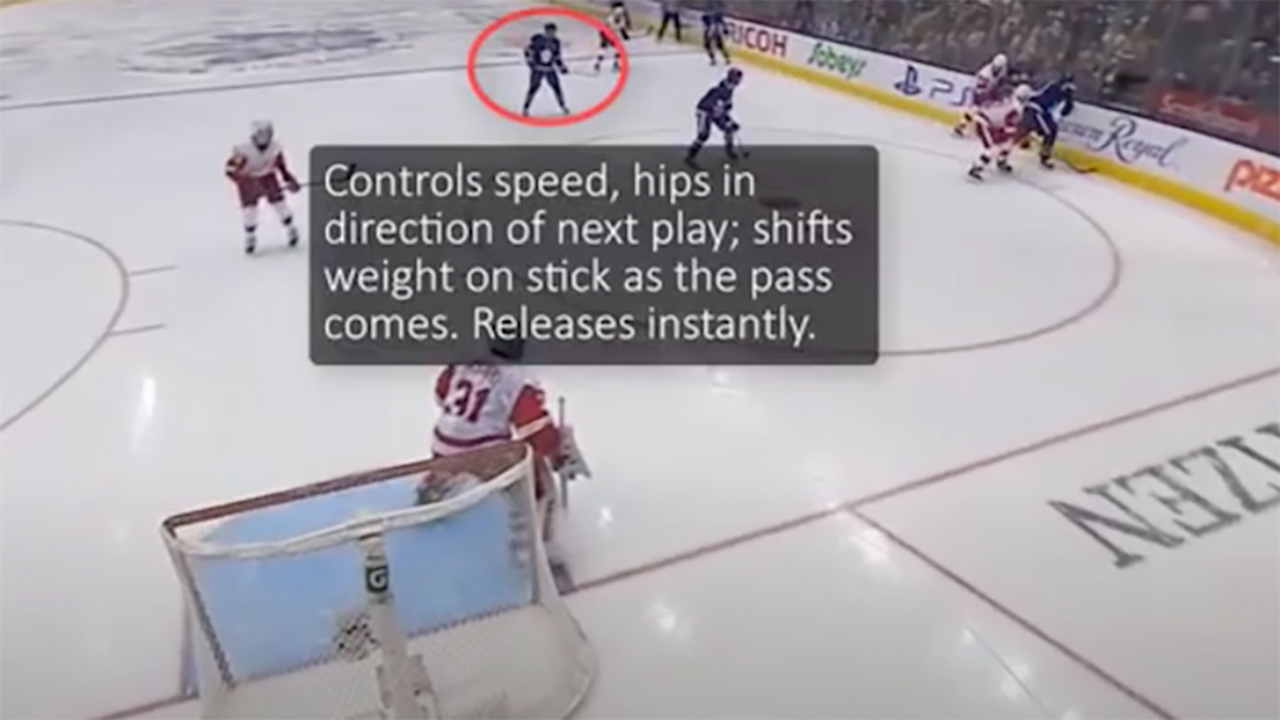
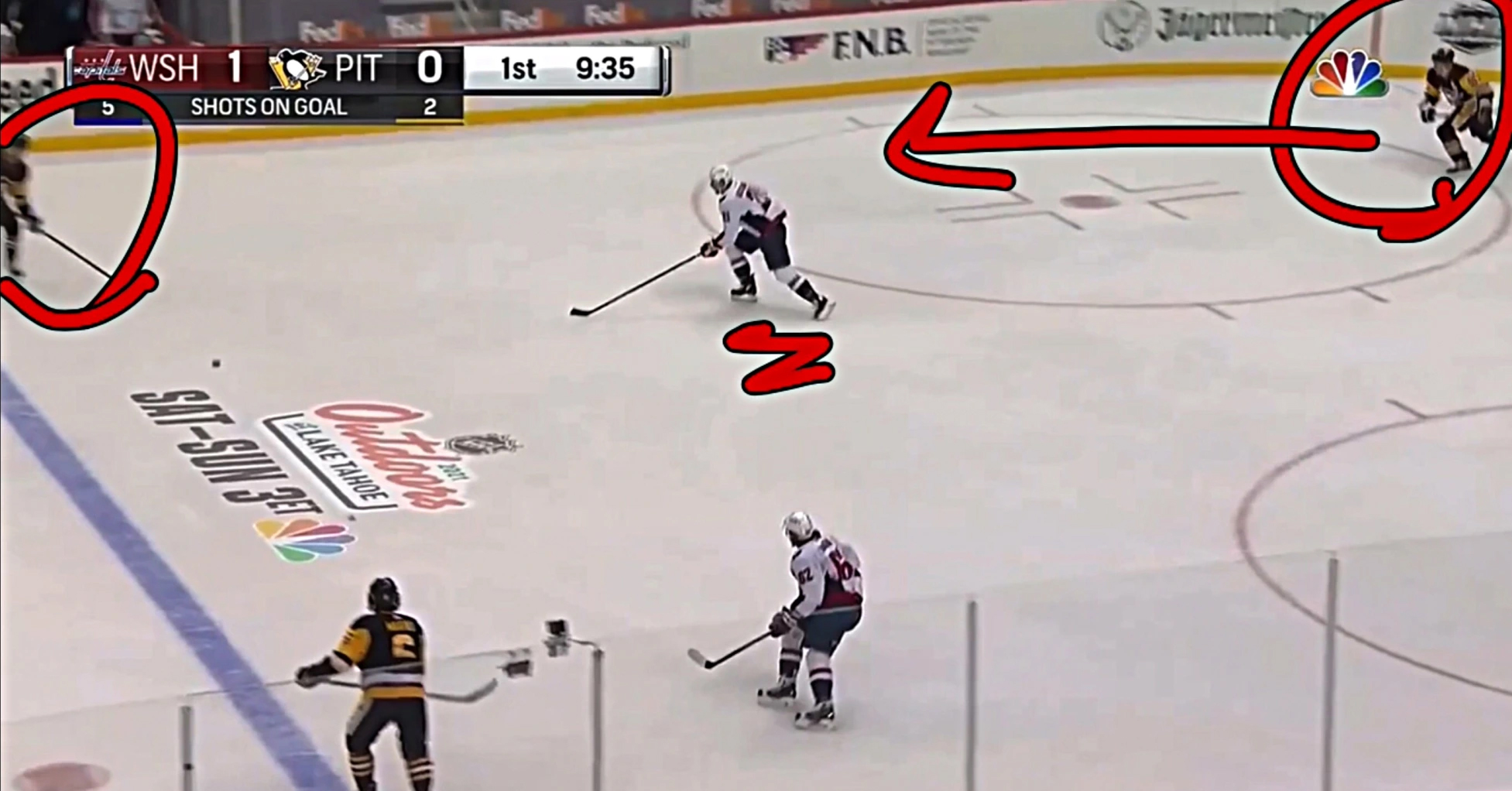
The forward was receiving the puck in a defensive zone (DZ) exit situation. Rather than immediately throwing it away—or becoming stationary along the wall—I wanted him to get off the wall, move his feet and scan.
Three strides can be enough to change the picture.
It might be a bump.
It might be a one-touch return.
It might be a stretch pass across the ice.
It might be a player filling a lane through the neutral zone.
Or it might simply be carrying the puck far enough to make another defender commit before the next play is made.
The important part is that the puck carrier isn't simply receiving the puck and is not ready to Receive. Move. Scan. Act.
The feet help create execution.
After the drill sequence was completed, the centre stood there catching his breath and gathering his thoughts.
He looked at me.
“Coach, I seemed to glide right into my check there. How many strides should I take so I don't check myself?”
I smiled. Take at least three!”
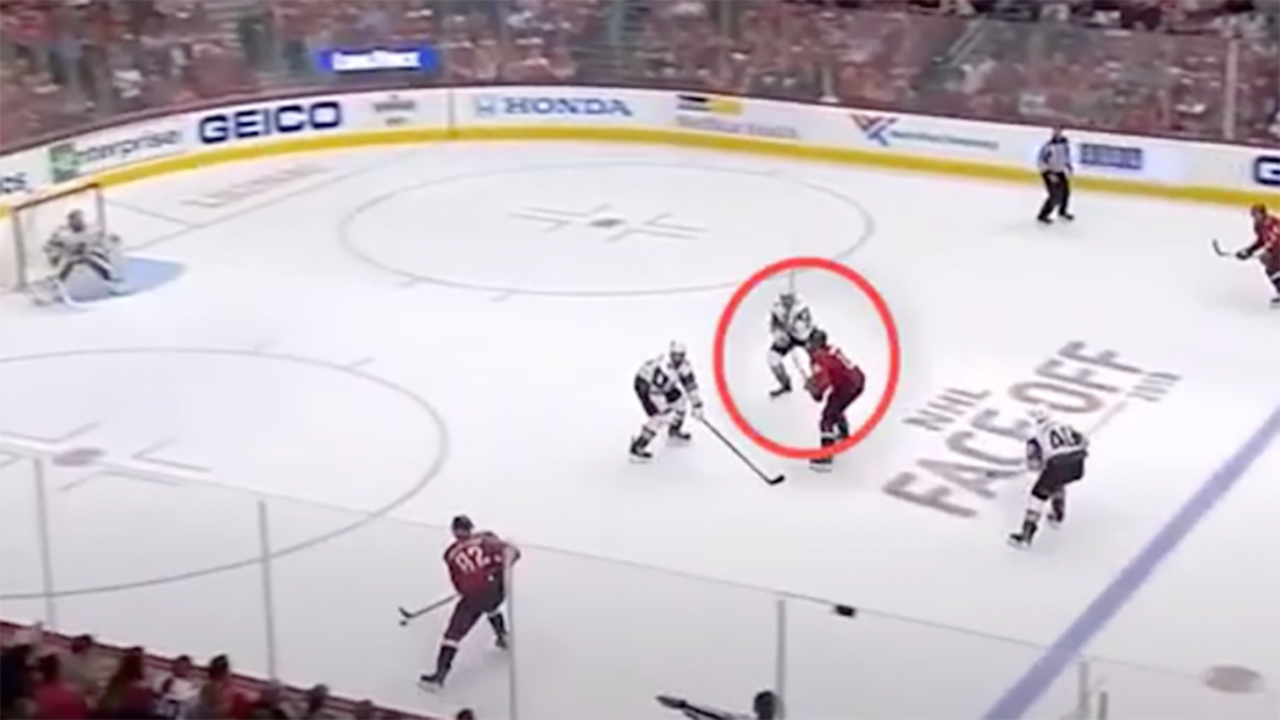
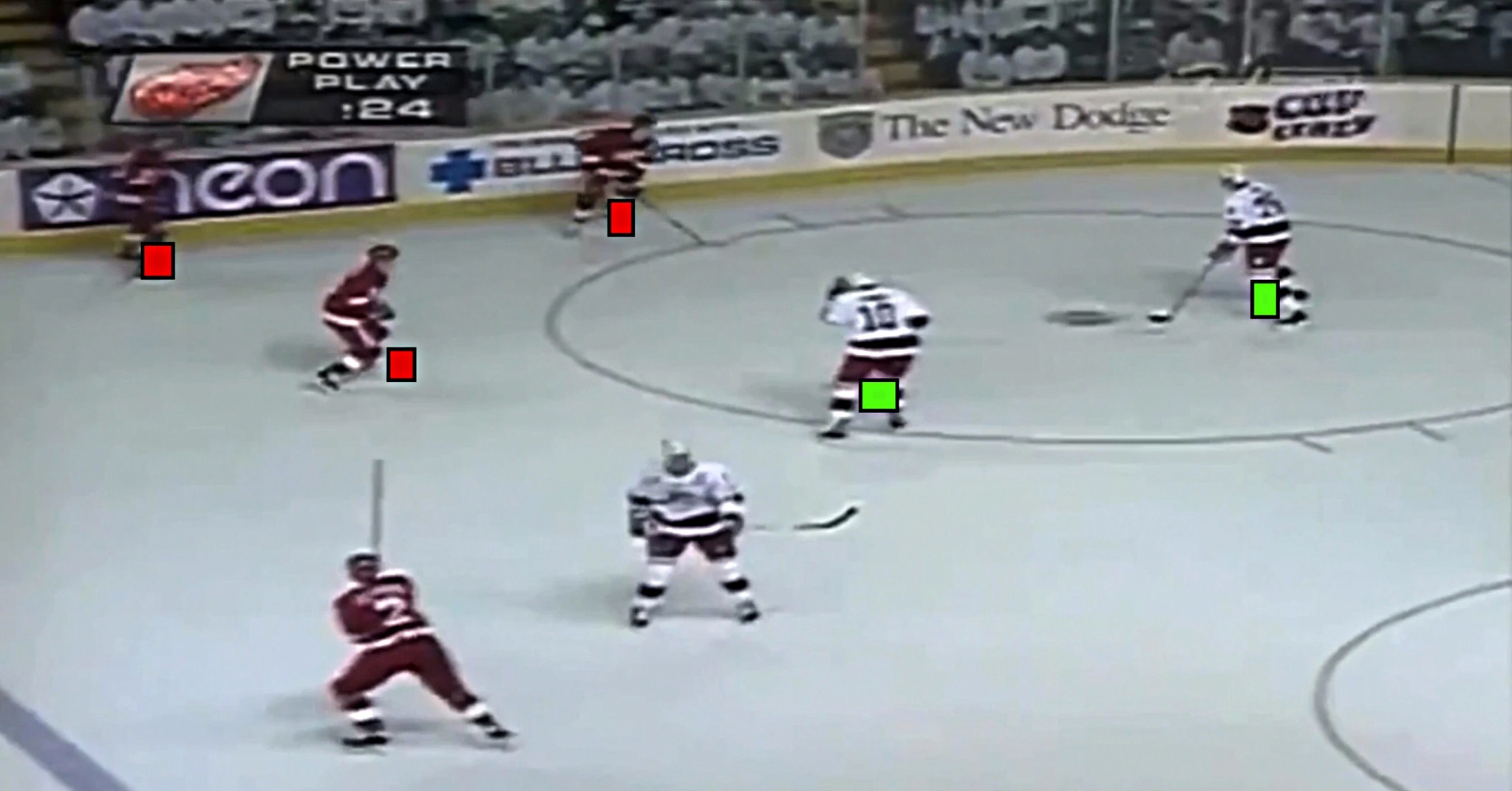
A stationary puck carrier is an easy target. A player standing still with the puck gives the defender a remarkably simple job.
Close.
Angle.
Hit.
Steal.
Repeat.
Even a player who isn't technically standing still can become predictable if he is merely gliding into pressure.
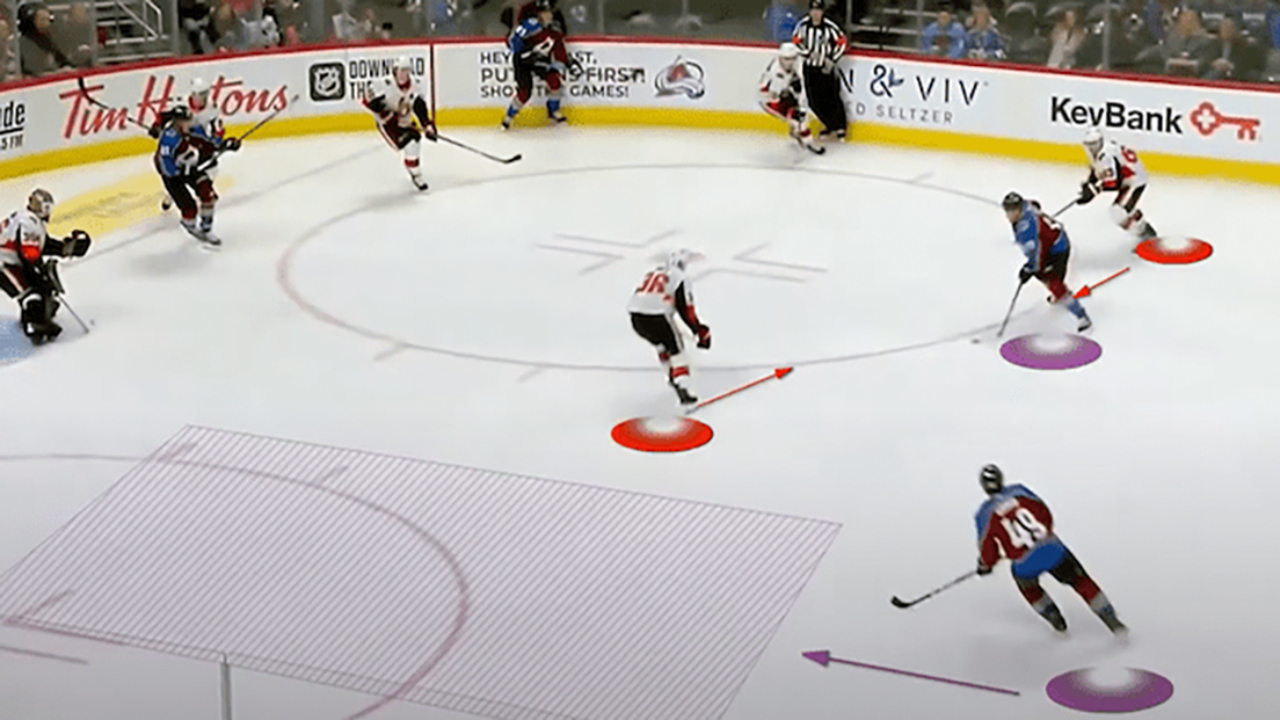
Deception with the puck requires movement. Movement changes the angle. Movement changes the distance. Movement alters the defender's timing. Movement makes the defender uncomfortably adjust. And once the defender has to make a decision, the puck carrier has created an opportunity.
This is where a seemingly insignificant coaching cue becomes much more interesting.
“Take at least three” isn't really about three. It is about earning the right to make the next play. The first stride gets you moving. The second stride begins to change the relationship between you, the puck, the defender and your teammates. The third stride creates separation.
Now the puck carrier has choices. To pass. To carry. To cut or drive wide.To counter or regroup. To attack the middle.
The defender, meanwhile, has a problem. And I like problems for defenders.
Hockey coaches have been telling players for generations that “the puck moves faster than you.”
Of course it does.
But that doesn't mean the player carrying the puck should become a human passing machine—receive it, immediately move it, and hope someone else solves the problem.
There are moments when moving the puck quickly is exactly the right play. But there are also moments when moving with the puck is the play.
That distinction is important.
If we move the puck too quickly, before the opposition has been forced to react, we may simply be transferring the problem from one teammate to another.
But if we carry the puck for a few strides and force the defender to move first, the next pass (the one-touch) can become much more dangerous.
The objective is to do something with the puck that improves our situation.
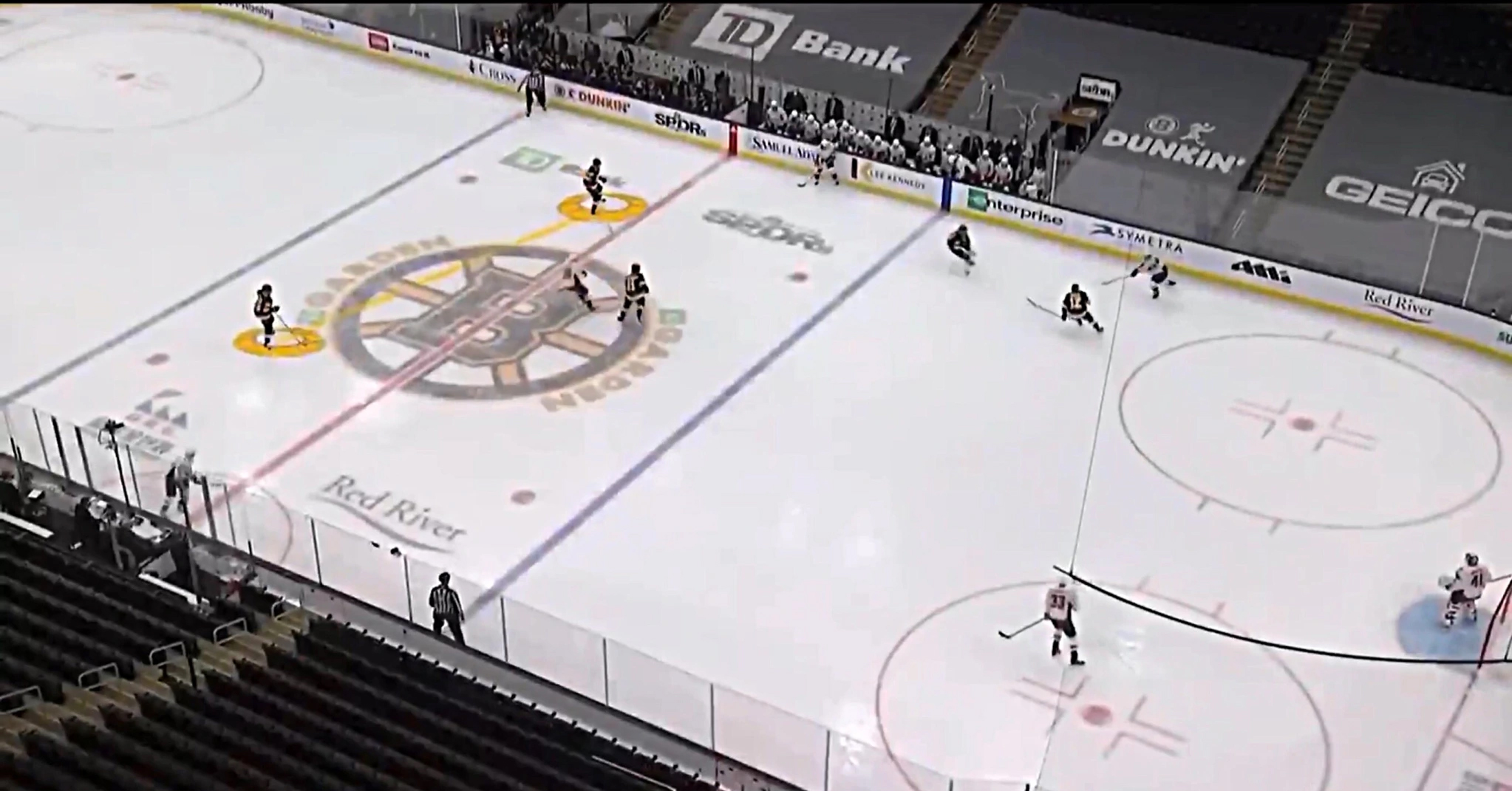
The next drill was built around possession entries. At the whiteboard, I reviewed the key execution points of the rehearsal before adding a few key teaching points to spice things up.
“Drive-skate.”
“Pop it out.”
“Jump down low.”
The players knew the language.
Then the second-line winger asked:
“On entries, how deep do we skate before we look to pass?”
I didn't even have to think about it.
“Take at least three.”
Again, the answer wasn't really about counting.
It was about depth.
A puck carrier who attacks the offensive zone and immediately dishes the puck can allow the defenders an advantage.
But when the puck carrier continues to skate, the defensive structure has to adjust.
The puck carrier goes deeper. The defender retreats. The supporting players have time to establish their routes. The weak-side player can arrive on time on the heels of a defender. The trailer can join. And suddenly, the attack has width, depth…and pace.
That depth matters because depth creates options. One misconception in hockey is that the puck carrier's job is to find the open player as quickly as possible. Sometimes the open player isn't actually open yet. Good offensive players understand that their movement can help create the passing option.
Carry the puck. Make the defender move. Create separation. Then pass.
The puck carrier's movement and the supporting player's movement are connected. One player's three strides can create another player's passing lane.
The sequence explained at the board was a continuous and open-ended activity chosen because it has no single predetermined pattern.
Players were able to get multiple repetitions with these different situations, different pressures and different options unfolding around them.
That was intentional.
I wanted them to recognize a principle.
Move the puck.
Move yourself.
Create space.
Attack space.
Force defenders to react.
Then make the next decision.
The drill began to take on a life of its own. Players started carrying the puck. Support players started adjusting their routes. The puck was moving with purpose.
And, perhaps most importantly, the players were beginning to understand why they were doing it.
Then I blew the whistle
“Boys!”
Heads turned.
“I like what I'm seeing. Efforts high. Tempo is great. Everyone is in. Well done.”
“But I have a question.”
They looked at me.
“How many strides should we take with the puck?”
There was barely a hesitation.
The entire group answered together:
“TAKE AT LEAST THREE!”
Now they had it.
There is always a danger in coaching a simple cue.
Players can turn it into a rule.
“Coach said three, so I have to take three.”
That's not the point.
If three strides take you directly into a defender, take two.
If the defender gives you ten feet of space, take ten.
If you have a teammate standing wide open on a two-on-one, you probably don't need a three-stride committee meeting before making the pass.
The number is a teaching tool.
“Take at least three” is a reminder to avoid becoming predictable.
Move your feet.
I have always believed that the best coaching cues are the ones players can remember when the game gets fast. The player needs something simple enough to access under pressure.
Take at least three.
Four words.
One concept.
And if the players eventually start saying it to one another without the coach standing nearby, you've probably got something useful.
Because the goal of coaching isn't to make players dependent on the coach's voice.
It's to make the coach's voice unnecessary.
So the next time you see a player receive the puck, stand still and immediately throw it away, ask yourself:
Did he really need to move it—or did he need to move himself first?
Maybe the answer is simple.
Take at least three.