
Its the off-season. Some coaches have their team selected because of spring tryouts, while others wait for tryouts in September. Regardless of which situation a coach finds themself in, they all have one thing in common. Its time to start planning the season.
Building a season plan can be a lot of work. The depth of content and detail can depend on the age and level you are coaching and the program you intend to offer. There are, however, components common to all season plans regardless of age and level. Technical, tactical, evaluation, culture, communication, and outcomes will be required in any plan for any team. But before you jump in to building out all that content and detail, STOP. You cannot start without knowing the end.
A season plan is a recipe. An itinerary. A blueprint. Like all these documents the season plan serves a greater purpose. It answers the question "Where do we want to be at the end of the season?" It will include all the content, schedules and processes required to get you, the players, and the team to that end point. And keep in mind there will be multiple end points. Where do we want to be technically? Tactically, physically, mentally? How do we want our team culture to look?
We call these end points season outcomes and establishing them is step 1 in season planning.
Establishing season outcomes provides us with our destination. Now that we know where we want to be at season end, we can start mapping the route. In the season planning process the route is defined by objectives; the things we need to evaluate and achieve from week to week, month to month to ensure we achieve the season outcomes. Objectives are the stepping stones that create the path or route. In planning terminology, they are referred to as milestones.
Each season outcome will have multiple objectives and these objectives need to be mapped out in a logical, progressive manner across the weeks and months of the season.
The objectives are then going to create your development inventories. The lists of things that need to be introduced, taught, developed, learned to address the objectives. The objectives are also going to dictate your process for evaluation. How you evaluate, what you evaluate, when you evaluate and how you share that evaluation with stakeholders.
Example:
- Step 1 - Establish season outcomes (where we want to be)
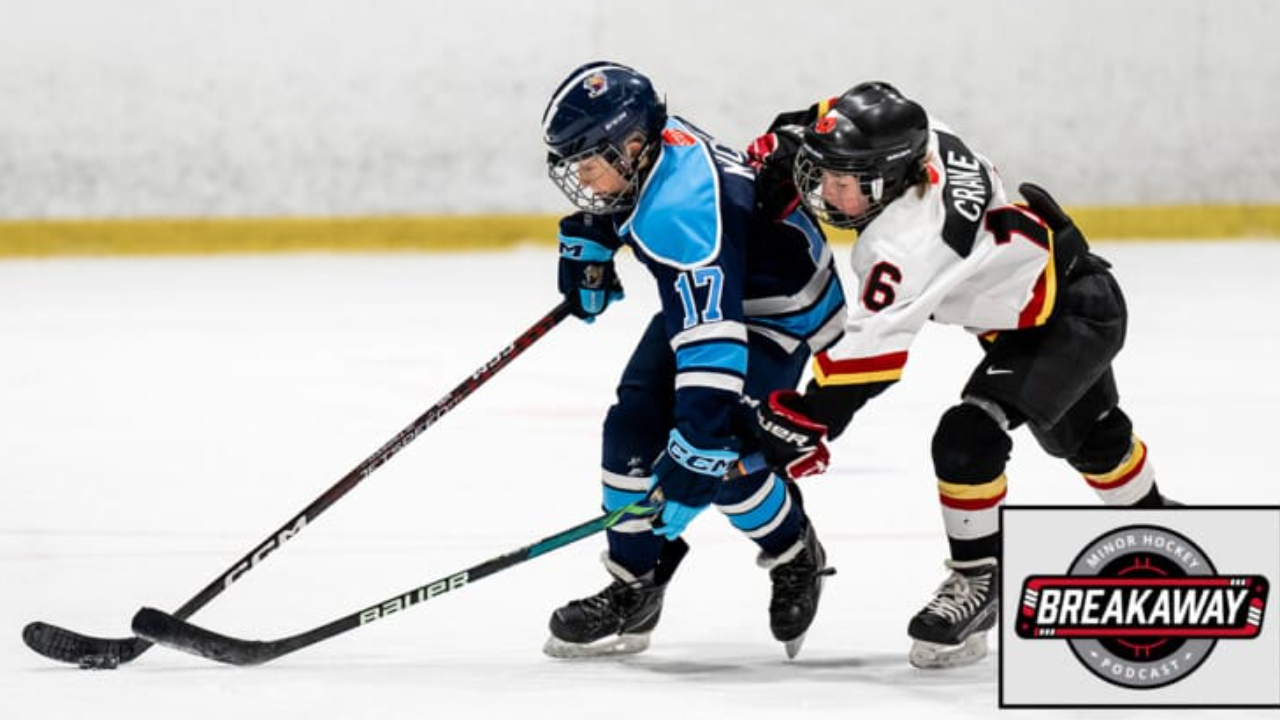
- Tactical Outcome - Players will excel in defending 1 v 1.
- Step 2 - Establish objectives to achieve the outcomes (how we get there)
- Improve agility skating.
- Improve stick habits.
- Improve gap control.
- Improve angling.
- Step 3 - Assign the objectives to months in the plan in a logical progression (the path to get there)
- September - improve agility skating, improve stick habits.
- October - Improve agility skating, improve gap control, improve angling.
- November - improve gap control, improve angling.
- December - improve angling.
- Step 4 - Create inventory content to meet objectives (the KTPS to get there)
- Stops, starts, accelerations.
- Change of speed, change of direction.
- Edge control; inside, outside.
- Sculling, power pushes, cross overs.
- Scanning.
- Stick on ice, stick on puck.
- Stick checks; poke, list, sweep.
- Cutting the hands, initiating contact
We see a couple of things in this simple example.
- Objectives can and usually will cross multiple months. If, however, the evaluation process determines learning is ahead of schedule then the plan can be updated.
- Objectives for a single outcome will be connected. In other words, while you are working on meeting one objective you can be addressing other objectives at the same time. For instance, while explicitly meeting the angling objective you could be implicitly meeting the gap control objective.
After completing this exercise for all your season outcomes, you are ready to now begin the process of filling out your plan template. Plugging objectives into the months, adding content to your inventories, creating schedules and events. We will look at this in the next article on season planning.
Early in this article I stated, "Building a season plan can be a lot of work." We start to see how this can be true. If I had two season outcomes in each of my main planning areas (technical, tactical, physical, mental, culture), and I then create objectives for each of those ten outcomes, I can end up with an exceptionally long list of objectives. But the work is critical.
We cannot and must not proceed down the path of a seven to eight month program where we are responsible for the development of youth with being well prepared and having a thorough plan to guide us.