READING THE GAME: Hockey Sense Grows Through Action Possibilities (4:8)
By Coach Barry Jones IIHF Level 3 High Performance | USA Hockey Level 3 Performance | Head Coach Perth Inferno AWIHL
- READING THE GAME: Hockey Sense Isn’t What You Think It Is
- READING THE GAME: Hockey Sense Starts with Knowing Your Game
- READING THE GAME: Hockey Sense Lives in Time and Pressure
- READING THE GAME: Hockey Sense Grows Through Action Possibilities
- READING THE GAME: Hockey Sense Emerges Through the Four Roles
- READING THE GAME: Hockey Sense Develops Through Sampling and Constraint
- READING THE GAME: Hockey Sense Is Adaptability Over Time
- READING THE GAME: Hockey Sense Emerges From Environments That Think Back
Hockey IQ Grows Through Action Possibilities
Why intelligence expands when players have more ways to act
Hockey IQ doesn’t improve because players think harder. It improves because players have more ways to respond.
When action possibilities expand, perception expands with them.
Intelligence Is Shaped by What the Body Can Do
Players see options their body can support.
If a player has only one reliable pass, escape, or defensive response, the game presents very few usable opportunities.
This is not a decision-making problem. It is an action capability problem.
More Actions Create More Affordances
Affordances emerge from the interaction between the environment, the task, and the player’s action repertoire.
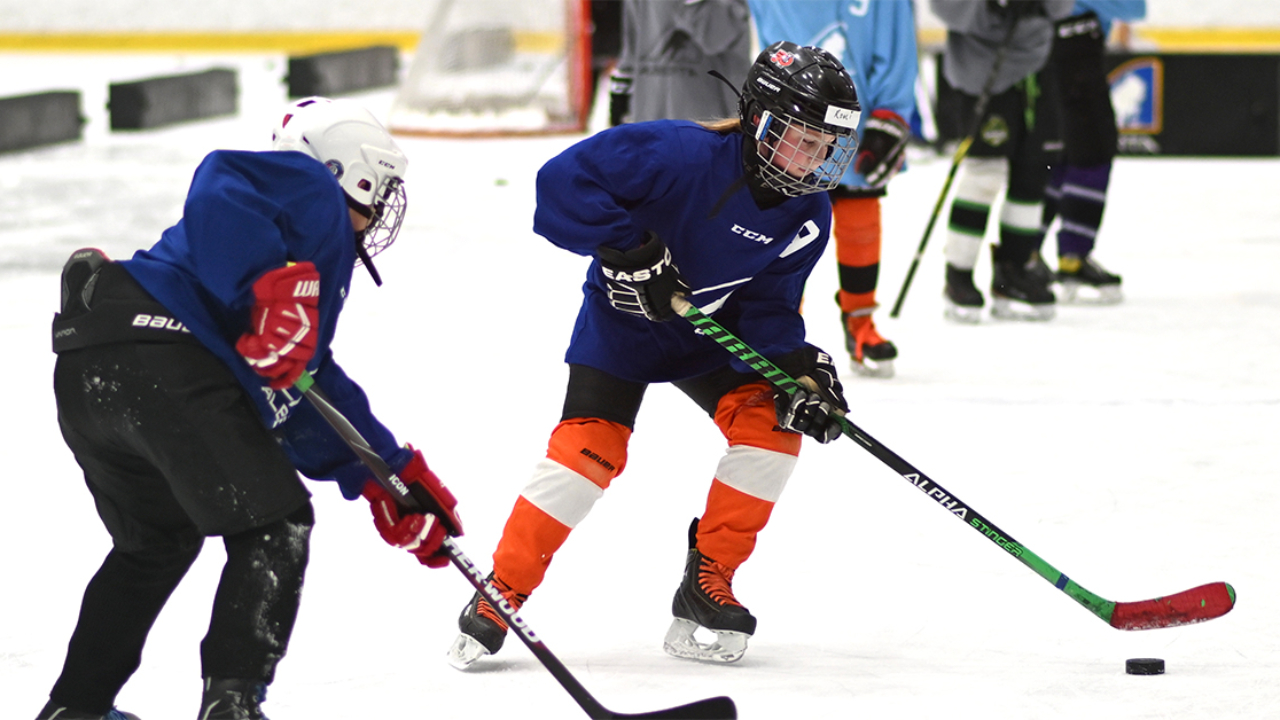
When players add new ways to move the puck, move their body, change angles, and defend space, they gain new information.
Why Skill Variety Matters More Than Skill Perfection
Games are unpredictable.
When conditions change, overly refined solutions can become fragile.
Hockey IQ becomes robust when players can transition between solutions and solve the same problem in different ways.
Expanding the Repertoire Slows the Game Down
When players have multiple options, perception stabilises.
The game does not slow down. The experience of time changes.
Action Possibilities Across the Four Roles
Hockey IQ functions across four ecological roles: offense with the puck, offense supporting, defense on the puck, and defense away from the puck.
Each role requires its own action repertoire.
Sampling Builds Intelligence
Sampling exposes players to multiple solutions in context.
It teaches which actions hold up under pressure and how to adapt when conditions shift.
Why Action Repertoires Must Be Trained Under Constraint
Actions that only exist in low pressure environments do not transfer.
Action possibilities must be experienced under time pressure and opposition to support Hockey IQ.
The Coach’s Role in Expanding Hockey IQ
The coach designs environments that invite different actions and reward adaptability.
The goal is to expand possibility, not control behaviour.
Where We’re Going Next
The next article explores the four-role ecology and how role clarity supports Hockey IQ.
Author Bio: Barry Jones is an IIHF Level 3 High Performance Coach and USA Hockey Level 3 Performance Coach. He currently serves as Head Coach of the Perth Inferno (AWIHL) and leads the Blaze Development Program. His work blends ecological dynamics, nonlinear design, and athlete-centred leadership to build adaptive teams that thrive in uncertainty.
Time · Pressure · Perception · Options · Action. Hockey IQ