READING THE GAME: Hockey Sense Develops Through Sampling and Constraint (6:8)
By Coach Barry Jones IIHF Level 3 High Performance | USA Hockey Level 3 Performance | Head Coach Perth Inferno AWIHL
- READING THE GAME: Hockey Sense Isn’t What You Think It Is
- READING THE GAME: Hockey Sense Starts with Knowing Your Game
- READING THE GAME: Hockey Sense Lives in Time and Pressure
- READING THE GAME: Hockey Sense Grows Through Action Possibilities
- READING THE GAME: Hockey Sense Emerges Through the Four Roles
- READING THE GAME: Hockey Sense Develops Through Sampling and Constraint
- READING THE GAME: Hockey Sense Is Adaptability Over Time
- READING THE GAME: Hockey Sense Emerges From Environments That Think Back
Hockey Sense Develops Through Sampling and Constraint
Why weaknesses are not problems to fix, but affordances waiting to emerge
Hockey IQ doesn’t grow by avoiding problems. It grows by meeting them repeatedly, in environments that allow learning to occur.
This is where sampling matters.
Sampling Is How Intelligence Expands
Sampling means experiencing multiple solutions to the same problem under changing conditions.
Through sampling, players learn not just what works, but when, why, and for whom it works.
Why Repetition Alone Isn’t Enough
Repetition improves execution, but it does not guarantee adaptability.
When environments change, players who have not sampled solutions struggle to find answers.
Reframing Weaknesses Ecologically
Weaknesses are better understood as under developed action capabilities.
They are areas where affordances are limited, not indicators of low intelligence.
Constraints Reveal Possibility
Constraints guide learning by forcing players to search for new solutions.
This search process is where intelligence emerges.
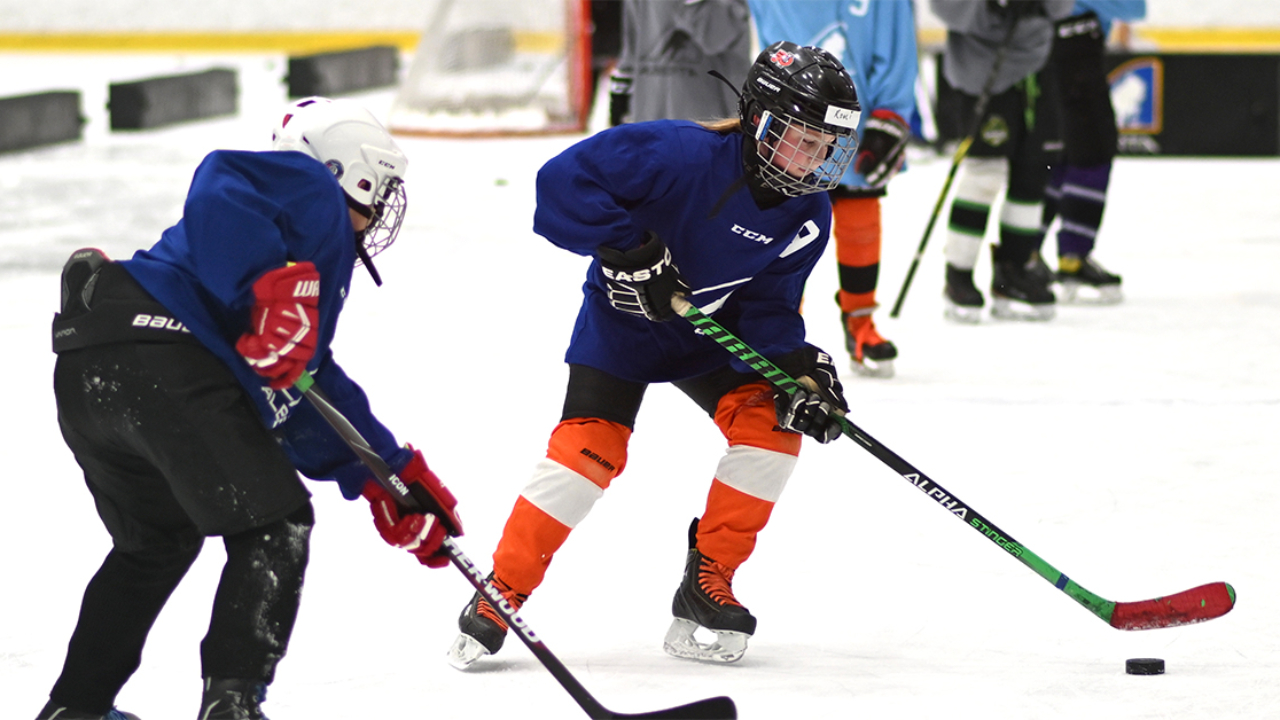
Small Area Games as Learning Environments
Small area games compress time, space, and information.
They create ideal conditions for sampling, stress testing strengths, and developing weaknesses into usable affordances.
When Weaknesses Become Affordances
As players sample solutions, new actions stabilise and perception expands.
What once felt limiting becomes a new option.
The Role of the Coach in Sampling
The coach designs environments that expose problems and allows players to struggle productively.
This is intentional restraint, not absence.
Learning Without Fear
Sampling requires psychological safety.
When fear of mistakes is reduced, curiosity replaces hesitation.
Where the Series Lands
Hockey IQ is perception, shaped by time, pressure, roles, and action possibilities.
Design the environment well, and intelligence emerges.
Author Bio: Barry Jones is an IIHF Level 3 High Performance Coach and USA Hockey Level 3 Performance Coach. He currently serves as Head Coach of the Perth Inferno (AWIHL) and leads the Blaze Development Program. His work blends ecological dynamics, nonlinear design, and athlete-centred leadership to build adaptive teams that thrive in uncertainty.
Time · Pressure · Perception · Options · Action. Hockey IQ