By now, many in the hockey community have heard about Arizona State University hockey defenseman Matthew Mayich, who remains in a coma and in critical condition after suffering a severe exertional heat stroke during an outdoor team workout on August 20, 2026.
Our thoughts and prayers remain with Matthew, his family, his teammates, and everyone affected by this tragic situation. Despite the reported poor prognosis for recovery, the hockey community continues to hope for the best for this promising athlete.
Matthew, a 21-year-old NCAA sophomore defenseman who transferred to Arizona State University from Clarkson University, was selected by the St. Louis Blues in the 2023 NHL Draft. His life and aspirations have now changed. The circumstances surrounding the workout have raised important questions for coaches, trainers, programs, parents and players.
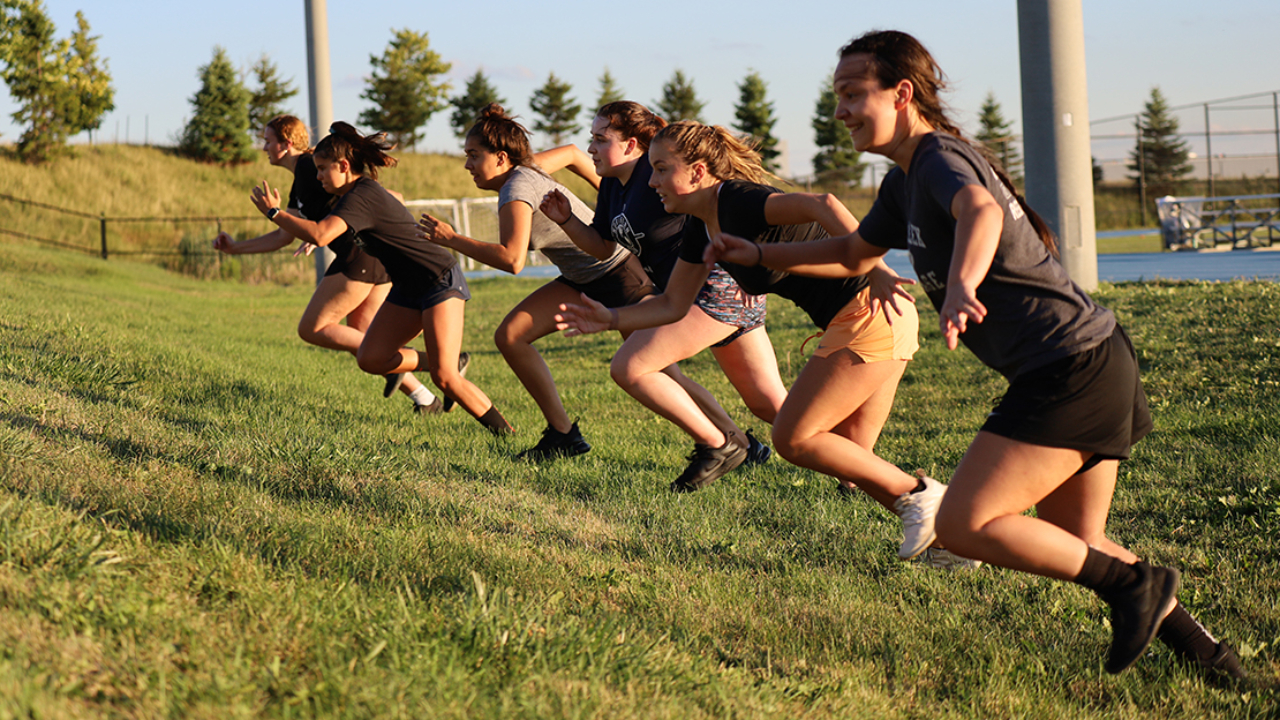
The session reportedly took place during the morning hours at ASU's Sun Angel Stadium Track. It was not led directly by the team's coaching staff but, rather, it was conducted by an individual who was reportedly approved by or known to the team's head coach. The workout has been characterized as a military-style or boot-camp-like physical training session.
Although the training occurred during the morning hours, environmental conditions that day were extreme, with temperatures reported around 80°F and a high relative humidity.
Arizona State University has conducted internal reviews, while Matthew's family and their representatives have called for an independent, external investigation.
Regardless of the ultimate findings, this tragedy is a sobering reminder to coaches, athletic trainers, strength and conditioning professionals, and other sports practitioners that strenuous exercise carries inherent risks—and that those responsible for designing, supervising, and monitoring training have a significant duty of care.
The central question for all of us should be: How do we design and deliver training that develops athletes without exposing them to unnecessary or unacceptable risk?
Several principles are worth emphasizing.
1. Comprehensive Pre-Participation Screening and Athlete Disclosure
An athlete's relevant health history should be known to the professionals responsible for training and medical/health care staff. At the high-performance level, appropriate medical screening and physical examination can provide important information for determining training loads, exercise selection, environmental restrictions, and other precautions. They must be completed before athletes train and compete.
At younger or less competitive levels, parents or guardians should complete appropriate health and player-profile forms, identifying relevant medical conditions, previous injuries, medications, exercise limitations, or other factors that may affect safe participation.
This information is not administrative paperwork for its own sake. It provides the foundation for individualized risk management and appropriate modification of training when necessary.
2. Appropriate Physical and Functional Assessment
Where appropriate, medical screening can be complemented by objective assessment of an athlete's physical capacities before intensive training begins.
Depending on the sport and level of participation, assessment may include cardiovascular function, musculoskeletal capacity, strength and power, neuromuscular performance, recovery characteristics, and relevant neurocognitive measures. In hockey and other contact sports, baseline assessments may also be incorporated into broader concussion-management protocols.
These measurements should not be interpreted as a simple license to push an athlete harder. Rather, they can help establish individual baselines and inform appropriately progressive training programs.
3. Supervision, Athletic Training Support, and Emergency Preparedness
Qualified athletic trainers and appropriate medical personnel should be present at training and competition.
Athletic trainers play an important role in injury prevention, hydration and recovery strategies, recognition of illness, emergency response, and the management of acute injuries and medical conditions.
When an athletic trainer or other medical professional cannot be present, responsibility for emergency response must still be explicitly assigned. A designated individual should be identified before the activity begins, and emergency action procedures should be established, communicated, and readily accessible.
Emergency preparedness cannot begin after something goes wrong.
4. Continuous Monitoring During Training
Athlete monitoring should continue throughout a training session—not simply at the beginning.
Coaches and practitioners should routinely assess athletes for signs of excessive fatigue, heat illness, dehydration, altered behaviour, declining performance, unusual behaviour, or other indicators that an athlete may not be tolerating the workload or environment appropriately.
Biomonitoring and physiological surveillance are now common across sport science and human performance domains. These technologies track, monitor, and evaluate multiple physiological and performance variables in real time during training and competition. Wearable devices—including watches, chest straps, accelerometers, and telemetry systems—capture and store vast amounts of data on exercise intensity, volume, movement quality and amount, and workload, transforming it almost instantly into actionable information. This data can also support individualized and team-level analysis of recovery, readiness, and regeneration, including comparisons against established norms. Most importantly, biometric monitoring can inform decisions related to athlete safety and readiness. For organizations with the resources to invest in these systems, integrated monitoring platforms can support both risk management and performance optimization. For teams without access to sophisticated hardware and software, due to costs, effective alternatives exist. Simple field-based measures, such as heart rate, heart-rate zones, and respiratory-quality assessments, can provide accessible and meaningful information to guide training, recovery, and athlete readiness.
Direct communication with athletes is most valuable. Ratings of perceived exertion, fatigue scales, wellness questionnaires, and other monitoring tools can supplement professional observation.
However, subjective feedback should never be the sole safeguard. Athletes may underestimate or fail to recognize the seriousness of developing symptoms, particularly in highly competitive environments where they feel pressure to continue.
5. Qualified and Appropriately Credentialed Personnel
Training should be designed and supervised by individuals with appropriate education, certification, accreditation, licensing, and experience for the population and activity involved.
Credentials matter, but so does professional judgment and conduct.
Experienced practitioners understand the relationship among exercise intensity, duration, environmental conditions, individual capacity, recovery, and physiological stress. They recognize that increasing suffering is not synonymous with increasing adaptation.
Effective training requires knowing how much, how often, how intensely, for what purpose, and when to stop.
6. Training Must Have a Purpose
Every training intervention should have a clearly defined physiological, technical, tactical, or performance objective.
Exercise should not be used primarily as a test of an athlete's "guts," willingness to suffer, or perceived toughness. There is an important distinction between appropriately challenging an athlete and deliberately pushing an athlete beyond a reasonable physiological or environmental limit.
Effective development follows a progression: build capacity rather than break the athlete down.
Hard training can be productive. Uncontrolled or purposeless suffering is not a substitute for sound programming.
7. Environmental Conditions Must Be Part of the Training Plan
Environmental conditions can substantially alter an athlete's physiological tolerance and exercise capacity. Heat, humidity, direct sun exposure, inadequate hydration opportunities, air quality, cold, and other environmental hazards must therefore be considered when planning training.
Risk assessment should occur before the session begins and should account for both environmental conditions and the characteristics of the athletes participating.
Where hazards can be mitigated, appropriate controls should be implemented. These may include modifying intensity or duration, increasing recovery periods, providing hydration and cooling opportunities, adjusting clothing or equipment, moving the session indoors, or changing the time of day.
When conditions cannot be adequately controlled, the appropriate decision may be to postpone or cancel the activity.
Safety is not an obstacle to effective training. It is a prerequisite for it.
A Shared Professional Responsibility
The circumstances surrounding Matthew Mayich's medical emergency will hopefully be examined carefully and objectively, with the facts established through an appropriate investigation. Whatever those findings ultimately show, the incident provides an opportunity for everyone involved in sport to reconsider how we approach training risk.
Coaches, athletic trainers, strength and conditioning professionals, administrators, and other sports practitioners share responsibility for creating environments in which athletes can train hard, improve, compete, and pursue excellence without being exposed to unnecessary danger.
Our responsibility is not simply to make athletes better.
It is to make them better safely.
Matthew, his family, his teammates, and the entire hockey community remain in our thoughts and prayers.