Introduction:
What do I mean when I differentiate between the terms Soviet and Russian? In my opinion, the chronological history of events leading to this change began with the 92-93 season when the Soviet player invasion to the 24 team NHL occurred. 42 to 43 players came to the NHL plus a similar number to the minor professional leagues. After successful careers in the NHL, players like Sergei Federov, Sergei Zubov, Igor Larionov, Alexi Kovalev, Dimitri Yuskevich, Igor Korolev, Victor Kozlov, Alexi Zhamnov and many others returned to Russia. Some played a few more years in the KHL but these and so many other players then entered the coaching profession in the KHL. For sure, this meant that some aspects of our North American game would be introduced into the Soviet hockey system. One also cannot forget that on 3 occasions, the NHL had lockouts: 1994-95 half a season, 2004-05 an entire season and 2012-13 half a season. This meant many Russian and North American players joined KHL teams during the lockouts. As well for several years, North American coaches were employed in the KHL, so this meant new ideas would permeate from West to East.
It should also be noted that in 2019, the NHL and Russian hockey officials signed an NHL streaming agreement allowing NHL games to be watched in Russia. This only lasted 3 to 4 years as political problems ended the agreement. The end result from these factors was that from about 2005 to 2010 onward, the style of game was going to begin to change. I can verify this from personal experience as I coached Magnitorosk from 2005-06, being the first North American head coach in the Russian top league and again 2013-2015 in Yaroslavl. When I coached in 2005-06, the style of game was still the old Soviet fast paced, puck possession interchange of position game. When I returned to the KHL in 2013, it was much more of a “hybrid style” game offensively but had a real North American influence in their defensive game. I describe this style as The New Russian Game but one must emphasize the exchange of ideas/tactics was a 2 way street with the North American game integrating Soviet (European) ideas earlier, beginning in the 1980’s-90’s. With the NHL-Russian Club Team Super Series from 1975-1991 and a few Canada Cups, this also gave us more exposure to the Soviet game and the contrast in style was obvious but more importantly fascinating!!
I had the privilege of coaching Canada’s 1984 Olympic team and then coached the full time National/Olympic team program from 1984-85 to 1991-92. Coaching 20 to 30 games of our 55-65 game schedule against the Soviets was a challenging but amazing experience. To say the least, I learned a lot about Soviet hockey and much like George Kingston (Canada), Lou Vairo and Tim Taylor of the USA who all possessed great International experience; we all felt obligated to share it and hopefully learn from it.
We respected our North American game a great deal, however, we also recognized that the Soviet and European style of game could be integrated into our style so we could win these confrontations more with Technique over Physique!
Let’s look at the old Soviet style remembering that up until 1992-93, only a few defectors left for the NHL. Both their National A and B teams were very impressive and if you review the results from the 1975-91 NHL-Soviet Club Team Super Series, you will see that in total 98 games were played with the Soviets winning 55, losing 33 and tying 10.
THE SOVIET GAME
-
Speed of play…their pace was so fast, it really magnified any positional mistakes you made. The puck carrier served the other 4 players and rarely slowed the game down. The only occasions we saw player to player or coach to player problems was when a player held the puck too long. The Soviets used a lot of 1 touch passing and continually played with their eyes up to be 1 pass ahead. This really added to the speed of their attack as they were always aware of where the “next play” existed.
-
Interchange of position…yes, they played fast and as well they continually interchanged positions. It was fast, almost position-less hockey and they were so collective. You had to know where the puck was but be so aware of what was happening away from the puck.
-
Changing the point of attack…As mentioned above, their collective puck movement at times made you think that they must have too many men on the ice. Just like playing any opponent, you realized it was important to control the puck carrier and be aware of defending options away from the puck. Thankfully, their predisposition to score “pretty” goals made defending away from the puck at times even more important! The puck carrier may have had a shooting opportunity but chose to make the artistic play. So when defending, you had to continually try to achieve positional balance and keep your “head on a swivel” to reduce their ability to change the point of attack. Positional balance really refers to keeping the space between defenders manageable so that good stick positioning can help reduce open passing lanes.
-
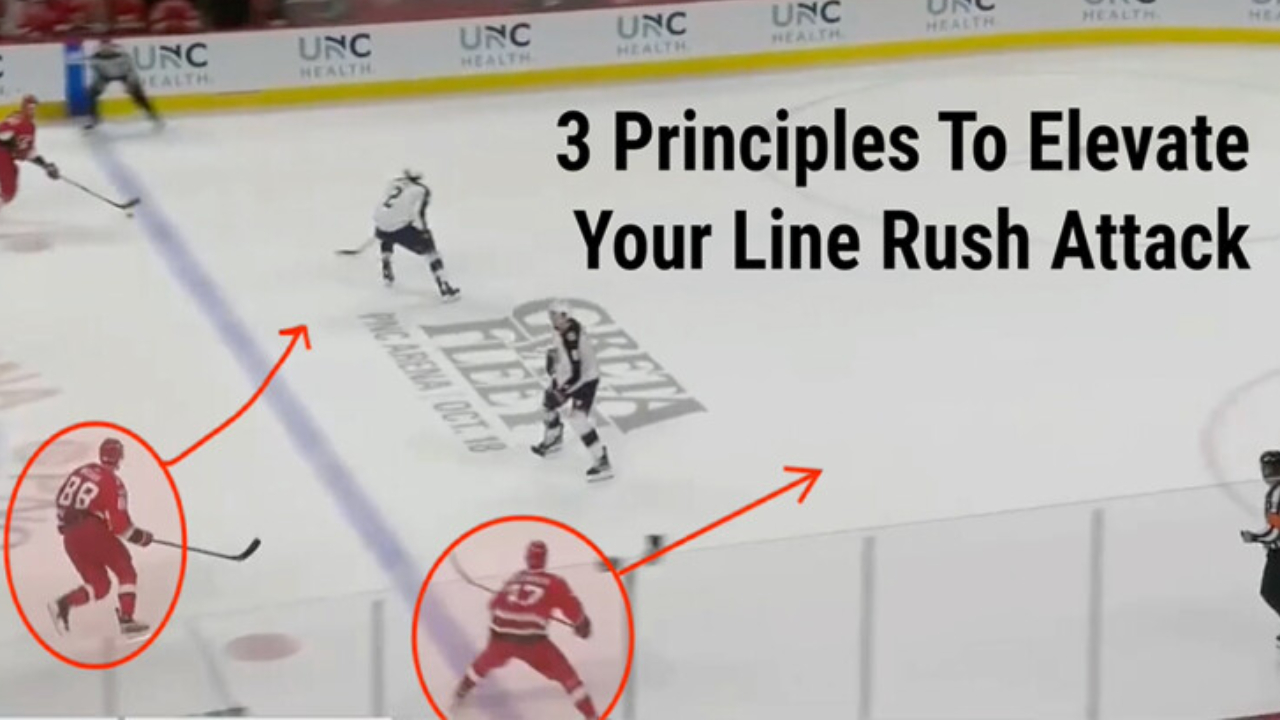
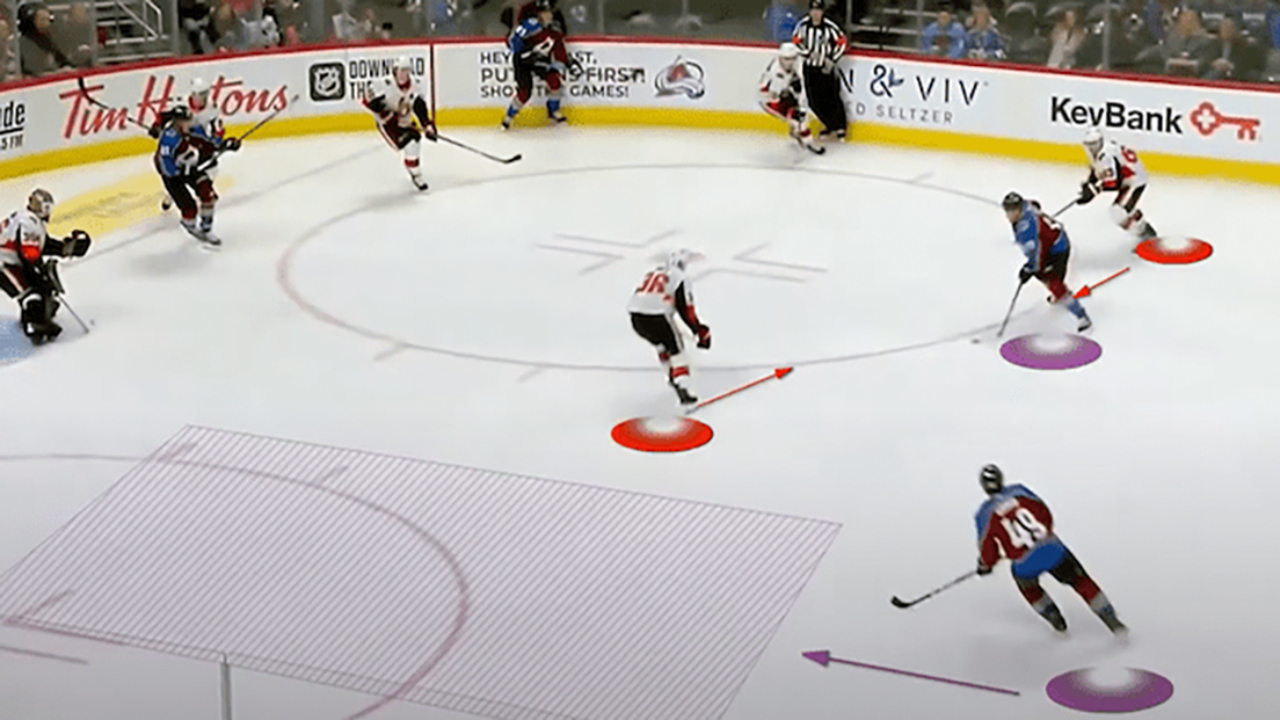
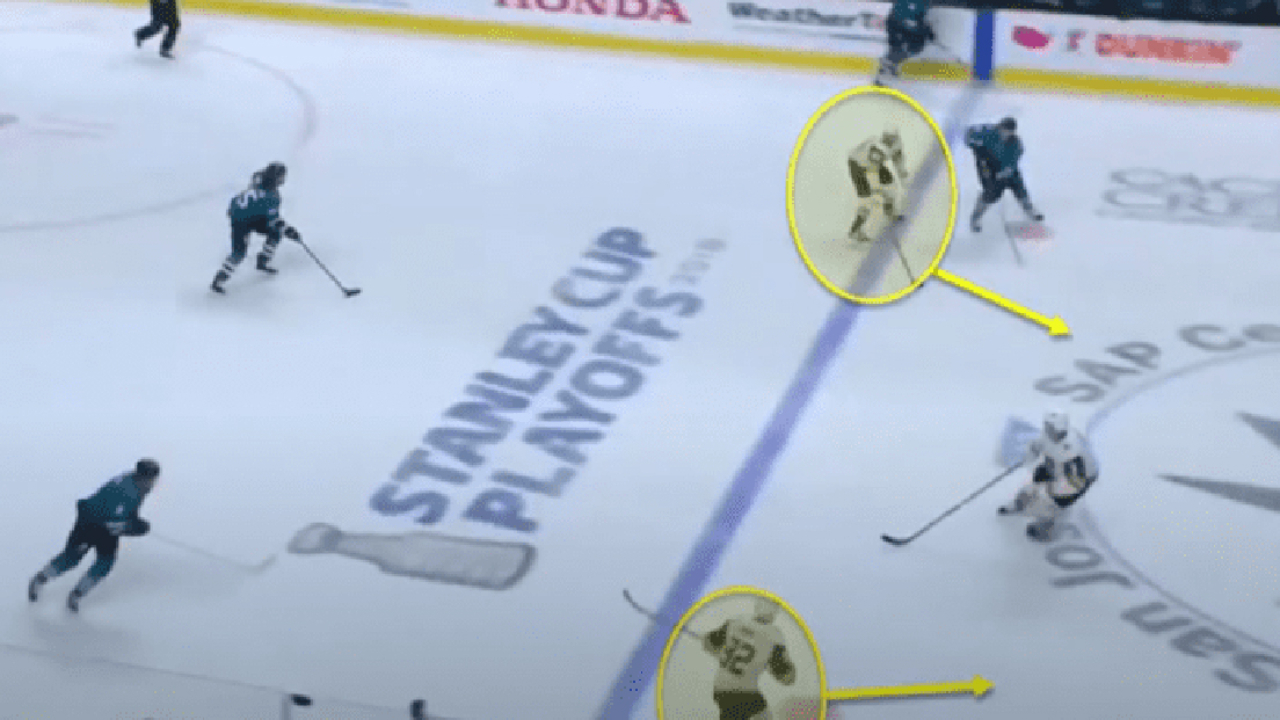
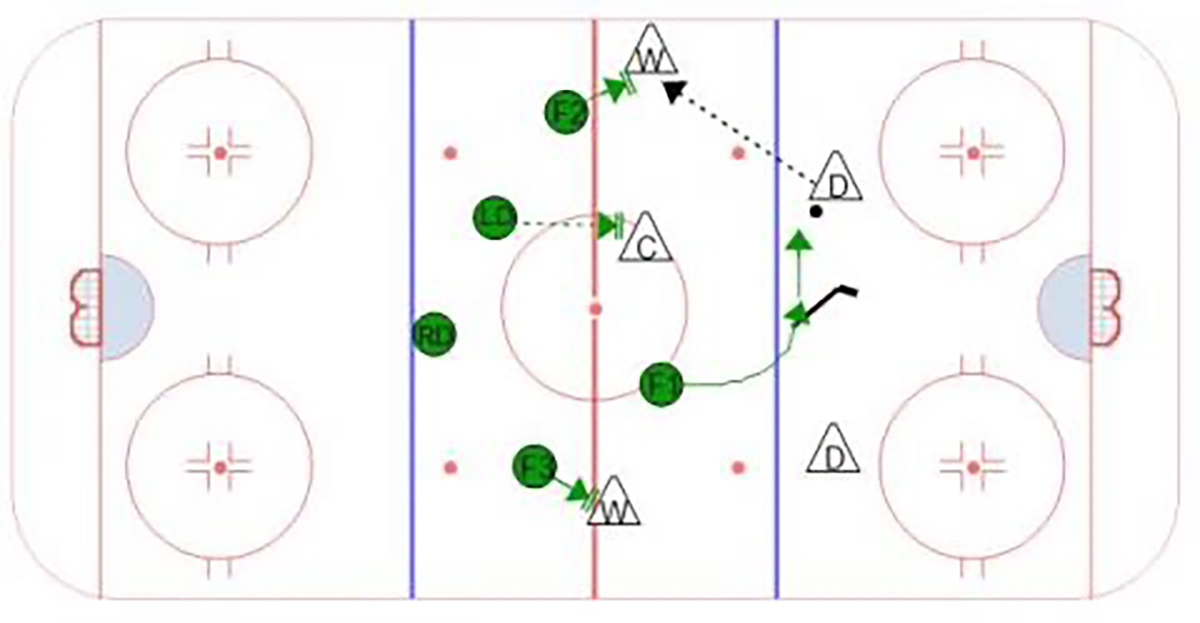
Controlling and Manipulating Space Offensively…one of the keys to playing good defense is to control and if possible, reduce space but vs the Soviets this was much easier said than done! On breakouts and regroups, they skated aggressively off the puck trying to penetrate between defenders or stretch and disappear behind defenders. If these options were not utilized on the rush, then they would simply straddle or post up at the offensive blue line. When the defenders had to give up the blue line, the puck carrier used this available space for drop passes or kick out passes to achieve rather easy uncontested entries. A key element to the Soviet attack was that they wanted to get a middle entry into the OZ. To accomplish this, they had their wingers play on their off-wing. This improved shooting angles, puck protection and allowed them to get the puck to the middle, entering the offensive zone and have the advantage of being on their forehand. For example, if the puck carrier was moving through the NZ in the wide lane, they would use a quick change of pace or acceleration crossing the red line. Respecting this, the defender would accelerate skating backwards. Then just before the blue line, the puck carrier would use a sudden semi-stopping action to decelerate, creating a larger gap between him and the opponent, then carry the puck to the middle. Being on the off wing, the puck carrier had an advantage as the puck was further away from the defender’s poke check. This also allowed Soviet forwards to cross, exchange lanes and use a drop pass as they isolated on one defender. If the puck carrier didn’t take the puck to the middle because the gap was too tight, he would then accelerate, testing the drive skating possibility going to the net. Failing that, he would turn it up, create separation and because he was on the off wing, make a forehand pass to late attackers coming into the zone.
Their offensive possession style game seemed to be automated, yet still very unpredictable. The arsenal of individual and team tactics, along with precise execution allowed them to control and manipulate space. Their speed and decisive, accurate passing and receiving skills made defending a real challenge.
Intelligence is the Ability to Adjust…how we adapted.
In many old western movies, when under attack, the wagon train would “circle up” to be compact and better defend themselves. Often when defending the Soviets position-less OZP, our DZC resembled the “circle up the wagons”.
Off loose pucks or long rebounds, we tried to be aggressive and flex out to win the puck race or if late, at least contest the puck carrier. However, if they had possession with separation, we soon learned that at times, you must defend a space more than a man! Their cycling game was a 5 man activity so to reduce the need for so many switches and decisions, it was better to stay compact, keep your head on a swivel and shadow check the puck carrier. The Soviet puck carrier when cycling was always hoping the defender would jump out to check with too much speed and sensing this, use an explosive change of direction to beat the defender 1 vs 1. If you were defeated 1 vs 1 outside, then you were outnumbered inside and this generally created a scoring chance for them.
You had to challenge them but avoid getting caught in “no mans land” because you attempted an “all or none” decision.
For a long time, everybody believed that to defeat the Soviets, one had to try to establish an aggressive forechecking game and in so many games, this theory was effective for 5 to 10 minutes. It couldn’t be sustained and it faltered. The lesson we learned was to forecheck aggressively when appropriate and be less aggressive and contain forecheck when it was appropriate. This is all based upon how much separation the forechecker had from the puck carrier. Forechecking smart allowed us to use our energy wisely, not simply chasing the puck, rather pressure or steer their attack allowing us to maintain stability in our game.
Defensively, we learned that good positioning and awareness eliminated scrambling and guessing. We learned when to apply pressure and when to be smart and defend space. We also learned to always know where the puck was but not over puck watch: keep your head on a swivel to take away options from the puck carrier. We started to emphasize the need to “read” your teammates as much as you “read” the opposition and with communication, be defensively more collaborative.
A valuable lesson we learned was you could defend through possession. This meant puck management was a crucial factor when playing the Soviets. No one wants to be responsible for a “takeaway” to an opponent; so you had to make them work very hard to earn it. As well, we tried to never gift them an easy “giveaway”. We didn’t want to make them better by how we were playing, so we learned to manage our mistakes by not chasing and making it worse but rather recover with good positioning and exercise “damage control”. Playing the Soviets, we realized that bad angle shots that missed the net would often start their attack so with no good passing options or shooting angles we would hold and protect the puck. This made them stop in DZC to defend and then not have the speed to transition quickly from D to O. We also realized that discipline both tactically and emotionally was going to make us more competitive. We were going to reduce “self inflicted wounds”!
Beyond playing smarter hockey, we also learned a long term lesson that fitness was a key element to defeating the Soviets. The game would no longer be 8 months, it would be a 12 month commitment. We can’t forget our goalkeepers as they learned that the Soviets were good shooters but their artistry created a need to score highlight goals! Goalies then started to play deeper in the net so suddenly to go side to side to cover the back door was shorter. This was particularly important 4 on 5 and even more important 3 on 5. Intelligence is the ability to adjust and our goalkeepers certainly did that. Great National Team goalies like Sean Burke, Andy Moog and Ed Belfour were so skilled but so smart!
The New Russian Game
As previously mentioned, the style of game they now play is tactically very similar to our NHL game. If you were to have two TV sets side by side and were simultaneously watching an NHL game on one and a KHL game on the other: the similarities would appear to be much greater than the differences.
Defensively, they have become very consistent adding more details from the NHL to their structure. However, the major change has been the tactical discipline required from the players. With video/computer interactive systems being used, they can’t escape the eye of the camera and this has caused players to adapt and concentrate on both sides of the puck. The ex-NHL Russian players now in coaching and over the years a substantial number of foreign coaches in the KHL, imposed better defensive habits in their players.
Let’s look briefly at their offensive game as it was their attacking game that back in the day, really attracted our attention because it was so contrasting to ours. In some ways, I do feel a little sadness when I look at their “new” offensive style as the optimism and initiative has been tempered in favor of a more linear and higher percentage game. On BO’s vs pressure, they now play the NHL short pass, “cut the ice in half” and always gain the next zone style of play. With some separation, they utilize the NHL “stretch, slash, bypass” tactic with the wingers stretching early well out into the NZ to create space to be used for long indirect passing options. This often leads to a “chip-in” and a forecheck situation. Initially, this is not so exciting but the chip-in does create the aggressive forechecking situation and the pace of the game in these moments becomes very impressive.
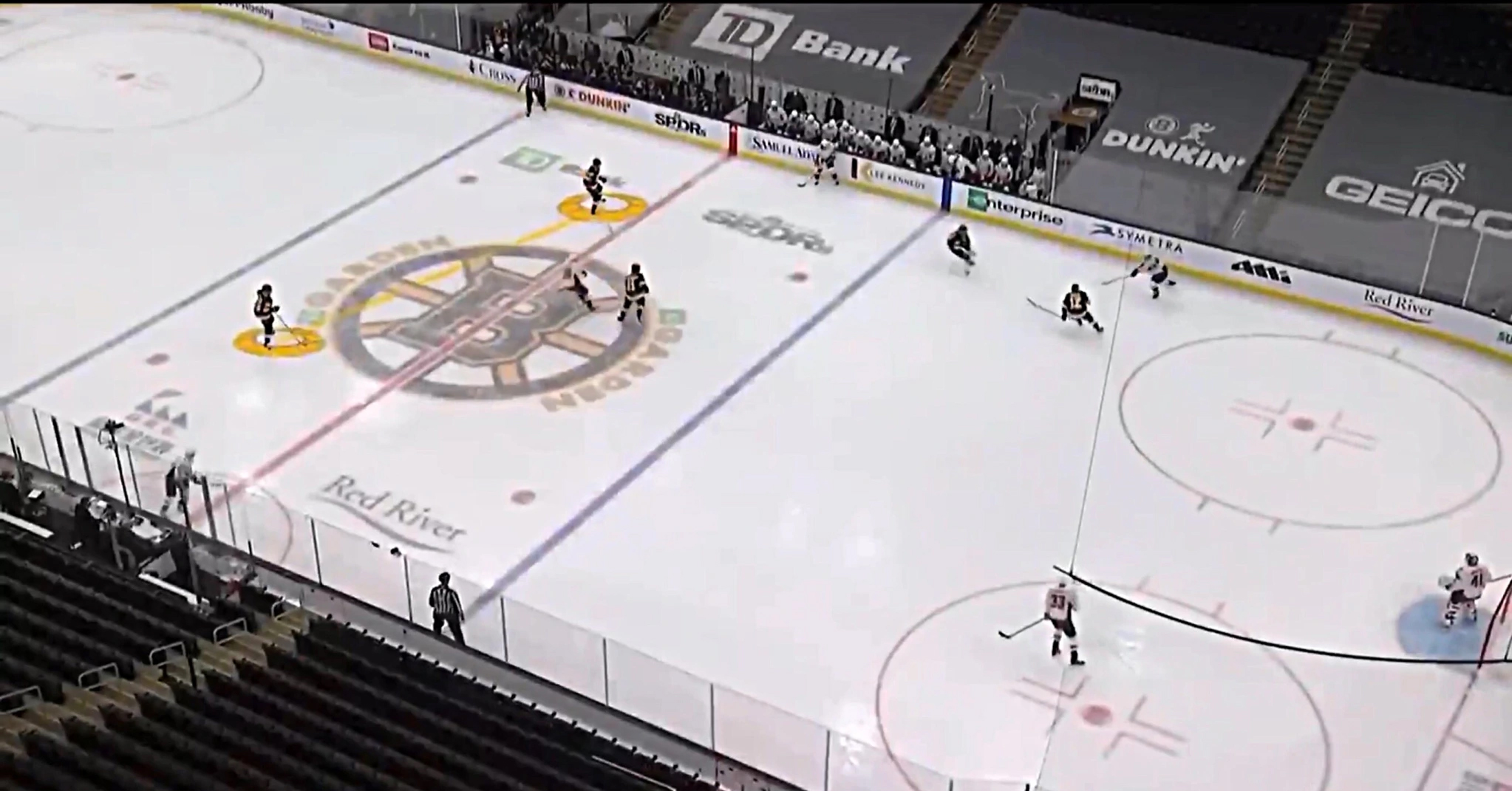
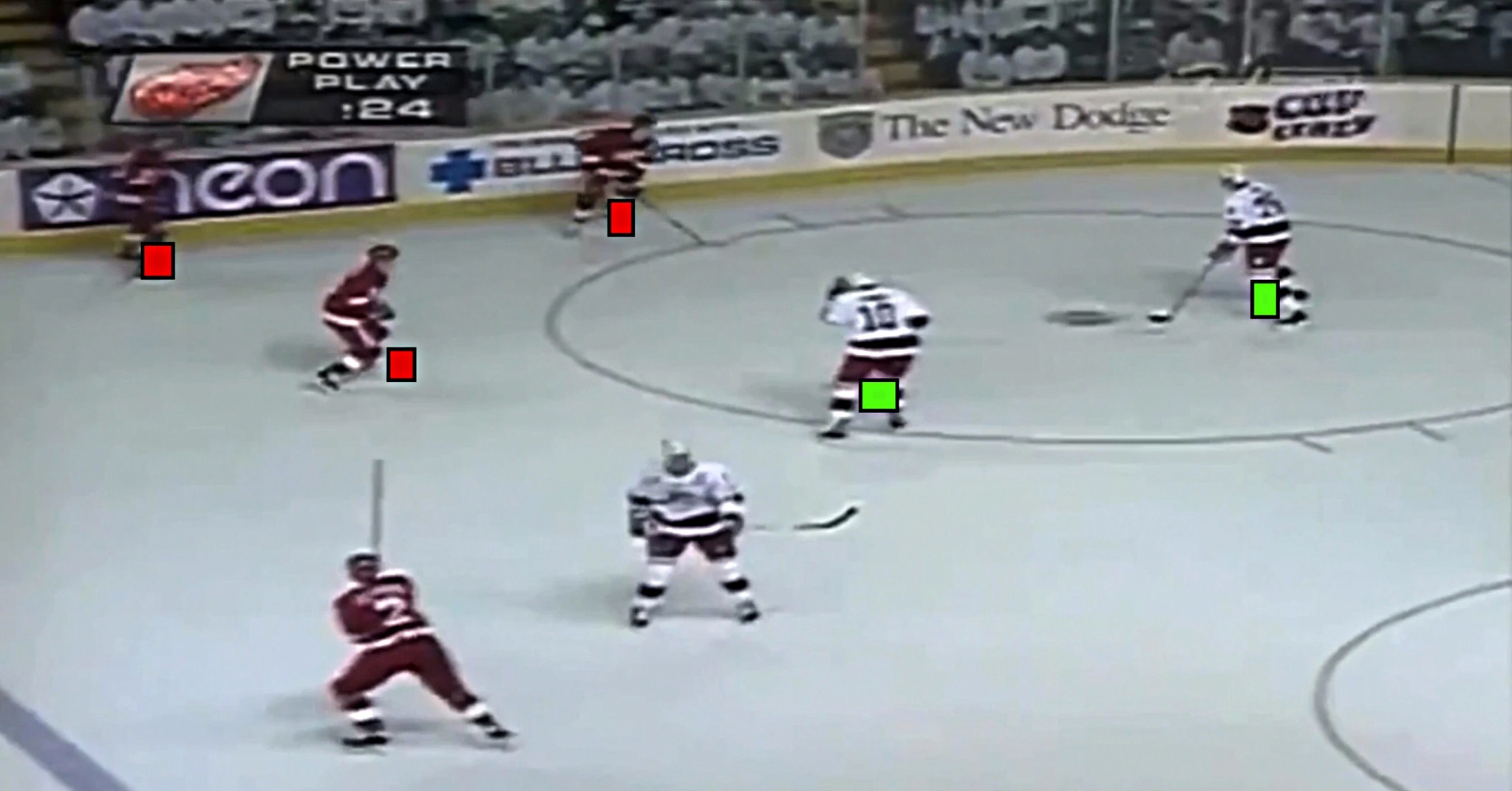
On regroups vs a contain forechecking style with numbers back, they will again use the stretch/bypass game, however they still will attempt to play the “old Soviet” way at times! This “build up” or controlled offensive tactic is simply advancing the puck forward toward the layers of retreating defenders with the puck carrier looking for passes into penetrating seams but if not available, the puck carrier will back-pass to a teammate who has reloaded behind the puck to build speed. This back-pass can often disrupt the defenders ability to play tight gap hockey allowing the puck carrier to achieve the BL and use a kick-out pass or failing that a “chip-in” to a forecheck. In the early days of North American-Soviet games, we often saw this build up style as the shoot in was not a high priority: they always tried to achieve a possession entry. It is interesting now to see this NZ back pass being used on PP BO’s in almost every league in any country playing hockey. We can thank Soviet hockey for that.
The new Russian OZP is almost identical to our North American style. They cycle with speed, test defenders with quick change of direction and all 5 attackers play a position-less game. Just like in North America, defenders protect the inside, get in shot lanes causing rather long unproductive cycling to occur and often end with an outside shot with traffic at the net.
On specialties, the tactical play is almost identical with the PK being very North American in style and the PP structure very close to the same with all teams using the basics of the old Soviet/Czech PP systems. One could generally say that the flow of ideas has been West to East since approximately 2004-05 but prior to that it may have been more East to West.
Summary
It is often said that diversity is a strength or an advantage as it stimulates thought. The Soviet style was very different and at times provided every country in hockey a lesson in humility! This is why our game now in North America and other European countries is so much better. We were not too proud to learn and adjust with the flow of information when it was more East to West. Hope you enjoyed this and never forget “Loose Pucks and Ice Bags” will always be important to winning!!