When I was preparing to coach U13 hockey last season, I wanted to ensure that we were implementing an effective and effecient warm up. The length of warm-ups in youth hockey vary depending on the league, or the tournament the team is participating in. We experienced a range of times from 2.5 minutes - 10 minutes.
In creating our warmup, we did not begin the process by deciding which drills we wanted to include, but rather, asking the question, "what do we want our warmup to accomplish?" We then constructed a warm up that would help us accomplish those tasks.
Our staff discussed what a warm up should accomplish, and we came up with the following points:
- Give players an opportunity to stretch - helping to prevent in-game injuries
- Give players a chance to get their feet moving - game speed skating
- Allow the goalie to be hit with the puck - feel the rubber, read the puck coming off the stick
- Get the goalie out of the net and playing the puck
- Get players handling the puck - passing and stick handling - plenty of touches to ensure every player has warmed up their hands and feels comfortable prior to their first in-game touch
- Limit Standing around time- get everybody imvolved and moving
- Execute successful breakouts
- Executive game-speed decision making
I think that many of these points would appear on most coaches lists of what they expect from their warm up. Some were tailored specifically to our teams needs.
For example, developing our goalie's ability to play the puck was a key focus for us this year, as he entered the season terrified to leave the net. It was imporant to me that he received puck playing opportunities as part of our warm up.
So we designed a warm up that would allow us to adress all of these points, knowing that our length of time was typically 5 minutes or less.
First, we decided that the stretching piece could be covered before we set foot on the ice. We completed a team wide dynamic warm up with our playing gear on in the dressing room immediately before hitting the ice. (We also completed this before practices as well).
A couple of players still did a couple of stretches on the ice during the breakout portion of warm up.
1. Players hit the ice.
Players would place water bottles and stick on the bench, and take a hard lap. A couple of players usually had to grab the net from off the boards and move it into position. Our goalie would often complete a little on ice routine and stretch as this time. All pucks were left on the side wall in the neutral zone, players would get into position to begin breakouts.
2. Breakout / 3 on 2.
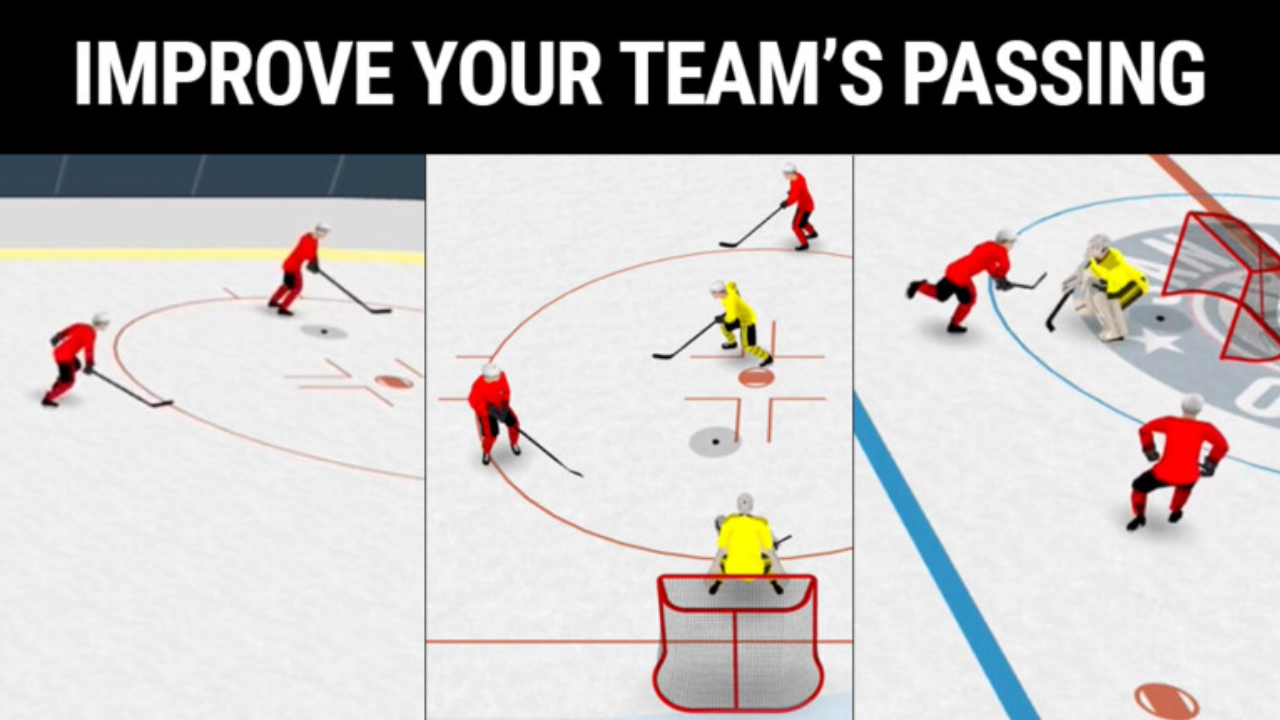
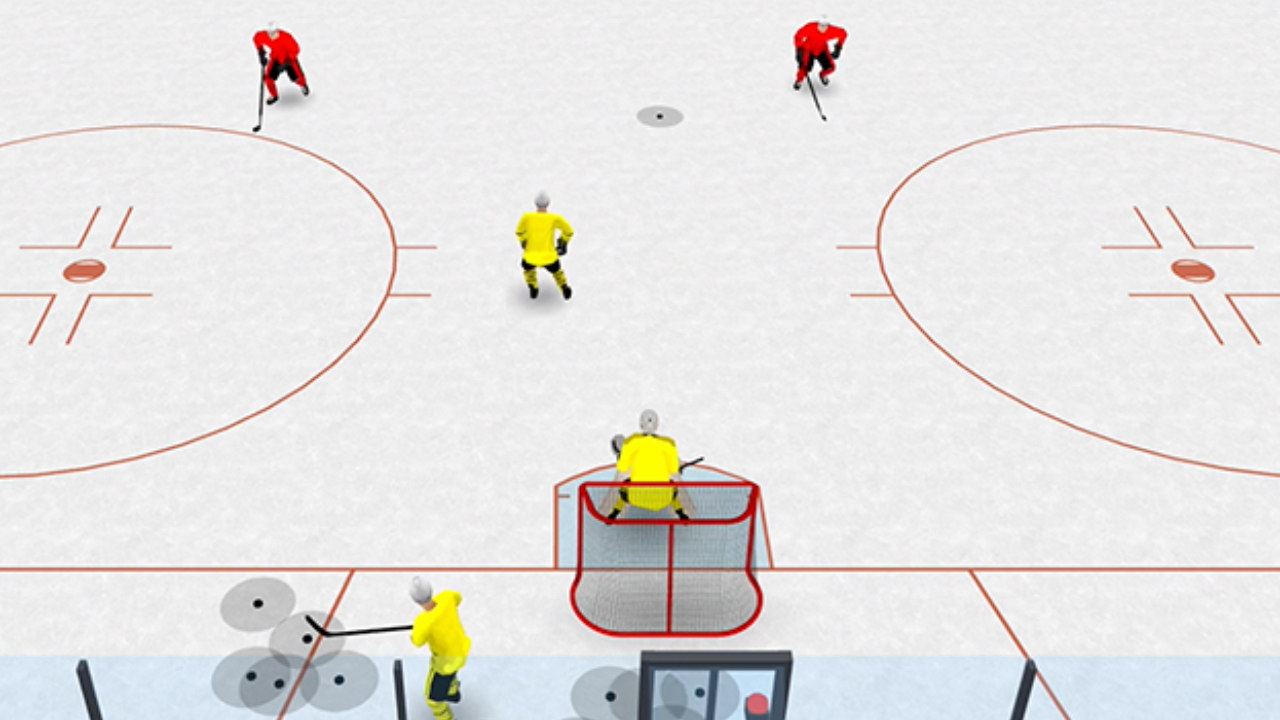
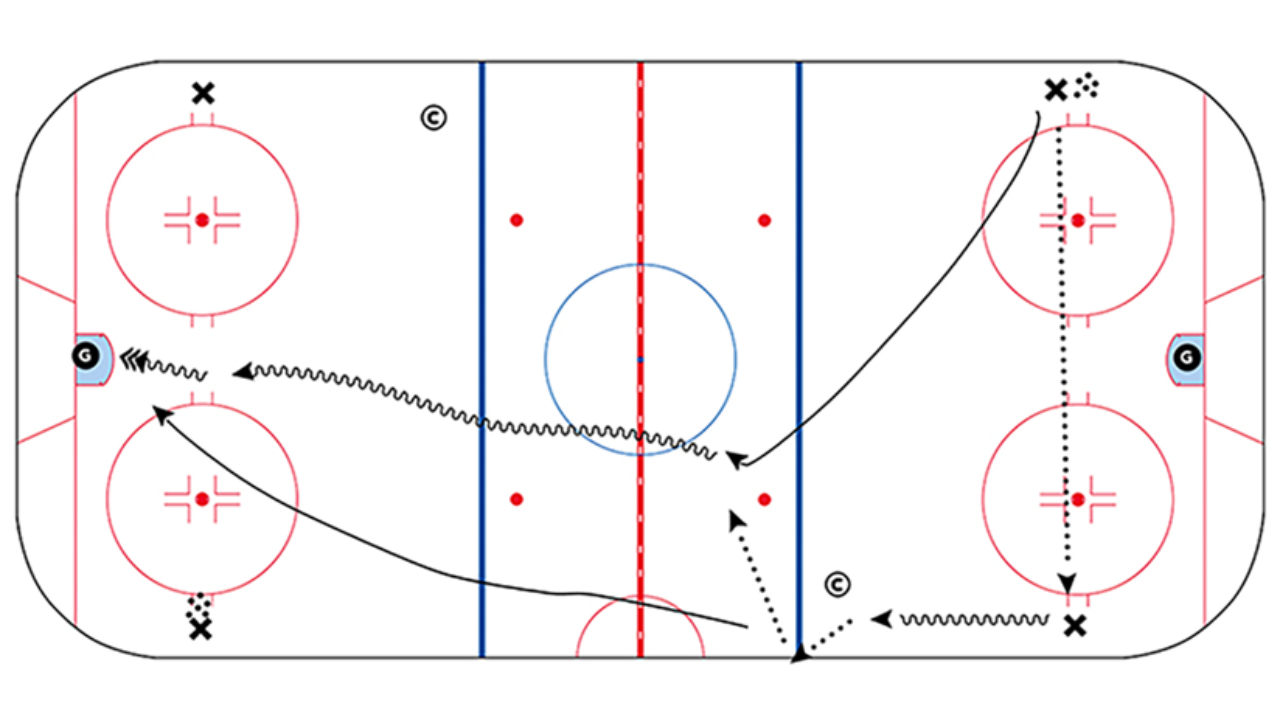
We had 3 forward lines, 2 defensive pairs, and 1 goalie this year. Forward line 1 would begin the first breakout by dumping the puck in from center. The goalie ( who might still be wrapping up his stretching routine during the first 1 or 2 reps of the breakout) would stop the puck behind the net. The D would pick up the puck, and all five players would break out, offense would regroup in the neutral zone, and come in 3 on 2. After a one and done shot, the next puck would be fired in from center and forward line 2 would compelte the same sequence.
We would vary the number of reps depending on the length of warm-up we were given. For some tournaments where we had a very small amount of time, we would only run three reps, one per line. When we had our usual 5 or so minute long warm up, we would give each line 2 reps, that way each winger had an opportunity to make a breakout pass.
This drill was important for us this year, as it gave our goalie reps stopping the puck behind the net. As mentioned earlier, this was an important area of development for our team, and we saw major improvement in his ability and confidence throughout the season, and I truly believe the extra reps in warm up contributed to his growth.
This drill also gave a few reps of exiting the zone cleanly, which is critical in games. Finally, I think this drill turns the brain on, and allowed us to make decisions at game-speed. Having players execute staying onside during the re-entry , filling the lanes during the 3 on 2, and moving the puck to get a shot off all prep the mind for the game at hand.
3. Shooting Lines / Puck Touches
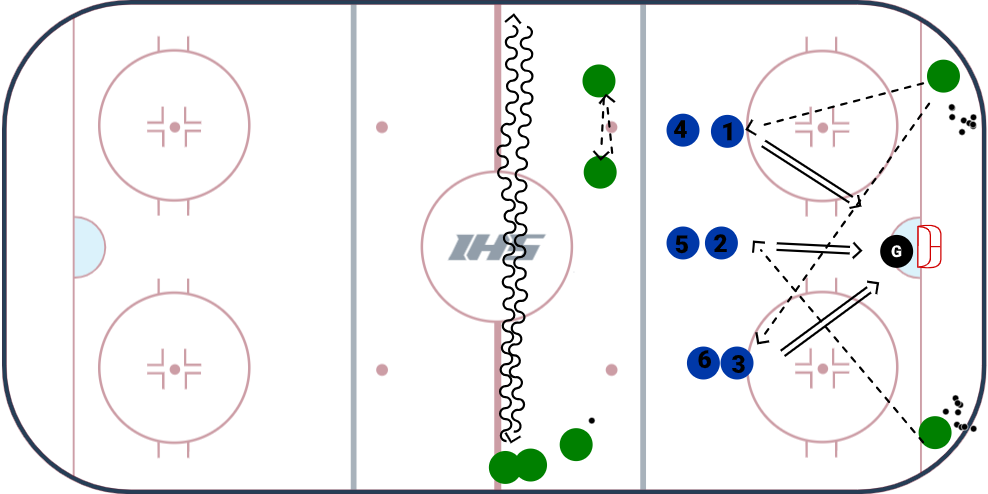
After the breakouts, a few pucks were left in the neutral zone, while the other pucks were placed into each of the two corners.
Our team was divided into 2 groups, simply called, "group 1 shooters", and "group 2 shooters".
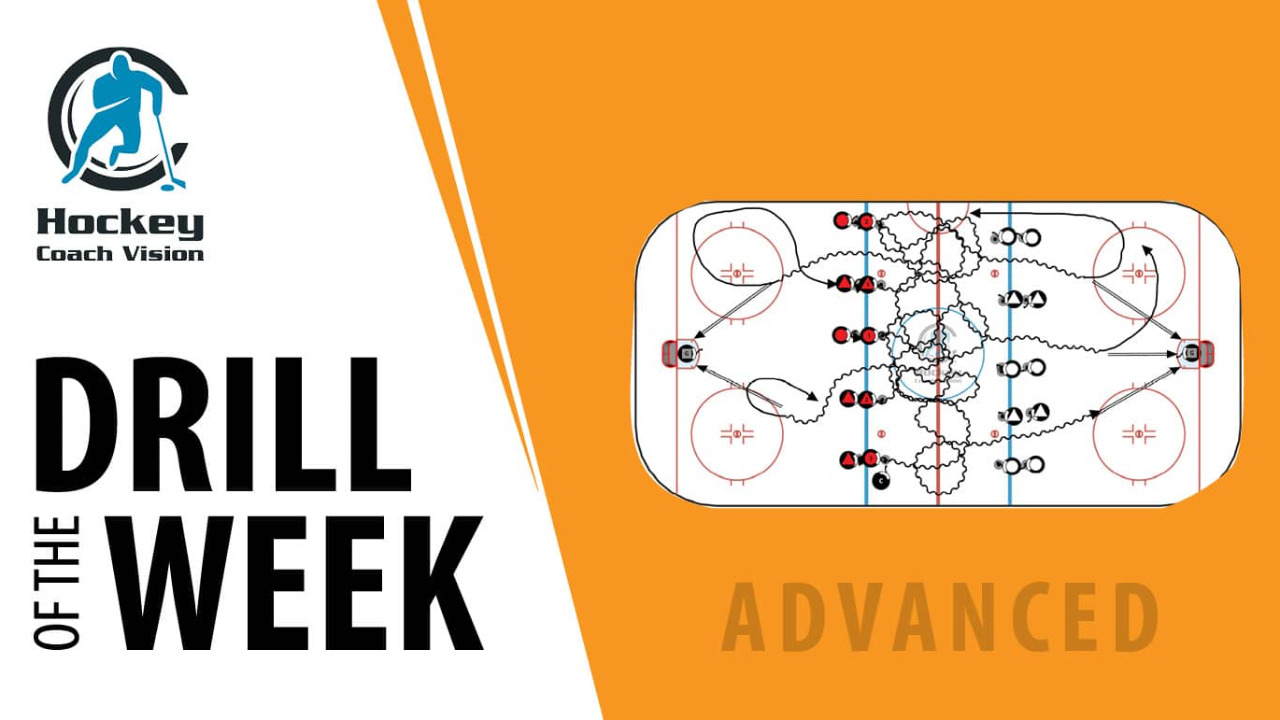
Group 1 shooters are coloured blue in the diagram, group 2 shooters are coloured green. On our team, forward lines 1 and 2 were always our group 1 shooters, while forward line 3 and our D were our group 2 shooters.
The group one shooters would create three shooting lines. The pass would come from the corners to the front of the line, and players would catch, shoot, and move to the back of a different line.
While this is happening, the group 2 shooters are completing 2 sets of hard "there and backs" in the neutral zone. They then have some creative time, where they are encouraged to complete partner passing, or stickhandling routines. Groups would switch after a minute and a half or so. Typically, each shooter got 2 shots from each spot, for a total of 6 shots each.
We also had a team rule that every inviduals first 2 shots had to be on the ice, so that the goalie was getting his stick active, and getting a feel of the ice on his pads.
This portion of warm up hit a lot of our points, one of which is I wanted to avoid standing around time. So many minor hockey warm ups use some sort of horseshoe variation, and I've watched players stand around in line, waiting for their turn, make a pass, skate out, and have a teammate throw a pass way off line, so they return to the back of the line and wait around. I once tracked my U11 son's game warm up, and in the entire warm up, he completed 4 passes, and had 1 shot on net. How is he supposed to be ready for the opening shift when those were his only touches?!
I feel that splitting the team into 2 groups allowed for less standing around time, more shots, and more meaningful puck handling movements as well.
I did find that on the days when we had a full 10 minutes warm up, I needed another drill, and so we would also run 2 on 1's to end our time before puck drop.
So here's the take home message...
We built a warm up that was specific to our team. I am not saying that I cracked the code on running the best warm up possible. But I think we get something right about it... and that something is, don't just do something becuase that's the way it's always been done. Ask yourself, "why do we do it that way"? In this case, we asked the question, "what should our warm up do for us?", and we desgined a warm up that accomplished those things. Keep asking those questions, and make your decisions with those questions in mind.