The Best Way to Learn the Game Is to Play the Game!
I was a youngster in the 1950s and 60s, and this is how we almost unknowingly developed our skills and game sense. In those days, we only played 25 to 30 formal hockey games, and the length of the season depended upon the weather, from about mid-November to mid-April, as we played on outdoor rinks. If you went deep into the playoffs, it was a real bonus because you got to play indoor games.
Practicing depended almost solely on the commitment of your coach and how much time he was willing to put in. As you progressed up the ladder, you would start to have more formal games along with more practices. Your season was a little longer, with most of your games played indoors, but most often you still practiced outdoors.
If you really enjoyed hockey, the only way to get more was to organize your own games. This was referred to as shinny hockey.
When we played on ponds or outdoor rinks, we used skates. Street hockey was played in our winter boots. I lived in Saskatoon, “the frozen north.” We were lucky because close to our home we had a very quiet four corner intersection, with street lights on diagonal corners, so we could play before and well after supper until Mom called us in for bedtime.
If we played on the Albert School outdoor rink and it was really cold, we usually could play full ice. If the weather was moderate, a few degrees below zero, we had to share the ice with the pleasure skaters, which meant we played cross ice in one end zone, with or without skates. If it was windy, both teams always agreed to change ends at about half time.
We used a puck or a tennis ball. When we used the puck, no “raising” for shots on goal was allowed. If we used a tennis ball, which after 15 minutes or so froze up, we were allowed to raise our shots. If it hit you in “the package,” it really hurt.
We rarely had goalies, as keeping warm was best accomplished through active movement. It also forced us to finesse the puck or ball into the net, and only rarely was a mid range shot used.
We often used partially broken sticks to play shinny because it was not a good place to use your “game stick” as it might get damaged. Mom and Dad would not be happy shelling out another two or three dollars for a new stick. Our shinny sticks always had good shafts, but the blades were partially broken and reduced in size. We called them “toothpicks” or “twigs.”
Depending upon snowfalls or wind, we often had to use the shovels stored outside the rink warming shack to scrape off the snow before we played. Everybody joined in, and within 15 to 20 minutes we usually had a pretty good playing surface cleared.
At local outdoor rinks we usually had goal nets, but for street hockey we did not. We used piles of snow or, if the milk wagon horse was generous, his droppings for goal posts.
When you played shinny, it was a melting pot of ages. At times you had to really dig in to compete, and at other times you might be one of the older players and needed to be generous, passing to the little guys to include them in the fun.
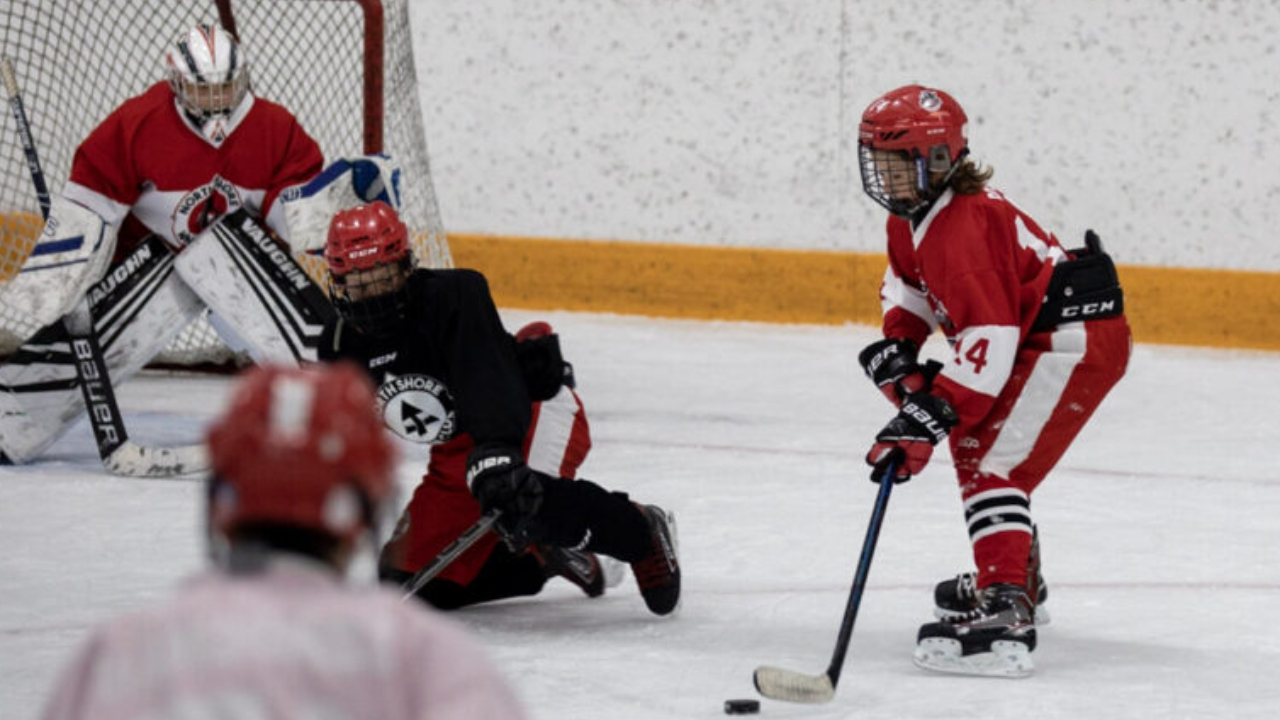
We wore no protective equipment. No gloves, no shin pads, and in that era there were no helmets. There were no referees, but an understanding existed regarding raising the puck, slashing, high sticks, or rough play. Most of the time we did not keep score, and the winner was decided when we all agreed, “Next goal wins.”
The greatest thing about shinny was there were no consequences for mistakes. Risk was never a consideration in decision making. Everyone played a high risk, optimistic game. There were no coaches, so giveaways and turnovers were no problem. Sometimes somebody might give a teammate “the look” or “the stare,” which was a form of feedback.
We had no uniforms, so most of the time you were never really sure if the guy in front of you was with you or against you. This meant being a puck hog was tolerated. You had to learn to play and handle the puck or ball with your head up.
Your stickhandling and skating agility really improved. Often there were so many players in such a small space that it was challenging. Full ice games favored the best skaters, but cross ice or street hockey games favored the puck handler.
Players could leave or join the game seamlessly, as long as the numbers appeared fairly equal. When we selected teams, everyone threw their sticks into a pile on the ice, and one of the older guys would pull sticks out and create two piles. Those were your teams.
There was an unwritten rule: if your little brother came down to the rink with you, he was always on your team so you could look after him.
On weekends and evenings, it was total game on at any time. On school days, it was recess and noon hour breaks. We would put on our coats and boots, grab our toothpicks from the barrel behind the door that led to the playground and rink. Almost every elementary school had an outdoor rink and a small warming shack.
What a life.
As the old pros from that era will tell you, “You can’t learn to love the game until you have shoveled the rink and frozen your toes playing shinny.” So true.
As a youngster, I was having too much fun to recognize I was learning the game. However, when we played our organized league games, I did recognize that because I played so much shinny, I was getting better than most kids in terms of skills and making quick decisions.
Looking back now, I see many more insights and outcomes from those hours of shinny. As you read this, you may also look back at your shinny career and realize how much fun it was, how much you improved, and more importantly how it created a love for the game that still exists today.
One very valuable outcome for me was recognizing that combining effort with anticipation gave me more possession time. Most young players telegraph their intentions. If you were smart and patient, you could make the puck carrier believe the passing lane was open, then anticipate and intercept the pass.
It became clear that if you anticipated the pass just before it was made, you could get there faster and create a turnover. We all played with so much risk that losing the puck was expected. You also learned that the best moment to regain possession was often just after you lost it, before the opponent was organized.
In loose puck situations, early body position often led to winning possession. To maintain possession, you had to use your body to protect the puck. It was hard on the shins, but bruises did not matter if you had the puck.
Full ice games favored great skaters. Cross ice games demanded puck control and quick decisions. It did not take long to figure out that the more you talked, the more you had the puck. If you passed and shared it, everyone enjoyed the game more. Strangely, the ice seemed bigger when you moved the puck. If you held it too long, the rink seemed to shrink.
You learned that if you spread out and found space, the puck found you. You learned to turn sideways and lift a leg when facing a frozen tennis ball in front of the net. You learned that playing light and polite usually meant losing.
You figured out one on one play. If you had a speed advantage, go for it. Use your eyes and shoulders to fake. Draw the defender’s eyes to the puck. Do not crowd your best players. It was never a bad play to pass to a better player. The further from your net, the more risk you could take.
Along the boards, you could flip the puck off the boards and skate around the defender to pick it up. If you passed and then moved, you were more likely to get it back.
Over time, most of these situations became automated. Through repetition and recognizing recurring circumstances, we figured it out ourselves. Our game sense improved, some more than others.
One thing I will never forget: when I walked down to the street corner or outdoor rink and imagined I was Gordie Howe or Alex Delvecchio, I always played better.