What if your team’s greatest untapped strength wasn’t talent, but trust?
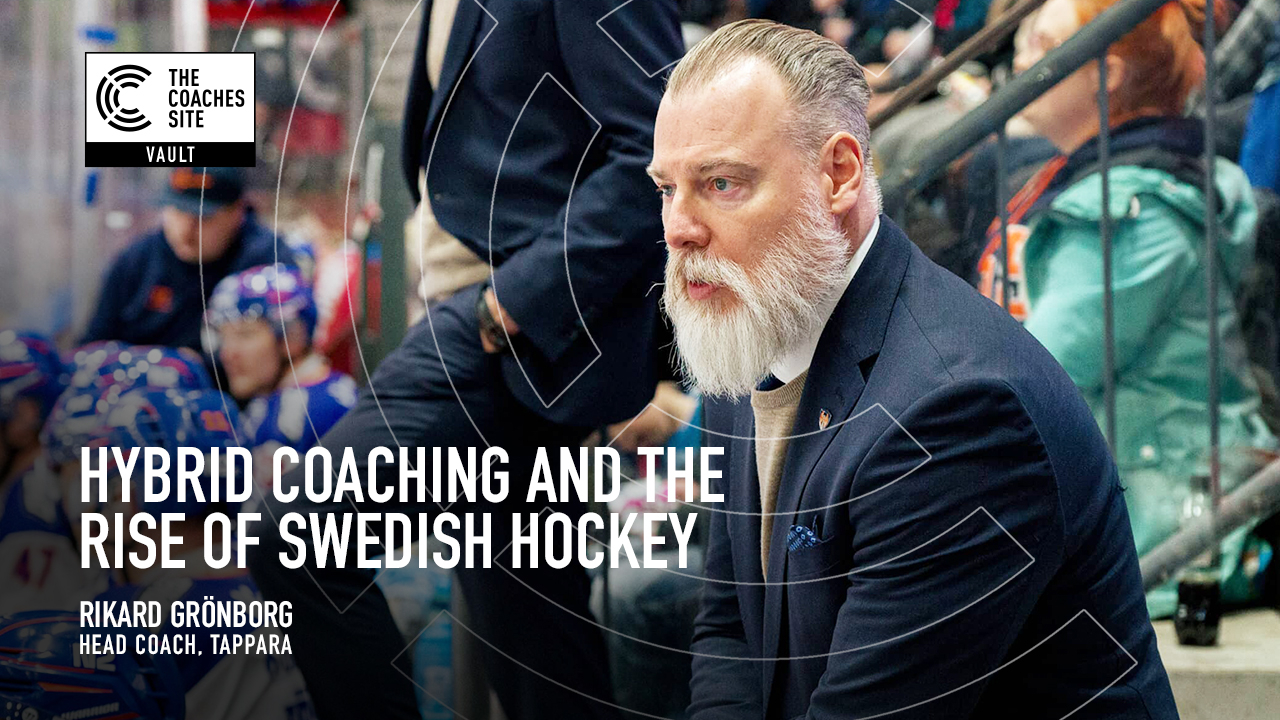
Rikard Grönborg has coached at nearly every level of the game, from international powerhouses to professional clubs, and he’s learned that success in a high-performance environment doesn’t start with systems or structure.
A high-performance environment doesn’t start with systems or structure. It starts with communication.
Grönborg began his session with a simple but important message: be curious. Throughout his coaching career, he has spent countless hours reading, researching, and studying how people communicate because, in his view, communication is the foundation of culture. As he put it, “Culture starts with how organizations communicate internally. If your players don’t understand your process, then it’s not really a process.”
From there, he walked through the stages every team experiences throughout a season: forming, storming, norming, and performing. While coaches are often aware of where their team sits within that cycle, Grönborg challenged us to consider whether our players understand it as well. When players recognize where they are in the journey, they can better understand both the challenges and opportunities in front of them.
“Leadership comes at a price. You can’t just talk about commitment. You have to give your time and energy.”
That idea carried through the rest of the presentation. For Grönborg, communication is never just about delivering information. It's about creating trust, building ownership, and helping players understand how they contribute to something bigger than themselves. He pointed to several habits that help coaches do that effectively: communicating clearly and directly, building trust through consistent actions, taking the time to explain the reasoning behind key decisions, and helping players understand the unique value of their role within the team.
Drawing on Simon Sinek’s work, Grönborg emphasized that leadership starts with understanding individual strengths and finding ways to connect those strengths to the needs of the group.
“High-trust, low-performing players are more valuable than low-trust, high-performing players.”
The message was clear. Talent matters, but trust is what allows a team to function at its highest level. Without it, even the most skilled groups will struggle to reach their potential.
Different Groups, Different Messages
Grönborg also broke down how coaches can tailor their communication depending on group size.
In Team Settings:
-
Limit meetings to 15 minutes max, especially on game days.
-
Keep presentations clear and focused.
-
Spread out meetings throughout the day to help players retain key information.
-
After games, he often sits down with players at eye level, encouraging open discussion and connection.
In Small Groups:
-
Add more detail, more tactics, more specificity.
-
These are ideal for discussing positional concepts or scouting.
In 1-on-1 Meetings:
-
Anything goes. These can be structured in an office, informal chats on the bench, or even while doing shoulder-to-shoulder laps at practice.
-
Grönborg sees these as “coaches’ meetings,” where real development and trust can be built.
“Stick up for your players. It matters.”
Coaching Takeaways
-
Communication is the foundation of trust, and trust is the foundation of team success.
-
Short, clear, and consistent messaging helps players retain and apply information.
-
Build ownership into your culture - let players participate in shaping the team.
-
Know when to talk to the whole team, a small group, or one-on-one.
-
Leadership isn’t loud. It’s relational, thoughtful, and generous.
Coaching Challenge
This week, assess how much of your communication is one-way vs. two-way.
Try holding one meeting at eye level with your team, shoulder-to-shoulder with a player, or in a way that gives ownership back to your group. Are you building trust or just talking?
Noteworthy timestamps:
- 0:25 Academic background
- 2:50 What is “the Process?”
- 6:00 Consistent process tools
- 9:00 Leadership thoughts
- 10:05 Trust vs performance/structure
- 13:10 Retaining info
- 14:15 Communication - Team
- 19:20 Communication - Smaller groups/individual
- 25:40 Shoulder to shoulder
- 28:45 Special assignments
- 37:40 Conclusion