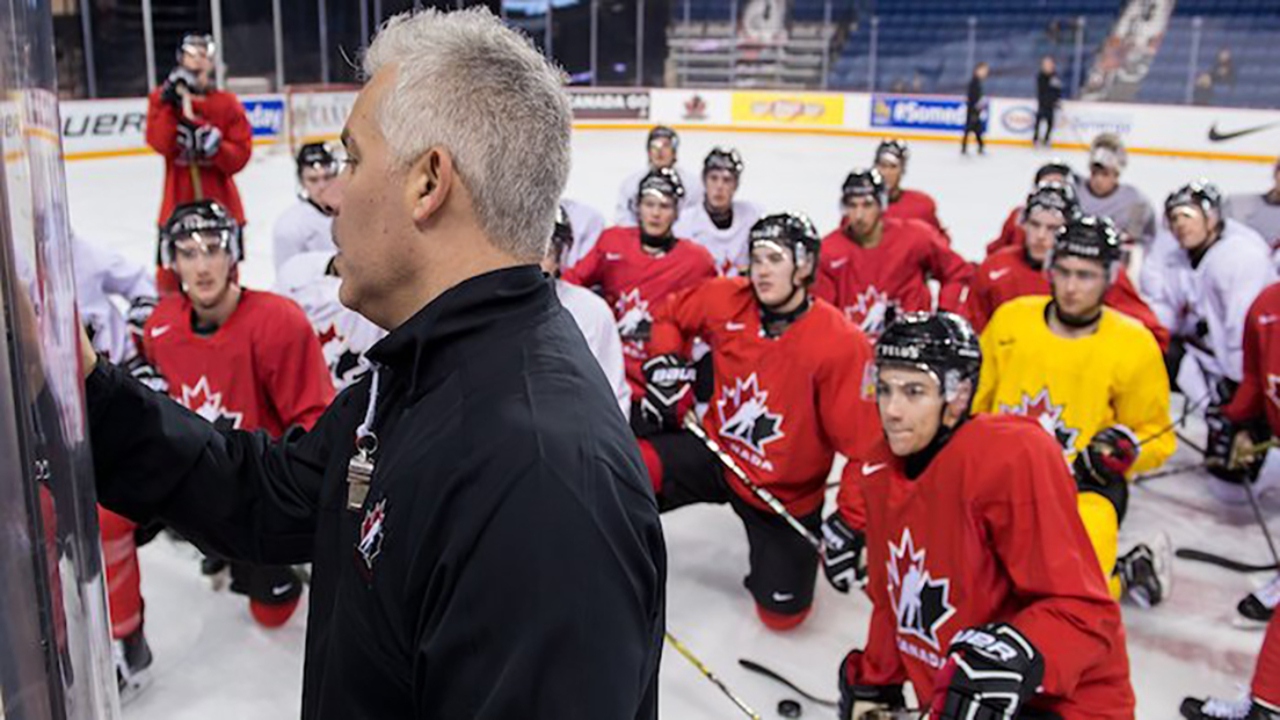
When I went to TCS Live in Edmonton, I expected to come home with advanced systems, drills, pre-scout ideas and concepts that I could use with the teams I coach.
Because I am currently coaching both U11 and U16, I was looking at everything through two different lenses. At the U16 level, I wanted to learn more advanced systems and understand how higher-level coaches prepare their teams. At U11, I was looking for the pieces that could be simplified and translated to younger players.
What surprised me was just how much of it translated.
You might look at a TCS Live lineup filled with coaches who have worked in the NHL, AHL, international hockey and other high-performance environments and think that the information is going to be too advanced for an everyday minor-hockey coach.
I found almost the opposite.
The game becomes more complex as the level gets higher, but many of the best coaches presenting in Edmonton kept finding ways to make it simple for their players.
That may have been my biggest takeaway from the entire event.
Less Is More.
One presentation that really stood out to me was Misha Donskov's breakdown of 5-on-5 pre-scouting and video preparation.
At the highest levels, there is an incredible amount of information available. Coaches can break down an opponents forecheck, breakout, transition game, rush attack, offensive-zone play, defensive-zone coverage and individual player tendencies.
The challenge isn't finding information.
The challenge is deciding what information actually matters.
Donskov's approach was about removing layers and creating a simple picture for the players.
The communication needs to be clear, short, direct and actionable.
Even a detailed pre-scout might only involve nine to 15 clips and less than 10 minutes of meeting time.
That really hit home for me.
If NHL and international-level players don't need to sit through endless clips and explanations, how can I expect a 10-year-old to process a five-minute speech at the whiteboard?
It made me think differently about how I can use video with both my U11 and U16 teams.
Instead of showing players every mistake, I want to use fewer clips and reinforce one clear message.
I also want to make sure video isn't always about what went wrong.
One of the things I took from the presentation was the value of showing your own players doing things correctly. A pre-scout shouldn't leave players worried about everything the opponent can do. It should reinforce your own team's strengths and leave players feeling confident, prepared and positive.
That absolutely translates to minor hockey.
At U11, maybe we don't need a complete pre-scout of an opponent.
But we can show three clips.
Here is what we're doing well.
Here is the one thing we need to recognize.
Here is what success looks like.
Then go play.
Are We Developing Good Drill Players or Good Hockey Players?
Another presentation that really changed how I thought about practice was Riley Dudar's Live Drills: Bridging the Gap.
One question from that session has stayed with me:
Are we developing a good drill player or a good hockey player?
That is such an important question for minor-hockey coaches.
Sometimes we want our drills to look perfect.
We want players in the exact right position. We want the puck moved to the exact right spot. We want the breakout to look exactly like we drew it. If something goes wrong, our instinct is to blow the whistle, stop the drill and fix it.
I know I've done it.
I've stopped offensive-zone drills because players weren't exactly where I wanted them to be. I was trying to create the perfect picture.
But hockey doesn't give players perfect pictures.
The game is chaotic.
Pucks bounce.
Players miss passes.
Defenders recover.
Someone falls down.
The player who was supposed to be in one place ends up somewhere completely different.
Players have to recognize what happened and solve the problem.
Dudar talked about using realistic situations, constraints and environments that allow players to find solutions rather than scripting every outcome.
That doesn't mean coaches stop teaching.
It means we need to become more comfortable allowing learning to happen inside the mess.
Let It Happen
This is probably the biggest change I want to make in my own coaching.
Imagine we're running a 3-on-2 with my U11 team.
A player makes what I believe is the wrong pass. The play breaks down.
My old instinct would be to stop it immediately.
Explain what they should have done.
Move them into the correct position.
Restart the drill.
Now, I want to give it more time.
Let it happen three or four times.
See if the players begin finding the solution themselves.
Then maybe we have a short group discussion.
What are you seeing?
Where is the space?
What other option could we have used?
And then let them try again.
That doesn't mean allowing bad habits to continue forever. There still has to be coaching and correction.
But there is a difference between guiding players and constantly giving them the answer.
If we give players every answer in practice, we shouldn't be surprised when they struggle to solve problems during games.
Practice Should Look Like Hockey
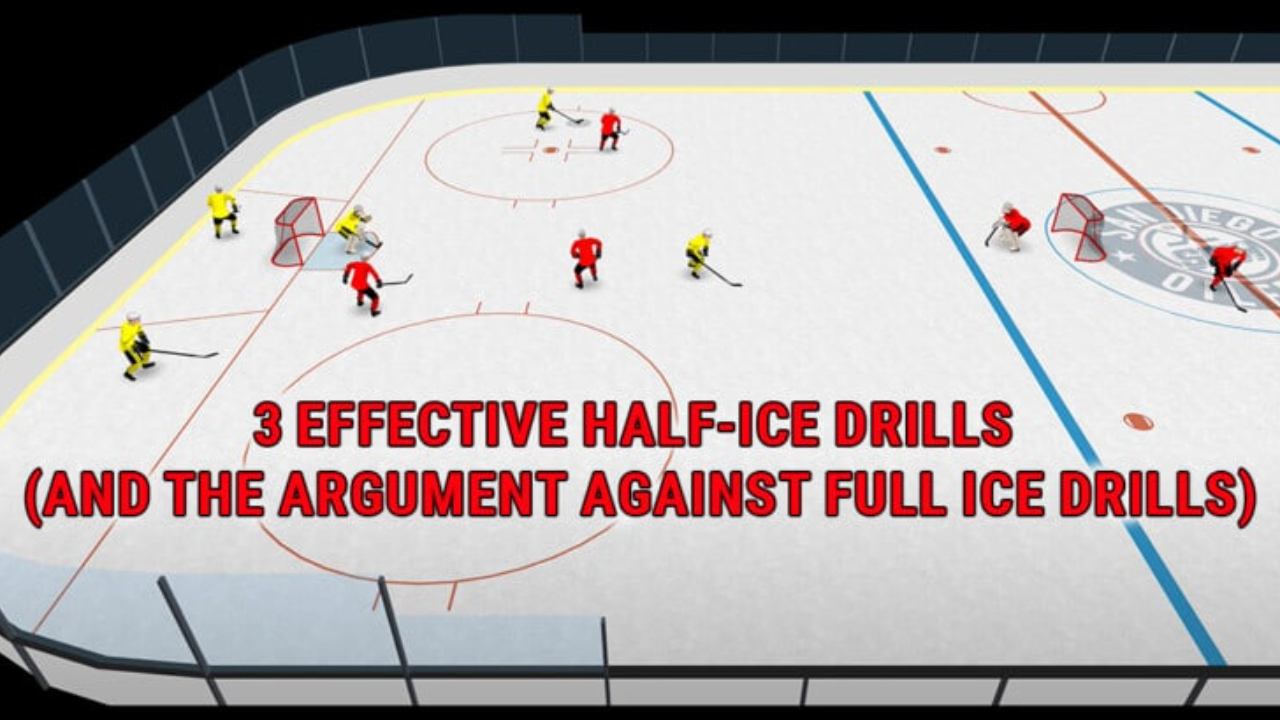
Several of the drills I brought home from TCS Live involved 3-on-0 and 3-on-2 situations.
One starts with three players building speed and spacing from the far blue line before attacking.
Another is a continuous 3-on-2 designed around spacing and attack principles.
In a Turn and Burn 3-on-2, players accelerate into an attack, finish the first play and then immediately have to recover another puck and transition into another 3-on-2.
What I like about these drills isn't necessarily the setup.
It's the problem solving.
Where is the space?
How do we attack the defenders?
Where should the player without the puck go?
When should we drive?
When should we delay?
Who supports the puck?
Players have to read what is happening rather than simply follow a pattern.
That is something I want more of in my U11 practices.
Attack the Middle
Another idea that challenged some of my own coaching was how players create time and space when attacking defenders.
I have often coached young players to get outside.
Protect the puck. Use your speed. Get around the defender.
There is still value in that.
But several discussions at TCS Live reinforced attacking defenders more through the middle and forcing them to make decisions.
Instead of automatically moving away from pressure, can we attack it?
Can we pull a defender toward us?
Can we create space for a teammate?
Can we manipulate the defender instead of simply skating around them?
For a U11 player, I don't need to turn that into a five-minute tactical explanation.
I can create a drill or small-area game where the player has to experience it.
That goes back to the same theme:
Create the problem and let the player work toward the solution.
Hockey IQ Has to Be Developed
One thing I heard repeatedly throughout TCS Live was concern around hockey IQ and decision-making in today's players.
That forced me to think about our role as coaches.
If we want smarter players, we need to give them opportunities to make decisions.
We can't demand hockey IQ and then control every second of practice.
Players need to experience situations.
They need to make the wrong choice sometimes.
They need to see what happens when they make it.
They need another opportunity.
Development is not a straight line.
Especially at U11.
It will go forward, backward and sideways.
There will be great practices followed by messy ones.
A concept that looked fantastic Tuesday might disappear completely Saturday.
That's development.
We need to embrace some of that chaos instead of constantly chasing perfection.
The Higher the Level, the Simpler the Message
The other thing that stuck with me was communication.
Again and again, the message was simple:
Be concise.
Believe in what you're saying.
Make sure players understand it.
And create buy-in.
The best coaches aren't necessarily the ones giving the longest explanations.
They're finding ways to make complex ideas understandable.
That may matter even more at U11.
Young players also don't all learn the same way.
One player might need to see something on video.
Another needs a coach to demonstrate it.
Another might understand after a quick one-on-one conversation.
Part of coaching is understanding the person you're teaching, not just understanding hockey.
That connection matters.
I strongly believe players compete harder when they trust their coaches, enjoy being at the rink and feel like they are part of something.
That reinforced another belief I already had before TCS Live:
Build the team first.
Systems matter.
Drills matter.
Tactics matter.
But if the group isn't connected, the rest becomes much harder.
Why Minor-Hockey Coaches Should Attend TCS Live
Before attending, I could understand why a U11, U9 or U13 coach might look at TCS Live and wonder whether it is really meant for them.
After attending, I would tell them absolutely yes.
Go.
You will be surprised how much translates.
You may hear about NHL pre-scouts, international hockey, advanced forechecks or special teams concepts that you'll never install with a 10-year-old.
That's okay.
Listen to how the coaches teach.
Listen to how they simplify information.
Listen to how they design practice.
Listen to how they communicate.
Listen to what they choose not to tell their players.
There are lessons everywhere.
I went to Edmonton hoping to learn advanced hockey.
One of the most valuable things I brought home was actually permission to simplify it.
Less information.
More problem solving.
More realistic situations.
More player ownership.
More patience when things don't look perfect.
More chaos.
Because our job as minor-hockey coaches isn't to create players who can execute our practice perfectly.
Our job is to create players who can play the game, recognize what's happening in front of them and make good decisions.
Sometimes that means the best thing we can do as coaches is resist the urge to blow the whistle.
Let it get messy.
Let them make the mistake.
Let them work through it.
Embrace the chaos.