Use of a Dynamic Drill (Why it matters)
When working in a team setting, the time available for goalies is often limited: on average, you get only 10–20 minutes per session, with 2 or 3 goalies on the ice. In these conditions, every second counts. That’s why a dynamic structure is a true game-changer for any goalie coach.
As I explained in a previous article where I introduced the concept of Dynamic Structure, the goal is to start from an extremely simple and static version of an exercise—so the goalie can focus only on the basic technical gesture, free from distractions—then progressively add game-like elements without changing the setup or breaking the training flow.
This approach keeps goalies constantly active, minimizes downtime, and lets you move from pure technique to game application in minutes—through small, clear adjustments (one quick cue is enough to introduce each new variation).
Drill concept (What we are training)
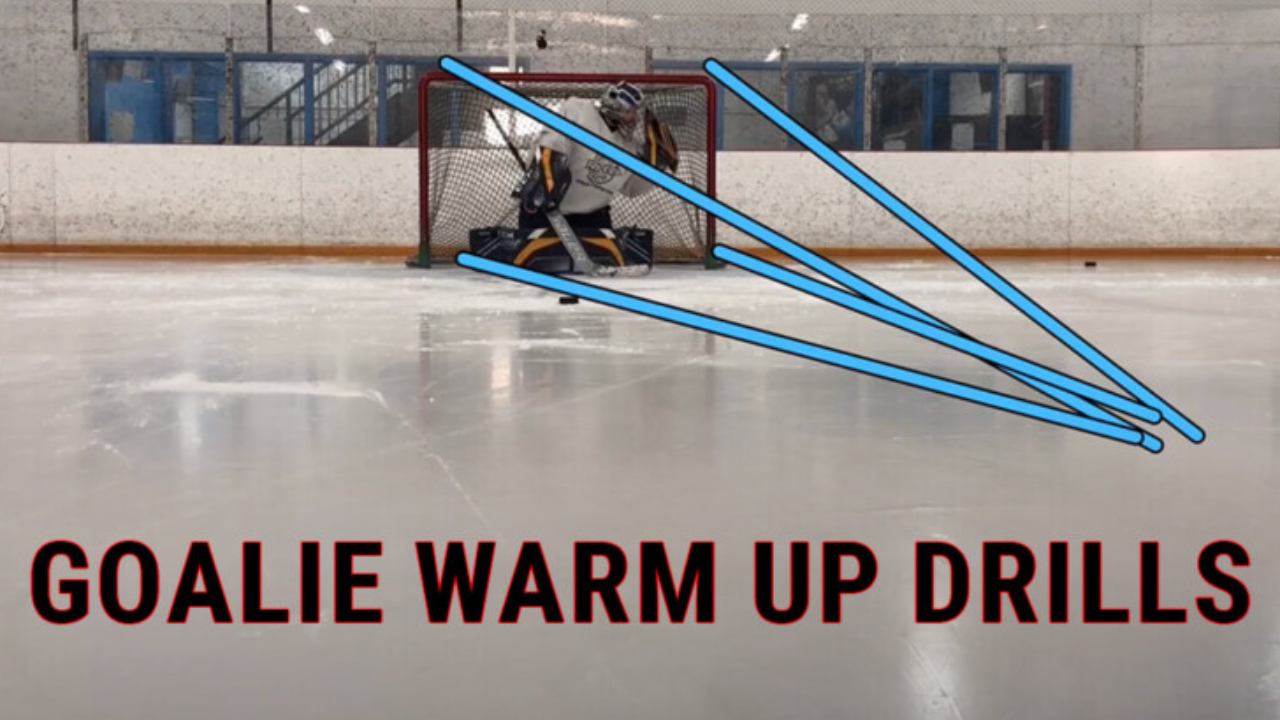
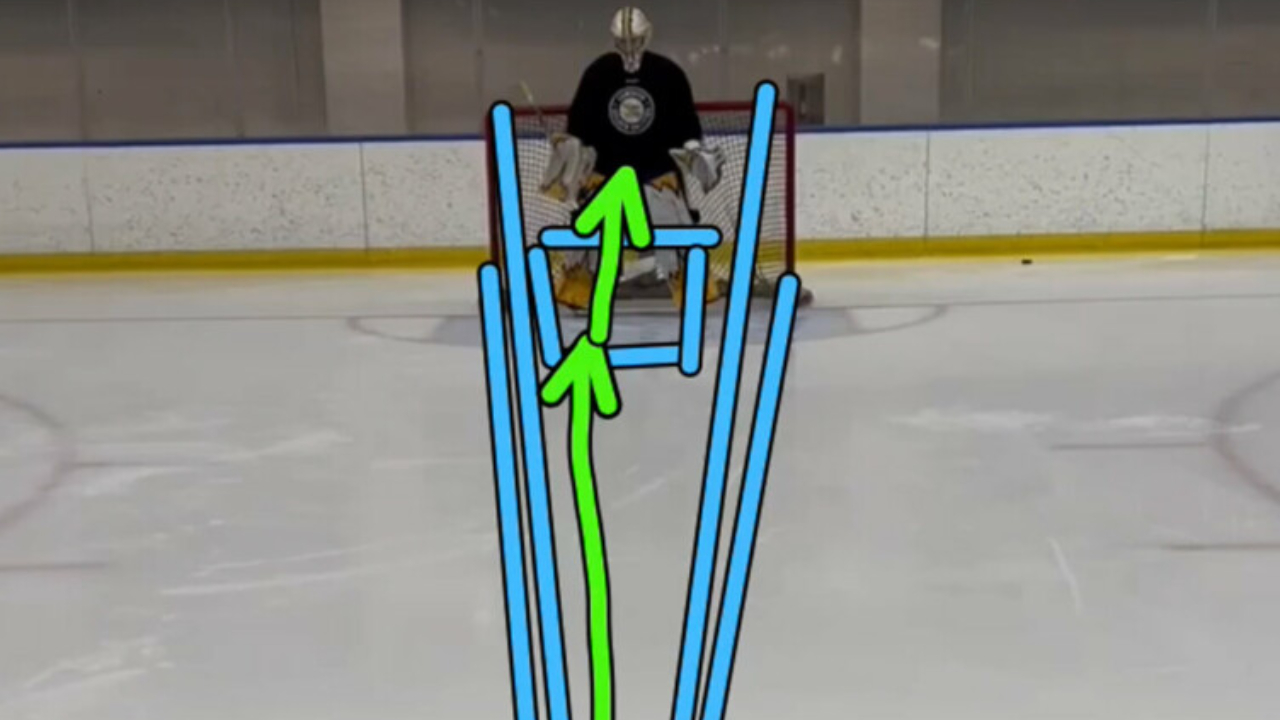
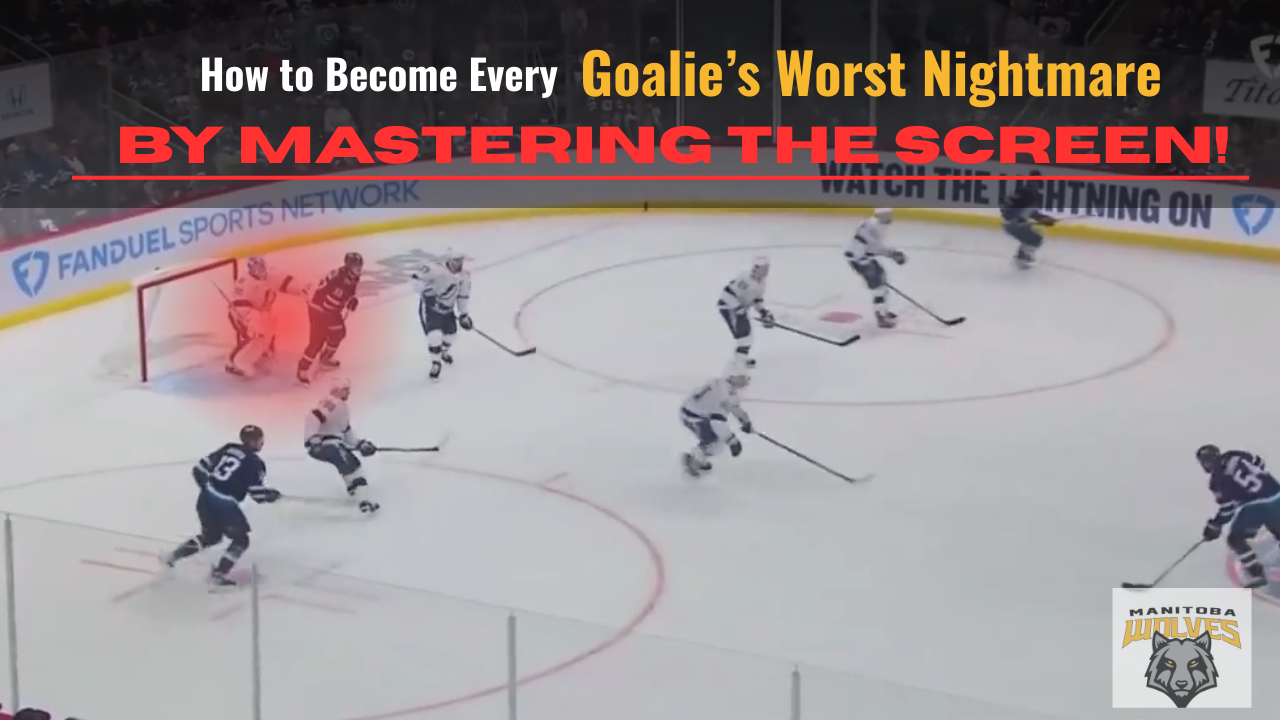
The idea behind this drill is to have goalies work within an in-zone play setup that simulates passing lanes similar to real game situations (very often seen on the power play). It allows goalies to train lateral skating and movement efficiency, with the added motivation and realism of an actual shot at the end of the sequence.
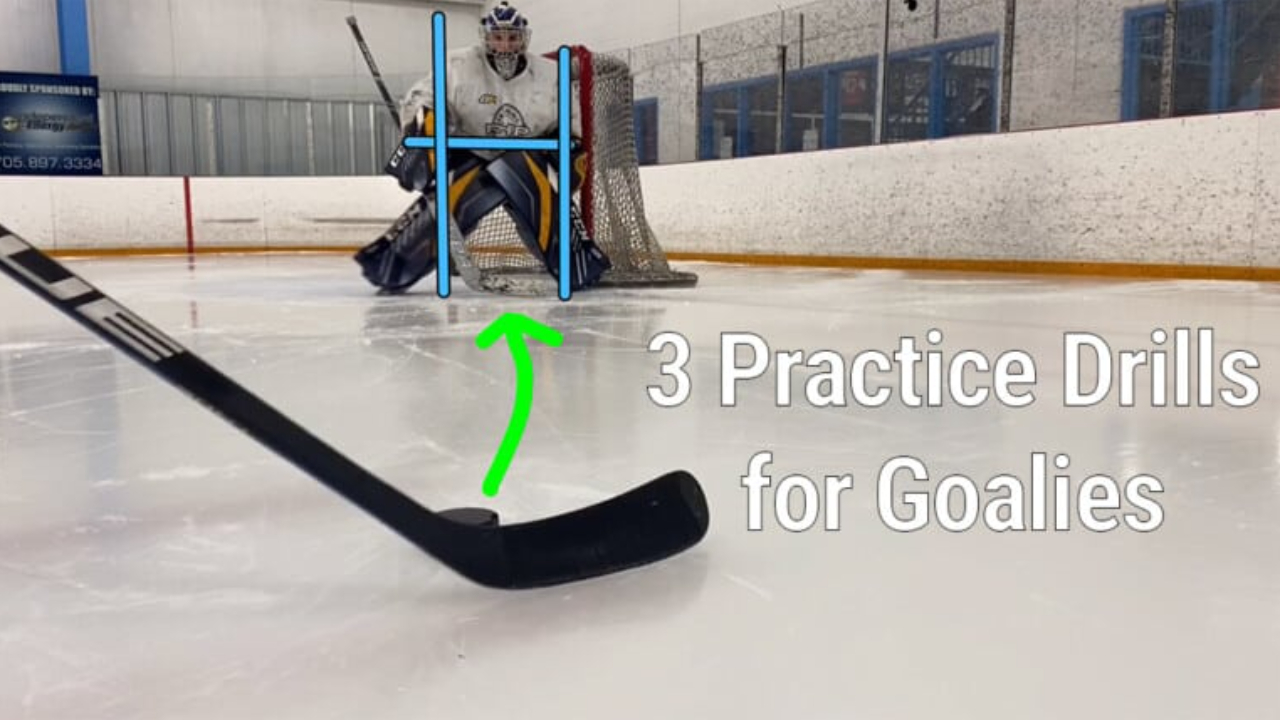
On top of that, the drill helps goalies find their depth and spacing (“take their measurements”) and rehearse lateral movements through a repeatable pattern that shows up consistently in games.
Introduction (Stage 1 – Static / Technical focus)
This drill is designed to recreate in-zone play situations with multiple High-Low and Low-High passing options. In this first stage the pace is intentionally controlled and very static, allowing the goalie to focus on technical details without game-like chaos.
The main goals are:
-
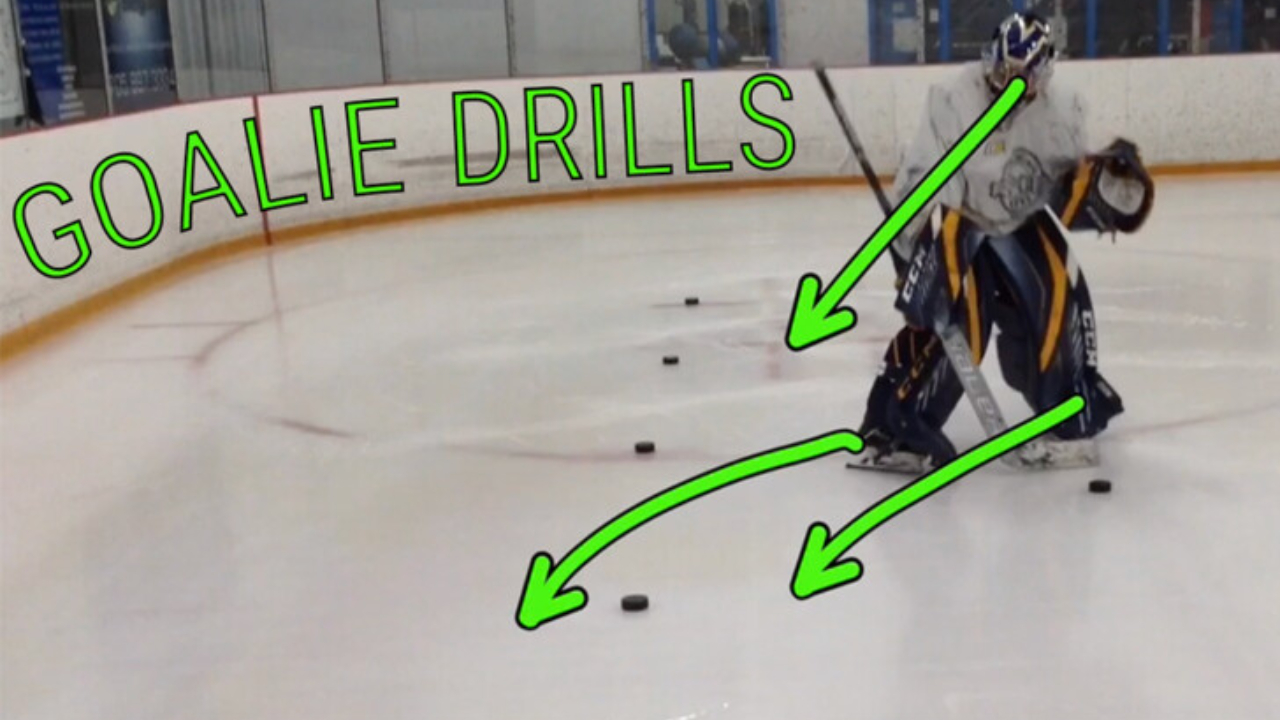
Explosive lateral movement (strong pushes and clean recoveries)
-
Precise positioning (arriving square, balanced, and set)
-
Rebound control (absorbing, steering, and “killing” second chances)
3-step progression (Goals for the goalie at each stage)
Step 1 (Static – build the base)
Goal: lock in the technical execution with zero noise.
In Step 1 the setup stays controlled and predictable so the goalie can focus on the essentials:
-
Arrive set on every pass: square to the puck, stable stance, hands in front, eyes leading the body.
-
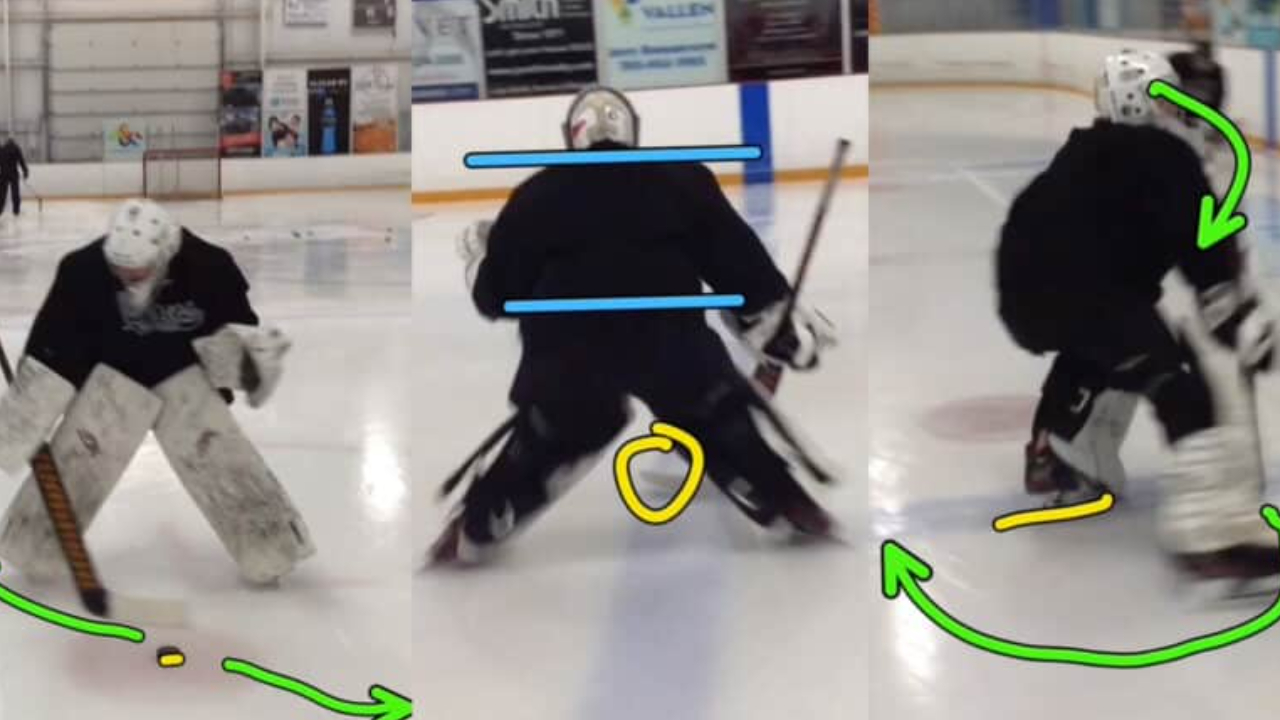
Explosive but clean lateral pushes: one strong push, controlled glide, and a quiet stop (no over-sliding).
-
Rebound intention: absorb when possible; if not, steer rebounds to a safe area with purpose.
This is where you “fix the movement”: the goalie repeats the same pattern until the timing, depth, and edges feel automatic.
Step 2 (Add dynamics – active positioning under timing pressure)
Goal: keep the same technical quality while the shooter creates real-game timing.
Before the shot, the shooter adds a lateral movement (side-step / slide). This forces the goalie to:
-
Stay connected to the puck through the release: maintain angle and depth while the shooter changes the release point.
-
Hold edges and adjust micro-depth: small shuffles/edge work to stay square without drifting or chasing.
-
Arrive set at the moment of release: no early drop, no late hands—read the release and be stable when the puck leaves the blade.
The focus here is “positioning that moves”: the goalie is not just sliding into a spot, but actively managing angle, depth, and balance while the shot is being created.
Step 3 (Add support / across pass – seam reads + efficient transfer)
Goal: execute efficient lateral movement on a true pass-across while staying in control for rebounds.
Add a support player to create a pass across option before the shot. Now the goalie must:
-
Read the seam and the threat: recognize when the puck carrier is likely to go across and prepare the body (hands/hips) accordingly.
-
Move on the puck, not on the fake: track the puck cleanly and initiate the push at the right time.
-
Efficient transfer: strong push, controlled arrival, chest/hips square, and a clean stop—no spinning, no drifting.
-
Rebound management in chaos: after the pass-across shot, be ready for a second puck (rebound or quick follow-up) while staying compact and balanced.
This is the most game-like stage: the goalie applies the same technical base from Step 1, but now under real reads, higher speed, and changing angles—exactly what happens in power play situations.