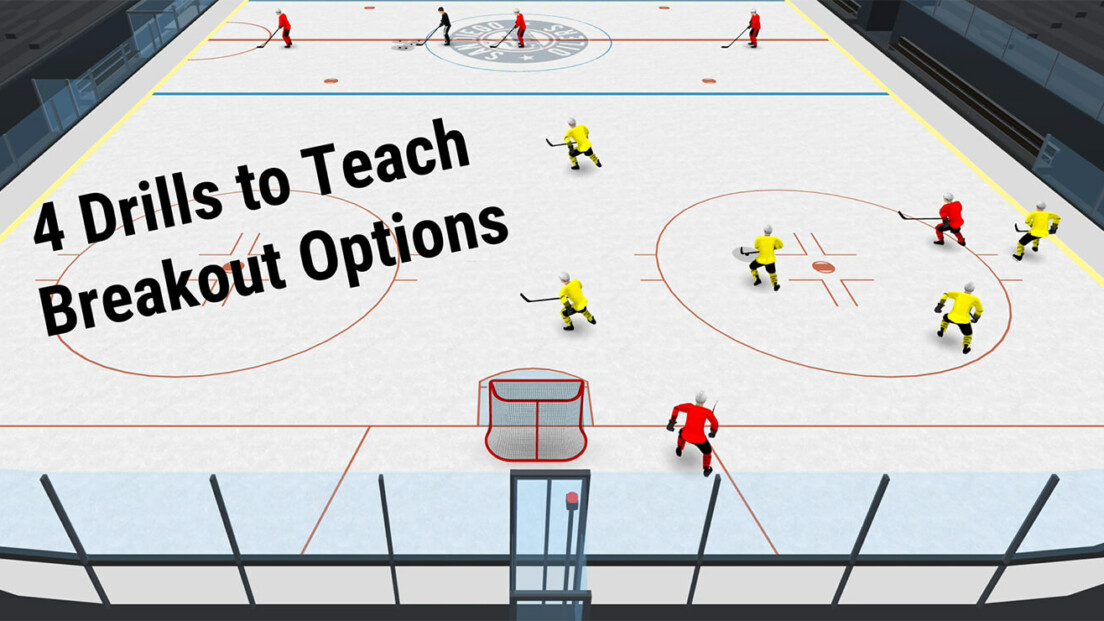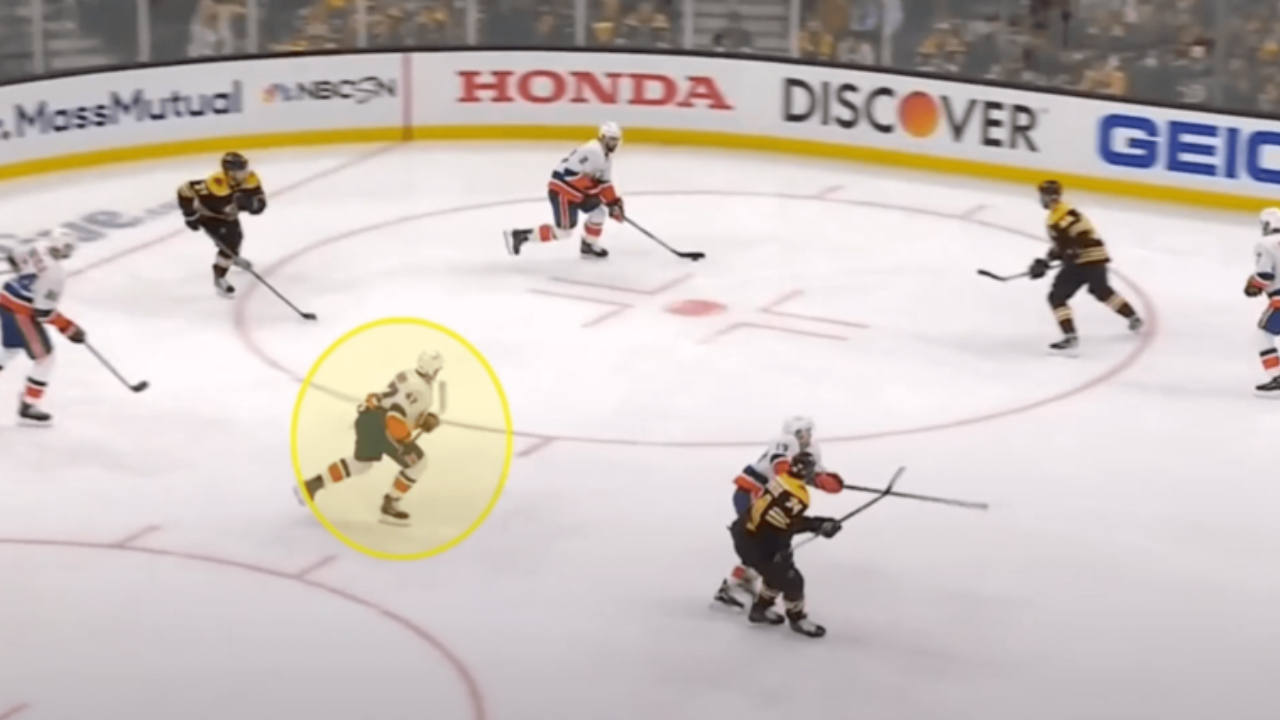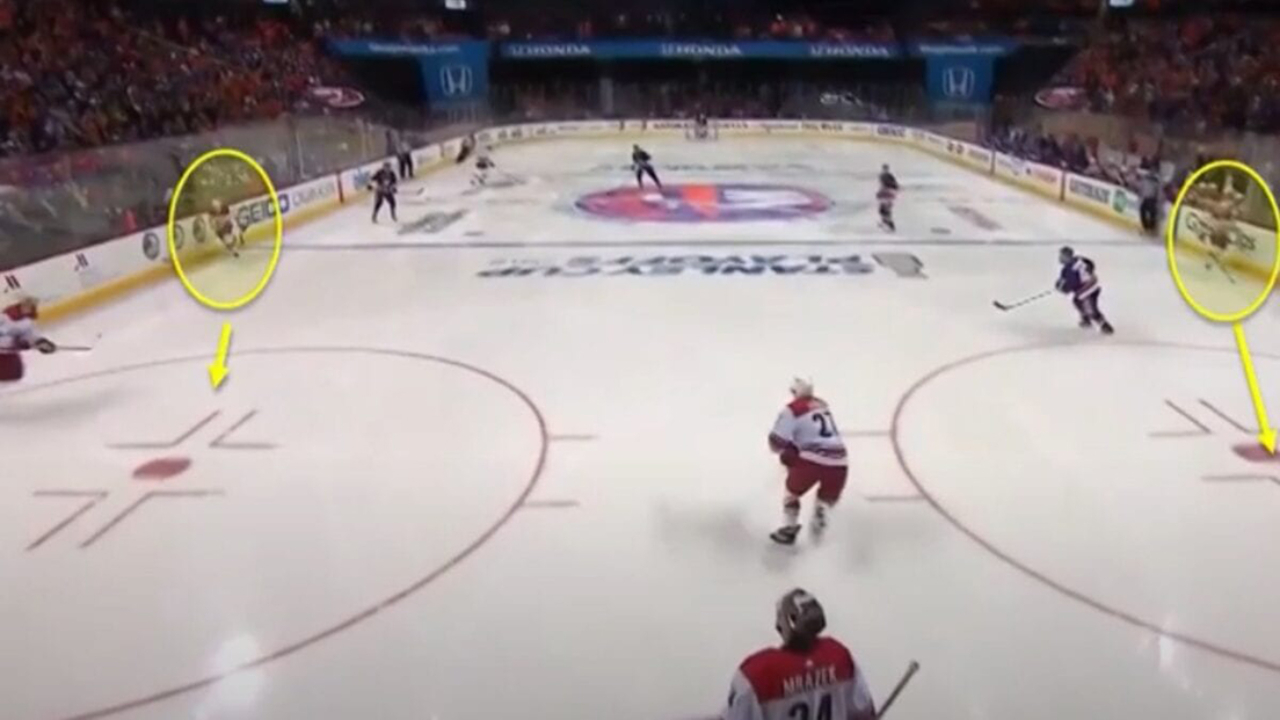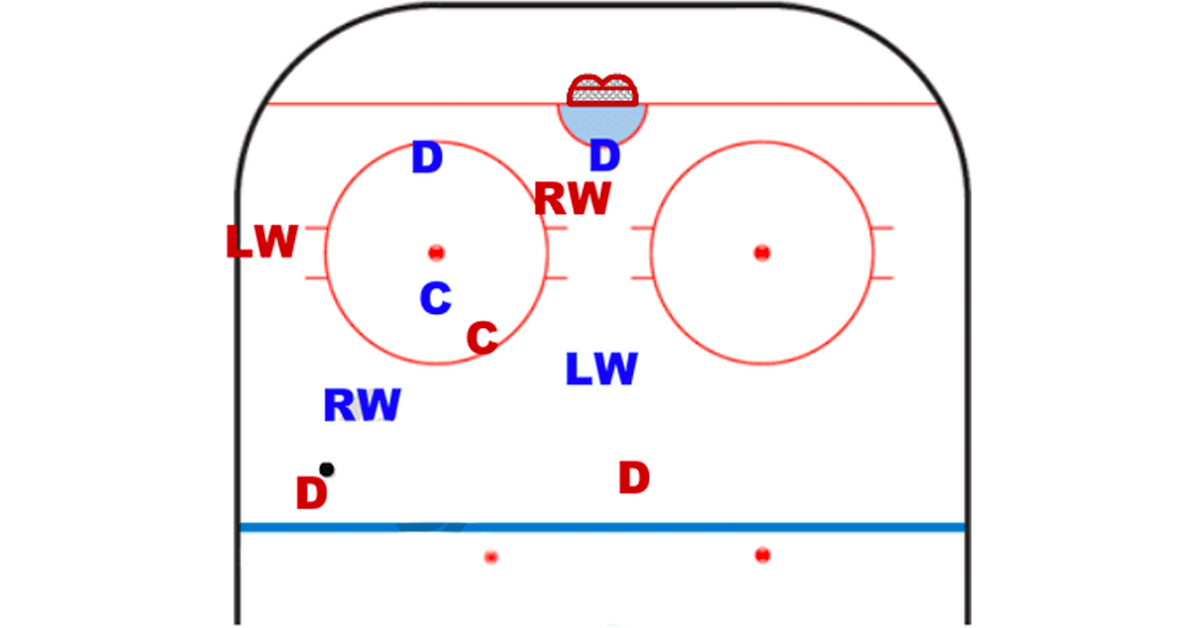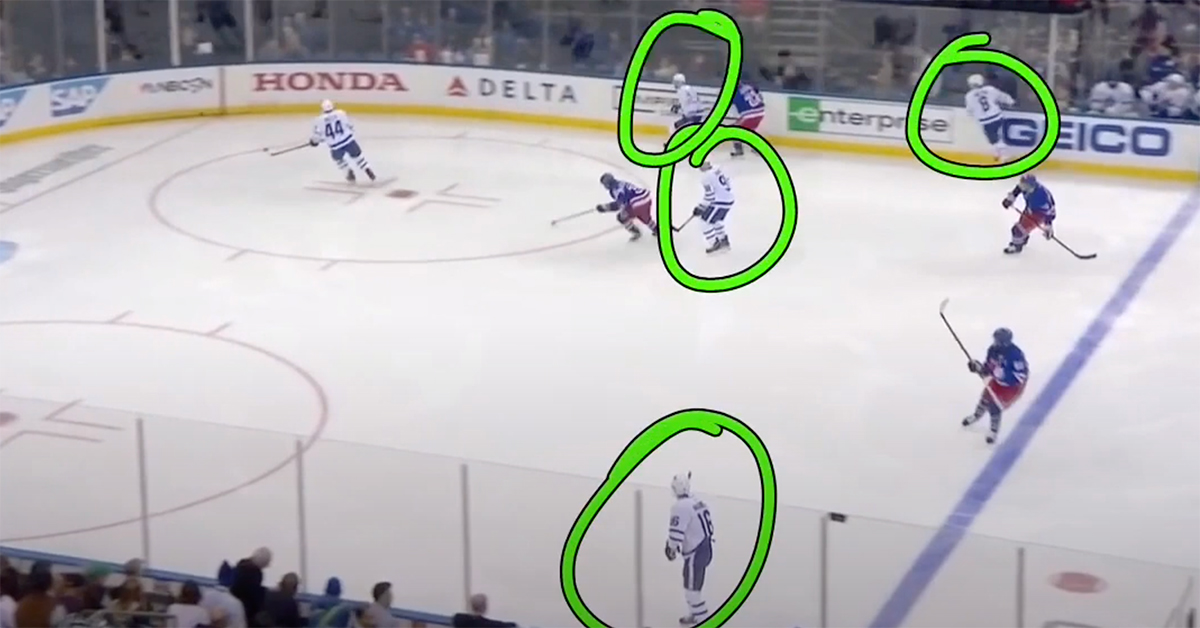
If you watch our video, you’ll notice that our breakout work doesn’t look like the typical “D retrieves, D-to-D, half-wall winger, swinging center” pattern that so many teams run on repeat. In my opinion, relying too heavily on that one scripted breakout creates predictable players and poor habits. It looks clean in practice, but it doesn’t teach real awareness or adaptability, two things you absolutely need in a game.
Typically, during a game, you’ll see red, yellow, and green pressures in your defensive zone.
Green pressure is when you have time and space, allowing you to look for the neutral-zone stretch pass or a longer, controlled exit.
Yellow pressure is that in-between moment, some pressure, but still enough time to make a calculated play.
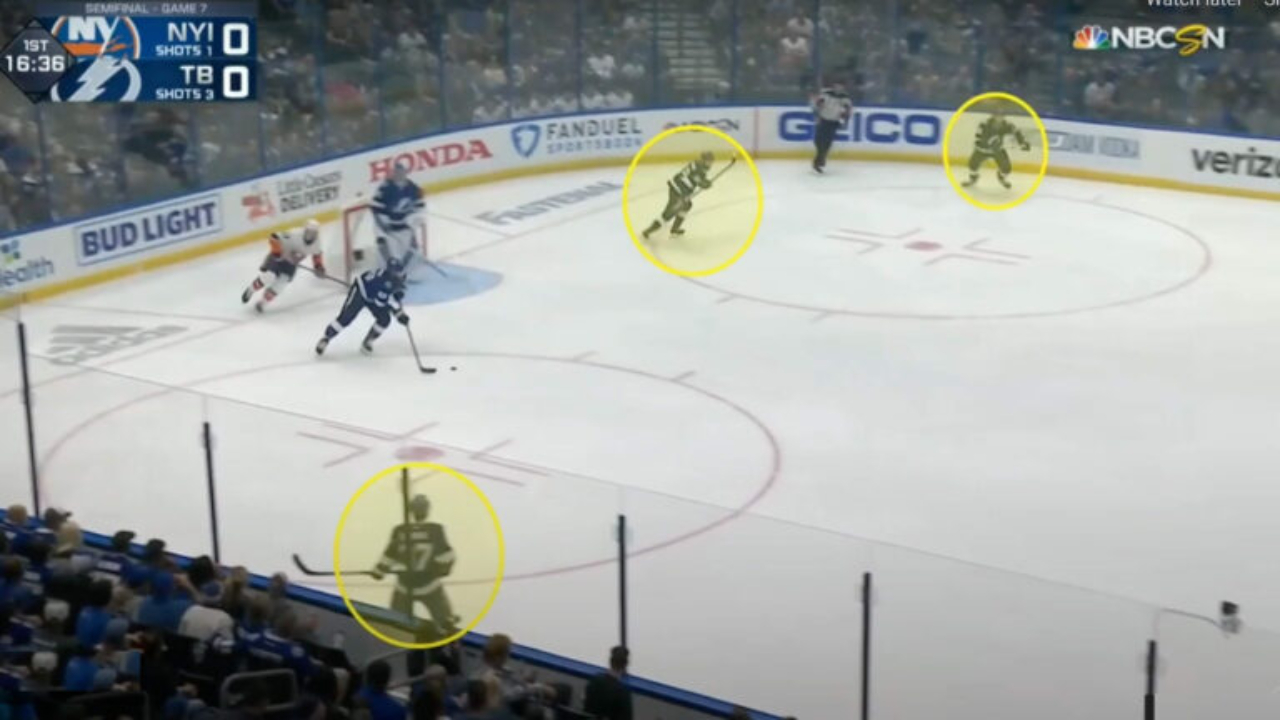
But the most common scenario in youth hockey is red pressure. Red pressure happens when your defenseman going back for the puck has a forechecker within a stick length, forcing a quick decision. Another version of red pressure is when the other team already has possession in your zone, and you’re trying to recover the puck. These moments demand awareness, support, and quick reads, not just a memorized breakout pattern.
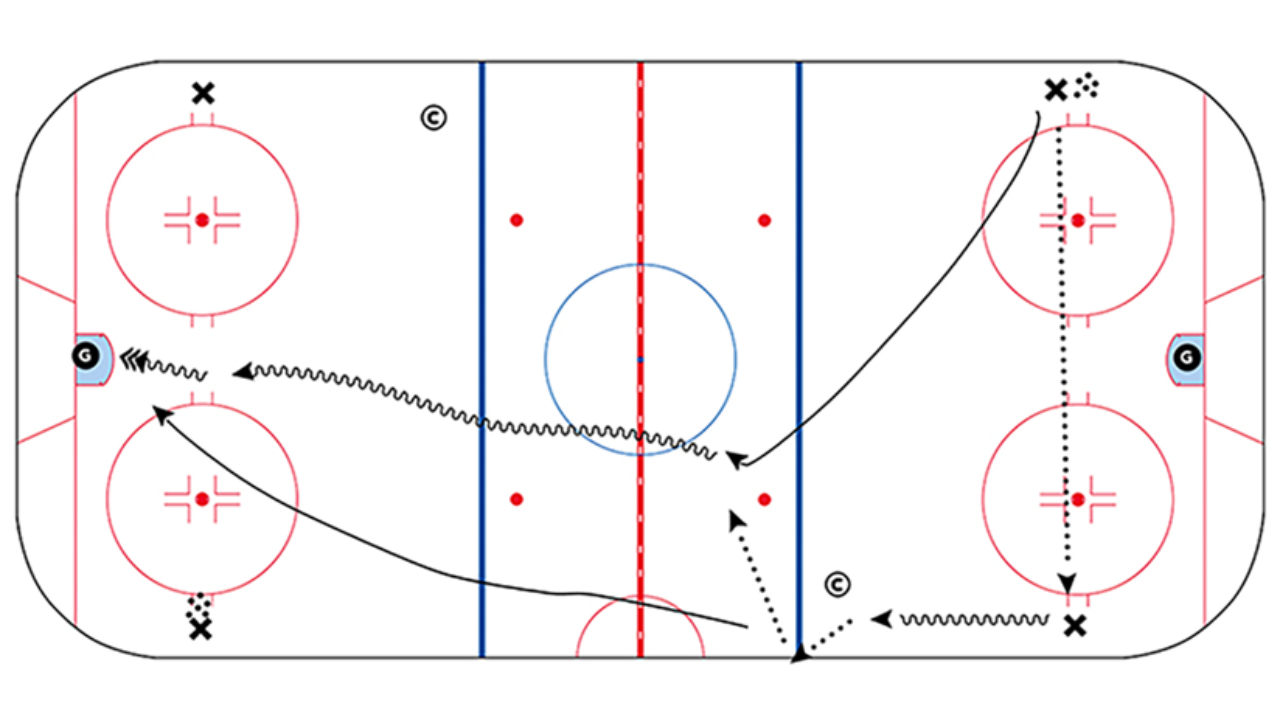
Once we’re organized defensively, we layer in all the different ways you can exit the zone: up the middle, weak-side winger, strong-side winger, bump-to-weak-side D, or using multiple options in sequence. There are so many valid breakout routes, yet most teams only ever practice one.
In the practice clip, you can see we’re still learning timing, support routes, and how to read the next play, not just memorize a pattern. But the habits are forming, and our show it, practice it, transfer it; teaching process is taking hold.
The goal isn’t perfection. The goal is building hockey IQ, so players can solve problems, not run scripts.