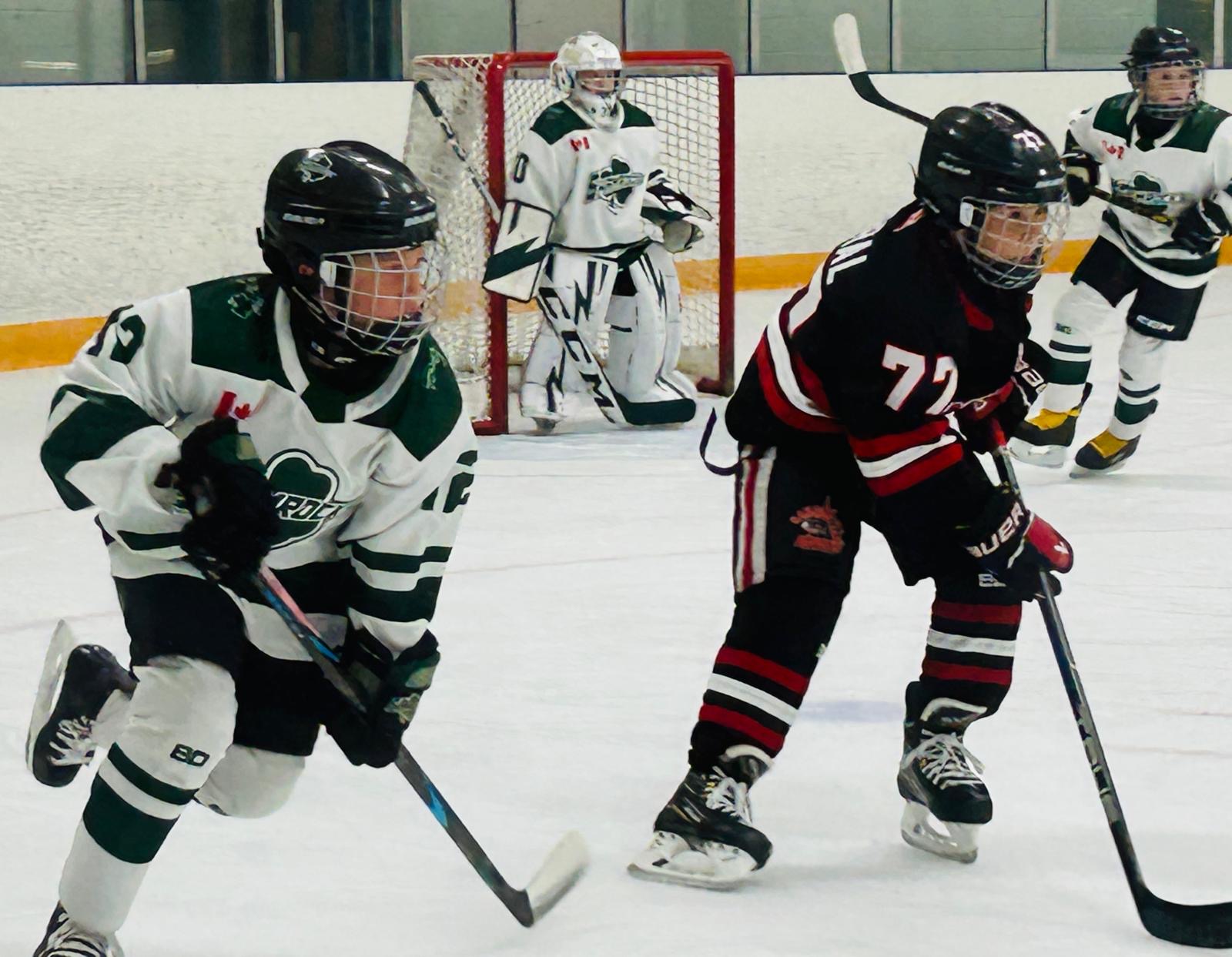
One of the hardest things I have found in coaching younger players is that it is very easy to talk about development in August.
It is much harder in October when the game is tied, you get a power play, and every competitive instinct you have is telling you to load it up.
I catch myself there more often than I would like.
Do I put my best five players on the ice?
Do I shorten the back end in the third?
Do I chase the result?
Then I have to remind myself of something that should be obvious, but sometimes is not when you are standing behind the bench:
They are 10 years old. They are playing "A" hockey. I am here to develop them.
That does not mean I do not care about winning.
I hate losing.
Eight years around U Sports taught me pretty quickly that competition matters. At higher levels, results matter. People’s jobs and livelihoods can depend on them.
That mentality does not just disappear because I am now coaching 10-year-olds.
And that is probably the biggest battle I have with myself as a youth coach.
Inconsistency is frustrating — especially when the mistakes are familiar
Our biggest issue early this season has been inconsistency.
What makes it frustrating is that these are not new concepts.
We have been preaching many of the same things since last season:
Get pucks out.
Pass the puck.
Trust your teammates.
Work hard.
Have good defensive-zone coverage.
Some nights, we look like we have taken a massive step forward.
Other nights, we make the same small mistakes over and over again.
A perfect example came recently.
We tied the defending league champions 2-2.
We competed.
We battled.
We played hard.
Quite frankly, we probably deserved to win the game.
For our group, it felt like a significant step.
But sandwiched around that game were two losses against teams we have consistently beaten before — and in both games, we did not have our best effort.
Same players.
Same systems.
Same coaches.
Very different performances.
That is youth hockey.
And as frustrating as that can be, I am starting to understand that inconsistency is not always a sign that development is failing.
Sometimes it is development happening in real time.
The scoreboard does not always show progress
There are things happening with our team right now that I would not have seen if I only looked at wins and losses.
Our forecheck is significantly better than it was at any point last season.
The players have bought into it.
They are getting pressure.
They are recovering pucks.
They are beginning to understand where they need to go.
Now our next problem is:
What do we do once we get the puck?
That is development.
Solve one problem and another appears.
Last year, the issue may have been getting possession back.
Now we are getting possession more often, but we need to become better at what comes next.
Can we make a play?
Can we support the puck?
Can we find the next option instead of throwing it away?
That progression does not always show up on MyHockeyRankings or in the standings.
But it matters.
I still feel the pressure to win
There is another side to this that coaches probably do not talk about enough.
Sometimes I worry about what people think when we lose.
I wonder if parents are judging the coaching.
Then if I shorten the bench, I wonder what the parents of the players who are not getting those minutes are thinking.
That can become a vicious cycle if you let it.
You start coaching reactions instead of coaching players.
That is why I keep having to reset.
I am not coaching this team because somebody hired me to win a U11 championship at all costs.
My responsibility is to help these players improve.
That means giving them opportunities to play in difficult situations.
It means allowing different players to get power-play opportunities.
It means not automatically shortening the bench the second a game gets tight.
Will that potentially cost us something in October?
Absolutely.
But if I never let a 10-year-old experience those moments, how can I expect him to handle them later?
Development does not mean accepting everything
There is an important distinction here.
Development over winning does not mean there is no accountability.
I still believe kids need to learn that their actions matter.
If we have gone over something repeatedly and a player is not listening, there has to be accountability.
If the effort is poor, that matters.
If we are making the same mistake because we are choosing not to do what has been taught, that is different than making a mistake while genuinely trying to execute.
Those are two completely different things.
The challenge as a coach is recognizing the difference.
They are going to be inconsistent.
They are 10.
But they can still learn responsibility.
They can still learn that effort matters.
They can still learn that teammates need to be able to trust them.
What I am seeing at U16 has reinforced this even more
Working with U16 AAA players has made me think even more about what we teach younger players.
At that level, the game moves quickly.
Really quickly.
One mistake away from the puck can turn into a goal almost immediately.
A player who does not anticipate the next play can suddenly find himself completely removed from it.
That has probably increased my desire to work with younger players more than anything else.
I want younger players to learn how to think the game before the physical side catches up.
Maybe a player is not the biggest kid at 10.
Maybe he is not the fastest.
Maybe his body changes at 13, 14 or 15.
If that happens and he already knows how to support the puck, recognize pressure, anticipate the next play and understand where he should be away from the puck, he has a chance to make a big jump.
And when he eventually moves from A to AA or AAA, coaches notice those habits.
That has also become a major part of what I want to build through Candela Hockey Development.
Not just better hands.
Not just a harder shot.
I want players to learn how to see the ice.
How to anticipate.
How to understand what is coming next in the offensive zone, defensive zone and neutral zone.
How to make a decision instead of being scared and guessing.
What would success actually look like?
Of course I want our group to win.
I believe this team is capable of doing something special together.
I would love for them to have a playoff run or tournament memory that stays with them for years.
But if March arrives and we have not won a championship, that does not automatically mean the season failed.
If every player improved, that matters.
If we compete in tournaments, that matters.
If we trust one another more, that matters.
If we become a team that moves the puck instead of trying to do everything individually, that matters.
If our players are better hockey players in March than they were in September, that has to matter.
That is the part I have to keep reminding myself of.
Especially when the scoreboard is close.
Especially when I want to load up the power play.
Especially when I want to shorten the bench.
Because development is easy to believe in when you are winning.
The real test is whether you still believe in it when winning gets hard.
Jesse Candela is a hockey coach, scout and founder of Candela Hockey Development with experience working across minor hockey, AAA, junior scouting and international hockey.
He currently coaches at the U11 A level while also working with U16 AAA players, where he focuses on defence, video and player development. His scouting experience includes work with junior hockey organizations and Neutral Zone, giving him a broader view of what separates players as they move through higher levels of the game.
That experience has shaped Jesse’s coaching philosophy. He believes younger players need more than skill repetition — they need to learn how to think the game, read pressure, support teammates, make decisions and understand what is happening away from the puck.
Through Candela Hockey Development, Jesse works with players and coaches from U7 through U18, with a focus on hockey IQ, confidence, individual development, video analysis and practical teaching that translates into games.