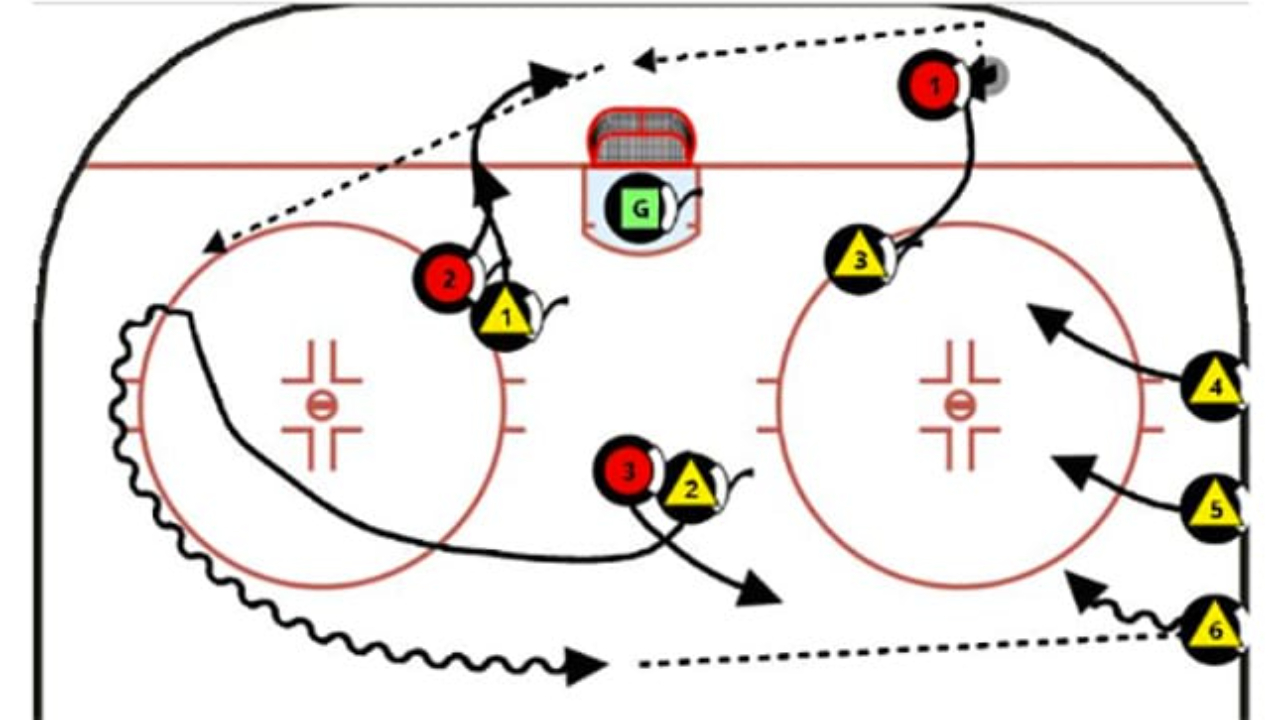
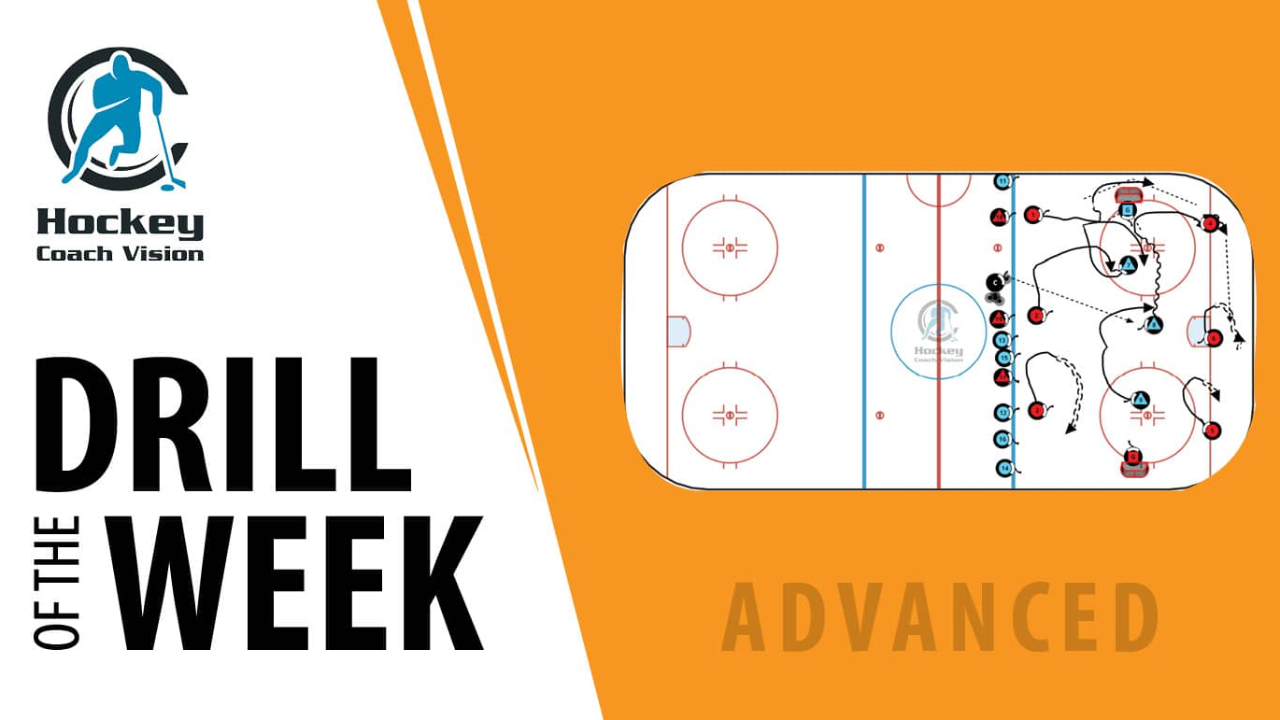
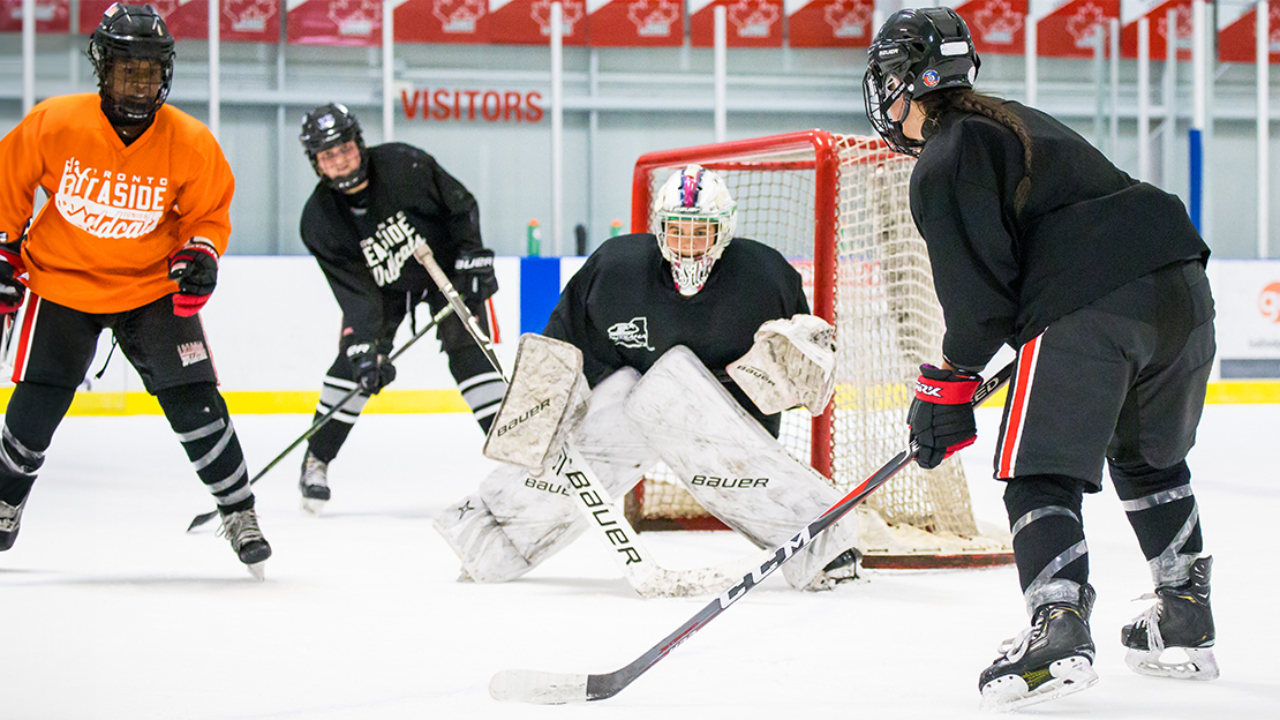
Breaking & Entering Game is one of the most versatile games in a coach’s playbook because it effortlessly scales to any group size while instilling the crucial habit of penetrating high-danger ice rather than settling for low-percentage perimeter play. By removing shooting entirely, the game strips away bail-out shots from low-percentage areas and challenges players to rely on deception, spatial awareness, and puck protection to break into the high-danger house area.
Setup & Rules
- Scalable Player Numbers: The game seamlessly adapts to any group size—running as tight 2v2 battles, odd-man situations (e.g. 3v2, 4v3, or 5v4 ), or team play up to 5v5. Run shifts in 45- to 60-second bursts to sustain high compete levels.
- The House: Mark the "house" using cones or markers stretching from the net posts out through the face-off dots up to the tops of the circles.
- Game Start: Game can start in a variety of ways, from a dump-in/puck race, to a face-off, to a static start with players already in the zone.
- Scoring: 1 point for carrying the puck into the house under control; 2 points for completing a pass to a teammate positioned inside the house.
- The Reset: After scoring, the possessing team must transport the puck back outside the house and complete at least one perimeter pass (or an outside puck exchange) before attacking the middle again.
- No Shooting: Play focuses purely on possession, route-running, and interior ice penetration.
Offensive Focus Areas
- Deceptive Route Timing: Discourage forwards from standing static inside the house. Attackers must hide in defenders' blind spots, use change-of-pace cuts, and time their arrival into the slot precisely when the puck-carrier lifts their eyes to pass.
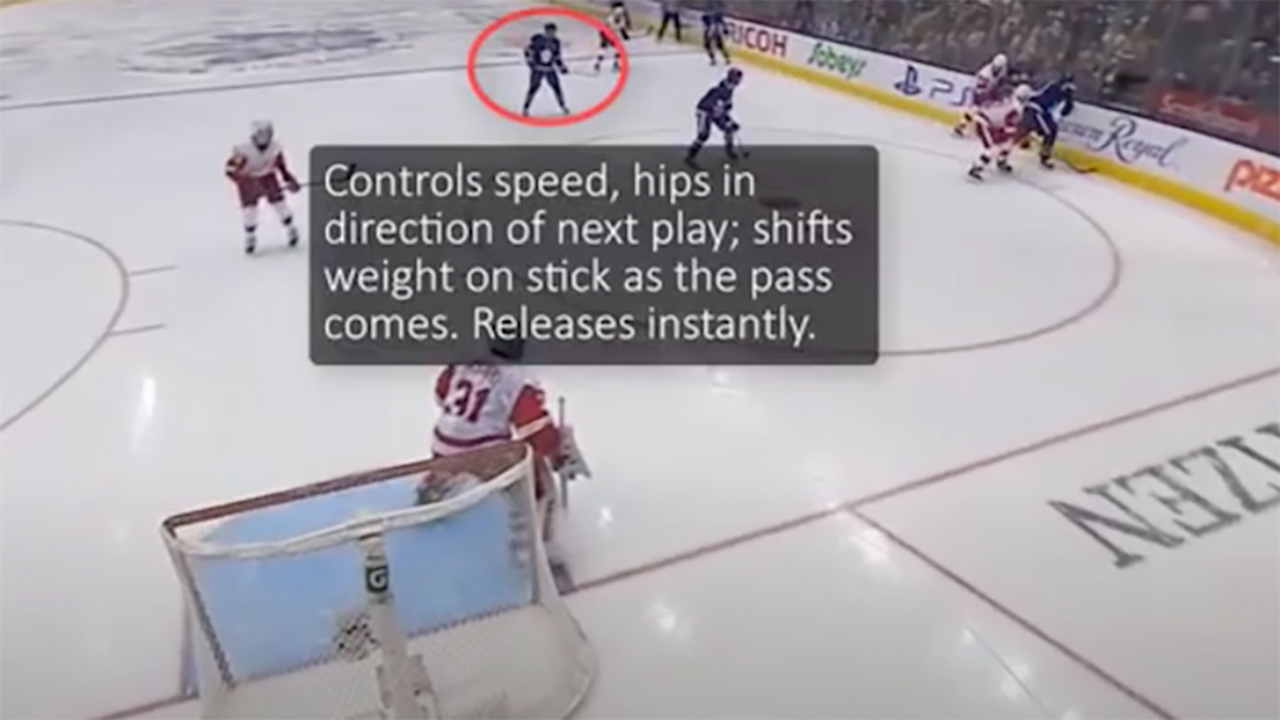
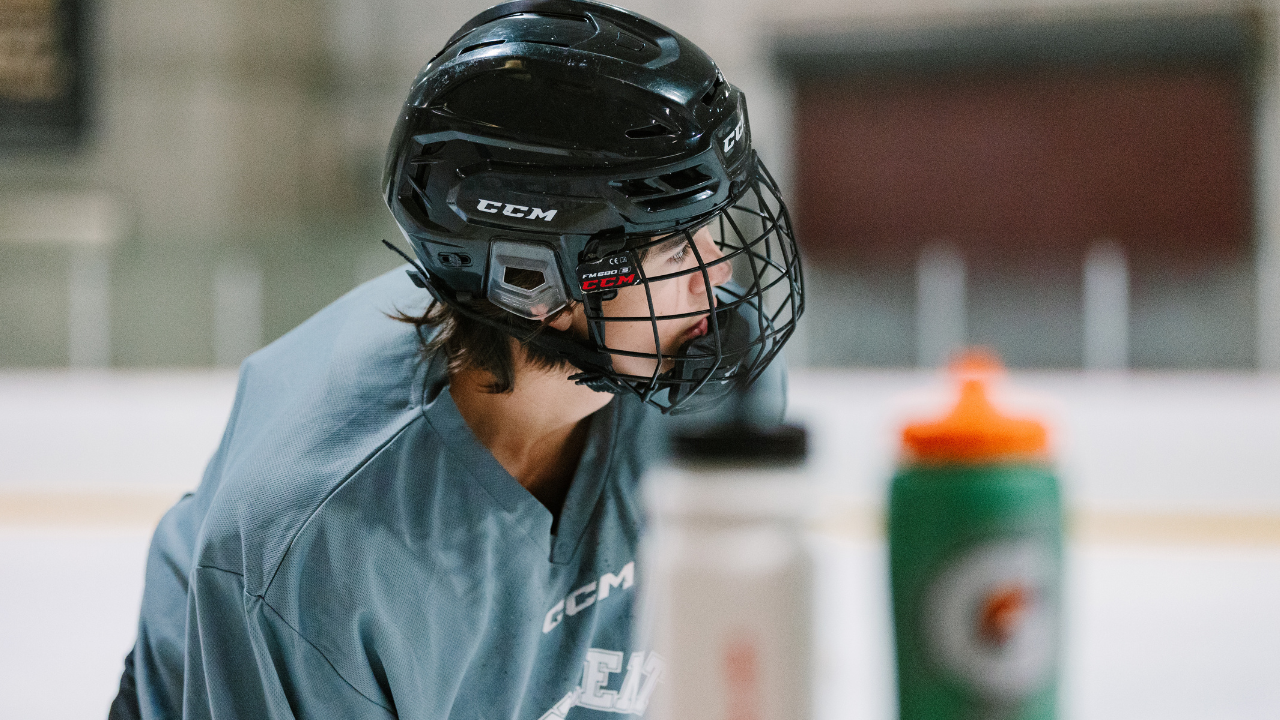
- Scanning & Spatial Awareness: Perimeter players must scan shoulder-to-shoulder before receiving pucks to identify open interior passing lanes early, avoiding excessive dusting or hesitation.
- Patience & Puck Protection: Rather than forcing contested passes into a clogged middle, puck-carriers must use agile skating, body positioning, and false information along the boards to extend possession until seam lanes emerge.
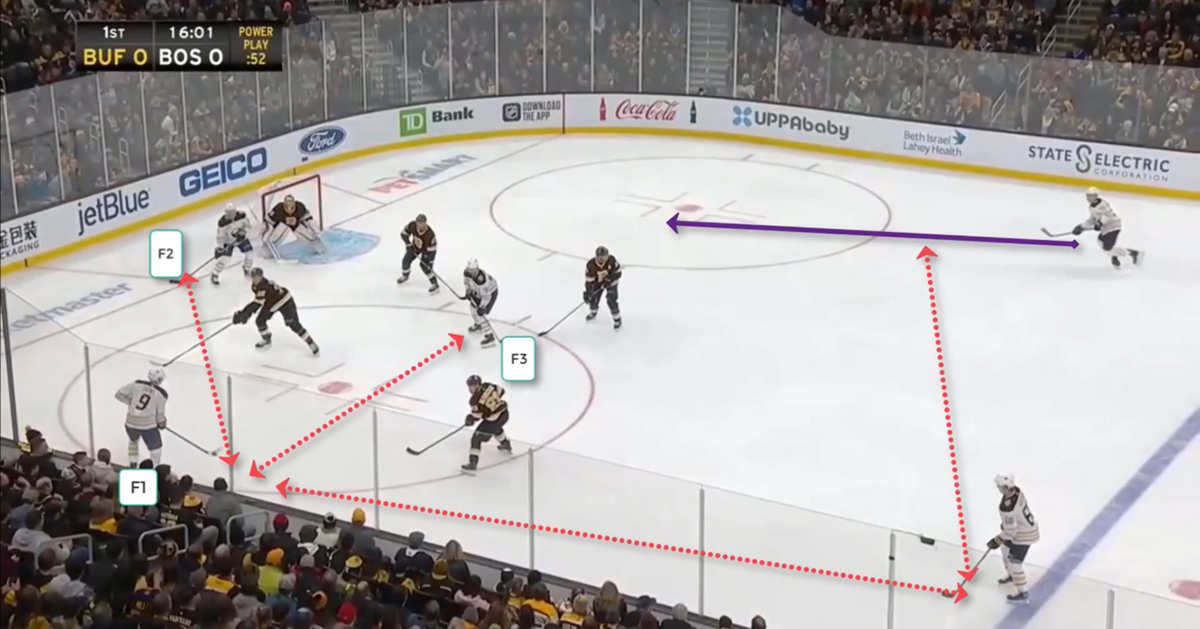
- Give-and-Go Speed: Attackers should quickly relocate after moving the puck outside the house, using rapid give-and-go exchanges to beat defenders across their heels and exploit open entry routes.
Defensive Focus Areas
- Inside-Out Body Positioning: Defenders must prioritize defending from the net outward, anchoring their bodies between the puck and the middle lane rather than chasing low-threat p along the perimeter.
- Active Stick-on-Puck: Keeping sticks on the ice and actively positioned in middle-ice passing lanes to disrupts hhigh-danger passes and force opponents to keep the puck on the perimeter.
- Shoulder Checks & Awareness: Off-puck defenders must continuously check their shoulders to track cutters sliding into the slot behind them, avoiding fixating solely on the puck.
- Gap Closure & Angling: When pressuring the outside carrier, defenders should take away middle ice first with proper stick leading, steering the attacker into the boards to limit penetration angles.
Constraints
Varying the environmental constraints changes how players perceive space and unlocks different tactical behaviors. Below are just some examples of ways to constrain this game:
- Two-Touch Perimeter Play: Restrict players outside the house to a maximum of two touches. This constraint eliminates dusting the puck, forcing perimeter puck-carriers to scan before receiving and affording quicker give-and-go opportunities to teammates cutting through traffic.
- Two-Second House Limit: Attackers may only remain inside the house for up to two seconds before exiting. This constraint affords deceptive route timing, discouraging forwards from standing still in coverage and instead teaching them to time their arrival just as passing lanes open.
- Below-the-Goal-Line Bonus: Award an extra point if the pass into the house originates from behind the goal line. This constraint affords low-to-high cycle awareness, pulling the defense’s eyes and body positioning to expose the slot.
- Royal Road Bonus: Award an extra point if the pass into the house crosses the "royal road" line to encourage passes that move the goalie side to side.
- Neutral Floater (+1): In smaller groups (such as 3 or 5 players), designate one player as an all-time offense floater. This numerical advantage affords constant weak-side support and encourages players to recognize and exploit odd-man overloads in tight spaces.