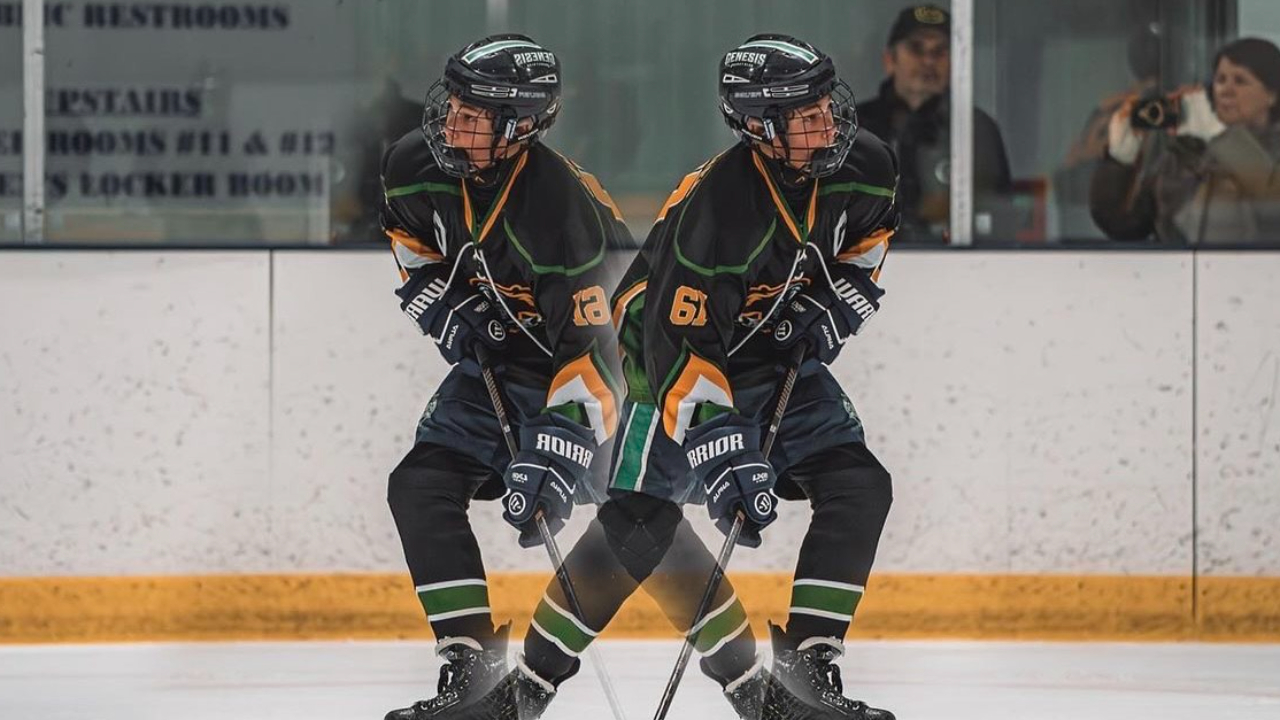
This is my first January coaching this age group, and it’s felt like a natural point to pause and take stock.
Not in terms of wins or losses, but in terms of whether we’re actually doing what we said we were going to do at the start of the season. It’s easy to talk about development in September. It’s harder to stay disciplined when the schedule gets heavier, the games matter more, and emotions start creeping into decisions.
So instead of changing direction, January has been about realigning with our plan and re-anchoring the habits we believe matter most.
Below are the three areas we’re focusing on, along with the three drills we’re using to reinforce them. I’ve included the drill diagrams and descriptions so coaches can download and use them with their own teams.
1. Flow and Timing
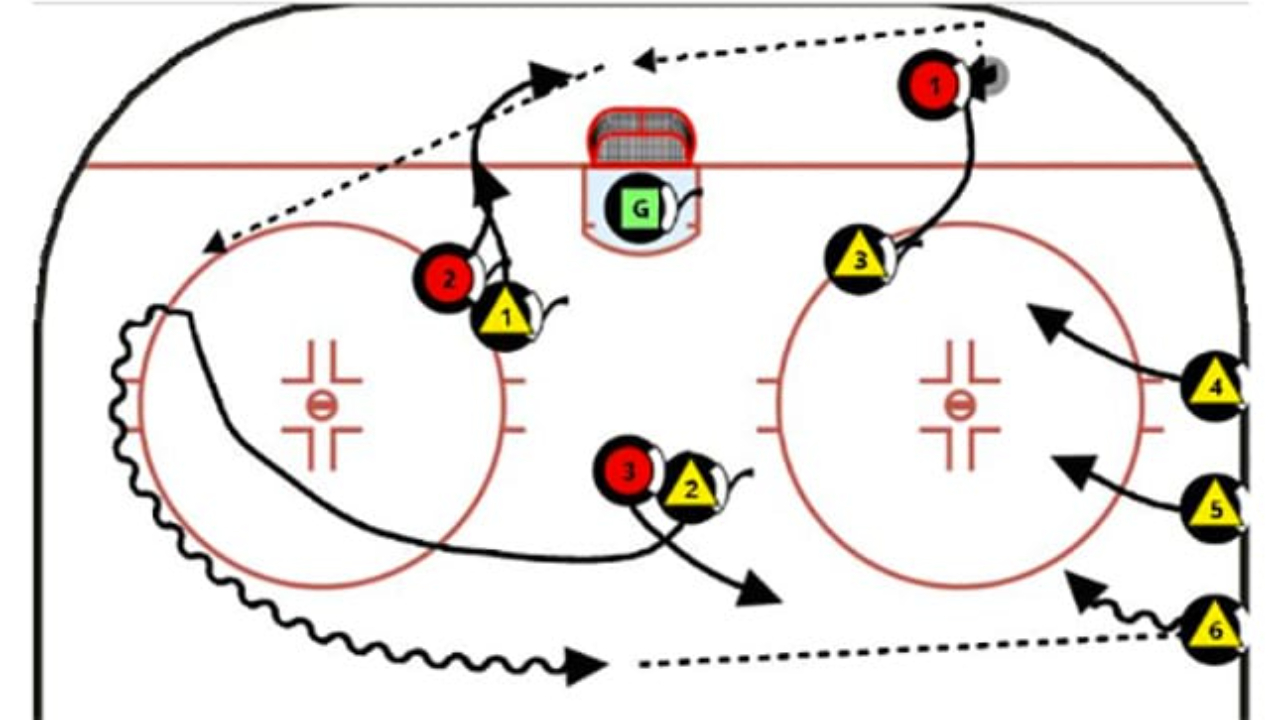
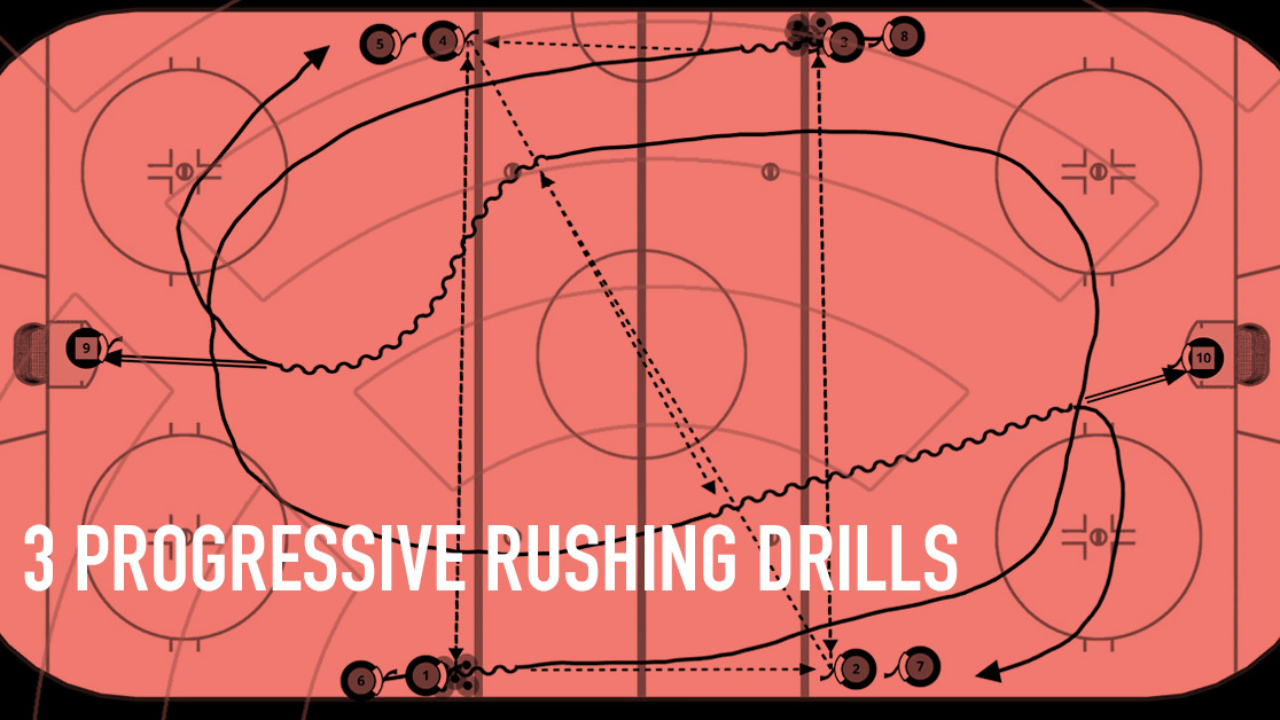
Drill: Team Canada Warm Up
One of the biggest issues we saw creep into our game was rushed play — players leaving early, stopping to wait for passes, or forcing pucks into space that wasn’t there yet.
The Team Canada Warm Up has been useful because it exposes timing immediately.
The structure is simple:
- Player 1 starts with the puck, shoots, then retrieves a puck from the corner.
- Player 2 swings through the middle and receives a pass from Player 1.
- Player 3 swings low up the wall, receives a pass from Player 2, then attacks the net with speed and shoots.
- After the shot, Player 3 becomes Player 1 and the flow continues.
The key point is that the drill only works if the timing is correct. If one player goes too early, too late, or drifts, the entire flow breaks down. That’s exactly why it’s valuable — it teaches players that flow is about synchronization, not speed.
We emphasize short, horizontal passes and skating at the right time, not just skating fast.
2. Passing Before Shooting
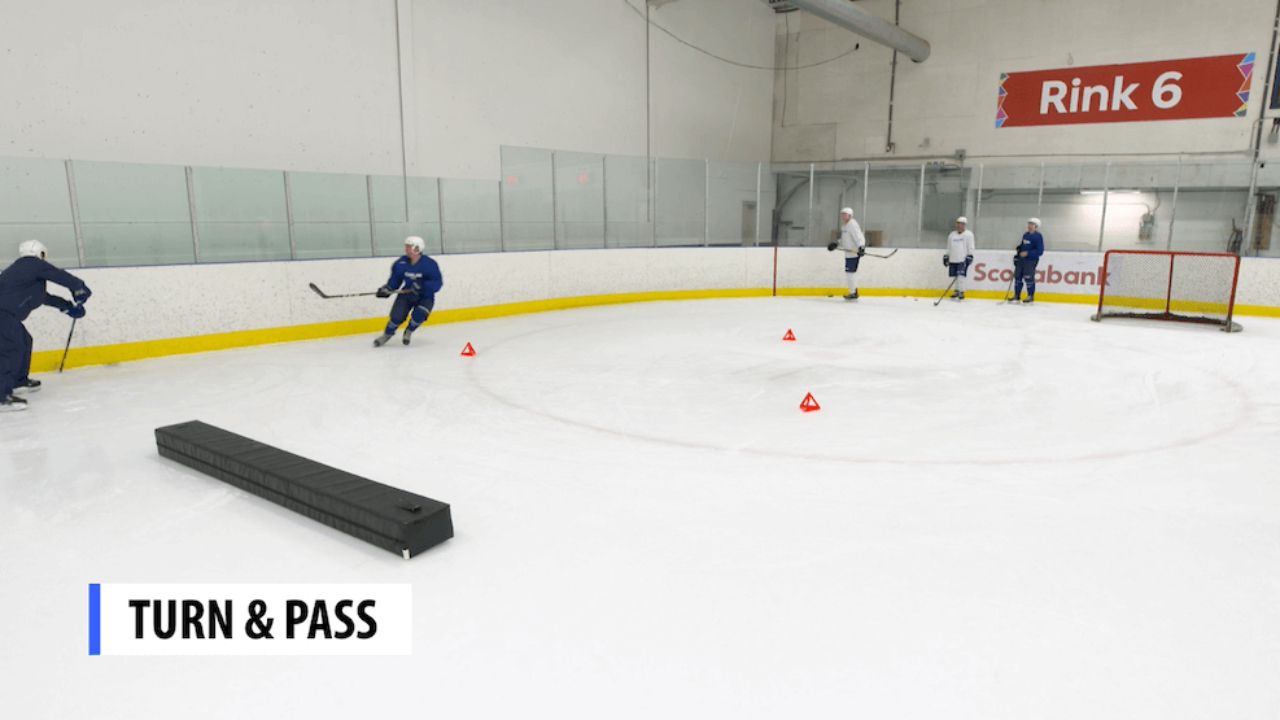
Drill: Pass and Shoot
We were getting shots, but not quality chances. Players were rushing plays, shooting from poor areas, and missing opportunities to improve the scoring look with one more pass.
The Pass and Shoot drill reinforces patience and puck movement before attacking the net.
The structure:
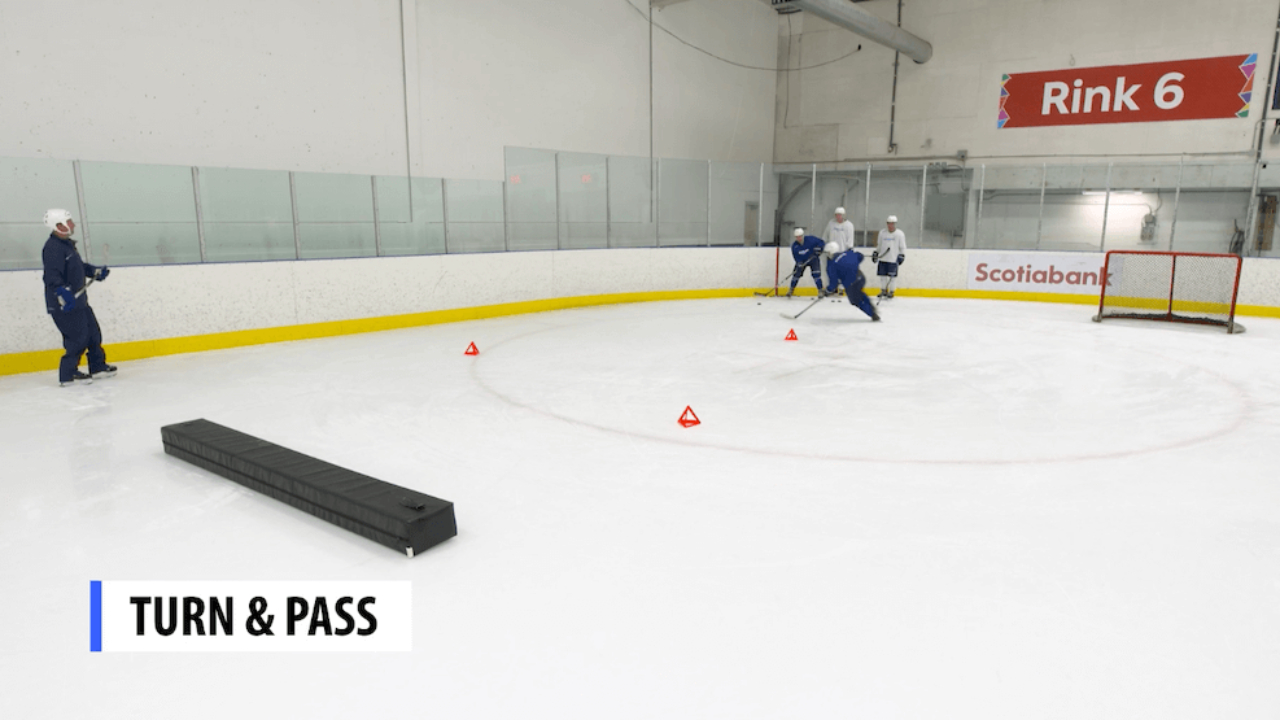
- Players skate around the first pylon and pass to X1.
- X1 pivots 180 degrees and passes to X2.
- The original player continues their route, receives a return pass from X2, and attacks the net for a shot.
This creates a natural “pass-pass-shoot” pattern and teaches players to move the puck low-to-high and back into space before attacking.
The technical focus is on:
- accurate passing,
- receiving in stride,
- and attacking the net off movement instead of off a standstill.
It’s helped slow the game down for our players and improved their ability to see and use support.
3. Defending With Structure
Drill: 1v1 x 2
We also needed to improve how we defend, especially gap control, stick positioning, and recovery habits.
The 1v1 x 2 drill starts with a defender stationary, skating backward, facing a forward with a puck.
- On the whistle, the forward attacks with speed. The defender focuses on maintaining proper gap and keeping the forward to the outside.
- After the shot or chance, the forward curls up the opposite side and receives another puck from the coach, attacking again.
- The defender pivots, reloads, and defends a second rush immediately.
This creates two consecutive rush defenses in one rep and reinforces:
- backward skating posture,
- pivot efficiency,
- stick positioning,
- and recovery after a play.
It’s physically demanding, but it clearly exposes defensive habits and decision-making under fatigue.
Why This Matters
This reset isn’t about adding more structure or complexity.
It’s about making sure we’re still building the right things.
Timing.
Passing habits.
Defensive structure.
January is where development either stays intentional or slowly turns into reaction.
This mid-season check has helped me stay honest about whether I’m coaching the plan or chasing the results. We’re not finished, and we’re not perfect, but we’re aligned again — and that matters.
You can download all three drills and use them with your team today.
About the author
I’m a U10 Rep A coach and an OJHL regional scout who’s learning how to balance development, competition, and teaching at the youth level. I write about what I’m trying, what’s working, and what I’m still figuring out along the way in hopes it helps other coaches do the same.