Cognitive Overload is Destroying On-Ice Decision-Making
Remember that movie where Scarlett Johansson gains superhuman cognitive abilities? Instant pattern recognition. Processing multiple data streams simultaneously. Perfect decisions under pressure.
You're not coaching Lucy.
You're coaching humans with working memory that can only hold 3-7 pieces of information at once. And you're trying to cram "only"10+ tactical points into their heads before every game.
It's the third period. Your team is up by one. You've got the personnel, the preparation, the system.
Then it happens. A bad read in the defensive zone. Confusion on a line change. A turnover in transition that shouldn't happen at this level. Goal against.
On the bench, your coach is baffled. "We went over this 100 times. Why can't they execute?"
In the video room the next day, you'll show them the clips again. Explain the reads again. Add a few more details about opponent tendencies.
Here's the uncomfortable truth: You're not fixing the problem. You're making it worse.
Your players aren't dumb. They're not lazy. They're not "low hockey IQ."
They're cognitively overloaded. And you're the one doing it to them.
The Science Hockey Has Been Ignoring
While we've obsessed over physical training load, we've created a catastrophic blind spot in cognitive load management. The research is unequivocal, but somehow we're still acting like more information always equals better performance.
Study 1: Mental Fatigue Decimates Decision-Making (Ponce-Bordón et al., 2024)
Researchers tested professional soccer players using a controlled experiment. After a 30-minute cognitive task (the Stroop test—a mentally demanding color-word interference task), athletes played a full 90-minute training match.
The results were stark: Significantly worse passing decision-making performance throughout the entire match compared to the control group. Not just slightly worse—measurably impaired tactical decisions and slower response times.
The cognitive task beforehand handicapped their brains for the full game.
The hockey translation: Your 30-minute video session six hours before puck drop? You just compromised your team's decision-making capacity for the entire first period. Maybe longer.
Study 2: Working Memory Has Hard Limits (Wu et al., 2024; Multiple Studies 2023-2025)
A 2024 meta-analysis of 21 studies involving 1,455 participants—athletes across basketball, soccer, fencing, and other sports—confirmed that athletes have superior working memory compared to non-athletes. But even elite athletes hit a ceiling.
Working memory can only hold 3-7 pieces of information simultaneously. That's not a guideline. That's a biological constraint.
Multiple recent studies across basketball, soccer, and hockey confirm: working memory capacity directly predicts tactical decision-making under pressure. When cognitive demand exceeds available resources, performance doesn't just decline—it collapses.
The Losing Streak Death Spiral
Here's what happens when teams hit a rough patch. The losses pile up. Panic sets in. And organizations instinctively do the exact wrong thing: they add more information.
A typical game day during a losing streak (yes, this is somewhat exaggerated, but follow the pattern):
Morning (6 hours before game):
- 45-minute video session: 12-15 opponent tendencies to absorb ("We need to be better prepared!")
- 30-minute systems meeting: 8-10 tactical adjustments from last game ("Here's what we're doing wrong")
- 20-minute special teams review: 5-7 power play/penalty kill details ("We need to execute!")
Pre-game:
- Individual video clips sent to tablets: 3-5 personal focus points ("Everyone needs to be better")
- Final adjustments in locker room: 2-3 more tactical points ("One more thing...")
During game:
- Between-period video review: 3-5 adjustments per intermission ("We need to adjust NOW")
- Bench coaching: Real-time reads and corrections ("No, not that read!")
The desperation is understandable. But here's what's actually happening:
Each individual session exceeds working memory capacity (3-7 items).
The 45-minute video session asking players to absorb 12-15 opponent tendencies? That's asking working memory to hold roughly double its maximum capacity.
The systems meeting covering 8-10 tactical adjustments? Same problem.
Then the cognitive fatigue from each session compounds, degrading the brain's ability to process the next session, and the next, until game time—when decision-making capacity is already compromised before the puck drops.
When results are poor, the instinct is to do more. More video. More meetings. More information. More correction.
But you're not fixing the problem. You're making players' brains work harder at the exact moment they need to think less and react more.
The losing streak continues. So you add even more information next game. The cycle accelerates.
Study 3: Cognitive Load Theory in Team Sports (2025)
Recent work applying cognitive load theory in basketball and hockey shows that manipulating training task complexity directly influences tactical decision-making and cognitive adaptation under pressure. The key insight: excessive cognitive load during practice creates negative transfer to game situations.
Translation: The more complex you make your systems, the worse your players perform when it matters.
Study 4: Mental Fatigue Impacts ALL Performance Domains (2024)
A comprehensive systematic review of mental fatigue in Olympic ball sports reveals decreased performance across psychological, cognitive, decision-making, physical, and technical domains. Mental fatigue doesn't just slow thinking—it degrades everything.
The patterns in hockey right now:
- Third-period breakdowns (accumulated cognitive fatigue)
- Power play execution failures (too many options, decision paralysis)
- Defensive zone coverage errors (system overload)
- Transition game confusion (processing lag under speed)
This isn't a talent problem. It's a brain problem.
The Modern Hockey Information Overload Crisis
- Tablet video homework on the bus/plane
- System messages and clips in group chats
- "Optional" film review (that isn't really optional)
Recovery Days "optionals":
- Next opponent advance scout video
- Individual development film sessions
- Analytics reports to review
The cognitive demand never stops. And working memory doesn't have infinite capacity.
What The Research Actually Says About Working Memory
Here's what elite athletes can actually handle:
Working Memory Capacity in Sports:
- 3-7 simultaneous pieces of active information
- Processing degrades rapidly after 20-30 minutes of cognitive tasks
- Recovery requires 2-4 hours minimum
- Athletes under mental fatigue show 15-25% decrease in decision accuracy
But we're programming players like they're computers:
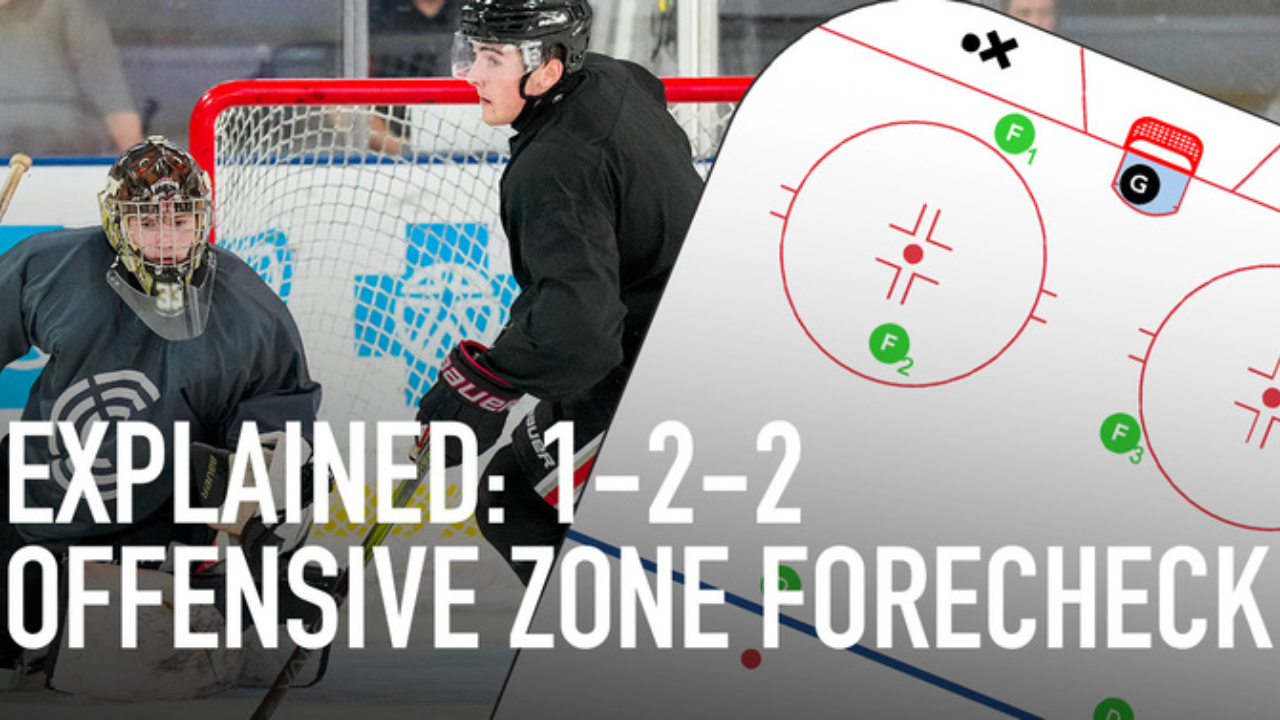
- "Remember these 12 forecheck reads"
- "Here are 8 defensive zone coverage adjustments"
- "Don't forget the 6 power play entry options"
- "And here are 15 opponent tendencies to watch for"
Then we wonder why they look confused on the ice.
People. Purpose. Performance.