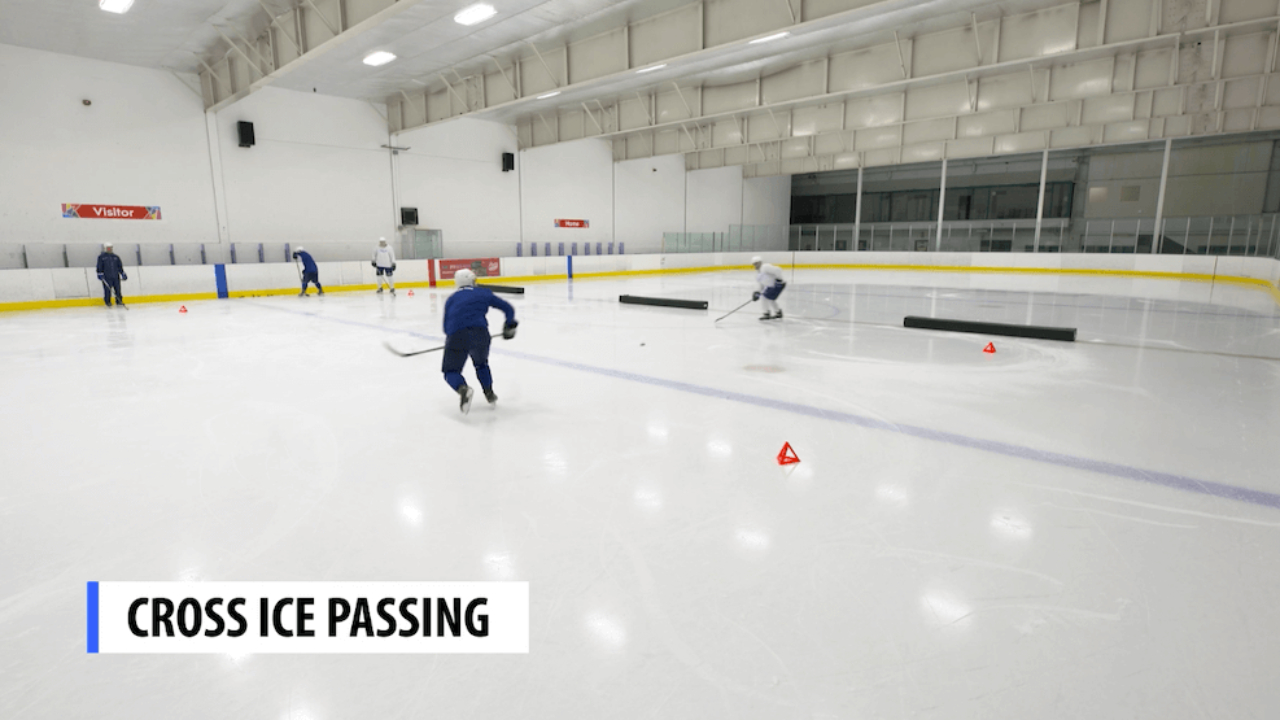
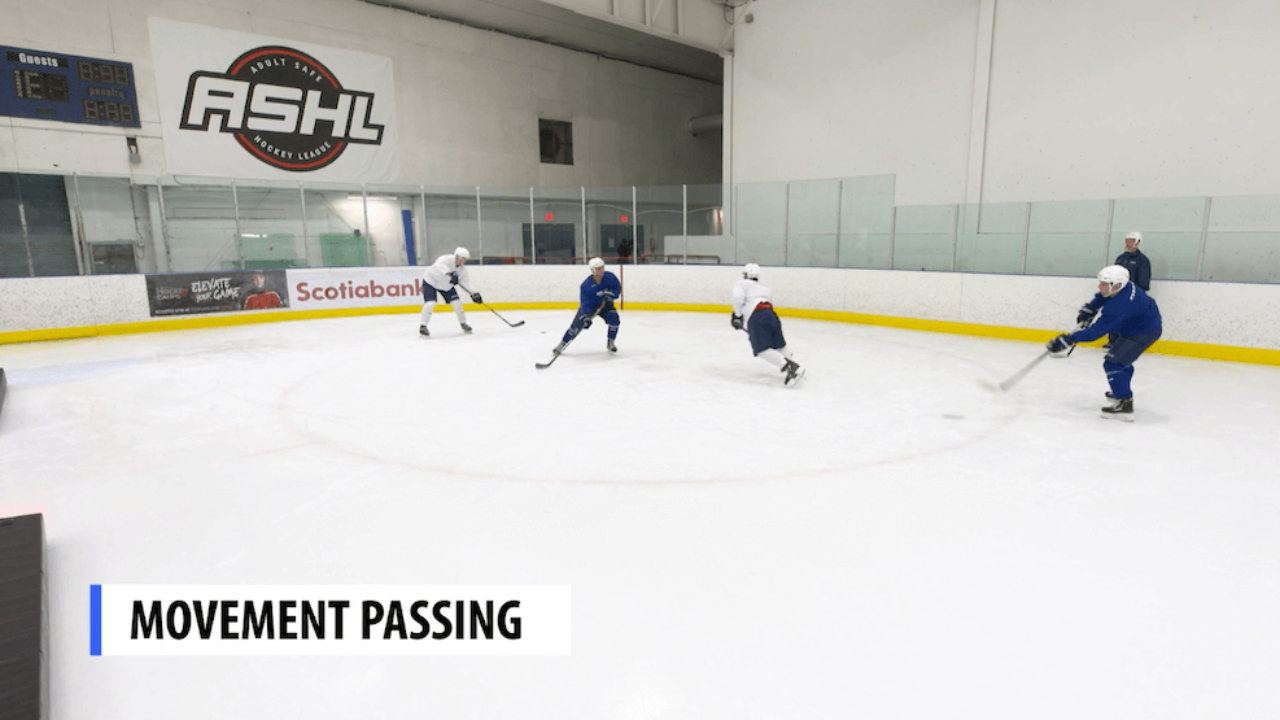
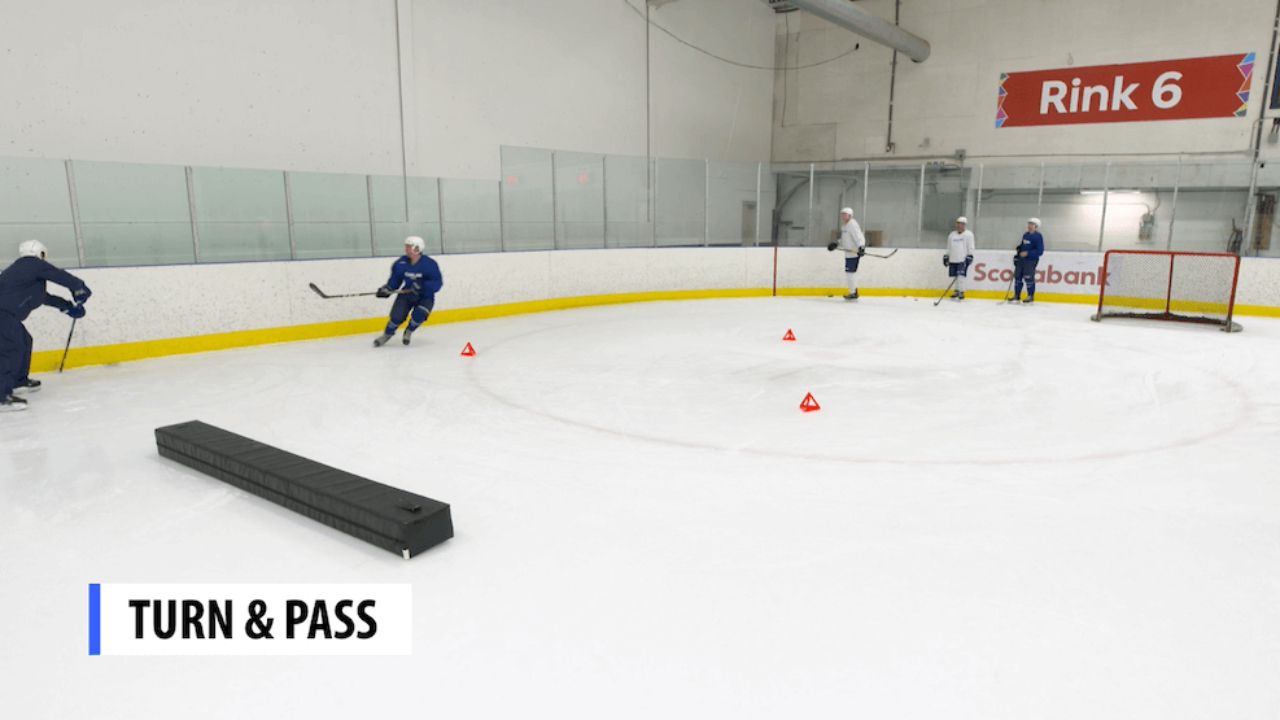
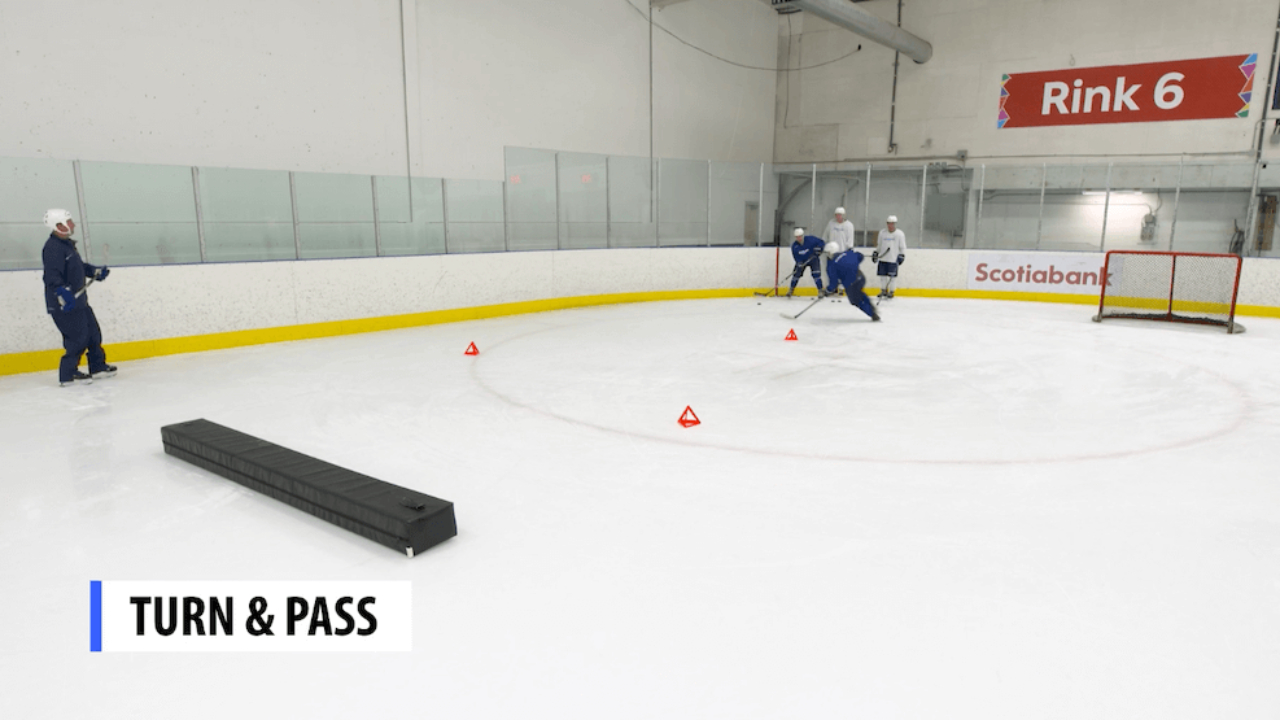
The Concept: Early in the season, getting young players to look up from the puck is one of the biggest challenges. This progression adds a heavy layer of cognitive load by forcing multiple passes while still navigating the controlled chaos of the intersecting paths. It demands rapid processing speeds from the players as they transition from receiving a pass directly into avoiding traffic.
Objective: To develop rapid puck control, improve spatial awareness to avoid collisions, and execute multiple give-and-go passes in traffic without losing momentum.
Setup:
-
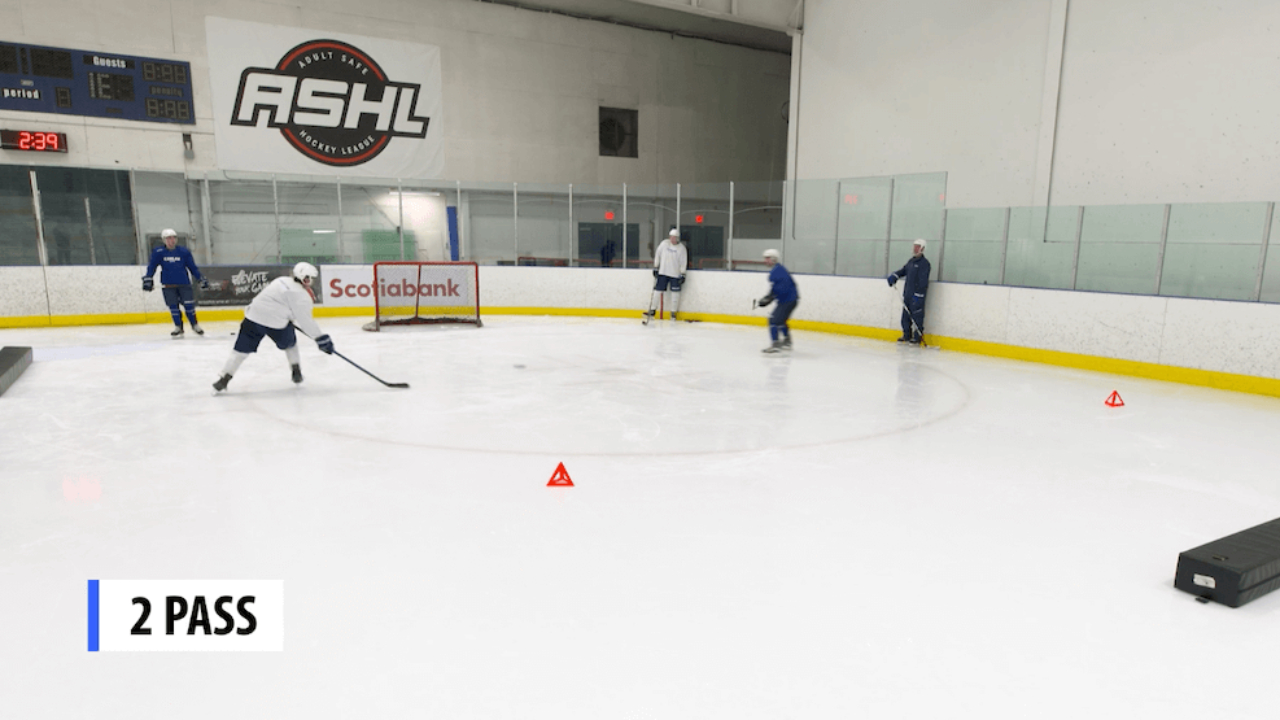
Place cones to establish two mirrored, intersecting skating paths.
-
Form two lines of players, one at the start of each path, with plenty of pucks.
-
Position two coaches at the first turns (one on the outside of each path).
-
Position two more coaches at the far end of the zone to act as the final pass receivers.
Execution:
-
Simultaneous Start: One player from each line activates at the exact same time, carrying a puck.
-
First Give-and-Go: As players approach their first turn, they execute a crisp pass to the coach stationed on their side and immediately receive a return pass.
-
Heads-Up Evasion: The moment the puck is back on their stick, players enter the merging paths. They must instantly get their eyes up to read the oncoming skater from the opposite line and adjust their route to safely cross paths.
-
Second Give-and-Go: After clearing the traffic, players attack the end of the route, deliver a second pass to the far coach, and receive it right back in stride.
-
The Finish: Players loop aggressively toward the net and finish the sequence with a strong shot.
-
Continuous Cycle: Players cycle back to the lines, and the next pair activates.
Key Focus Areas:
-
Rapid Processing: Players must immediately transition their focus from catching a pass to identifying an oncoming skater, breaking the habit of admiring their pass.
-
Heads-Up Puck Handling: Emphasize feeling the puck on the stick rather than staring down, ensuring constant visual awareness of the ice.
-
Controlled Passing in Motion: Delivering accurate passes to multiple coaches while distracted by the changing dynamics of the drill.