
Most D-zone problems aren’t system problems, they’re understanding problems.
I’ve watched a lot of defensive zone clips over the past year, and the breakdowns are rarely random. They’re actually very predictable.
Coaches spend a lot of time choosing between:
- zone
- man
- hybrid
But what I see more often is this:
Players don’t understand their responsibilities once the play breaks down.
And that’s where goals come from.
The 3 most common D-zone breakdowns I see:
1. Second Support Overcommits
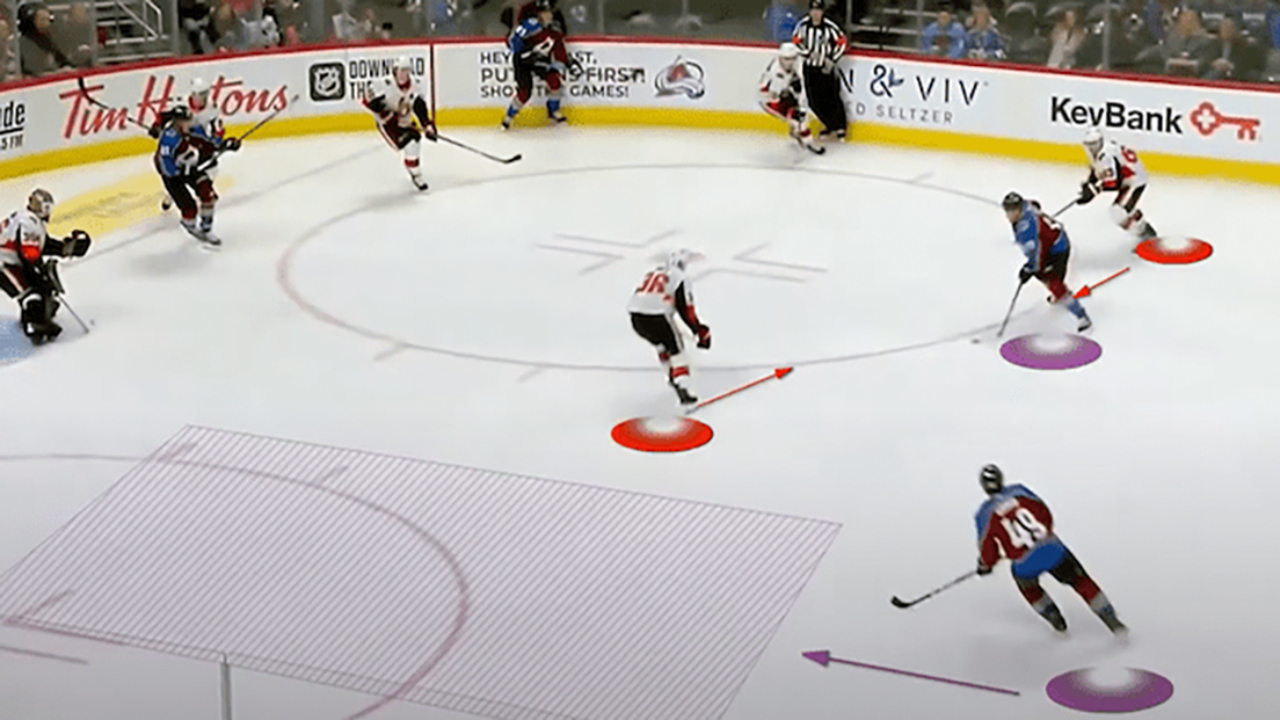
Two players get pulled to the puck, trying to “help,” and suddenly the slot is wide open.
2. Losing net-front positioning
Defenders start puck-watching instead of body positioning. Inside leverage is lost, and now you’re defending from behind.
3. Poor reads on pressure
Players either:
- go when they shouldn’t
- or hesitate when they need to close
Both lead to time and space for the offense.
D-Zone Breakdown: Hesitation & Support Overcommit
While the 2nd support overcommits, this leaves a player on vegas alone in the corner. The net-front defender can step and close here, while his D partner recovers to the net. Instead, hesitation creates time and space.
Net-Front Breakdown: Losing Inside Position
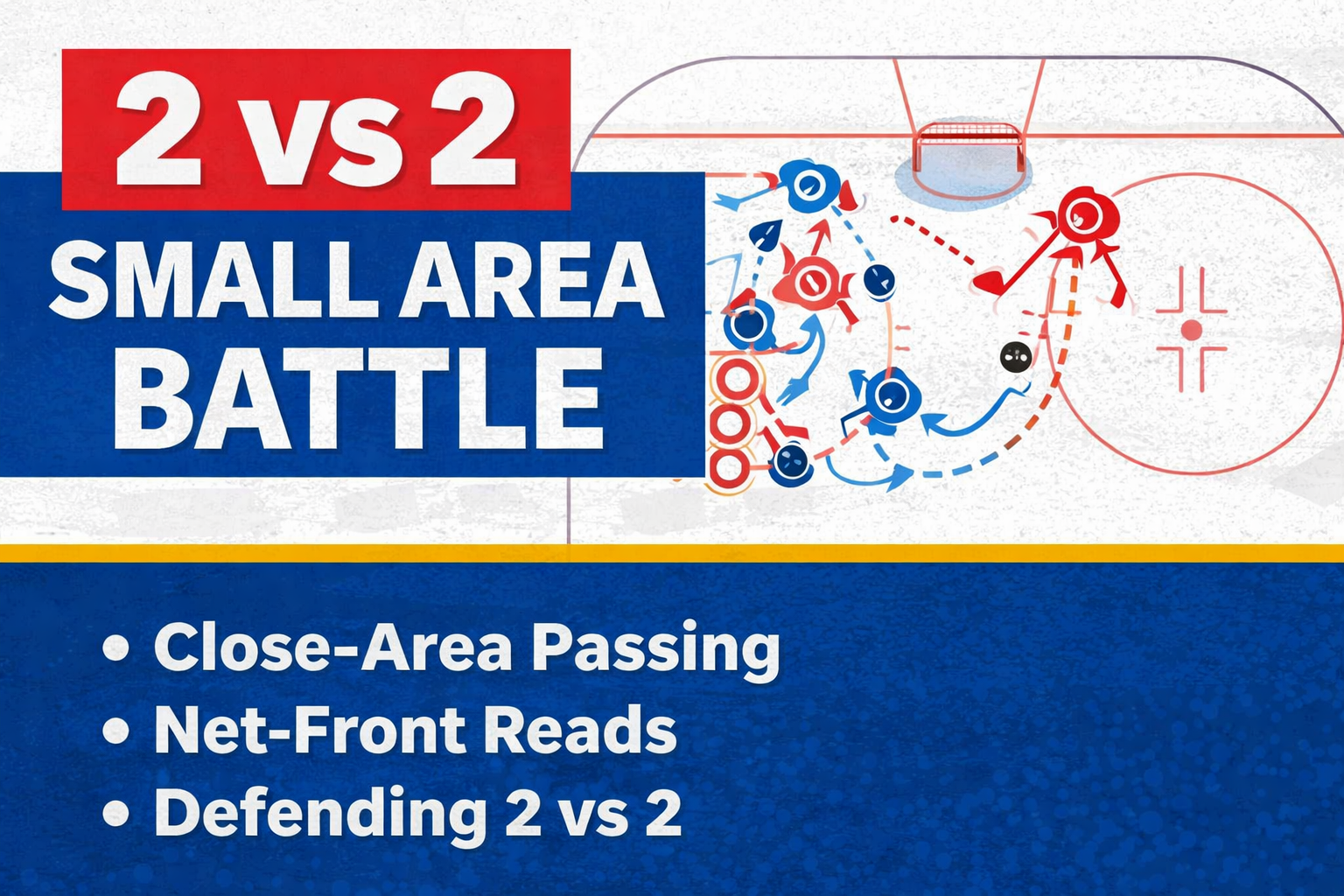
This isn’t just one player losing position, both defenders end up outside their checks. What should be a 2v2 becomes a 2v1 in front of the net.
The biggest issue isn’t structure, it’s what happens after structure breaks.
Good defensive teams aren’t perfect.
They’re predictable to each other.
Everyone knows:
- who is responsible
- when to pressure
- and what happens if someone gets pulled out of position
If your players are reacting instead of reading, your system will always look broken, no matter what you run.