Please note that this text was generated by human intelligence (HI) (you will not find any bold words, lots of emojis or images with inaccurate logos).
This text is not a scientific opinion on the subject. Having been interested in shared leadership in sports teams during my master’s thesis, I believe I know the topic well enough to make several connections. Unlike many opinion writers on social media, I am far from being an expert in the field I studied extensively. Are you familiar with the Dunning–Kruger effect? It suggests that there is a cognitive bias linking one’s knowledge of a subject to their level of confidence in it. In reality, the more I studied leadership, the more I became aware of its nuances—eventually thinking that I knew nothing at all. The more you learn, the less you know.
The topic of artificial intelligence (AI) is obviously timely, both for better and for worse. For several months now, I have been interested in its use in the world of sports. To keep this text concise, we will focus on the harm AI can cause to the development of leadership.
Definition of Leadership
First and foremost, to ensure that we are talking about the same thing when it comes to leadership, keep in mind that leadership is a process whereby an individual influences a group of individuals to achieve a common goal (Northouse, 2010, p. 3). No, this is not the only possible definition of leadership, as it is the most studied topic in management. However, it is the definition I prefer and the one we will rely on for the remainder of this text.
According to this definition, we are talking about a process (something that evolves over time) that influences a group. The key word to highlight here is INFLUENCE (I said no bold words, so I’ll underline it). Influence comes from several elements, notably the trust people place in the leader. This trust is built through emotional intelligence, empathy, communication styles, the ability to adapt to situations, and so on. All of these are behavioral skills (soft skills). These skills are generally acquired through interacting with and understanding people—being able to analyze and identify behaviors, attitudes, and reactions that may be unique to each individual. Unfortunately, these people-related skills are often sidelined when it comes to AI.
Highlighting an Imminent Problem
This week, while listening to The Diary of a CEO with Simon Sinek—following a colleague’s recommendation—I came to what could be an alarming realization: the use of AI and the dehumanization of relationships hinder the development of leadership. Simon Sinek brilliantly explains that the process is often more important than the result. AI puts an end to the process and takes us directly to the result. What about the famous phrase “Trust the process,” which we hear so often?
I borrow Sinek’s idea in relation to his book: the sum of all the research surrounding my master’s degree, the reflections on the meaning of words and actions, the interactions with people, and the completion of a large-scale project taught me far more than the thesis itself.
I also frequently refer to Hofstede’s model,a framework that compares cultural differences between countries across six dimensions (I’ll let you Google that!). We are a society that wants quick results and immediate success. AI responds to this desire, in contrast with the development of soft skills and, consequently, the development of leadership. Good things take time and, unfortunately for some, good things also require mistakes, introspection, and reflection.
Even Ted Lasso Shows It!
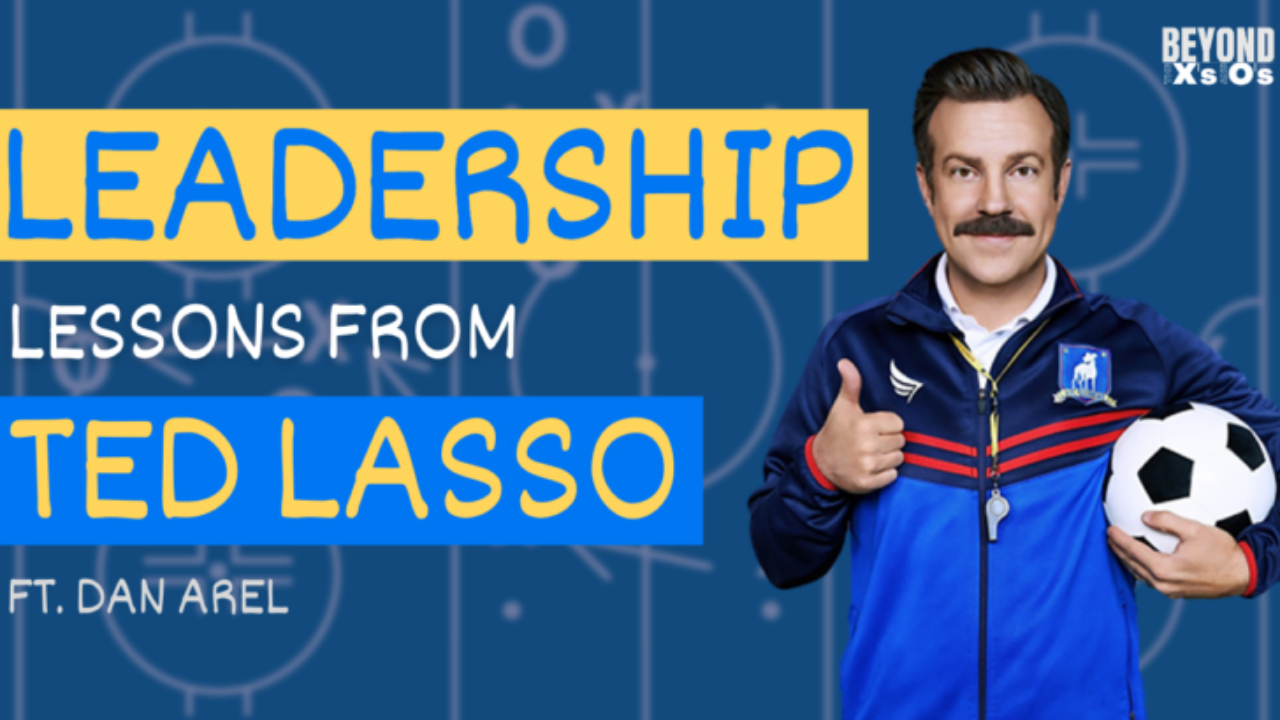
For those who know me, you know that I can always draw connections between a coaching topic and Ted Lasso. Naturally, this subject is no exception.
Have you ever wondered why Ted always brings homemade biscuits to Rebecca? He creates a meeting with his boss that he calls Biscuits with the Boss. Every morning, he brings biscuits to his boss to create a moment of conversation with her. The idea is brilliant. So let’s ask the question: why does he make the biscuits himself?
Ted makes his own biscuits for the uniqueness of the product. If he went to the grocery store to buy them, Rebecca could do the same. He would then lose the moment he creates with her. It is clearly shown that Rebecca loves Ted’s biscuits. Along the same lines, Rebecca could simply type what she believes is the biscuit recipe into an AI, but the product would inevitably be different. Maybe Ted doubles the vanilla, buys organic flour, or slightly underbakes the biscuits. He brings the human element that makes his biscuits unique.
How Not to Fall into the Ease of AI
To conclude, when you write an email using AI: they are not your words, not your thinking, and certainly not your solutions.
When you ask AI for a recipe, if you and I both say that we have chicken and peppers in our fridge, AI will give us the exact same recipe.
Uniqueness creates value. Obviously, using AI for repetitive and redundant tasks—to eliminate the blank page syndrome or to create quantitative content—is a phenomenal tool.
However, AI does not think like you, does not feel like you, and will never be in a leadership position the way you are. Authenticity will always be a powerful lever.