The Real Meaning of Fun
Fun.
We hear it all the time in youth hockey.
"We just want the kids to have fun."
But what does fun really mean?
The answer depends on who's answering the question.
For a player, fun might be scoring a goal, making a great play, or simply being with friends.
For a parent, it's watching their child grow in confidence, learn to overcome adversity, and become part of something bigger than themselves.
For a referee, it's skating a competitive game where the players—not the officials—determine the outcome.
For an organization, it's creating an environment where players can't wait to come back.
For a coach, it's something different.
A coach's job isn't to make hockey entertaining.
It's to create an environment where players become connected to the game and to one another.
When I look back on my playing and coaching career, I realize the moments that stayed with me weren't always the ones that felt like the most fun at the time.
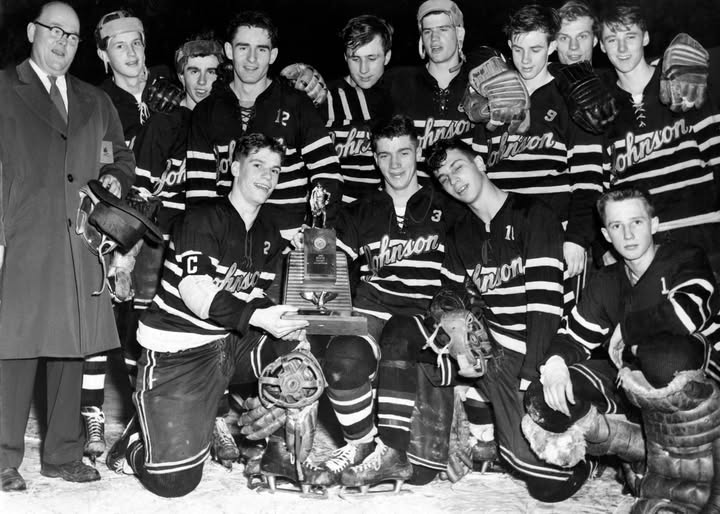
I once heard Herb Brooks answer a question about the most enjoyable experience of his hockey career. Most people expected him to say coaching the 1980 U.S. Olympic team.
Instead, he talked about winning the Minnesota State High School Championship with his buddies at St. Paul Johnson.
Here was a man who reached the highest level of hockey, yet the memory he treasured most wasn't the Olympic gold medal.
It was the people he shared the journey with.
When I look back on my own hockey life, I understand exactly what Herb meant.
I grew up playing outdoor hockey on the East Side of St. Paul.
We practiced Tuesday and Thursday evenings, played on Saturday afternoons, and some of the best hockey happened between practices. We'd gather at Hayden Heights Playground, pick teams, and skate until we couldn't feel our toes. If there weren't enough players, we'd shovel another section of ice and start another game.
Nobody organized us.
Nobody scheduled us.
We just played.
Looking back, I don't even remember many of the games.
I remember the people.
One of those people was Wes Barrette.
Wes was a bricklayer by day, and every evening he volunteered at the rink. For more than 45 years, he quietly invested in generations of kids on the East Side.
After every evening at the rink, nobody hurried home.
We stayed to flood the outdoor rink.
The older players worked beside Wes with the hose.
The younger players kept the hose moving around the boards and rolled it up when we were finished.
At the time, it felt more like work.
Today, I realize we weren't just flooding the rink.
We were building friendships.
When we finished flooding the rink, Wes loaded us into the back of his big blue truck and took us to Sambo's for hot chocolate before driving us home.
Years later, Wes coached me with the East Side Midgets.
He believed in standards:
No cussing.
No drinking.
Respect your parents.
Respect your teammates.
Respect the game.
Before every game, Wes gathered us together and said a prayer.
I don't remember exactly what he said, but I remember how it felt.
Wes brought us together before we ever stepped onto the ice.
Wes never stood in front of us and talked about culture.
Back then, I don't think any of us even knew what the word "culture" meant.
He simply lived it.
We made it to the Minnesota State Championship in International Falls and lost 4-3 in double overtime.
We outshot them 47-17.
Sometimes, despite your best efforts, things don't go your way.
At the time, the loss was devastating.
Today, it isn't the first thing I remember.
I remember my teammates.
I remember Wes.
I remember believing in one another.
Now, don't misunderstand me.
Competition matters.
Winning matters.
Every kid keeps score.
Every coach wants to win.
Wes did.
So did I.
Competition teaches lessons that nothing else can.
Preparation.
Discipline.
Sacrifice.
Resilience.
Humility in victory.
Grace in defeat.
But winning and relationships aren't competing priorities.
The best teams don't become close because they win.
More often, they win because they become close.
Maybe that's why the championships fade...
but the teammates never do.
Why is this important?
Because one day every young hockey player will play their last game.
Only a handful will play Division I hockey.
Even fewer will play professionally.
For almost every child who laces up a pair of skates, hockey won't become a career.
It will become a memory.
Most of the players we coach won't make a living playing hockey.
But every one of them can leave the game with something even more valuable.
Confidence.
Character.
Lifelong friendships.
Memories they'll carry forever.
The question is...
What kind of memories are we helping create?
Years from now, they probably won't remember every practice plan or every system we taught.
They may not even remember every big game.
But they'll remember how they felt walking into our locker room.
They'll remember whether they belonged.
They'll remember the teammates they laughed with.
And if we're fortunate...
they'll remember us the way I remember Wes Barrette.
Not because we taught them hockey.
But because we taught them that hockey was always about something much bigger.
I think that's the real meaning of fun.
The measure of a coach isn't how many players make it to the next level.
It's how many former players still smile when they hear your name.
I hope every young player is fortunate enough to have a Wes Barrette somewhere along the way.
I know I was.
Author's Note: This article is dedicated to the thousands of volunteer coaches who quietly shape young lives, often without realizing the lasting impact they have.