There’s one play in the offensive zone that consistently turns good structure into confusion, hesitation, and blown coverage, the high roll. It doesn’t rely on speed, skill, or deception with the puck. Instead, it weaponizes something far more damaging: uncertainty.
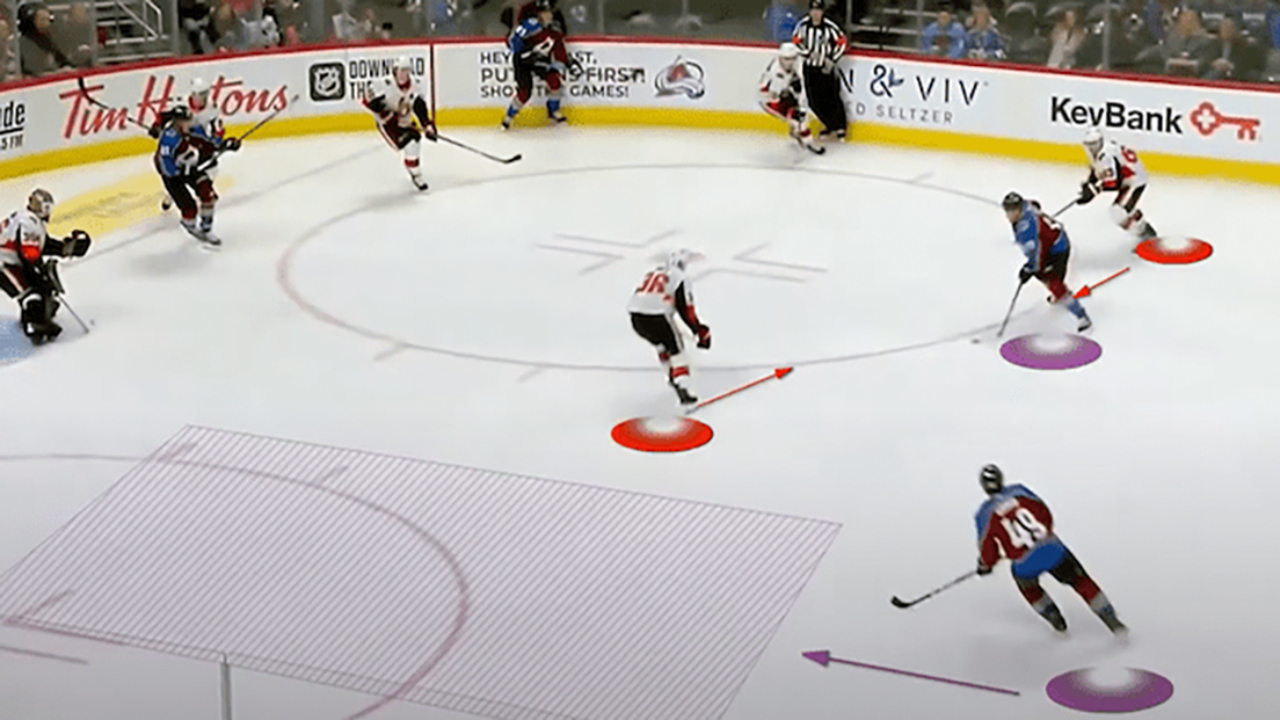
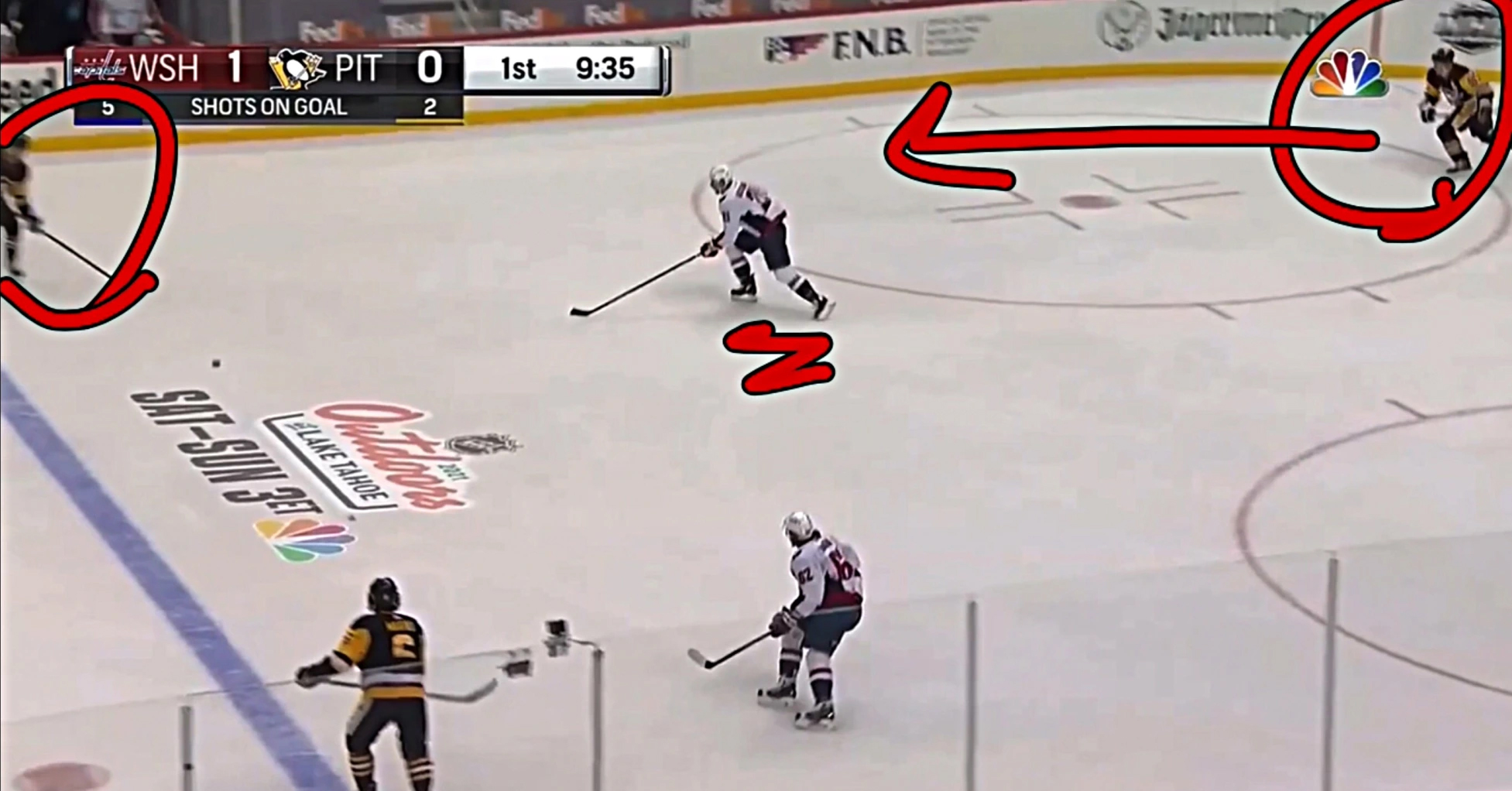
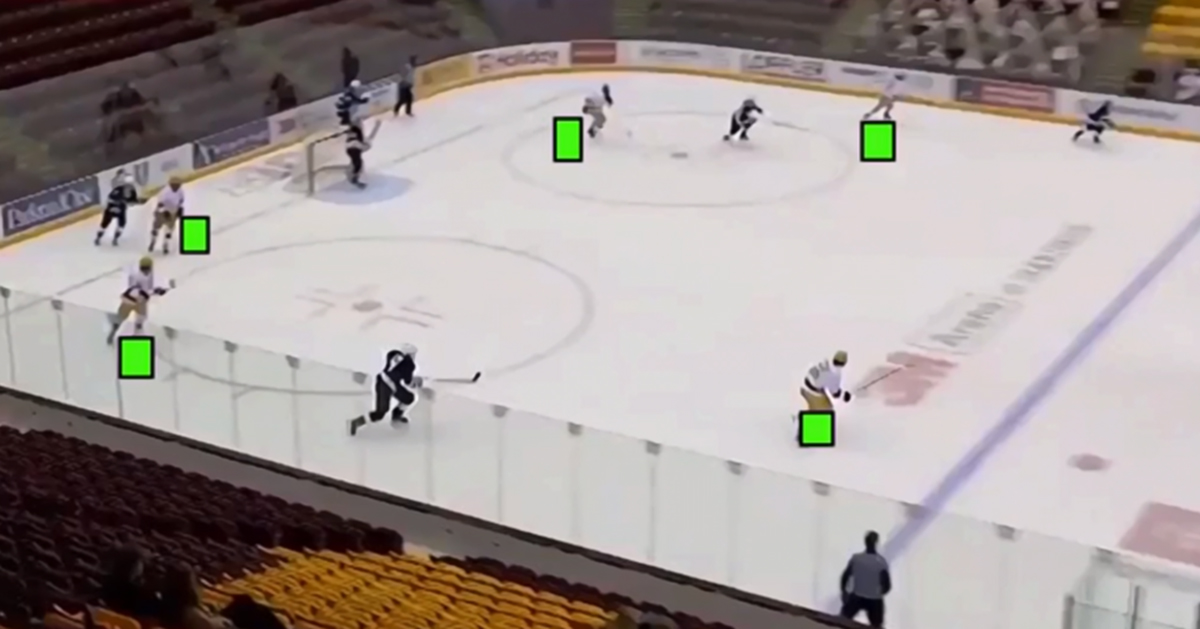
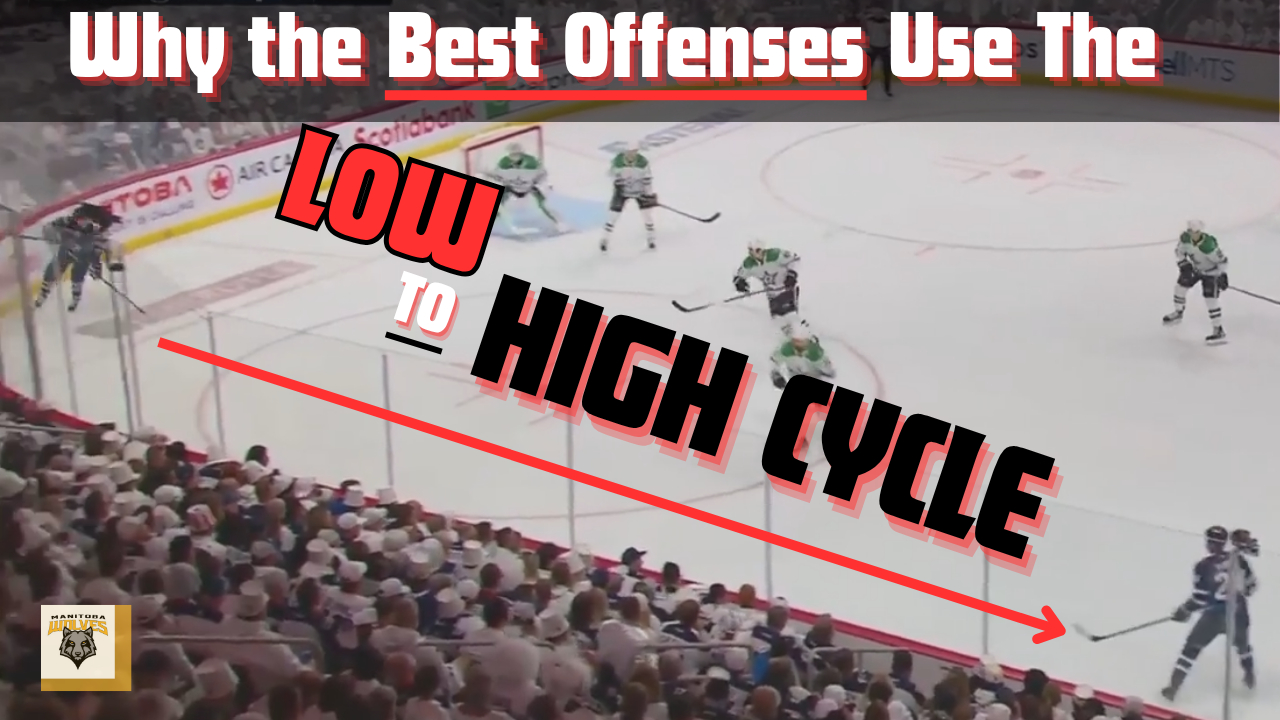
At its core, a high roll is simple. As the puck moves low or behind the net, an offensive player rolls up into space above the hashmarks, often arriving late and with momentum. That movement attacks the seam between defensive responsibilities, forcing defenders to make immediate decisions under pressure. And that’s where things break down.
The danger of the high roll isn’t the movement itself, it’s the question it asks: Who owns this player?
Ask coaches, and the debate starts instantly. Some argue the defense must step out and take anything that appears above the dots. Others believe the high forward must stay connected and track the roll. Both answers can be correct depending on puck position, timing, support, and system. But in real time, players don’t have the luxury of debating philosophy. They have milliseconds to react.
This is why high rolls are so effective. They live in the grey area between man coverage and zone principles. If a defender hesitates, worried about opening the middle, the shooter gets a clean look. If the forward is late collapsing, the pass is already gone. Even a brief breakdown in communication creates exactly what the offense wants: time and space in a dangerous area.
At the youth level, high rolls expose developmental gaps quickly. Poor scanning habits, quiet benches, and unclear priorities show up immediately. Players often assume someone else has it covered. When no one clearly takes ownership, the puck ends up in the back of the net and the post-shift conversation becomes a familiar one: “I thought you had him.”
For coaches, the lesson isn’t about choosing the “right” coverage rule. It’s about clarity. Players need to understand not just what their responsibility is, but why it changes based on context. Teaching triggers, communication cues, and early recognition matters far more than rigid assignments.
High rolls don’t just break defensive structure, they expose it. And until teams address the grey areas with purpose and intention, this will remain the most dangerous play in the offensive zone.