The Coach’s Guide to Talking About Food and Nutrition
By Melissa Boufounos, CHN
You don’t need to be your team’s nutrition expert. But the way you talk about food can
influence how your players fuel, perform and think about eating.
Use this quick guide to keep nutrition conversations positive, performance-focused, and
within your role as a coach.
Try This Instead
Instead of: “No junk food before games.”
Try: “Make sure you’re getting enough carbohydrates before the game so you have
energy to play.”
Instead of: “Stay away from sugar so you don’t crash.”
Try: “Choose easy-to-digest carbohydrates close to game time for quick energy.”
Instead of: “You need to eat clean.”
Try: “Your body needs enough food and a variety of nutrients to support hockey,
recovery and growth.”
Instead of: “Sports drinks have way too much sugar.”
Try: “Sports drinks can be useful during longer or more intense practices and
tournament days when you need carbohydrates on top of fluid and electrolytes.”
Instead of: “You shouldn't be eating that.”
Try: “Different foods can serve different purposes. Let's think about what will help you
fuel what you're doing next.”
Instead of: “You need to lose weight/get leaner.”
Try: Don't make recommendations about an athlete's weight or body composition. Refer
them to an appropriately qualified professional when there is a legitimate concern.
What IS Your Role?
As a coach, you can:
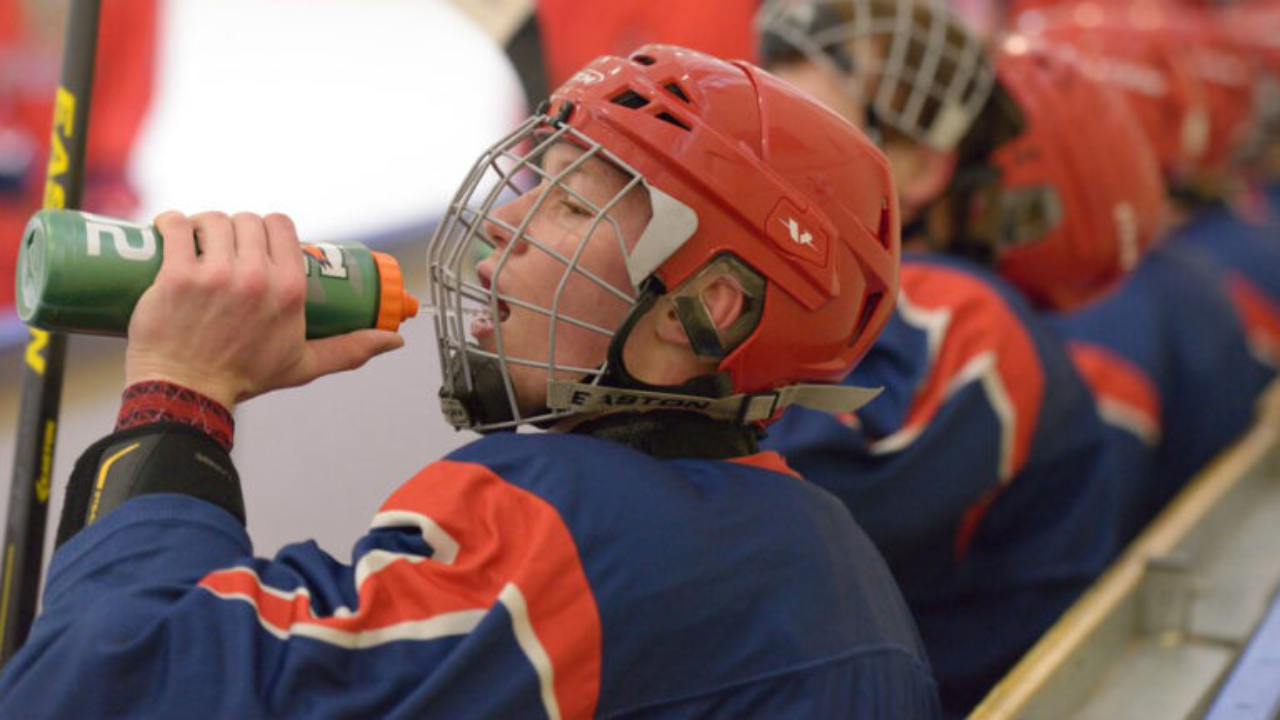
● Encourage athletes to arrive at practices and games fuelled and hydrated.
● Schedule water breaks and give athletes opportunities to drink.
● Allow enough time to eat between double-header training sessions.
● Remind players and parents to plan ahead for food on travel days.
● Reinforce the importance of post-game recovery.
● Talk about food in terms of energy, recovery, health, and performance.
● Model neutral, positive language about food and bodies.
● Bring in a qualified sports nutrition professional to provide nutrition education and
workshops for your team.
● Recognize when an athlete needs additional support and refer them to an
appropriate professional.
What ISN'T Your Role?
Unless you have additional qualifications that allow you to do so, avoid:
● Creating individualized meal plans.
● Prescribing calorie or macronutrient targets.
● Recommending weight loss or restrictive diets.
● Setting target weights or body-fat percentages.
● Diagnosing food intolerances or other nutrition-related medical concerns.
● Telling athletes to eliminate foods or food groups.
● Recommending supplements without appropriate expertise.
● Policing what athletes bring to the rink or commenting negatively on their food
choices.
Remember: this applies to your entire performance team. A coaching, strength and
conditioning, or personal training certification does not automatically qualify someone to
provide nutrition advice.
Make Nutrition Part of Player Development
Nutrition shouldn't only become a conversation when there's a problem.
You don't wait until a player loses strength to introduce strength training or until their
skating becomes a problem to work on skating development. Nutrition can be
approached the same way. Proactive nutrition education can help players learn how to fuel before games, recover
afterwards, stay hydrated, manage tournament weekends, and meet the demands of
training, competition, and growth.Consider bringing in a qualified sports nutrition professional to educate your team
throughout the season. Nutrition education can be built into player development just like
strength and conditioning, skills training, and recovery.
There are also times when an individual athlete may need additional support. Consider
making a referral when you notice concerns around:
● Consistently low energy during practices or games
● Difficulty recovering between games or training sessions
● Questions about supplements or individualized nutrition needs
● Weight or body composition concerns
● Restrictive eating or elimination of food groups
● Difficulty eating enough to support training and growth
● Medical nutrition concerns
When players need nutrition support, look for someone with appropriate education and
training in sports nutrition, such as a sports nutritionist or registered dietitian. Your Job Isn't to Have Every Answer.
One of the most useful things you can say as a coach is:
“That's a great question, but it's outside my area of expertise. Let's get you an
answer from someone who specializes in sports nutrition.”
Creating a positive nutrition culture isn't about controlling what your athletes eat. It's
about creating an environment where fuelling is treated as an important part of
performance, food isn't feared or moralized, and players know where to go when they
need support.