When a defenceman goes back to retrieve a puck with a forechecker bearing down on them, they have very little time to make a play. There’s no time to think; they need to know where they’re going with the puck before they even get there. It’s those moments where a coach’s preparation makes a significant difference.
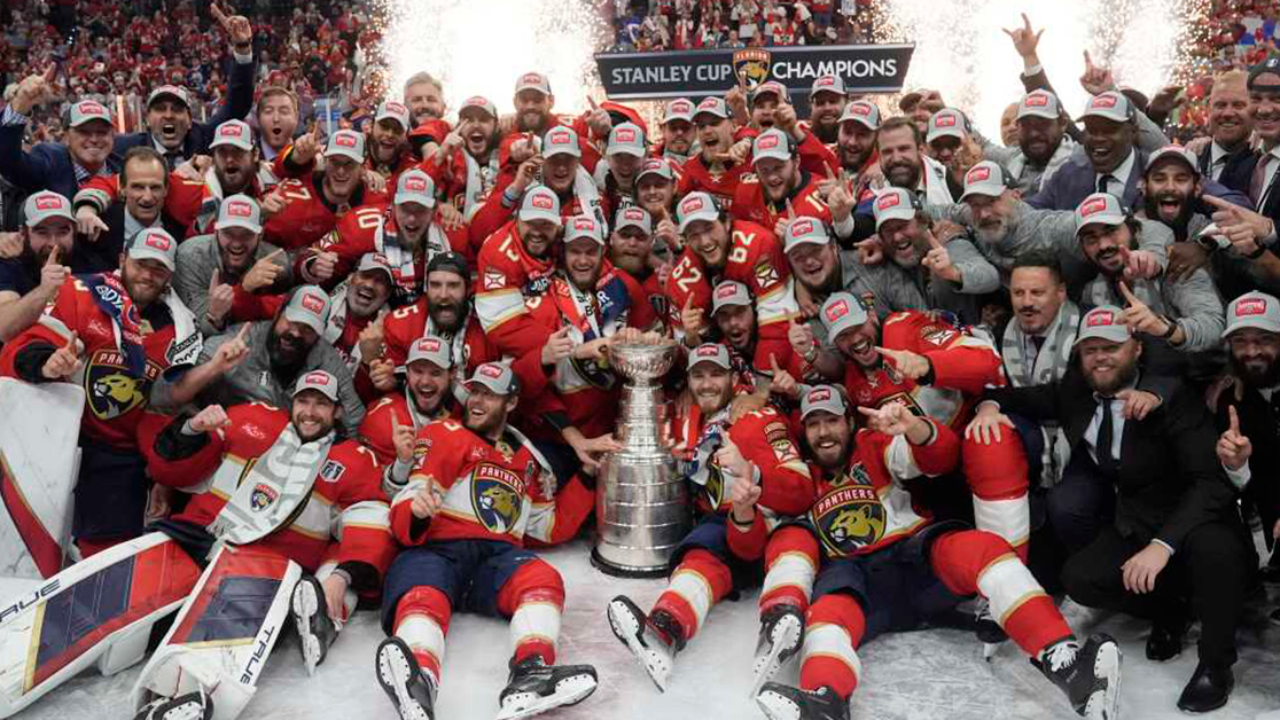
On day two of TCS Live, Florida Panthers Assistant Coach Jamie Kompon gave a presentation on how to build a breakout that fits your team and helps players know where the puck is going without having to stop and think.
“I’m not up here to tell you one breakout. There’s no secret sauce to a breakout,” said Kompon. “You guys will figure that out through your team. I’m here to help guide you through the process of selecting the best option or options for your breakouts.”
He said that there are three questions that coaches must ask themselves to select and develop a breakout that makes sense for their team:
What are your rules for defending the rush?
Kompon believes that your team’s breakout should naturally complement their other systems. Neutral zone forecheck, transition defence, and breakouts should all be guided by the same set of rules.
“What your neutral zone forecheck system is should align with your defending-the-rush rules. Don’t have two sets of rules. It’s hard enough for your players to have one set of rules. Now you’re putting more pressure on them to make more reads and more sets.”
Whether you want to run a 1-2-2, a 1-1-3, or any other neutral zone forecheck, the key is to maintain a cohesive set of rules as you go back to retrieve the puck.
Do you have a plan under playoff pressure?
It’s one thing to have a set breakout when everyone is changing or tagging up. Still, Kompon emphasized the importance of having a plan under playoff pressure — when time and space to improvise aren’t available to players.
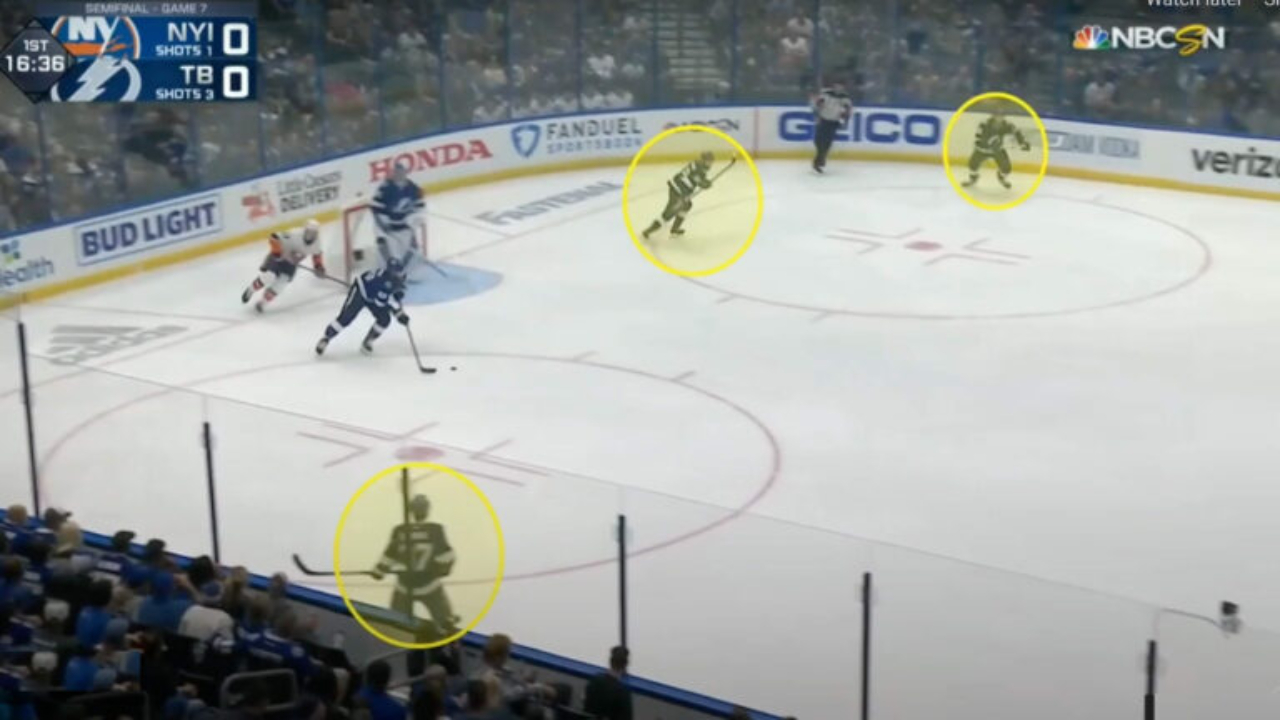
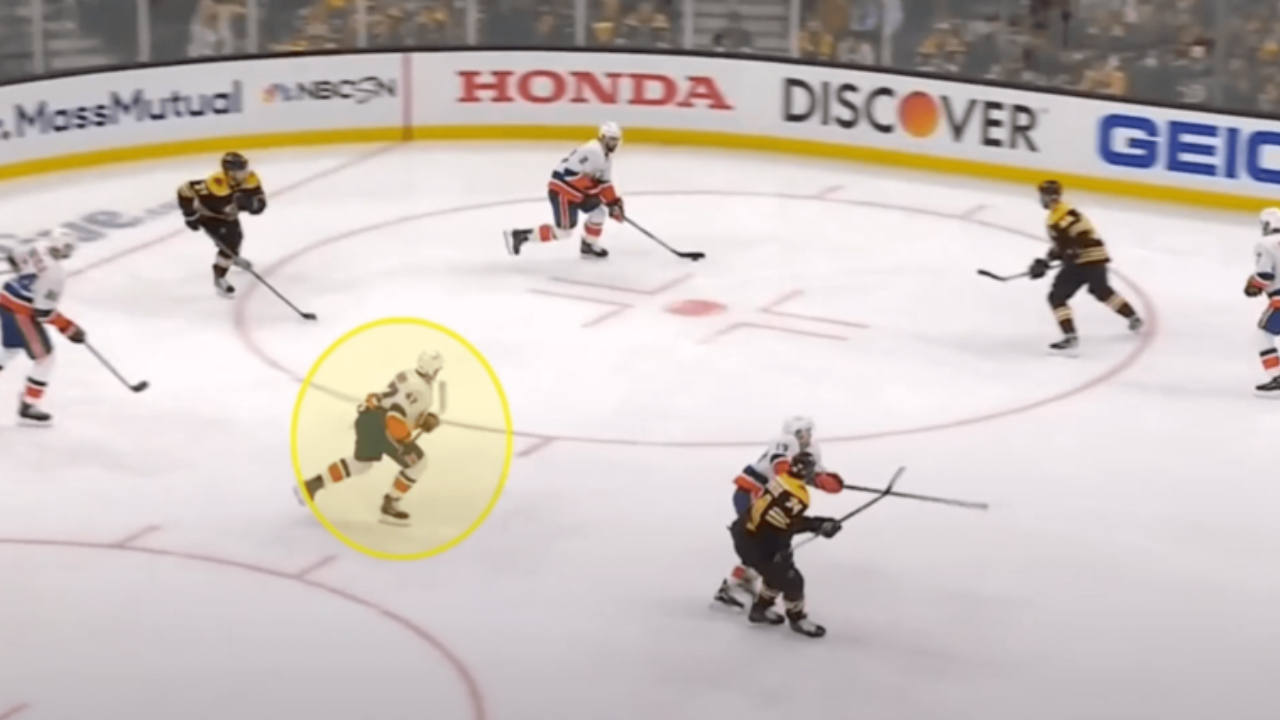
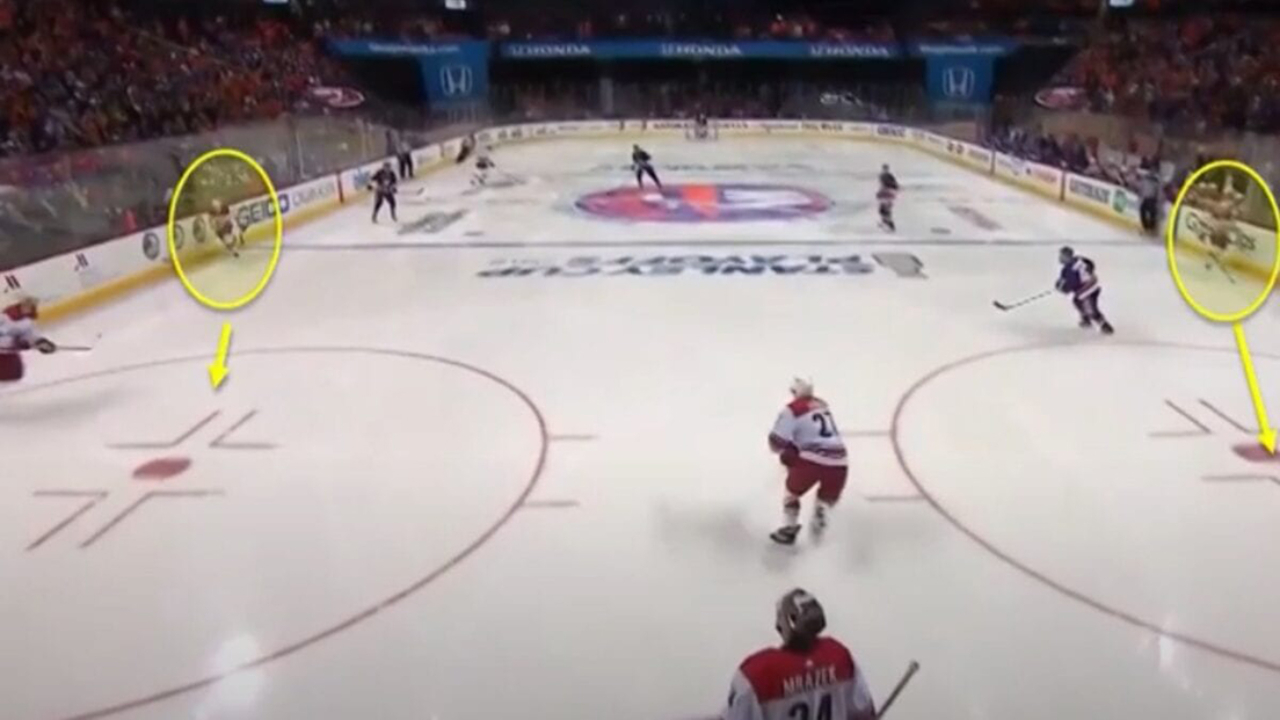
Instead of relying on each player to solve the problem independently, Kompon explained that coaches should establish predetermined options based on landmarks on the ice.
“The trapezoid is a landmark,” Kompon said. “The hash mark, it’s a landmark. They don’t change, no matter what rink you go to.”
He went on to explain that teams can use these landmarks to decide where the puck goes next. For example, you might tell your players to go up the strong side when the puck is dumped in outside the trapezoid and move the puck to the weak side if it reaches the trapezoid.
“I’m not saying this is the be-all and end-all, but this will definitely help your team. It will definitely help your players, especially youth players, and even NHL players. It doesn’t matter. It’ll help your players with predictability, and with predictability is simplicity.”
Kompon discussed how important simplicity is. To him, the game is already difficult enough. If coaches can establish some simple rules to reduce the number of reads their players have to make, it’s going to be easier to stay on the same page, even when time and space are limited.
At the NHL level, even small improvements can matter. If simplicity allows players to make decisions a little bit faster and with greater confidence, the overall effect can be significant. Kompon showed last season’s NHL rankings in breakout success rate. The Tampa Bay Lightning were league-best with a 67.3% success rate, while the San Jose Sharks finished last with 61.1%. The margins are thin—every second saved is meaningful.
How often do you practice your breakouts?
Once you’ve established your landmarks, ensuring that your breakout aligns with your rush defending principles, how often do you need to practice it to engrain these rules in your players' heads? Kompon said he does this multiple times per week with his team.
“You can never get upset with your players if you don’t practice it. If they can’t execute something you’ve never practiced, you cannot get upset. So, practice it. That’s the most important thing.”
For Kompon, reinforcing habits as often as possible and as early as possible is key. You want your players to develop muscle memory.
“Get your players to feel comfortable doing it because if you start early enough in training camp or in your preseason, by the time playoffs come around, there’s a comfort level.”